Find the Best Furnace Repair Companies for Your Business
No obligation • Fast responses • Nationwide coverage

Why you can trust HVAC Firms
HVAC Firms is a leading United States resource for evaluating HVAC service providers. Our team researches companies, checks credentials, and reviews customer feedback to present clear, unbiased information. Listings and rankings are based on merit, and companies cannot pay to change our editorial content.
Search providers near you
Top Furnace Repair Companies in College Station, Texas Ranked
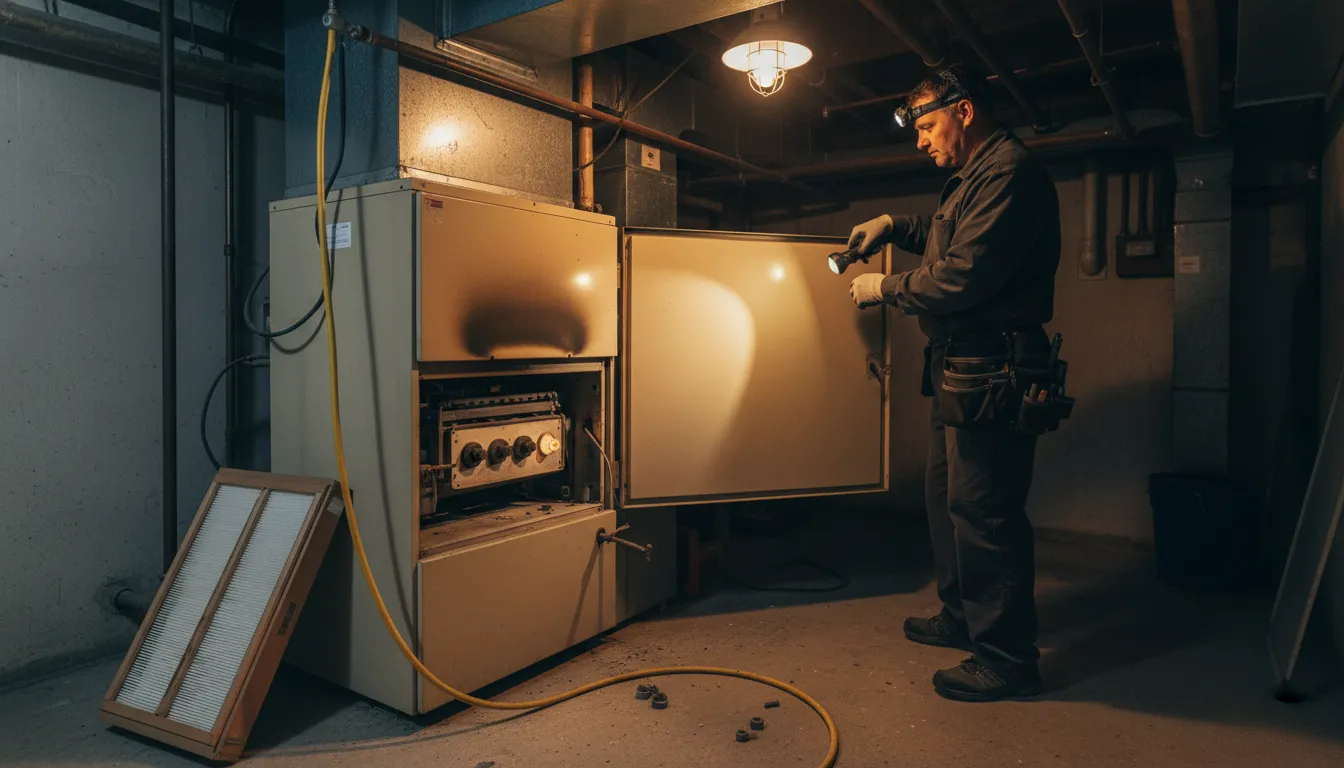
When the winter chill arrives in College Station, a reliable furnace isn't just a comfort-it's a necessity. Furnace repair involves diagnosing and fixing critical issues that prevent your heating system from working safely and efficiently. This guide will help you understand the common problems, the repair process, and how to find qualified local technicians to restore warmth to your home.
Barker's Cooling, Heating & Plumbing
10141 SH 30, College Station, TX 77845
Barker's Cooling, Heating & Plumbing provides comprehensive HVAC and plumbing services in Houston, TX. They offer heating and cooling system installations, repairs, tune-ups, duct cleaning, indoor air quality testing, and smart thermostat installations. Their plumbing services include drain cleaning, leak repairs, fixture upgrades, and water pressure troubleshooting. Barker's focuses on long-term performance and customer education to ensure reliable home comfort solutions. The company serves the Houston area with a local team committed to quality workmanship and transparent service.
Siegert One Hour Heating & Air Conditioning
989 N Earl Rudder Fwy, Bryan, TX 77802
Siegert One Hour Heating & Air Conditioning provides HVAC repair, installation, and maintenance services in Houston, TX. They specialize in heating, air conditioning, furnace repairs, and indoor air quality services. The company offers expertise in system diagnostics and improvements such as plenum redesigns to optimize airflow and static pressure. Operating as an independently owned business with a commitment to customer satisfaction, Siegert One Hour Heating & Air Conditioning backs their work with a two-year guarantee and offers 24/7 emergency availability.
Superior Air Repair
6083 E State Hwy 21, Bryan, TX 77808
Superior Air Repair is a furnace repair and installation company serving Houston, TX. They provide furnace repair, installation, HVAC tune-ups, and indoor air quality services. Their technicians focus on quality repairs and offer maintenance plans to help extend the life and efficiency of heating systems. Superior Air Repair also assists customers in selecting replacement furnaces when needed.
Understanding Your Furnace and Common Failures
A furnace is a complex appliance with several key components that can fail. Understanding these can help you communicate more effectively with a technician. The most frequent culprit for a furnace that won't start is a faulty hot surface ignitor or flame sensor1. These parts are responsible for safely lighting the gas; when they wear out, your furnace will attempt to start but fail to produce heat. Other common issues include a clogged air filter restricting airflow, a malfunctioning thermostat, or problems with the blower motor or inducer fan.
Regular wear and tear, lack of maintenance, and the age of the unit are primary factors in these failures. In College Station's climate, where systems may switch between heating and cooling, the strain can accelerate component wear.
The Step-by-Step Furnace Repair Process
When you schedule a heating repair service, a certified technician will follow a systematic approach to restore your system.
- Scheduling & Arrival: You'll call a local HVAC company to schedule a visit. Some companies offer priority scheduling for customers enrolled in annual maintenance plans. The technician will arrive with the necessary tools and common replacement parts.
- Diagnosis: This is the most critical step. The technician will start with simple checks, like ensuring the thermostat is set to "heat" and the circuit breaker is on2. They will then perform a thorough inspection, testing electrical components, checking gas pressure, examining the heat exchanger for cracks, and assessing the condition of the blower assembly 3.
- Repair: Once the issue is identified, the technician will explain the problem and the proposed fix. Common repairs include replacing the ignitor, cleaning or replacing the flame sensor, swapping out a faulty limit switch, or addressing motor issues.
- Testing & Safety Check: After the repair, the technician will start the furnace and monitor it through several cycles to ensure it operates correctly, efficiently, and, most importantly, safely. They will check for proper ignition, stable temperatures, and that no hazardous carbon monoxide is being produced.
How Long Do Furnace Repairs Take?
The timeline for a furnace fix varies greatly depending on the complexity of the problem. A simple repair, like replacing a thermostat or a standard ignitor, can often be completed in under an hour4. More involved jobs, such as replacing a blower motor or addressing complex electrical issues, may take a few hours. The most time-consuming repairs involve the heat exchanger or major ductwork modifications, which could take half a day or more4. The diagnostic phase itself typically takes 30 minutes to an hour before work even begins.
Recognizing Signs You Need Heating Service
Don't wait for a complete breakdown. Contact a professional if you notice any of these warning signs:
- No Heat or Insufficient Heat: The furnace isn't turning on, or it's running but not warming your home adequately.
- Strange Noises: Loud banging, screeching, or rattling sounds often indicate mechanical problems like a loose component, a failing motor bearing, or issues with the inducer fan.
- Frequent Cycling: The furnace turns on and off more frequently than normal, which is inefficient and hard on the system.
- Yellow Burner Flame: A healthy furnace flame is blue. A yellow, flickering flame can signal a dangerous combustion problem.
- Unusual Odors: A persistent smell of gas requires immediate evacuation and a call to the gas company. A dusty smell when first starting is normal; a burning electrical smell is not.
Find the perfect furnace repair companies for your needs
Get personalized recommendations and expert advice
Cost Considerations for Furnace Repairs in College Station
Repair costs in College Station depend on the part needed, the labor involved, and the time of year. Here's a general breakdown:
- Minor Repairs: Fixing issues like a faulty flame sensor, pressure switch, or thermostat typically ranges in the low hundreds of dollars.
- Major Component Repairs: Replacing significant parts like the blower motor, control board, or inducer motor can cost several hundred to over a thousand dollars5.
- Critical Repairs: The most expensive repair is often a cracked heat exchanger, which is a safety hazard. This repair can easily exceed $1,000 and often makes replacing the entire furnace a more economical and safer choice.
A common rule of thumb is to consider replacement if the cost of the repair multiplied by the age of your furnace (in years) is greater than $5,0006. For example, a $1,200 repair on a 10-year-old furnace (1,200 x 10 = 12,000) suggests replacement is likely the better long-term investment.
Proactive Maintenance: Your Best Defense
The most effective and cost-saving strategy is regular preventative maintenance. Scheduling an annual furnace tune-up in the fall ensures a technician can clean components, check for wear, and identify small problems before they lead to a costly, cold-weather breakdown7 8. Many local HVAC companies offer maintenance plans that include this service, often providing priority scheduling and discounts on repairs9. Simple homeowner tasks, like changing your air filter every 1-3 months, also dramatically improve efficiency and prevent strain on the system8.
Choosing a Reliable Furnace Repair Provider
When your heat goes out, you need a technician you can trust. Look for companies that are licensed, insured, and have positive reviews from College Station residents. Experienced technicians should be able to clearly explain the problem, provide a detailed estimate, and offer guidance on whether repair or replacement is the most sensible option for your situation and budget10. Always ask about warranties on both parts and labor.
Frequently asked questions
Sources
Footnotes
-
What Is The Most Common Part to Fail on a Furnace? - https://www.myqualitycomfort.com/general/what-is-the-most-common-part-to-fail-on-a-furnace/ ↩
-
6 Important Things to Check Before Scheduling a Service Call - https://acmasters.com/6-things-to-check-before-scheduling-a-service-call/ ↩
-
Air Conditioner Troubleshooting: First Steps for Techs - IHACI - https://www.ihaci.org/blog/what-should-a-technician-check-first-if-an-air-conditioner-does-not-work ↩
-
How Long Does It Usually Take to Repair a Furnace?. - https://www.tcmemt.com/post/how-long-does-it-usually-take-to-repair-a-furnace ↩ ↩2
-
Top Gas Furnace Repair Pros In College Station, TX - Modernize - https://modernize.com/near-me?find=gas-furnace-repair&location=College-Station,TX ↩
-
How often should you replace your AC or furnace in Texas? - AC Direct - https://www.acdirect.com/blog/how-often-should-you-replace-your-ac-or-furnace-in-texas/ ↩
-
Heating System Repair Process in Texas | KAC Express - https://kacexpress.com/heating-system-repair-process/ ↩
-
Factors Impacting Furnace Efficiency & Improvement Tips - Shipley Energy - https://www.shipleyenergy.com/resources/efficiency/furnace-efficiency-tips/ ↩ ↩2
-
Furnace Repair in College Station, TX - https://www.totalcomfortbcs.com/furnace/repair ↩
-
Professional Residential HVAC Services in College Station, TX - https://www.godailey.com/hvac/residential-hvac/ ↩