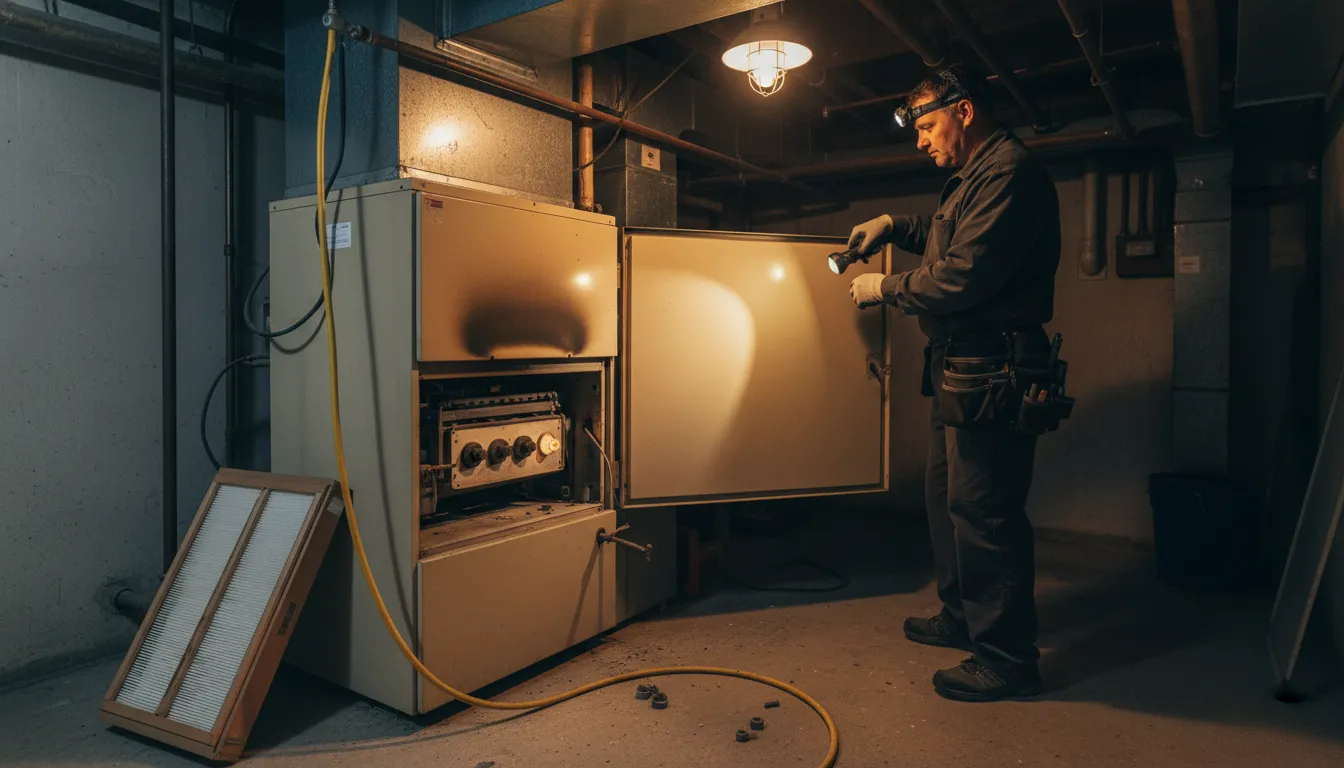
Find the Best Furnace Repair Companies for Your Business
No obligation • Fast responses • Nationwide coverage

Why you can trust HVAC Firms
HVAC Firms is a leading United States resource for evaluating HVAC service providers. Our team researches companies, checks credentials, and reviews customer feedback to present clear, unbiased information. Listings and rankings are based on merit, and companies cannot pay to change our editorial content.
Search providers near you
Top Furnace Repair Companies in Cincinnati, Ohio Ranked
When the winter chill hits Cincinnati, a reliable furnace isn't just a comfort-it's a necessity. Furnace repair involves diagnosing and fixing issues with your home's heating system to restore warmth, safety, and efficiency. This guide explains what to expect from the repair process, common problems in our region, and how you can connect with qualified local technicians to ensure your home stays cozy all season long.
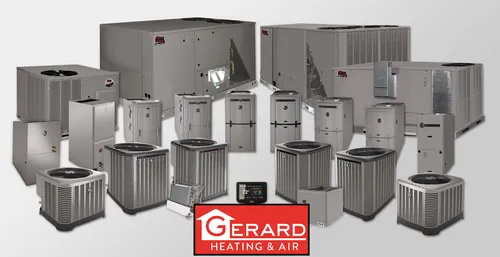
Gerard Heating and Air
404 Three Rivers Pkwy, North Bend, OH 45052
Gerard Heating and Air is a heating and air company serving Cincinnati, OH. They offer HVAC installation, furnace repair, and duct cleaning services. Their team uses quality equipment to clean air ducts, coils, and registers, ensuring thorough maintenance. Gerard Heating and Air also provides HVAC tune-ups that include inspection and performance checks. They focus on safe and correct furnace installation and repair to prepare homes for Midwest winters.
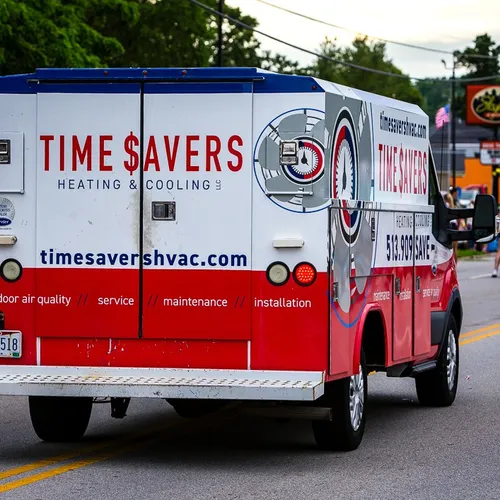
Time Savers Heating & Cooling LLC
420 Wards Corner Rd # B, Loveland, OH 45140
Time Savers Heating & Cooling LLC is a locally owned HVAC company serving Cincinnati, OH, and nearby communities. With over 32 years of experience, they provide residential and commercial heating and air conditioning services including repair, installation, and tune-ups. The company is known for ethical practices and thorough inspections, offering services such as gas furnace repair and HVAC system diagnostics. They serve multiple areas around Cincinnati, including Blue Ash, Indian Hill, and Loveland.
Watson Heating and Cooling
3788 Dead Timber Rd, California, KY 41007
Watson Heating and Cooling is a small business serving Cincinnati, OH, specializing in heating, cooling, and indoor air quality services. They provide installation, maintenance, and repair for air conditioners, furnaces, heat pumps, and HVAC systems. Their offerings also include duct cleaning, whole home air purifiers, odor control, and humidifier installation. The company emphasizes preventative maintenance plans to help customers maintain comfort throughout the year. Watson Heating and Cooling is known for its trained and licensed technicians who focus on personalized service for local residents.
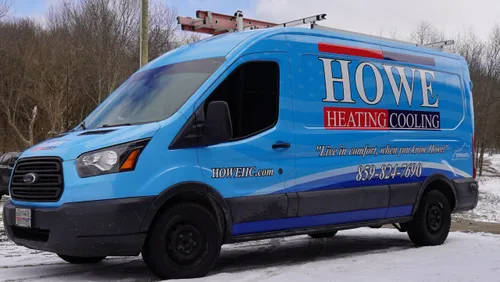
Howe Heating & Cooling
8397 US-42, Florence, KY 41042
Howe Heating & Cooling provides heating, air conditioning, and indoor air quality services in Cincinnati, OH. They offer repair and installation for HVAC systems, including furnaces and air conditioners, with a focus on maintaining comfortable home environments. The company serves Northern Kentucky communities and is staffed by trained and licensed technicians who emphasize precision and professionalism. Howe Heating & Cooling is experienced in delivering quality HVAC solutions and offers advanced indoor air quality services to improve home air freshness.
High Performance Heating and Air
Cincinnati, OH
High Performance Heating and Air is an HVAC company based in Cincinnati, OH, offering a wide range of heating and cooling services. Their expertise includes air conditioning repair and installation, furnace and heat pump repair and replacement, ductless and mini split system installation, as well as indoor air quality services such as duct cleaning, air purifiers, and dehumidifiers. They also provide commercial HVAC services and sheet metal forming. The company emphasizes regular maintenance and tune-ups to improve system efficiency and indoor air quality.
Understanding the Furnace Repair Process
A professional heating repair in Cincinnati typically follows a structured approach to ensure a thorough and safe resolution. The technician will start with a diagnosis, checking the thermostat settings, electrical power, and air filter before moving on to inspect internal components like the ignitor, flame sensor, blower motor, and heat exchanger 1 2. This systematic troubleshooting helps pinpoint the exact issue.
Once the problem is identified, the repair phase begins. Simple fixes, such as replacing a dirty filter or a faulty ignitor, can be completed quickly. More complex repairs, like replacing a control board or blower motor, take longer and may require ordering specific parts. Finally, the technician will test the entire system to verify it operates safely, efficiently, and effectively before considering the job complete 3 4.
Common Furnace Problems in Cincinnati Homes
Cincinnati's cold winters put consistent demand on heating systems, leading to a few recurring issues. Understanding these can help you identify potential problems early.
- Ignitor or Flame Sensor Failure: This is one of the most common reasons a furnace won't ignite or stay lit 5. The ignitor creates the spark to light the gas, while the flame sensor confirms a flame is present. If either fails, the furnace will not produce heat. Fortunately, this is often a relatively quick repair.
- Dirty Air Filters: A clogged filter is a simple but frequent culprit. It restricts airflow, forcing your furnace to work harder, which reduces efficiency, increases wear, and can even cause the system to overheat and shut off 6. Replacing the filter is an easy fix and a critical part of routine maintenance.
- Blower Motor Issues: If you hear the furnace turn on but feel little to no warm air coming from the vents, the blower motor may be failing. Repair times and costs for this component can vary significantly depending on the specific problem.
- Thermostat Malfunctions: Sometimes the issue isn't with the furnace itself but with its command center. Problems can range from dead batteries and incorrect settings to a complete failure of the thermostat unit, requiring replacement.
- Cracked Heat Exchanger: This is a serious and potentially dangerous problem. The heat exchanger separates combustion gases from your home's breathable air. A crack can allow carbon monoxide to leak into your living space. Due to the safety risk and high cost of replacement, a cracked heat exchanger often leads to a recommendation for a full furnace replacement.
What to Expect: Repair Timelines and Costs
The time required for a furnace fix depends entirely on the complexity of the issue. Basic repairs, like replacing an ignitor or thermostat, can often be completed in under two hours 7. More involved jobs, such as replacing a blower motor or control board, may take up to four hours or longer if parts need to be sourced. For emergency service calls, many local companies prioritize a faster response time to restore heat quickly.
Costs for heating system repair in Cincinnati vary based on the part needed and the labor involved. Here's a general breakdown based on common repairs:
- $100 - $300: For smaller components like a faulty ignitor, flame sensor, or thermostat.
- $300 - $600: For mid-level parts such as a blower motor or control board.
- $150 - $500: For a gas valve replacement.
- $2,000 - $3,500+: For a major repair like a heat exchanger replacement. At this price point, it's often more economical to consider replacing the entire furnace unit 8 9.
Find the perfect furnace repair companies for your needs
Get personalized recommendations and expert advice
The Importance of Annual Furnace Maintenance
The best way to avoid unexpected and costly breakdowns is with proactive care. Scheduling an annual furnace tune-up, typically in the fall before the heating season begins, is a wise investment. For about $80 to $200, a technician will clean, inspect, and adjust your system 10 11 12.
This preventative service can catch minor issues-like a slightly dirty sensor or a worn belt-before they turn into major failures. It also ensures your system runs at peak efficiency, which can lower your energy bills. As furnaces age (most have a lifespan of 15-20 years), these check-ups become even more critical for extending the unit's life and reliability.
Furnace Repair vs. Replacement: Making the Right Choice
When facing a significant repair, especially on an older system, it's important to weigh the cost against replacement. A simple rule of thumb is to consider replacement if the repair cost is more than half the price of a new, high-efficiency furnace and your system is over 10-15 years old. Newer models offer substantially better energy efficiency, which can lead to long-term savings on utility bills.
A cracked heat exchanger is a definitive tipping point. Given the high repair cost and paramount safety concern, replacement is almost always the recommended and safest course of action. A qualified technician can provide a detailed assessment and help you make the most cost-effective and safe decision for your Cincinnati home.
Frequently asked questions
Sources
Footnotes
-
Furnace Repair in Cincinnati and Hamilton County - https://www.onehourheatandair.com/cincinnati/services/furnaces/furnace-repair/ ↩
-
6 Important Things to Check Before Scheduling a Service Call - https://acmasters.com/6-things-to-check-before-scheduling-a-service-call/ ↩
-
HVAC Troubleshooting Guide: Step-by-Step Solutions Made Easy - https://projecthvac.com/2026/01/07/hvac-troubleshooting-guide-step-by-step/ ↩
-
Common HVAC Troubleshooting Scenarios: A Technician's Guide - https://www.servicetitan.com/blog/hvac-troubleshooting-scenarios ↩
-
What Is The Most Common Part to Fail on a Furnace? - https://www.myqualitycomfort.com/general/what-is-the-most-common-part-to-fail-on-a-furnace/ ↩
-
9 Reasons Your Furnace Is Losing Efficiency - Santa Energy - https://www.santaenergy.com/reasons-your-furnace-is-losing-efficiency/ ↩
-
Cincinnati Furnace Repair Service - Thomas & Galbraith - https://thomasgalbraith.com/furnace-repairs/ ↩
-
Cracked Heat Exchanger: What Does It Mean? - Trane - https://www.trane.com/residential/en/resources/troubleshooting/gas-furnaces/cracked-heat-exchanger/ ↩
-
What to Do If Your Furnace Has a Cracked Heat Exchanger - Lennox - https://www.lennox.com/residential/lennox-life/consumer/furnace-cracked-heat-exchanger ↩
-
How Long Does It Usually Take to Repair a Furnace?. - https://www.tcmemt.com/post/how-long-does-it-usually-take-to-repair-a-furnace ↩
-
Furnace Maintenance Services in Ohio: What to Expect - https://buckeyecomfortsolutions.com/blog/furnace-maintenance-services-in-ohio-what-to-expect/ ↩
-
Furnace Repair vs. Furnace Replacement: When Is the Right ... - https://www.myfivestarhomeservices.com/furnace-repair-vs-furnace-replacement-ohio/ ↩