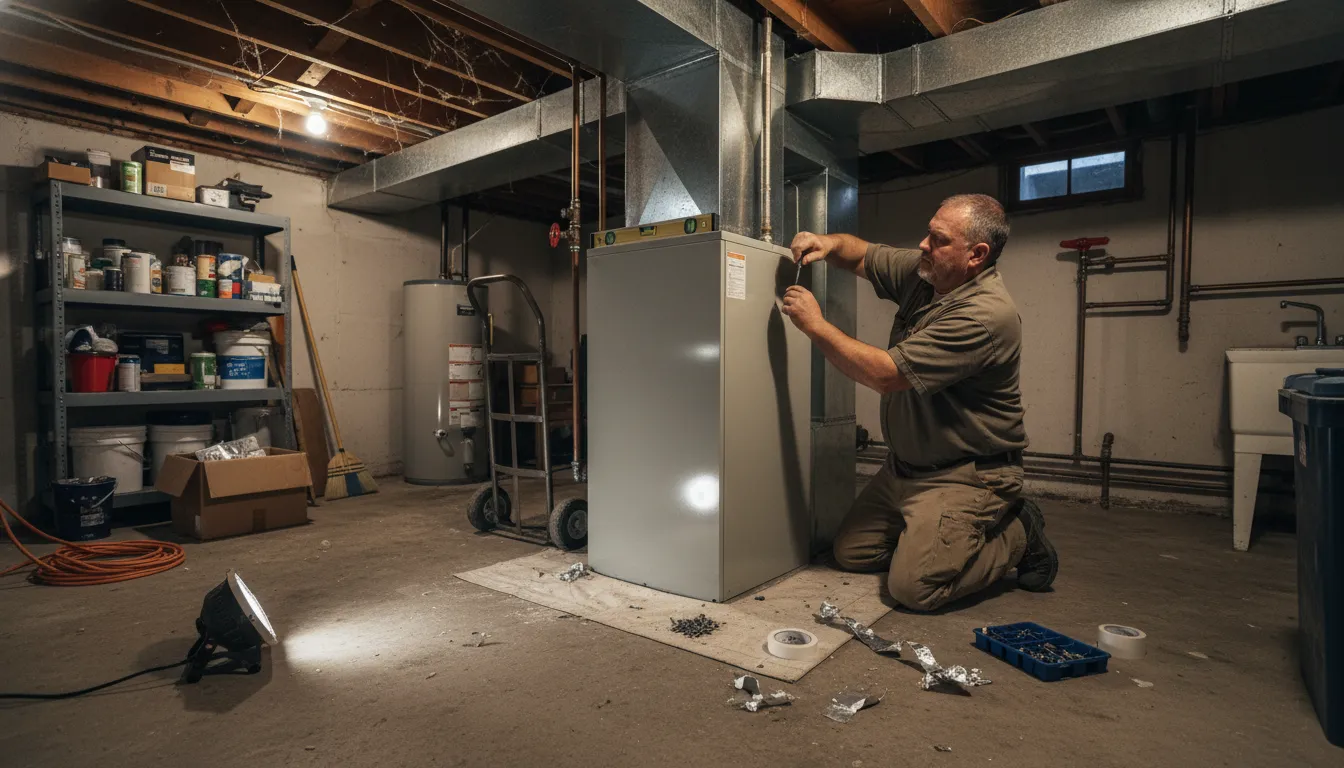
Find the Best Furnace Installation & Replacement Contractors for Your Business
No obligation • Fast responses • Nationwide coverage

Why you can trust HVAC Firms
HVAC Firms is a leading United States resource for evaluating HVAC service providers. Our team researches companies, checks credentials, and reviews customer feedback to present clear, unbiased information. Listings and rankings are based on merit, and companies cannot pay to change our editorial content.
Search providers near you
Top Furnace Installation & Replacement Contractors in Santa Cruz, California Ranked
Replacing your home's furnace in Santa Cruz is more than just swapping an old unit for a new one. It's a critical home improvement that ensures comfort, manages energy costs, and protects your investment against the unique coastal climate. With strict California energy codes and the specific challenges of salty, humid air, choosing the right heating system and a qualified installer is essential. This guide will help you understand the local considerations, costs, and processes for a successful furnace installation or replacement project.
Fuse service
349 Everett Ave, Palo Alto, CA 94301
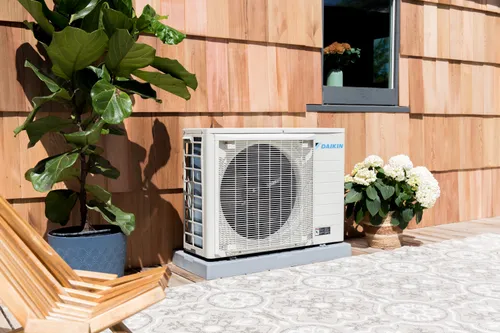
Fuse Service is an HVAC company serving Fremont, CA, offering heating and air conditioning installation, repair, and maintenance. Their services include AC and heat pump repair, furnace installation, and HVAC tune-ups. They also provide refrigeration, electrical, and plumbing services, including hydro jetting and water heater installation. Fuse Service emphasizes licensed and certified technicians, up-to-date training, and offers warranties on parts and labor.
Freon HVAC, Electrical & Appliance
299 E McGlincy Ln Suite A, Campbell, CA 95008
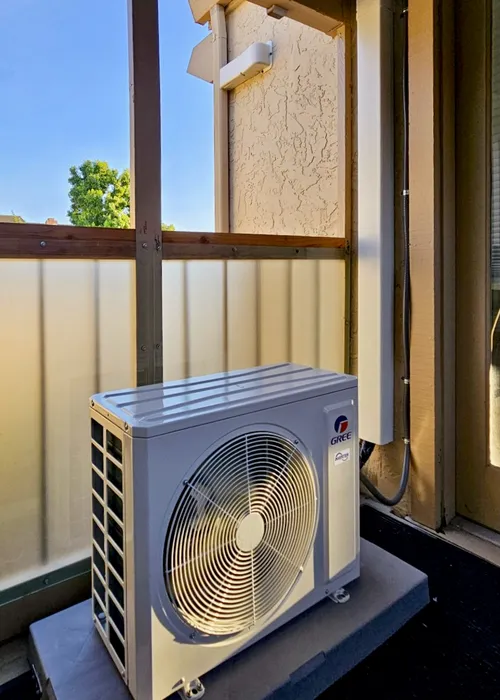
Freon HVAC, Electrical & Appliance provides a range of heating and air conditioning services in San Jose, CA. They specialize in HVAC installation, repair, and maintenance, including air conditioning, furnaces, heat pumps, mini splits, and thermostat installation. Their team handles ductwork repair and indoor air quality services to support comfortable indoor environments. Freon HVAC offers expertise in refrigerant replacement and commercial HVAC solutions, focusing on efficient system operation throughout the year.
Trio Heating & Air Hayward
Oakland, CA
Trio Heating & Air Hayward is an HVAC company serving Oakland, CA, specializing in heating, air conditioning, and heat pump repair and installation. They are the only Daikin 3E Partner in California, offering eco-friendly conversions of gas furnaces to heat pumps for enhanced efficiency. With over 10 years as a local industry leader, Trio Heating & Air Hayward provides 24/7 service to meet residential HVAC needs.
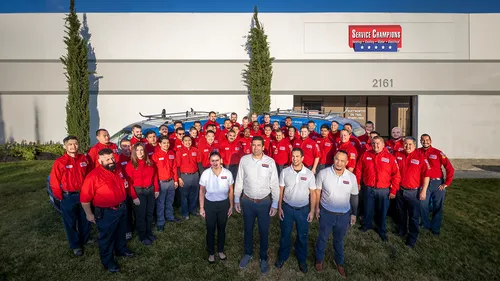
Service Champions
2161 Del Franco St, San Jose, CA 95131
Service Champions is a home services provider based in San Jose, CA, offering a wide range of services including heating and air conditioning repair and installation, plumbing, electrical work, insulation, ductwork, and water filtration. Serving San Jose and the greater Santa Clara County area, they specialize in HVAC tune-ups, furnace and air conditioner maintenance, and drain and sewer services such as hydro jetting. Established in 2003, Service Champions has over two decades of experience supporting local homeowners. They also provide 24/7 emergency service for urgent home system needs.
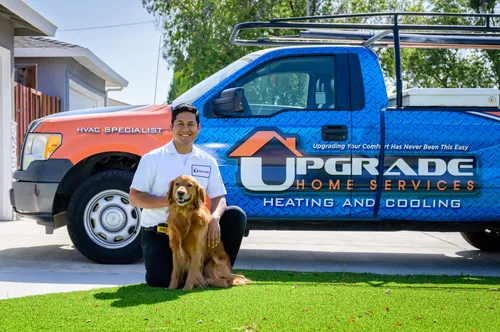
Upgrade Home Services, HVAC
743 Ames Ave, Milpitas, CA 95035
Upgrade Home Services, HVAC is a family-owned company serving San Jose, CA, and the surrounding Bay Area since 2002. They provide a range of HVAC services including air conditioning, furnace, heat pump, and mini split installation and repair, as well as indoor air quality testing and improvements. The company is experienced in handling all major HVAC brands and offers tailored solutions for both basic maintenance and complex home remodeling projects. Their expertise includes helping customers transition to energy-efficient electric heat pump systems. Upgrade Home Services is committed to maintaining comfortable home environments year-round.
Understanding Santa Cruz's Unique Heating Challenges
Living near the coast presents specific environmental factors that directly impact your home's heating system. A standard furnace installed elsewhere may not perform optimally or last as long in Santa Cruz without special considerations.
Salt Air Corrosion: The proximity to the ocean means your furnace is constantly exposed to salty, humid air. This can accelerate rust and corrosion on metal components like heat exchangers, flue pipes, and electrical connections, potentially reducing the equipment's lifespan and efficiency 1. Systems installed here often benefit from corrosion-resistant materials and more frequent maintenance checks.
Humidity and Mold Prevention: The famous coastal fog and high humidity levels require a robust system. Inefficient or poorly maintained ductwork in a damp environment can become a breeding ground for mold and mildew, which are then circulated throughout your home. Proper system sizing, installation, and regular duct cleaning are vital for indoor air quality.
Temperature Variability: Santa Cruz experiences chilly mornings and evenings with warmer afternoons, especially in the shoulder seasons. This means your system frequently cycles between heating and cooling (if you have a heat pump or central AC), placing more stress on components 2. A properly sized and efficient system is key to handling these swings without excessive energy use.
Local Climate Zones: Santa Cruz County falls under Climate Zones 3 and 4, which building codes and HVAC professionals use to determine the correct equipment specifications and insulation requirements for maximum efficiency.
Types of Heating Systems for Santa Cruz Homes
When considering a new furnace or heating system, you have several options suited to the local regulations and climate.
Natural Gas Furnaces (High-Efficiency): This remains the most common choice for whole-home heating, providing quick, powerful warmth. Critically, any new natural gas furnace installed in California must be an "Ultra-Low NOx" model to meet the state's stringent emissions standards aimed at improving air quality 3. These high-efficiency units (often 90% AFUE or higher) convert more fuel to heat, saving on gas bills.
Electric Furnaces and Heat Pumps: Driven by California's push toward electrification, these systems are growing in popularity. Air-source heat pumps are particularly recommended for their energy efficiency, as they provide both heating and cooling from one unit. They work well in Santa Cruz's moderate winters and can be a great option for homes without gas lines. Electric furnaces are another option, though they can be more expensive to operate depending on local electricity rates.
Ductless Mini-Split Heat Pumps: Ideal for homes without existing ductwork, for room additions, or for targeting specific zones. They are highly efficient and avoid the potential energy losses associated with ductwork.
Wall Heaters: Common in many older, smaller Santa Cruz homes, these unvented or vented gas heaters are a budget-friendly, space-saving option for heating individual rooms. They are not a whole-home solution but can be practical for certain layouts.
Package Units: These are all-in-one systems that house both heating and cooling components in a single cabinet, typically installed on the ground outside. They are a solution for homes without attics or basements for traditional split-system equipment 4.
The Furnace Installation & Replacement Process: A Step-by-Step Guide
A professional furnace replacement is a multi-step process that ensures safety, compliance, and optimal performance.
-
Initial Consultation and Load Calculation: A reputable contractor will not simply recommend the same size as your old unit. They will perform a Manual J load calculation, considering your home's square footage, insulation, window quality, and Santa Cruz's climate zone to determine the precise heating capacity (in BTUs) needed. An oversized or undersized furnace leads to inefficiency and comfort issues.
-
System and Equipment Selection: Based on the load calculation, your budget, and your home's infrastructure (e.g., existing ductwork, gas line), the contractor will help you select the appropriate type and model of furnace. They will ensure any gas furnace meets the current Ultra-Low NOx standards.
-
Permitting: A permit is required in Santa Cruz County for all furnace replacements 5. Your contractor typically handles this, pulling the necessary permits from the local building department. This step is crucial as it triggers the required inspections to ensure the work is done to code.
-
Removal of Old Equipment: The old furnace is safely disconnected from the gas line, electrical supply, and venting system. It is then removed from your home and properly disposed of or recycled.
-
Preparation and Modifications: The installation area is prepared. This may involve modifying the existing platform, adjusting ductwork connections for optimal airflow, or upgrading the electrical service to the new unit 6. Proper duct sealing is performed to prevent energy loss.
-
New Furnace Installation: The new, compliant furnace is set in place, leveled, and securely fastened. All connections are made: gas line (with a new shut-off valve if needed), electrical wiring, condensate drain line, and new venting that meets current safety codes.
-
System Start-up and Testing: The contractor will start the furnace, calibrate the burner, test all safety switches (like the flame rollout and limit switches), check for gas leaks, and measure airflow at the registers to ensure it matches design specifications 7 8. They will also program your thermostat.
-
Final Inspection: After installation, a city or county inspector will visit to verify the installation complies with all mechanical, gas, and building codes. Once it passes, your permit is finalized 9.
Find the perfect furnace installation & replacement contractors for your needs
Get personalized recommendations and expert advice
Understanding Costs for Furnace Replacement in Santa Cruz
It's important to budget accurately. Prices in the Santa Cruz and greater Bay Area are typically 20-30% higher than the national average due to higher labor costs, stringent code requirements, and general market demand.
Average Total Cost: For a complete, professional installation of a mid-range, high-efficiency furnace, homeowners can expect a total cost ranging from $5,000 to $9,500 10. This includes the unit, labor, standard materials, and basic duct modifications.
Cost Breakdown:
- Budget/Small Home (Low-end): $4,000 - $5,500
- High-Efficiency/Large Home (High-end): $10,000 - $13,000+
- Permit Fees: Typically $450 - $650
- Additional Testing: Some jurisdictions may require a HERS (Home Energy Rating System) test, adding $200-$400 11 12.
These costs are for a standard replacement. Significant ductwork modifications, moving the furnace location, or upgrading ancillary systems will add to the total.
Navigating California's Evolving HVAC Regulations
Staying compliant is non-negotiable. Two key regulatory frameworks affect furnace installation in Santa Cruz:
Title 24, Part 6 (California Energy Code): This code sets strict energy efficiency standards for all new and replacement appliances. It dictates the minimum efficiency ratings (AFUE for furnaces) for equipment installed in the state 13. Your contractor must be familiar with the latest version.
Ultra-Low and Zero NOx Emissions Standards: To combat air pollution, the Bay Area Air Quality Management District (BAAQMD) and other air districts have enacted rules phasing out conventional gas furnaces. Ultra-Low NOx furnaces (with emissions ≤ 14 nanograms per Joule) are currently required. Notably, a move to Zero-NOx emission standards (effectively requiring electric heat pumps or other non-combustion heating) is scheduled for 2029 in the BAAQMD region, which influences long-term planning 14.
Choosing the Right Contractor in Santa Cruz
Your installer is as important as the equipment. Look for a licensed, insured contractor with specific experience in Santa Cruz County. They should:
- Pull permits for every job.
- Perform a formal load calculation.
- Explain code compliance, including Ultra-Low NOx requirements.
- Provide a detailed, written estimate that breaks out equipment, labor, and permit costs.
- Offer references from local projects.
- Carry certifications from organizations like NATE (North American Technician Excellence).
The Future of Heating in Santa Cruz
With the regulatory push toward electrification and zero emissions, many homeowners are looking at heat pumps as a future-proof investment. Even if you install a high-efficiency Ultra-Low NOx gas furnace today, understanding that the next replacement may likely be an electric system is wise. Investing in good ductwork and proper insulation now will benefit any future system you choose.
Frequently asked questions
Sources
Footnotes
-
Antioch Heating Repair - 24/7 Service | Heater Repair in The Bay Area - https://www.californiahc.com/heating/heating-repair/ ↩
-
Why HVAC Maintenance Matters in Santa Cruz | Bogner Blog - https://www.bognerhvac.com/post/why-hvac-maintenance-matters-in-santa-cruz ↩
-
Ultra Low NOx Furnace Requirements CA | Fresno Guide 2025 - Allbritten - https://allbritten.com/ultra-low-nox-furnace-requirements-california/ ↩
-
Best Home Heating Systems for Northern California Homes - https://www.servicechampions.net/blog/the-best-types-of-home-heating-systems-for-northern-california-homes ↩
-
RESIDENTIAL FURNACE - Contra Costa County - https://www.contracosta.ca.gov/DocumentCenter/View/44632/Residential-Furnace-PDF?bidId= ↩
-
Reliable Furnace Installation in Monterey & Santa Cruz, CA - https://www.chriswilsonplumbing.com/heating/furnace-installation/ ↩
-
How to Install a Furnace | Furnace Installation Tips - https://www.carrier.com/residential/en/us/products/furnaces/furnace-installation/ ↩
-
Complete Furnace Replacement Guide for 2026 - https://www.budgetheating.com/blog/complete-furnace-replacement-guide/ ↩
-
RESIDENTIAL FURNACE - Contra Costa County - https://www.contracosta.ca.gov/DocumentCenter/View/44632/Residential-Furnace-PDF?bidId= ↩
-
Furnace Replacement Cost in California - https://airandplumbing.com/how-much-does-it-cost-to-replace-furnace-your-complete-guide/ ↩
-
New Heating System Costs in Southern California Explained - https://www.callwiseowl.com/blog/understanding-new-heating-system-costs-in-southern-california/ ↩
-
San Jose Furnace Replacement: 2025 Costs, Options & What ... - https://bayareaclimatecontrol.com/blog/san-jose-furnace-replacement-cost-2025/ ↩
-
Building Design - 2025 Code Criteria - Santa Cruz County - https://cdi.santacruzcountyca.gov/UPC/BuildingPermitsSafety/BuildingPermitsIndex/BuildingCodesResources/BuildingDesign%E2%80%932025CodeCriteria.aspx ↩
-
What You Need to Know About HVAC Regulations in the East Bay - https://www.hasslerheating.com/blog/2024/april/what-you-need-to-know-about-hvac-regulations-in-/ ↩