Find the Best Furnace Installation & Replacement Contractors for Your Business
No obligation • Fast responses • Nationwide coverage

Why you can trust HVAC Firms
HVAC Firms is a leading United States resource for evaluating HVAC service providers. Our team researches companies, checks credentials, and reviews customer feedback to present clear, unbiased information. Listings and rankings are based on merit, and companies cannot pay to change our editorial content.
Search providers near you
Top Furnace Installation & Replacement Contractors in Santa Ana, California Ranked
A properly installed furnace is the cornerstone of a comfortable and energy-efficient home, especially during Santa Ana's cooler winter months. Whether you're replacing an aging, inefficient unit or installing a new heating system, this process involves critical decisions about equipment type, sizing, and professional installation to ensure safety, reliability, and long-term savings. This guide provides a detailed overview of what Santa Ana homeowners need to know about furnace installation and replacement, from understanding local climate considerations to navigating the installation process and finding qualified local professionals.
All City Plumbing, Air & Electrical
5612 E La Palma Ave, Anaheim, CA 92807
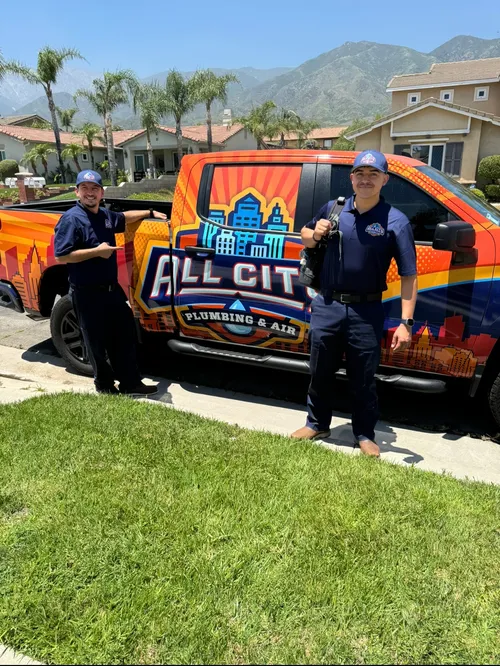
All City Plumbing, Air & Electrical is a full-service provider based in Anaheim, CA, offering plumbing, HVAC, and electrical services. They serve residential and commercial customers with repair, installation, and maintenance for air conditioning, furnaces, thermostats, and indoor air quality systems. The company is known for its ACE-certified technicians and uses advanced technology such as hydro jetting for plumbing services. With over 13 years in business, All City Plumbing, Air & Electrical provides 24/7 emergency service to address urgent HVAC and plumbing needs.
1st Choice Heating & Air Conditioning, Inc.
23372 Madero Suite B, Mission Viejo, CA 92691
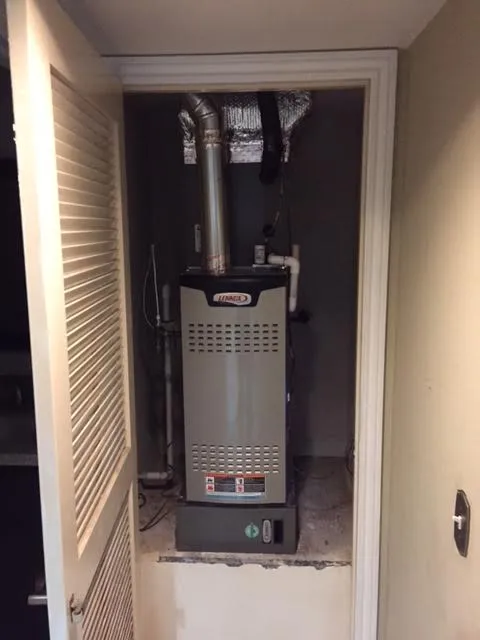
1st Choice Heating & Air Conditioning, Inc. provides a wide range of HVAC services in Anaheim, CA. Their offerings include installation, repair, and maintenance of air conditioners, furnaces, heat pumps, mini-split systems, and thermostats, along with indoor air quality solutions. As a Lennox Premier Dealer and recipient of the Centurion Award, they specialize in Lennox products and deliver energy-efficient heating and cooling systems. Their technicians are trained to handle various HVAC needs, from tune-ups to system replacements, ensuring comfort throughout the year.
Mission Viejo Heating & Air
22600 Lambert St Suite 1101, Lake Forest, CA 92630
Mission Viejo Heating & Air provides heating and air conditioning repair and installation services in Long Beach, CA. They offer tailored HVAC solutions for homes and businesses, focusing on energy efficiency and durability. The company is available seven days a week to assist with heating and AC repairs and installations, ensuring customer comfort throughout the year.
Sano Heating & Air Conditioning
5546 E La Palma Ave, Anaheim, CA 92807
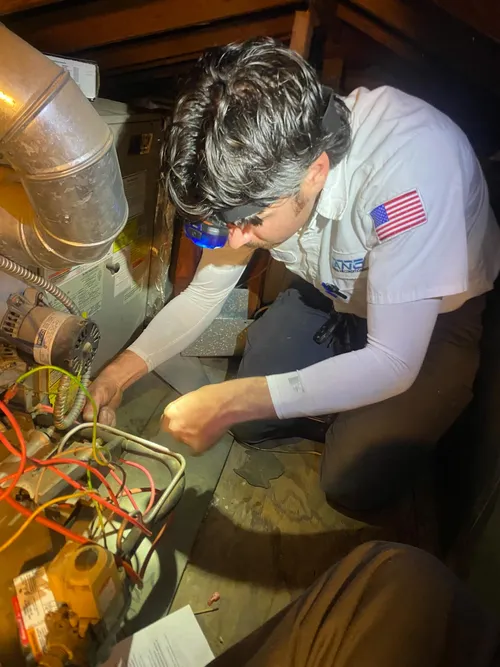
Sano Heating & Air Conditioning is an HVAC company based in Anaheim, CA, providing a range of heating and cooling services. They offer repair and installation for air conditioners, furnaces, heat pumps, mini splits, and perform HVAC tune-ups. The company also specializes in indoor air quality solutions and energy-efficient options like ductless and zoned systems. Serving Anaheim and the surrounding Orange County area, they handle new construction projects and have sheet metal capabilities to support their HVAC services.
Comfort Time Plumbing Heating & Cooling
8038 Freestone Ave, Santa Fe Springs, CA 90670
Comfort Time Plumbing Heating & Cooling is a family-owned company based in Los Angeles, CA, providing comprehensive HVAC and plumbing services for homes and businesses. They specialize in the repair and installation of air conditioning, furnaces, heat pumps, boilers, mini splits, and commercial refrigeration systems. Comfort Time Plumbing Heating & Cooling offers same-day service and uses advanced techniques such as trenchless sewer line replacement to address plumbing issues efficiently. Since 2008, they have served the local community with trained technicians who maintain up-to-date certifications and prioritize respect for customers' homes.
Understanding Santa Ana's Heating Needs
Santa Ana's Mediterranean climate features hot, dry summers and notably mild winters 1. This means heating demands are generally less intense than in colder northern regions, but reliable warmth on chilly evenings and during occasional cold snaps is still essential. This specific climate profile directly influences the ideal choices for heating systems, balancing upfront cost with operational efficiency. For many homes, a correctly sized, mid-efficiency furnace or a versatile heat pump can be the most cost-effective and comfortable solution year-round.
Key Climate Considerations for Your Furnace
- Moderate Heating Load: The primary heating season is shorter and less severe, which can make high-efficiency upgrades have a longer payback period compared to very cold climates. However, efficiency still matters for monthly utility bills.
- Year-Round HVAC Use: Many residents use their HVAC systems for cooling far more often than for heating. This makes dual-function systems like heat pumps particularly attractive.
- Dry Air: The arid climate can affect indoor air quality when heating systems run, highlighting the potential benefit of systems with integrated humidification or advanced air filtration.
Choosing the Right Furnace for Your Home
Selecting a new furnace or heating system is not a one-size-fits-all decision. The best choice depends on your home's size, existing infrastructure (like gas lines), and your budget for both installation and long-term energy use.
Types of Heating Systems Popular in Santa Ana
Natural Gas Furnaces The most common choice for Santa Ana homes with access to natural gas lines 2. They are favored for their operational efficiency and lower fuel costs compared to standard electric resistance heating. Modern gas furnaces are quiet, reliable, and available in a wide range of efficiency ratings.
Electric Furnaces A viable alternative for homes without access to natural gas 3. They typically have a lower upfront installation cost but can lead to higher monthly energy bills due to Southern California's electricity rates. They are often simpler to install as they don't require gas line or venting work.
Heat Pumps An increasingly popular and highly energy-efficient option for the Santa Ana climate. Heat pumps work by transferring heat rather than generating it, providing both heating and cooling from one unit. For a climate with moderate heating needs, a heat pump can be an excellent all-in-one solution. The Department of Energy notes their high efficiency for mild climates 4.
Dual-Fuel Systems This advanced option combines a heat pump with a gas furnace 5. The system intelligently switches between the two based on outdoor temperature, using the efficient heat pump for moderate cooling and heating and the powerful gas furnace for colder periods, optimizing comfort and operating costs.
Efficiency Ratings: What AFUE Means for You
A furnace's efficiency is measured by its Annual Fuel Utilization Efficiency (AFUE) percentage. This rating tells you how much of the fuel consumed is converted into usable heat for your home.
- Standard Efficiency (80% AFUE): These units convert 80% of fuel to heat, losing 20% through exhaust. They are a common, cost-effective choice that meets federal minimum standards and is well-suited to Santa Ana's climate 6.
- High Efficiency (90% to 95% AFUE): These condensing furnaces capture more heat from combustion gases, resulting in higher efficiency. They cost more upfront but offer greater energy savings.
- Ultra-High Efficiency (96%+ AFUE): The most efficient models available, offering maximum fuel savings. The premium price is often justified in larger homes or for homeowners prioritizing the lowest possible carbon footprint and utility bills 7.
The Critical Importance of Correct Sizing
Perhaps the most crucial technical aspect of furnace installation is proper sizing, measured in British Thermal Units (BTUs) of output. An HVAC professional performs a detailed load calculation (like a Manual J calculation) to determine the exact needs of your home.
- An Oversized Furnace will heat your home too quickly, causing short, frequent cycles (short-cycling). This leads to uneven temperatures, increased wear and tear, higher energy bills, and reduced humidity control.
- An Undersized Furnace will run constantly in an attempt to reach the thermostat setting, struggling to keep your home warm on the coldest days and driving up energy costs due to continuous operation 8.
Find the perfect furnace installation & replacement contractors for your needs
Get personalized recommendations and expert advice
The Professional Installation Process Explained
A professional furnace installation is a multi-step process that ensures safety, compliance with local codes, and optimal system performance. It is not a DIY project due to the complexities of gas, electrical, and refrigerant connections.
1. Initial Consultation and Load Calculation A certified technician will visit your home to assess your needs, discuss options, and perform the essential load calculation to determine the correct system size and type 9.
2. Permitting Reputable contractors will pull all required permits from the City of Santa Ana before work begins. This ensures the installation will be inspected and meet all safety and building codes 10.
3. Removal of the Old Unit The existing furnace is safely disconnected from the gas line, electrical supply, and ductwork, then removed from the premises.
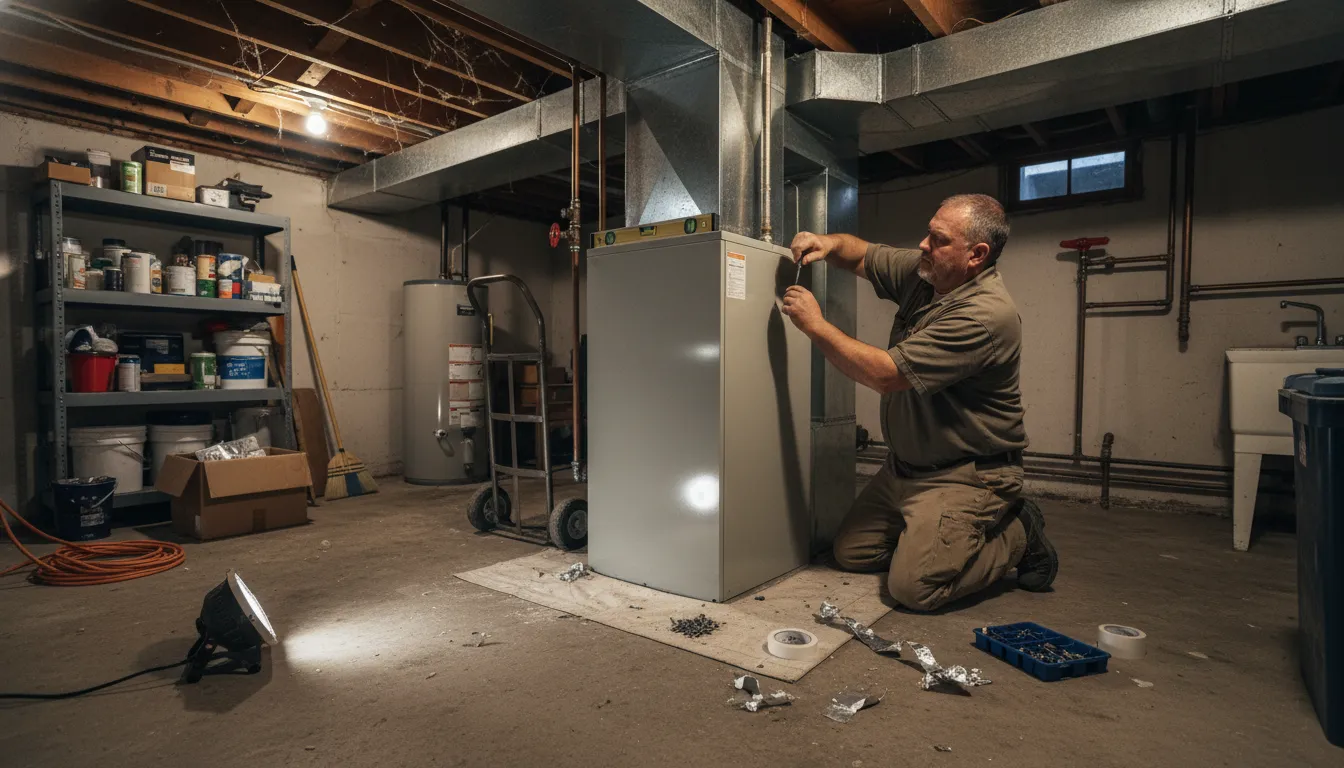
4. Preparation and Placement The installation area is prepared, and the new furnace is carefully positioned, leveled, and secured on a proper platform or pad 11.
5. Making Critical Connections The new unit is connected to the home's gas line (for gas furnaces), electrical system, and existing ductwork. All duct connections are sealed with mastic or metal-backed tape to prevent air leaks, which are a major source of efficiency loss.
6. Venting and Combustion Air For gas furnaces, new venting (flue pipes) is installed to safely exhaust combustion gases outside. Proper provisions for combustion air intake are also made to ensure safe and efficient operation 12.
7. System Testing and Startup The technician powers up the system, tests for gas leaks (if applicable), checks ignition sequences, verifies proper airflow, and calibrates the thermostat. Safety checks, including verifying carbon monoxide levels, are paramount 13.
8. Homeowner Orientation Finally, the installer will walk you through the basic operation of your new furnace, explain the thermostat settings, and review the manufacturer's maintenance recommendations 14.
Understanding Furnace Installation & Replacement Costs in Santa Ana
Costs for a new furnace installation can vary widely based on the system type, efficiency, home size, and complexity of the installation (e.g., attic vs. garage placement, need for new ductwork). The following table provides general price ranges for the Santa Ana area, inclusive of the unit, materials, and professional labor 15 16.
| Furnace Type | Installed Price Range (SoCal) | Typical Home Size |
|---|---|---|
| Entry-level Gas (80% AFUE) | $5,500 - $9,500 | Up to 1,200 sq. ft. |
| Mid-range Gas (90-95% AFUE) | $7,500 - $10,000 | 1,200 - 2,000 sq. ft. |
| High-efficiency Gas (96%+ AFUE) | $10,000 - $13,000 | 2,000+ sq. ft. |
| Electric Furnace | $3,500 - $7,000 | Varies |
Note on Heat Pumps: As a combined heating and cooling system, heat pump installation costs are generally comparable to the mid-to-high range of gas furnace costs, with significant variation based on capacity and efficiency (SEER2/HSPF2 ratings).
Several factors influence the final price:
- System Efficiency: Higher AFUE ratings command a higher price for the unit.
- Unit Capacity: Larger BTU output for bigger homes increases cost.
- Installation Complexity: Installations in attics, crawlspaces, or those requiring new gas lines, electrical circuits, or duct modifications add to labor and material costs 17.
- Brand and Features: Premium brands and models with advanced modulating burners or smart connectivity features will be more expensive.
Maintaining Your New Furnace
Protecting your investment requires regular maintenance. An annual professional tune-up before the heating season is recommended. This service typically includes cleaning the burners and heat exchanger, checking gas pressure, testing safety controls, changing the air filter, and inspecting the venting system. Homeowners should replace the air filter every 1-3 months to maintain airflow and efficiency.
Frequently asked questions
Sources
Footnotes
-
How to Choose the Right Heating System in Southern California - https://comfortbros.com/blog/how-to-choose-the-right-heating-system-in-southern-california/ ↩
-
Explore Furnaces And Heat Pumps: Top 2 Proven Heating ... - https://socalclimatecontrol.com/furnaces-and-heat-pumps-southern-ca/ ↩
-
New HVAC System Cost Calculator: Get a Custom Estimate in 2025 - https://modernize.com/hvac/cost-calculator ↩
-
Heat Pump Systems | Department of Energy - https://www.energy.gov/energysaver/heat-pump-systems ↩
-
How to Choose the Right Furnace for Your Home - https://www.threeriversheatingandair.com/blog/2024/october/how-to-choose-the-right-furnace-for-your-home/ ↩
-
New Heating System Costs in Southern California Explained - https://www.callwiseowl.com/blog/understanding-new-heating-system-costs-in-southern-california/ ↩
-
Furnace Replacement Cost in California - https://airandplumbing.com/how-much-does-it-cost-to-replace-furnace-your-complete-guide/ ↩
-
What Type of Heating System is Right for My House? - https://thomsonac.com/question-how-do-i-know-what-type-of-heating-system-is-right-for-me-and-my-house/ ↩
-
Expert Furnace Installation in Norco, CA - https://www.jerrysheatingandairconditioning.com/heating/furnace-installation-norco-ca ↩
-
RESIDENTIAL FURNACE - Contra Costa County - https://www.contracosta.ca.gov/DocumentCenter/View/44632/Residential-Furnace-PDF?bidId= ↩
-
How to Install Furnace: Step-by-Step Homeowner Guide - https://callwhitney.com/how-to-install-furnace-step-by-step-guide/ ↩
-
Different Types of Furnaces for Your Home Heating Needs - https://totalcomfortcooling.com/different-types-of-furnaces-for-your-home-heating-needs/ ↩
-
Key Steps in Professional Furnace Installation by Our Technicians - https://lcsheatingandcooling.com/blog/furnace-installation-key-steps ↩
-
Understanding the Furnace Installation Process - https://www.powerproplumbing.com/blog/furnace-installation-process ↩
-
2026 Furnace Replacement Cost Guide - Modernize - https://modernize.com/hvac/heating-repair-installation/furnace-cost ↩
-
How Much Does an Air Conditioner Cost for a 2,300-Square-Foot Home? - https://www.thisoldhouse.com/heating-cooling/air-conditioner-cost-for-2300-square-foot-home ↩
-
Santa Ana Gas Line Installation - https://www.pacificplumbingsocal.com/plumbing/gas-lines/ ↩