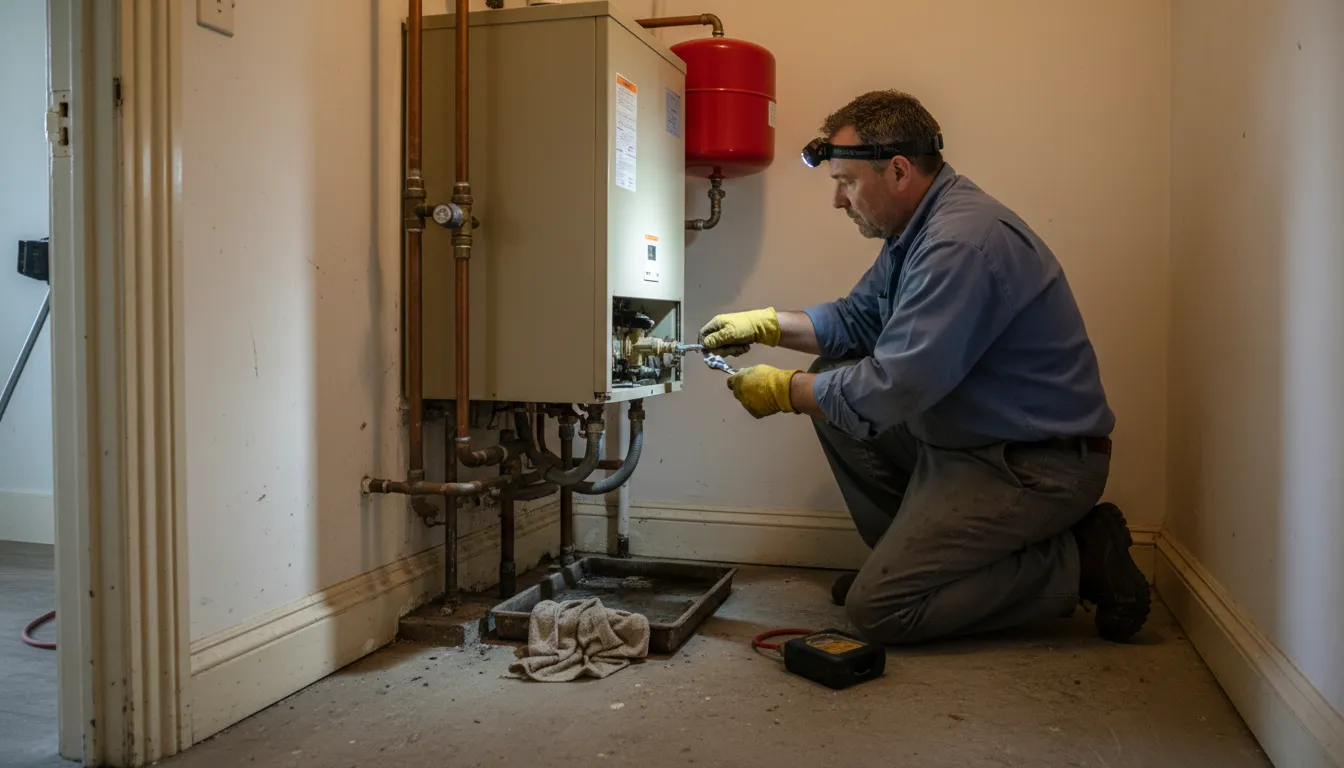
Find the Best Boiler Repair Contractors for Your Business
No obligation • Fast responses • Nationwide coverage

Why you can trust HVAC Firms
HVAC Firms is a leading United States resource for evaluating HVAC service providers. Our team researches companies, checks credentials, and reviews customer feedback to present clear, unbiased information. Listings and rankings are based on merit, and companies cannot pay to change our editorial content.
Search providers near you
Top Boiler Repair Contractors in DeSoto, Texas Ranked
When your boiler stops working, it's more than an inconvenience-it's a disruption to your home's comfort and safety. Boiler repair involves diagnosing and fixing issues with the central heating unit that provides hot water for your radiators, baseboards, or radiant floor systems. In DeSoto, where winters are relatively mild, a well-maintained boiler system is key to efficient, reliable warmth. This guide is designed to help you understand your hydronic heating system, recognize common problems, and connect with qualified local specialists who can restore your home's heat.
Conover Heating & Air
4200 Gus Thomasson Rd Suite 114, Mesquite, TX 75150
Conover Heating & Air is a family-owned HVAC company serving Dallas, TX, and surrounding areas since 1975. They provide residential heating and cooling services including repair and installation of air conditioners, furnaces, heat pumps, and boilers. Their technicians also offer HVAC tune-ups and indoor air quality solutions. With over 50 years of experience, Conover Heating & Air emphasizes honest service without unnecessary upselling and maintains a well-stocked inventory to support long-lasting repairs. Their service area includes Mesquite, Garland, Forney, Rockwall, Fate, Lake Highlands, North Dallas, Richardson, and University Park.

Temp Pro Mechanical
3643 Lawnwood St, Fort Worth, TX 76111
Temp Pro Mechanical provides a full range of HVAC services in Fort Worth, TX, including installation and repair of air conditioners, furnaces, heat pumps, and boilers. Their licensed technicians handle heating, cooling, and ventilation needs with a focus on energy-efficient solutions. The company offers 24/7 emergency services to address urgent HVAC issues promptly.
StrikeForce Heating & Air LLC
9734 Skillman St, Dallas, TX 75243
StrikeForce Heating & Air LLC is an HVAC company based in Dallas, TX, offering installation, repair, and maintenance services for air conditioning, heating systems, heat pumps, boilers, and furnaces. They also provide indoor air quality improvements and energy audits to help customers choose the best solutions for their homes. The company has been serving Dallas and nearby areas since 2011 and is known for servicing all major brands, including Lennox as a preferred Premier Dealer. StrikeForce Heating & Air LLC offers 24/7 emergency repair services for heating and cooling systems, ensuring help is available whenever needed.
Paschal Air, Plumbing & Electric
7120 W Interstate 20, Arlington, TX 76017
Paschal Air, Plumbing & Electric provides HVAC, plumbing, and electrical services in Arlington, TX. They offer repair and installation for air conditioning, furnaces, heat pumps, boilers, mini splits, and geothermal heat pumps. The company handles HVAC tune-ups and maintenance to support system efficiency and longevity.

Houk Air Conditioning DFW
833 111th St, Arlington, TX 76011
Houk Air Conditioning DFW has been serving homeowners in Arlington, TX, and the greater Dallas-Fort Worth area since 1962. They provide a full range of HVAC services including air conditioning, furnace, heat pump, and boiler repair and installation, as well as indoor air quality solutions like air purification and humidification. Their technicians are experienced with both residential and commercial systems, offering thorough diagnostics and repairs tailored to the local climate. Houk Air Conditioning also offers emergency services to address urgent heating and cooling needs.
Understanding Your Hydronic Heating System
Before diving into repairs, it helps to know what you're working with. Most homes in DeSoto with boiler-based heating use a hydronic system. This means the boiler heats water, which is then circulated through a network of pipes to deliver warmth. This is different from a forced-air furnace that heats and blows air through ducts.
The two most common delivery methods in our area are:
- Baseboard Radiators: These are the familiar metal units along walls. Hot water flows through them, and fins on the pipes help radiate heat into the room.
- Radiant Floor Heating: Pipes are embedded in the floor, providing a consistent, even heat that rises from the ground up. This is often considered a premium and highly comfortable option.
The boiler itself is the heart of this system. Common types include efficient gas-fired condensing boilers and, less frequently for whole-home heating, electric boilers. Even with DeSoto's mild climate, these systems require regular attention. Infrequent use can sometimes lead to issues like sediment settling in the lines or components seizing up, making periodic maintenance crucial for preventing mid-winter breakdowns.
Common Boiler Problems and What They Mean
A malfunctioning boiler or hydronic heater will usually give you clear signs that something is wrong. Recognizing these symptoms can help you describe the issue more accurately to a technician.
- Leaks and Drips: Water pooling around the boiler or at radiators is a red flag. Leaks can originate from pressure relief valves, pipe connections, circulator pumps, or within older radiators themselves. Even a small drip can indicate corrosion or a failing seal that needs prompt attention.
- Unusual Noises: Your heating system should operate relatively quietly. Clanging, banging, or whistling sounds (often called "kettling") are typically caused by air trapped in the lines, limescale or sediment buildup on the heat exchanger, or a failing circulator pump.
- Zoning or Heating Imbalances: A key advantage of hydronic systems is the ability to create separate heating zones (e.g., upstairs vs. downstairs). If one zone is cold while others are hot, the problem likely lies with a faulty zone valve, thermostat for that zone, or issues with the circulator pump serving that loop.
- No Heat or Low Pressure: The most obvious problem is a lack of heat. This can be due to a variety of issues: a tripped circuit breaker or blown fuse for electric ignitors, a malfunctioning thermostat, low water pressure in the closed system, or a complete failure of the circulator pump.
The Critical Decision: Repair or Replace Your Boiler?
When faced with a significant boiler issue, homeowners must weigh the cost of a repair against the investment in a new system. This decision isn't always straightforward and depends on several factors.
When Repair is the Right Choice:
- The System is Relatively New: If your boiler is less than 10-12 years old, a repair is often the most economical path.
- The Problem is Isolated: Issues like a single failed zone valve, a faulty circulator pump, or problems with electronic controls are typically repairable without replacing the entire unit.
- The Repair Cost is Proportional: A repair that costs a fraction of a new system's price and extends the unit's life by several years is usually a sound investment.
When Replacement Should Be Considered:
- Age of the Unit: Boilers have a typical lifespan of 15-20 years. If your system is 15 years or older and requires a major repair, replacement often becomes the more reliable and cost-effective long-term solution.
- Major Component Failure: A cracked heat exchanger is a serious safety and efficiency issue that usually warrants replacement of the entire boiler.
- Chronic Inefficiency: Older, non-condensing boilers operate at much lower efficiency (often 70-80%) compared to modern condensing models (90%+ or higher). Upgrading to a high-efficiency boiler, potentially an ENERGY STAR® certified model, can lead to substantial savings on your energy bills, which can help justify the upfront cost over time 1.
- Frequent Repairs: If you're calling for boiler service multiple times a season, the cumulative repair costs and hassle likely make a new, reliable system a better value.
Find the perfect boiler repair contractors for your needs
Get personalized recommendations and expert advice
Navigating Costs for Boiler Service in DeSoto
Understanding potential costs helps you budget and evaluate quotes. Prices can vary widely based on the complexity of the job, the parts required, and the specific model of your boiler.
- Repair Costs: Simple fixes like replacing a pressure relief valve or a thermostat may start around a few hundred dollars. More involved repairs, such as replacing a circulator pump, addressing multiple zone valves, or repairing electronic control boards, can range from $1,000 to $2,500 or more.
- Replacement Costs: Installing a new boiler is a significant project. For a standard gas boiler replacement in a DeSoto home, homeowners can expect a range from approximately $4,000 for a basic system to $10,000 or more for a high-efficiency condensing boiler with a complex installation, such as integrating with radiant floor systems or multi-zone setups 2. It's important to get detailed, written estimates that include all labor, materials, permits, and disposal of the old unit.
A Note on Value: Always get multiple estimates from established, local professionals. The lowest price isn't always the best value. Look for clear communication, proper licensing and insurance, and a willingness to explain the recommended solution.
Finding the Right Professional for the Job
Not all HVAC companies have deep experience with boilers and hydronic systems. For the best results, seek out a specialist.
- Look for Specific Expertise: Search for technicians or companies that explicitly mention boiler repair, hydronic heating, radiant heat, or baseboard radiator service in their service listings. This indicates focused knowledge beyond standard furnace and air conditioning work.
- Ask the Right Questions: When contacting a company, ask about their experience with your specific brand and type of boiler (e.g., Weil-McLain, Burnham, gas vs. electric). Inquire if they handle zoning systems and radiant floor installations.
- Check for Proper Credentials: Ensure the company is licensed, bonded, and insured to work in DeSoto. Membership in professional organizations can also be a mark of commitment to ongoing training.
- Seek a Thorough Assessment: A qualified professional won't just quote a price over the phone. They will perform an on-site evaluation of your entire system-boiler, piping, pumps, radiators, and controls-to provide an accurate diagnosis and recommendation.
Frequently asked questions
Sources
Footnotes
-
T1160ASHRAE-AEDG-Small-Hospitals-&-HF.pdf - http://www.ditar.cl/archivos/Normas_ASHRAE/T1160ASHRAE-AEDG-Small-Hospitals-&-HF.pdf ↩
-
Five Case Studies of Multifamily Weatherization Programs - https://weatherization.ornl.gov/wp-content/uploads/pdf/WAP1989/ORNL_CON-434.pdf ↩