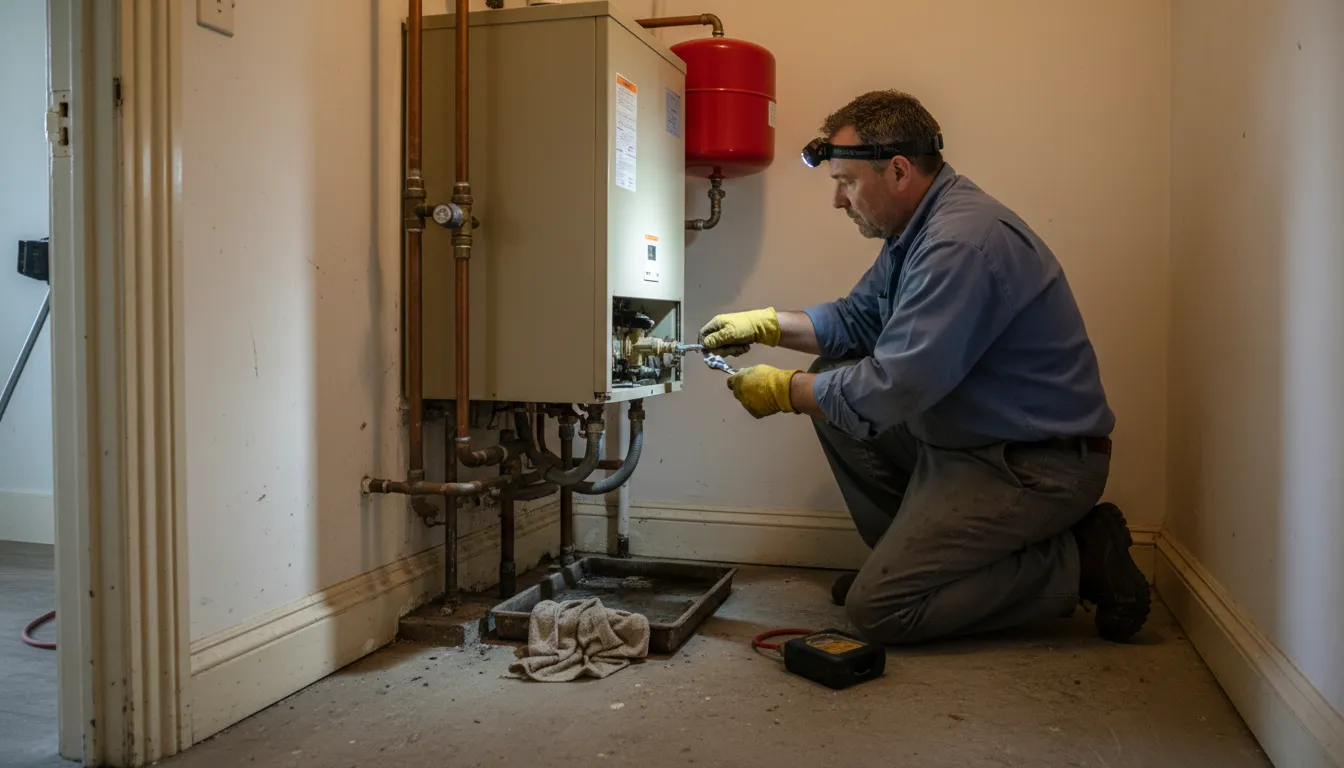
Find the Best Boiler Repair Contractors for Your Business
No obligation • Fast responses • Nationwide coverage

Why you can trust HVAC Firms
HVAC Firms is a leading United States resource for evaluating HVAC service providers. Our team researches companies, checks credentials, and reviews customer feedback to present clear, unbiased information. Listings and rankings are based on merit, and companies cannot pay to change our editorial content.
Search providers near you
Best Boiler Repair Contractors in Texas Ranked
A properly functioning boiler is essential for reliable heat and hot water in Texas homes and businesses, especially during cooler months. When your hydronic heating system malfunctions, it can lead to discomfort, high energy bills, and even safety hazards. This guide provides a clear overview of common boiler problems, maintenance practices, and the regulatory landscape in Texas to help you make informed decisions about servicing your heating system. You can use this information to understand your needs and connect with qualified local professionals for repair or maintenance.
Hage Energy
5773 Woodway Dr # 217, Houston, TX 77057
Hage Energy is an independent Trane Comfort Specialist dealer based in Houston, TX. They provide a range of HVAC services including repair and installation of air conditioners, furnaces, heat pumps, boilers, and mini splits. The company services all major brands but specializes in Trane products, offering expertise in HVAC tune-ups and system maintenance.
Conover Heating & Air
4200 Gus Thomasson Rd Suite 114, Mesquite, TX 75150
Conover Heating & Air is a family-owned HVAC company serving Dallas, TX, and surrounding areas since 1975. They provide residential heating and cooling services including repair and installation of air conditioners, furnaces, heat pumps, and boilers. Their technicians also offer HVAC tune-ups and indoor air quality solutions. With over 50 years of experience, Conover Heating & Air emphasizes honest service without unnecessary upselling and maintains a well-stocked inventory to support long-lasting repairs. Their service area includes Mesquite, Garland, Forney, Rockwall, Fate, Lake Highlands, North Dallas, Richardson, and University Park.

Temp Pro Mechanical
3643 Lawnwood St, Fort Worth, TX 76111
Temp Pro Mechanical provides a full range of HVAC services in Fort Worth, TX, including installation and repair of air conditioners, furnaces, heat pumps, and boilers. Their licensed technicians handle heating, cooling, and ventilation needs with a focus on energy-efficient solutions. The company offers 24/7 emergency services to address urgent HVAC issues promptly.
Prestige Heating & Air LLC
2484 Country Meadow Ln, Wylie, TX 75098
Prestige Heating & Air LLC is an HVAC company serving Plano, TX, and the surrounding DFW area. They provide repair and installation services for air conditioning, furnaces, heat pumps, and boilers. The company emphasizes honest and reliable service, aiming to build long-term relationships with customers through tailored solutions that maintain comfort year-round.

Urgent Air Care LLC
5754 Mobud St, San Antonio, TX 78238
Urgent Air Care LLC offers comprehensive heating, ventilation, and air conditioning repair and installation services in San Antonio, TX. The company handles a range of HVAC needs including air conditioning, furnace, heat pump, and boiler systems. With many years of experience, Urgent Air Care LLC has established itself as a reliable provider in the area, known for its professional and timely service.
Common Boiler Problems in Texas Homes
Boiler systems, while durable, can develop issues that affect performance and safety. Recognizing the early signs of trouble can prevent minor problems from becoming major, costly repairs.
- No Heat or Uneven Heating: This is the most obvious sign of a problem. You might experience cold spots in certain rooms, lukewarm water from taps, or the system failing to reach the set temperature. Causes can range from trapped air in the radiators or baseboards, a failing circulator pump, or imbalanced zone valves 1 2.
- Unusual Noises: A healthy boiler should operate relatively quietly. Banging (often called "kettling"), gurgling, or whistling sounds are red flags. These noises frequently indicate trapped air in the system, low water pressure, or a buildup of limescale on the heat exchanger.
- Leaks and Drips: Any visible water around the boiler unit or associated pipes is a cause for concern. Leaks can stem from corroded pipes, faulty pressure relief valves, or failing seals. In older Texas homes, it's also important to be cautious, as pipe insulation may contain asbestos, which requires professional handling if disturbed 3.
- Pressure Fluctuations: Your boiler's pressure gauge should remain within a normal range (typically 1-1.5 bar when cold). Pressure that is consistently too high or too low indicates a problem, such as a faulty expansion tank, a leak, or issues with the filling loop.
- Pilot Light or Ignition Issues: For systems with a standing pilot light, if it frequently goes out, the thermocouple may be faulty. Modern boilers with electronic ignition may fail to start, which could point to an ignitor, gas valve, or control board problem.
- Carbon Monoxide (CO) Risk: This is a silent and deadly danger. A cracked heat exchanger or poor combustion can allow carbon monoxide to leak into your home. Symptoms like sooty stains around the boiler, a yellow burner flame (instead of blue), and excessive condensation are warnings. Installing and maintaining CO detectors on every floor is a critical safety measure 4 5.
Essential Boiler Maintenance for Texas Homeowners
Proactive maintenance is the key to extending your boiler's lifespan, ensuring efficient operation, and preventing emergencies.
Daily/Weekly Monitoring:
- Listen for new or unusual sounds like banging or whistling.
- Visually check around the base of the unit and connecting pipes for signs of moisture or leaks.
- Note if heating becomes uneven or rooms are slower to warm up.
Immediate Actions:
- If your carbon monoxide detector alarms, evacuate immediately and call for help from outside.
- For any major leak or complete loss of heat, shut off the water supply to the boiler and call a professional.
- Address minor issues like a tripped circuit breaker or a reset button, but if the problem recurs, seek professional diagnosis.
Annual Professional Maintenance: Scheduling a yearly tune-up by a licensed technician is the most important step. A thorough maintenance visit typically includes:
- Cleaning the heat exchanger and burner assembly to maintain efficiency.
- Checking and calibrating all controls and the thermostat.
- Performing a combustion analysis to ensure safe operation and optimal fuel use.
- Testing safety devices, including the pressure relief valve, low-water cutoff, and CO levels.
- Inspecting the venting system and chimney for blockages or damage.
- Checking the expansion tank and system pressure.
- Lubricating moving parts like the circulator pump (if required).
This proactive service can identify hidden issues like a beginning crack in the heat exchanger before they become hazardous or lead to a full system failure.
Find the perfect boiler repair contractors for your needs
Get personalized recommendations and expert advice
Understanding Boiler Repair and Replacement Costs in Texas
The cost to repair a boiler in Texas varies widely based on the component failure, the boiler's age and model, and labor rates. Here's a general breakdown of common repair costs 6:
- Thermostat, Ignitor, or Pilot Assembly Repair: $150 - $400
- Zone Valve or Circulator Pump Replacement: $200 - $850
- Expansion Tank Replacement: $140 - $380
- Pipe or Valve Repair/Replacement: $350 - $1,000
- Annual Maintenance/Tune-up: $150 - $600
- Professional Service Call/Diagnosis Fee: $75 - $200 (often applied toward repair)
When repairs become frequent or a major component like the heat exchanger fails, replacement may be more economical. A new boiler installation can cost several thousand dollars, but it comes with significantly improved energy efficiency, reliability, and modern safety features. A qualified technician can help you calculate the long-term cost-benefit of repair versus replacement for your specific situation 7.
Texas Boiler Regulations and Safety Inspections
Texas has specific regulations for boilers, primarily focused on public safety in commercial and institutional settings.
- Mandatory Registration & Inspection: The Texas Department of Licensing and Regulation (TDLR) requires that all boilers used in public buildings (like schools, hospitals, and commercial properties) be registered and undergo periodic inspections by a licensed boiler inspector 8. Inspection frequency (annual, biennial, or triennial) depends on the boiler type and use.
- Inspection Scope: These mandatory inspections focus on structural integrity, operational controls, and critical safety devices like pressure relief valves. The inspector will also check the stack, foundation, and overall installation compliance.
- Preparation for Inspection: Facility managers should ensure clear access to the boiler, have all maintenance records and certificates available, and have staff on hand to assist with operational tests during the inspector's visit 9.
While residential boilers in single-family homes are generally not subject to these mandatory state inspections, adhering to the same safety principles is crucial. Hiring a technician familiar with Texas codes ensures any repair or installation meets high safety standards.
The Value of Professional Diagnosis and Repair
Attempting DIY repairs on a boiler can be dangerous due to risks involving gas, electricity, high pressure, and high-temperature water. A professional brings essential expertise:
- Accurate Diagnosis: Technicians use specialized tools to pinpoint the root cause of a problem, not just the symptom, saving you time and money on unnecessary parts.
- Safety Assurance: They ensure all repairs meet local codes and that safety devices are functioning correctly to protect your household from fire, explosion, or carbon monoxide poisoning.
- Efficiency Optimization: Proper repair and calibration restore your boiler to its peak efficiency, which can significantly reduce monthly energy bills.
- System Longevity: Expert service helps prevent cascading failures, extending the overall life of your heating investment.
Frequently asked questions
Sources
Footnotes
-
Boiler Repair: 5 Signs Your Heating System Needs Attention - https://genzryan.com/blog/boiler-repair/ ↩
-
Hydronic Heating Troubleshooting: 5 Common Issues and How to Fix Them - https://www.metropolitanheatingandcooling.com.au/blog/hydronic-heating-troubleshooting-5-common-issues-and-how-to-fix-them/ ↩
-
Hydronic Heating Systems - Home Inspections by US Inspect - https://www.usinspect.com/blog/hydronic-heating-systems/ ↩
-
Boiler Safety Inspections Checklist - PlumbersStock - https://www.plumbersstock.com/how-to-hvac/boilers/safety-inspection-checklist.html ↩
-
Annual Boiler Maintenance Checklist - Cellino Plumbing - https://cellinoplumbing.com/blog/annual-boiler-maintenance-checklist/ ↩
-
Boiler Maintenance Checklist: Heating System Upkeep Guide - https://skaggswalsh.com/boiler-maintenance-checklist-sw/ ↩
-
Calculating Boiler Repair Cost: When To Replace - McQuillan Bros - https://mcquillanbros.com/blog/calculating-boiler-repair-cost-replacement-guide/ ↩
-
Boiler Information - https://www.tdlr.texas.gov/boilers/blrinfo.htm ↩
-
Are Your Boilers Safe and Compliant? - TASB Risk Management Fund - https://www.tasbrmf.org/resources/insights/boiler-compliance ↩