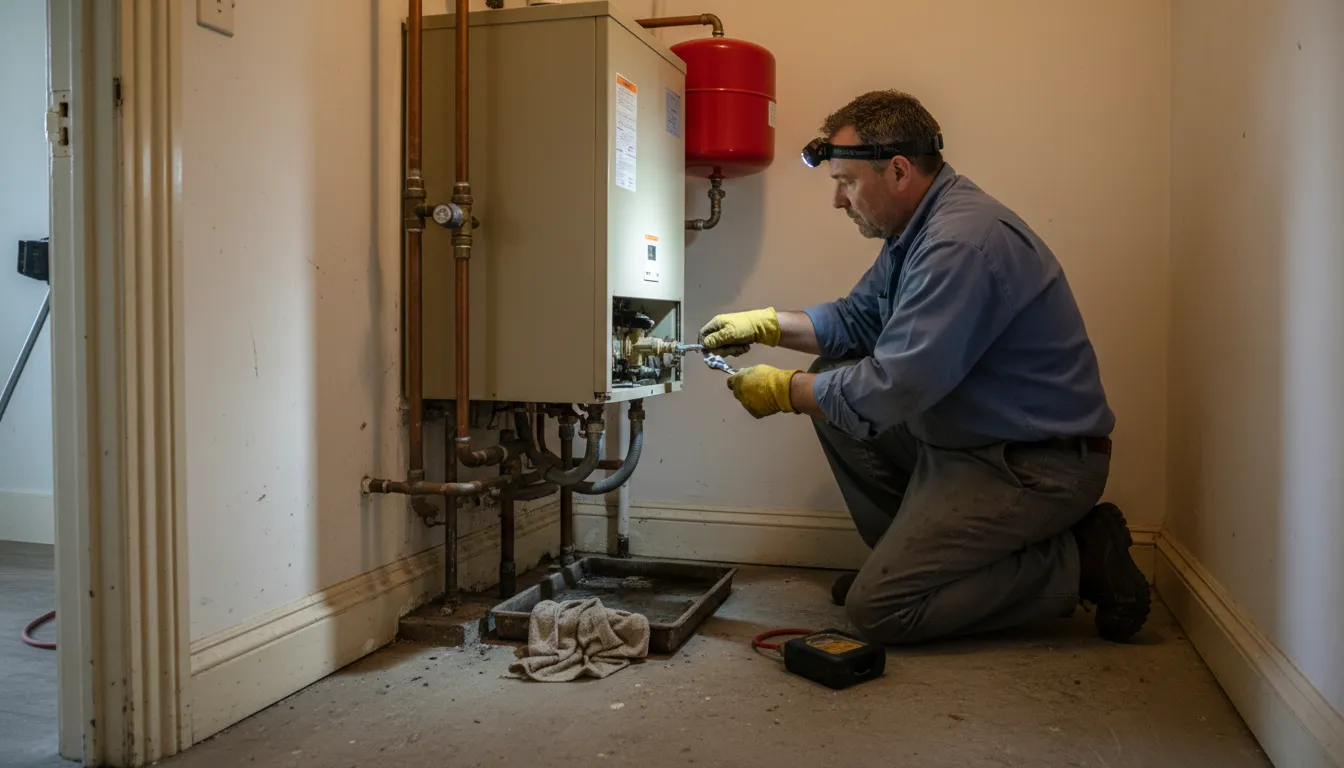
Find the Best Boiler Repair Contractors for Your Business
No obligation • Fast responses • Nationwide coverage

Why you can trust HVAC Firms
HVAC Firms is a leading United States resource for evaluating HVAC service providers. Our team researches companies, checks credentials, and reviews customer feedback to present clear, unbiased information. Listings and rankings are based on merit, and companies cannot pay to change our editorial content.
Search providers near you
Top Boiler Repair Contractors in Cedar Hill, Texas Ranked
A boiler is the heart of a hydronic heating system, providing reliable warmth by circulating hot water through radiators, baseboard heaters, or radiant floor tubing. In Cedar Hill, where winters can bring frosty cold snaps, a functioning boiler is essential for home comfort. This guide helps you understand your heating system, recognize when it needs attention, and make informed decisions about maintenance, repair, or upgrading your entire home comfort setup.
Conover Heating & Air
4200 Gus Thomasson Rd Suite 114, Mesquite, TX 75150
Conover Heating & Air is a family-owned HVAC company serving Dallas, TX, and surrounding areas since 1975. They provide residential heating and cooling services including repair and installation of air conditioners, furnaces, heat pumps, and boilers. Their technicians also offer HVAC tune-ups and indoor air quality solutions. With over 50 years of experience, Conover Heating & Air emphasizes honest service without unnecessary upselling and maintains a well-stocked inventory to support long-lasting repairs. Their service area includes Mesquite, Garland, Forney, Rockwall, Fate, Lake Highlands, North Dallas, Richardson, and University Park.

Temp Pro Mechanical
3643 Lawnwood St, Fort Worth, TX 76111
Temp Pro Mechanical provides a full range of HVAC services in Fort Worth, TX, including installation and repair of air conditioners, furnaces, heat pumps, and boilers. Their licensed technicians handle heating, cooling, and ventilation needs with a focus on energy-efficient solutions. The company offers 24/7 emergency services to address urgent HVAC issues promptly.
StrikeForce Heating & Air LLC
9734 Skillman St, Dallas, TX 75243
StrikeForce Heating & Air LLC is an HVAC company based in Dallas, TX, offering installation, repair, and maintenance services for air conditioning, heating systems, heat pumps, boilers, and furnaces. They also provide indoor air quality improvements and energy audits to help customers choose the best solutions for their homes. The company has been serving Dallas and nearby areas since 2011 and is known for servicing all major brands, including Lennox as a preferred Premier Dealer. StrikeForce Heating & Air LLC offers 24/7 emergency repair services for heating and cooling systems, ensuring help is available whenever needed.
Paschal Air, Plumbing & Electric
7120 W Interstate 20, Arlington, TX 76017
Paschal Air, Plumbing & Electric provides HVAC, plumbing, and electrical services in Arlington, TX. They offer repair and installation for air conditioning, furnaces, heat pumps, boilers, mini splits, and geothermal heat pumps. The company handles HVAC tune-ups and maintenance to support system efficiency and longevity.

Houk Air Conditioning DFW
833 111th St, Arlington, TX 76011
Houk Air Conditioning DFW has been serving homeowners in Arlington, TX, and the greater Dallas-Fort Worth area since 1962. They provide a full range of HVAC services including air conditioning, furnace, heat pump, and boiler repair and installation, as well as indoor air quality solutions like air purification and humidification. Their technicians are experienced with both residential and commercial systems, offering thorough diagnostics and repairs tailored to the local climate. Houk Air Conditioning also offers emergency services to address urgent heating and cooling needs.
Understanding Your Home's Heating System in Cedar Hill
Many homes in the Cedar Hill and greater Dallas-Fort Worth area utilize boiler-based, or hydronic, heating systems. These systems are prized for their ability to deliver steady, even heat without the drafts or noise associated with forced-air furnaces. The heated water is distributed through a network of pipes to terminal units like cast-iron radiators or modern baseboard convectors.
It's common, especially in older homes, to find a boiler paired with a separate, central air conditioning system for cooling. This split setup means your home's heating and cooling are handled by two distinct systems. Understanding this configuration is the first step in troubleshooting, as an issue with your home's warmth may be isolated to the boiler circuit, not the entire HVAC system.
The Cedar Hill Climate & Your Boiler
Our local climate presents a unique challenge for heating systems. We endure hot, humid summers but also experience winter temperatures that can dip below freezing. A well-maintained boiler provides efficient and comfortable heat during these cold spells. However, the mild stretches of our winters mean a system that runs constantly at full blast can be inefficient. Modern solutions often involve creating heating "zones" to better match the system's output to the actual demand, improving both comfort and energy bills.
Common Boiler Types and Components
Knowing the type of boiler you have can help in discussions with a technician. The main components you might hear about include:
- The Boiler Unit: The appliance that heats the water. Types include gas-fired (most common), oil-fired, or electric.
- Circulator Pump: Moves the heated water through the pipes and to your radiators or baseboards.
- Expansion Tank: Absorbs excess pressure created when water heats up and expands.
- Pressure Relief Valve: A critical safety device that releases water if pressure gets too high.
- Radiators/Baseboards: The "emitters" that release heat from the water into your rooms.
Recognizing Signs You Need Boiler Service
Don't wait for a complete breakdown on the coldest night of the year. Be proactive and call for boiler service if you notice any of the following:
- No Heat or Inconsistent Heat: Some rooms are cold while others are warm, or the system fails to reach the thermostat's set temperature.
- Unusual Noises: Banging, whistling (kettling), or gurgling sounds often indicate issues like trapped air, low water pressure, or limescale buildup.
- Leaks or Drips: Any sign of water around the boiler, pipes, or pressure relief valve requires immediate attention to prevent water damage and system failure.
- Pilot Light Issues: A yellow or flickering flame (instead of a steady blue) on a gas boiler, or a pilot that frequently goes out, signals a problem.
- Rising Energy Bills: An unexplained increase in your gas or heating costs often points to declining boiler efficiency.
- Frequent Cycling: The boiler turns on and off more frequently than normal, which strains components.
Repair vs. Replacement: Making the Right Choice
When your boiler acts up, the big question is whether to fix it or replace it. This decision hinges on the age, condition, and efficiency of your current system, as well as your long-term comfort goals.
When Repair is the Best Path: Repair is typically the most cost-effective solution for newer systems (generally under 15 years old) experiencing infrequent or minor issues. Common repairs that can restore function include replacing a faulty circulator pump, thermostat, pressure relief valve, or fixing minor leaks. If the unit has been reliable and the repair cost is reasonable, fixing it extends the system's life.
When to Consider Boiler Replacement: There comes a point when investing in another repair is like throwing good money after bad. Consider replacement if:
- Age: Your boiler is 15-20 years old or older.
- Efficiency: It has a low Annual Fuel Utilization Efficiency (AFUE) rating. Modern boilers can be over 95% efficient.
- Frequency of Repairs: You're calling for service multiple times a season, and repair costs are adding up.
- Comfort Goals: You want to add zoning capabilities, switch to a more efficient fuel type, or integrate with a new home automation system.
Find the perfect boiler repair contractors for your needs
Get personalized recommendations and expert advice
The Holistic Home Comfort Audit
A key insight for Cedar Hill homeowners is to think beyond just the boiler itself. The most effective and efficient heating solution comes from evaluating your entire home comfort system. A skilled professional will assess:
- Heat Distribution: Are your existing baseboards or radiators sized correctly and functioning optimally?
- Zoning Potential: Could your comfort and efficiency improve by installing ductless mini-split units to create independent temperature zones for different parts of the house? This is particularly effective for our climate.
- Home Envelope: The state of your insulation, windows, and ductwork (for your AC) dramatically impacts how hard your boiler has to work. Sealing leaks and adding insulation can reduce the load on any heating system.
Cost Considerations for Boiler Services
Costs can vary based on the complexity of the job, the boiler model, and labor. The following are general estimates to help you budget:
- Minor Repairs: Addressing issues like a faulty pump, valve, or control typically ranges from $200 to $800.
- Major Repairs or Component Replacement: Replacing a heat exchanger or addressing significant leaks can cost $1,000 or more.
- Full Boiler Replacement: Installing a new, standard-efficiency boiler system generally starts between $4,000 and $7,000. High-efficiency models or complex installations involving modifications to piping or radiators can reach $10,000 or more.
- Add-on Zoning (e.g., Ductless Mini-Split): Adding a single-zone ductless system for targeted heating and cooling can range from $1,500 to $4,000+ per zone 1.
Investing in a high-efficiency boiler or a zoned system often pays off through lower monthly utility bills and improved comfort, making it a wise long-term decision for many homeowners.
Maintaining Your Boiler for Longevity
Annual maintenance is the best way to avoid costly repairs, ensure safe operation, and extend the life of your boiler. A typical maintenance visit includes:
- Inspecting and cleaning the burner and heat exchanger.
- Checking all system controls and safety devices.
- Testing water pressure and the pressure relief valve.
- Inspecting for leaks or corrosion on pipes and the unit itself.
- Lubricating moving parts like the circulator pump.
- Flushing the system if needed to remove sediment.
Scheduling this service in the fall, before the heating season begins, is ideal.
Frequently asked questions
Sources
Footnotes
-
Heating & Air Conditioning Sol. in Cedar Hill, TX - https://www.legacyairtexas.com/heating-cooling-services-cedar-hill-tx/ ↩