Find the Best Boiler Repair Contractors for Your Business
No obligation • Fast responses • Nationwide coverage

Why you can trust HVAC Firms
HVAC Firms is a leading United States resource for evaluating HVAC service providers. Our team researches companies, checks credentials, and reviews customer feedback to present clear, unbiased information. Listings and rankings are based on merit, and companies cannot pay to change our editorial content.
Search providers near you
Top Boiler Repair Contractors in Tigard, Oregon Ranked
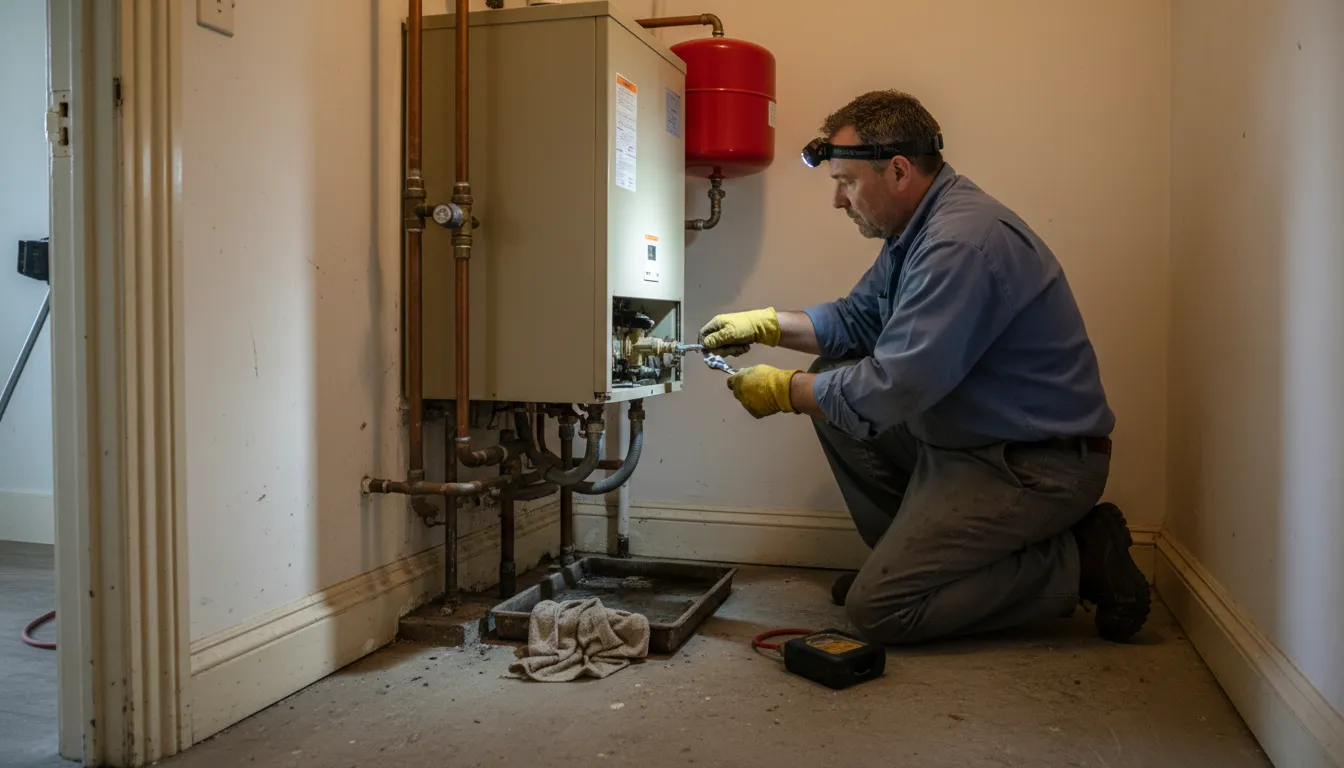
When the cool, damp Oregon winter settles into the Willamette Valley, a reliable heating system is essential for comfort. For many homes in Tigard, that system is a hydronic boiler, providing steady, radiant warmth through baseboards or in-floor tubing. Boiler repair and maintenance services ensure this critical equipment operates safely and efficiently, preventing costly breakdowns and managing energy use. This guide will help you understand your hydronic heating system, recognize when it needs attention, and connect with qualified local specialists to keep your home cozy.
Watts Heating & Cooling
17500 SE McLoughlin Blvd, Milwaukie, OR 97267
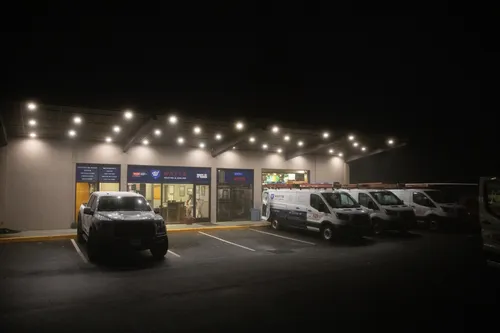
Watts Heating & Cooling is an HVAC company based in Portland, OR, offering a wide range of heating and cooling services. Their licensed contractors provide residential and commercial HVAC repair, installation, and maintenance, including air conditioning, furnace, heat pump, boiler, and mini split systems. Watts Heating & Cooling is equipped to handle emergency heating and cooling situations with a 24/7 call center for urgent needs. They emphasize regular tune-ups and proper installation to maintain system efficiency and comfort. The company also provides indoor air quality services and has a large fleet and warehouse to support timely service delivery.
Sky Heating, AC, Plumbing & Electrical
530 NE Liberty Ave, Gresham, OR 97030
Sky Heating, AC, Plumbing & Electrical has been serving Portland, OR, and surrounding areas since 1979. The company offers a wide range of services including HVAC installation and repair for air conditioners, furnaces, heat pumps, boilers, and mini splits, as well as plumbing and electrical work. With over 40 years of experience and a team of skilled technicians, Sky Heating provides comprehensive home comfort solutions. They also offer 24/7 emergency service for urgent needs and cover multiple nearby cities in Oregon and Washington.
Experts Heating & Cooling, Inc.
3136 Evergreen Way, Washougal, WA 98671
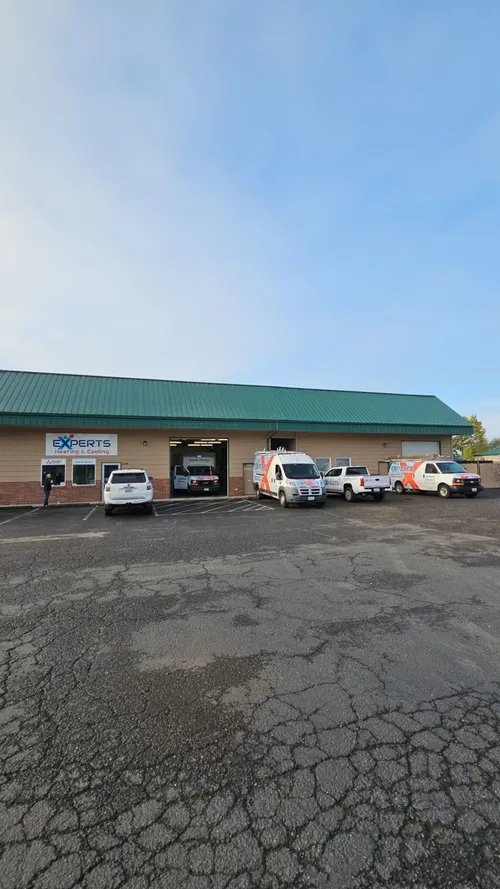
Experts Heating & Cooling, Inc. is an HVAC company serving Portland, OR, and nearby communities. They provide a range of services including installation and repair of air conditioners, furnaces, heat pumps, boilers, mini splits, and geothermal heat pumps. The company also offers HVAC tune-ups and sells high-quality filters through an online store. Established in 2016, Experts Heating & Cooling, Inc. has built experience in handling residential and commercial HVAC needs in the region.

Oregon Climate Tech
402 Beavercreek Rd #112, Oregon City, OR 97045
Oregon Climate Tech is an HVAC company based near Portland, OR, specializing in heating, ventilation, and air conditioning services. They offer repair and installation for air conditioners, furnaces, heat pumps, boilers, mini splits, and geothermal heat pumps. The company partners with Trane to provide reliable HVAC equipment and comprehensive tune-up services. Oregon Climate Tech serves the Portland area with a full range of HVAC solutions.

Heat Relief Heating & Cooling
13122 NE David Cir STE 800, Portland, OR 97230
Heat Relief Heating & Cooling is an HVAC company based in Portland, OR, offering a range of services including air conditioning, furnace, heat pump, and boiler repair and installation. Established in 1997, the company has nearly 30 years of experience serving the Portland metropolitan area. Heat Relief specializes in HVAC tune-ups and installations, providing comprehensive heating and cooling solutions. The company recently merged with Sun Glow, expanding its service capabilities to include plumbing and electrical work while maintaining its commitment to quality and customer satisfaction.
Understanding Hydronic Heating Systems in Tigard Homes
Hydronic heating, which uses hot water to distribute warmth, is a popular and effective choice for the Pacific Northwest climate. These systems excel at providing consistent, comfortable heat without the drafts or noise associated with forced air, making them ideal for Tigard's mild-to-cool, damp winters. The most common configurations found in local residences include:
- Gas Boilers with Baseboard Radiators: This is the most prevalent setup. A natural gas boiler heats water, which is then pumped through a network of pipes to baseboard radiators in each room.
- Radiant Floor Heating: Hot water circulates through flexible tubing installed beneath the flooring. This method provides quiet, even warmth from the ground up and is often considered the pinnacle of heating comfort.
- Combination Boilers (Combi): These efficient units heat water for both your home's heating system and your domestic hot water taps from a single appliance, saving space and potentially improving efficiency.
Understanding which type of system you have is the first step in addressing any repair needs or considering upgrades.
Common Boiler Issues and When to Call for Repair
Even well-maintained boilers can develop problems. Recognizing the signs early can prevent minor issues from becoming major emergencies. Be on the lookout for:
- No Heat or Insufficient Heat: This could stem from a faulty thermostat, a broken circulator pump, low water pressure, or a problem with the ignition system.
- Unusual Noises: Banging, whistling, or gurgling sounds (often called "kettling") are typically caused by limescale buildup, air in the system, or impending pump failure.
- Leaks: Any sign of water around the boiler or pipes requires immediate attention from a professional to prevent water damage and potential system failure.
- Pilot Light or Ignition Problems: If the pilot light won't stay lit or the boiler fails to ignite, it could be due to a faulty thermocouple, a gas supply issue, or an electronic ignition failure.
- Rising Energy Bills: A sudden, unexplained increase in your gas bill often points to declining boiler efficiency, which may be repairable or a sign it's nearing the end of its service life.
If you encounter any of these issues, it's time to contact a Tigard-based HVAC professional specializing in hydronic systems for a diagnosis.
Find the perfect boiler repair contractors for your needs
Get personalized recommendations and expert advice
The Repair vs. Replacement Decision
One of the most critical decisions for a homeowner is whether to repair an existing boiler or invest in a replacement. This choice depends on several key factors:
- Age of the System: The average lifespan of a gas boiler is 15 to 20 years. If your unit is within this range or older, replacement often becomes more cost-effective than repeated repairs.
- Frequency and Cost of Repairs: A good rule of thumb is if the cost of a repair approaches 50% of the value of a new system, replacement is likely the wiser financial decision. Constant service calls are a clear signal.
- Energy Efficiency: Older boilers, especially those over 20 years old, operate at much lower efficiency. Modern high-efficiency condensing boilers can convert over 90% of the fuel into usable heat, compared to 70-80% for older models, leading to substantial savings on your utility bills.
- System Performance: Are some rooms too cold while others are too hot? Does the system struggle to maintain a set temperature? An upgrade can resolve these comfort issues.
A reputable local technician can perform a thorough assessment, provide a detailed cost-benefit analysis, and help you weigh your options.
Modern Upgrade Paths for Tigard Homeowners
If replacement is the right path, today's technology offers excellent options that improve both comfort and efficiency.
- High-Efficiency Condensing Gas Boilers: These are the direct, superior replacement for a standard gas boiler. They capture heat from exhaust gases that would otherwise be wasted, making them significantly more efficient and environmentally friendly.
- Air-Source Heat Pumps: An increasingly popular option in Oregon's climate. Modern heat pumps are highly efficient at extracting heat from the outside air even in cool weather. They provide both heating and cooling from one system. Options include ductless mini-splits for homes without ducts or ducted models that can integrate with existing systems.
- Boiler/Water Heater Combos (Combi): As mentioned, replacing a separate boiler and water heater with a single combi unit can be a smart space-saving and efficiency-boosting upgrade.
Financial Considerations and Local Incentives
Investing in your home's heating system is a significant decision. Understanding the costs and available financial assistance is crucial.
- Repair Costs: Vary widely based on the issue, from a few hundred dollars for a component replacement to over a thousand for a major part like a heat exchanger or circulator pump.
- Replacement Costs: Installing a new, mid-range high-efficiency gas boiler typically ranges from $4,000 to $8,000 or more, depending on the unit's complexity and your home's specific requirements1. A full heat pump installation represents a larger investment, often ranging from $10,000 to $20,000+, but provides year-round climate control1.
- Energy Trust of Oregon Incentives: This is a key resource for Tigard residents. The Energy Trust offers cash rebates for installing qualifying high-efficiency gas furnaces, boilers, and heat pumps. These incentives can substantially reduce the upfront cost of a new system. It is highly recommended to check the Energy Trust of Oregon website for the most current offers and eligibility requirements before making a purchase.
Finding the Right Professional in Tigard
For repairs, maintenance, or a new installation, choosing the right contractor is paramount. Look for a local HVAC company with specific experience in hydronic heating systems. They should be licensed, insured, and offer clear, written estimates. A quality technician will perform a full load calculation for your home to ensure any new system is properly sized-not just a swap of the old unit. They should also be knowledgeable about local codes and rebate programs like those from the Energy Trust of Oregon.
Frequently asked questions
Sources
Footnotes
-
Residential Building Energy Efficiency Field Studies - https://www.energycodes.gov/sites/default/files/2021-07/LRMF_Studies_final_report_2020-06-24.pdf ↩ ↩2