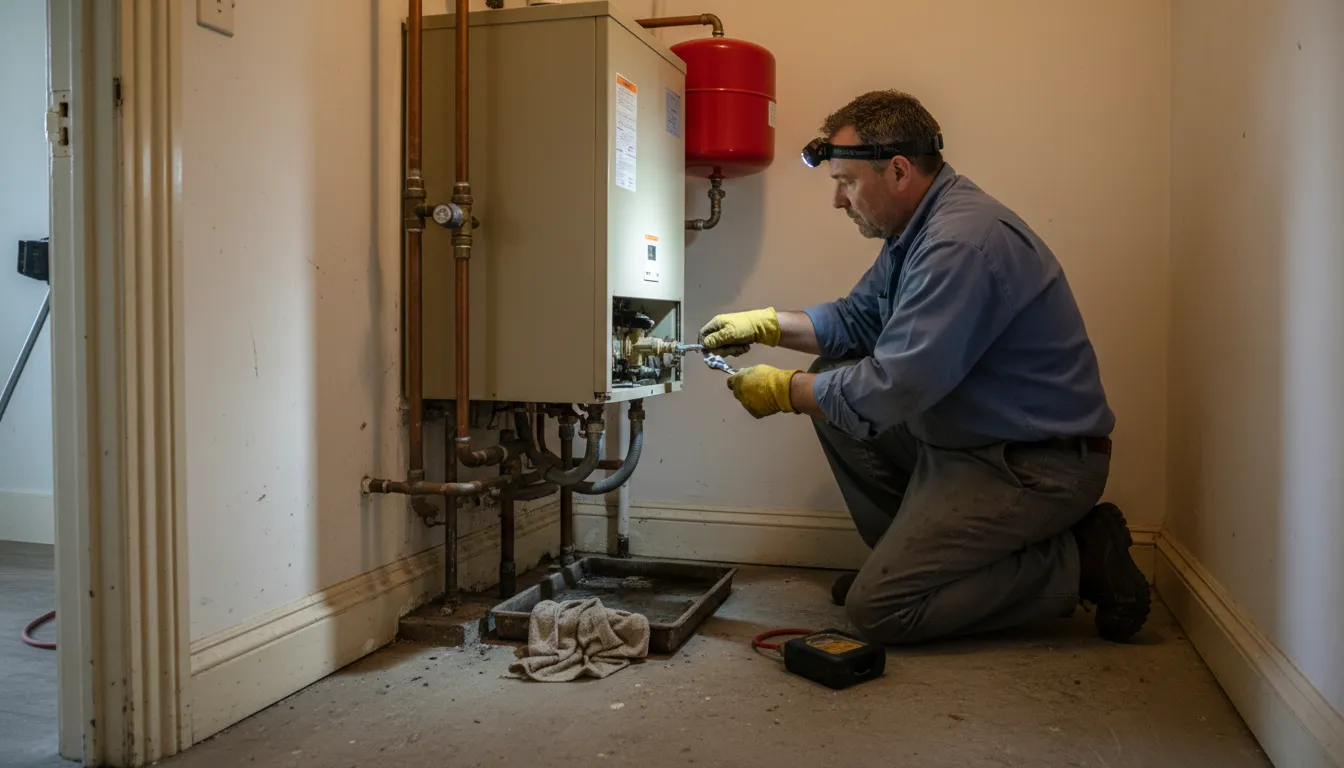
Find the Best Boiler Repair Contractors for Your Business
No obligation • Fast responses • Nationwide coverage

Why you can trust HVAC Firms
HVAC Firms is a leading United States resource for evaluating HVAC service providers. Our team researches companies, checks credentials, and reviews customer feedback to present clear, unbiased information. Listings and rankings are based on merit, and companies cannot pay to change our editorial content.
Search providers near you
Top Boiler Repair Contractors in Fort Wayne, Indiana Ranked
For Fort Wayne homeowners, a reliable heating system isn't a luxury-it's a necessity for enduring the region's cold Indiana winters. When your boiler acts up, it disrupts the consistent, comfortable warmth that hydronic systems are known for. This guide helps you understand your boiler system, recognize when you need service, and make informed decisions between repair and replacement, connecting you with the expertise needed to restore heat to your home.
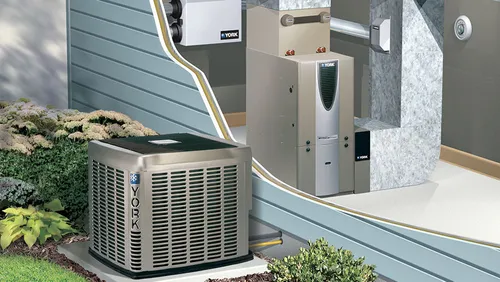
Northeast Mechanical Services, Inc.
3620 Metro Park Dr N, Fort Wayne, IN 46818
Northeast Mechanical Services, Inc. is an HVAC and plumbing contractor based in Fort Wayne, IN. They provide a wide range of services including installation and repair of air conditioning, furnaces, heat pumps, boilers, mini splits, geothermal heat pumps, and indoor air quality systems. The company also offers generator installation and maintenance, ensuring reliable power solutions for homes and businesses. Northeast Mechanical Services emphasizes honest recommendations and fair pricing, serving Fort Wayne and nearby communities such as New Haven, Auburn, and Huntington. Their expertise includes energy consultations and eco-friendly geothermal HVAC systems.
Flow-Tech Plumbing & Heating, Inc.
8131 N Clinton St, Fort Wayne, IN 46825
Flow-Tech Plumbing & Heating, Inc. has been serving Fort Wayne, IN, and surrounding areas since 1991. They provide a wide range of plumbing and HVAC services including installation, repair, and maintenance of air conditioners, furnaces, boilers, and indoor air quality systems. Their team handles both residential and commercial projects, offering specialized services such as backflow prevention, gas line work, and water purification system installation. Flow-Tech also provides 24/7 emergency service to address urgent plumbing and HVAC needs at any time.
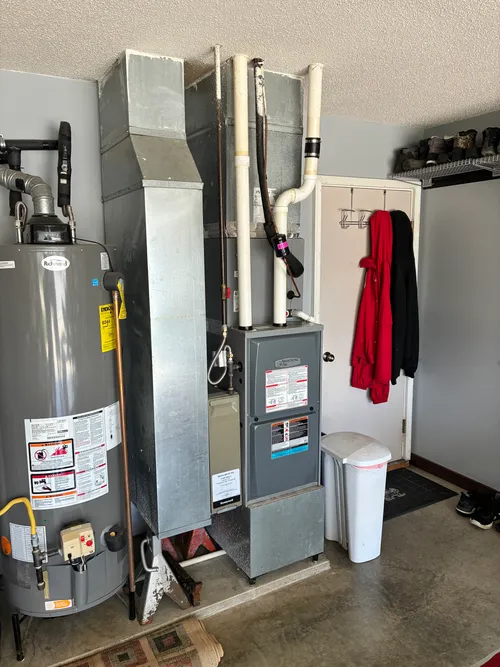
Blazing Heat HVAC LLC
Fort Wayne, IN
Blazing Heat HVAC LLC is a heating and cooling company serving Fort Wayne, IN, and nearby communities. They provide a wide range of HVAC services including installation, repair, diagnostics, maintenance, tune-ups, indoor air quality solutions, commercial refrigeration, boiler services, and geothermal system support. With over 36 years of combined experience, their certified technicians focus on energy efficiency, system longevity, and indoor comfort for both residential and commercial customers. They also offer emergency repair services to minimize downtime and maintain reliable system operation.
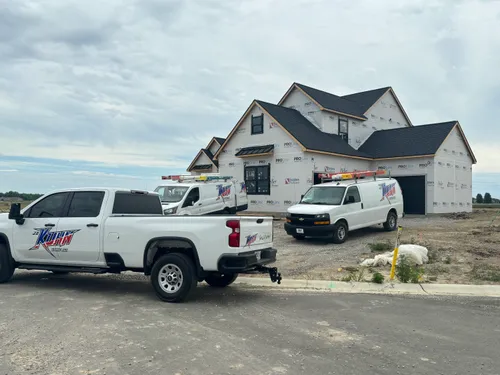
JD Kuhn Heating And Air Conditioning LLC
4625 Speedway Dr, Fort Wayne, IN 46825
JD Kuhn Heating And Air Conditioning LLC provides a range of HVAC services in Fort Wayne, IN. They offer installation, repair, and maintenance for furnaces, boilers, heat pumps, air conditioning units, and mini split systems. Their services cover both residential and commercial heating and cooling needs, including specialized work on unit heaters. Routine maintenance and service agreements are also available to help maintain system performance and efficiency.
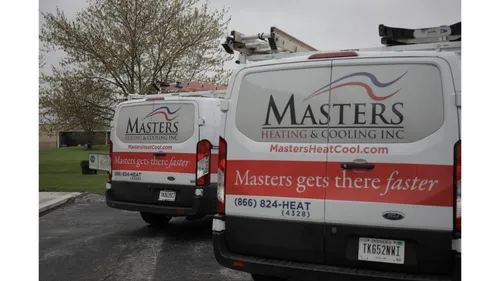
Masters Heating & Cooling
3512 Cavalier Dr, Fort Wayne, IN 46808
Masters Heating & Cooling is a heating, cooling, and plumbing service provider located in Fort Wayne, IN. They serve customers across Indiana, Michigan, and Ohio, offering installation, repair, replacement, and maintenance for air conditioners, furnaces, boilers, heat pumps, packaged units, ductless mini-splits, and geothermal systems. With over 40 years of experience since 1980, their certified technicians handle a wide range of HVAC and plumbing needs, including plumbing system repairs and water heater services.
Understanding Your Fort Wayne Home's Boiler System
Most homes in Fort Wayne that use boilers rely on hydronic heating systems. These systems heat water in a central boiler unit and circulate it through a network of pipes to distribute warmth 1. The two most common delivery methods in our area are:
- Radiators or Baseboard Heaters: Hot water flows through these units, which then radiate heat into the room. This method provides steady, draft-free warmth.
- Radiant Floor Heating: Tubes carrying hot water are embedded beneath the flooring, providing gentle, even heat from the ground up-a highly efficient and comfortable option.
Another popular option, especially in homes with limited space, is the combination (combi) boiler. This unit provides both space heating and on-demand domestic hot water from a single appliance, eliminating the need for a separate water heater tank 2.
Common Signs Your Boiler Needs Attention
Don't wait for a complete breakdown in the middle of a freeze. Be proactive and contact a professional if you notice any of these issues:
- Inconsistent Heating: Some rooms are cold while others are too hot, or the system struggles to maintain the thermostat setting.
- Unusual Noises: Banging, whistling (kettling), or gurgling sounds often indicate limescale buildup, air in the system, or a failing pump.
- Pressure Problems: Frequently needing to repressurize the system or a pressure gauge reading outside the normal range (typically 1-2 bar).
- Leaks: Any signs of water around the boiler, pipes, or radiators.
- Pilot Light Issues: A yellow or flickering flame instead of a steady blue one, or the pilot light frequently going out.
- Increased Energy Bills: A sudden, unexplained rise in heating costs can signal declining efficiency.
The Repair vs. Replacement Decision
Facing a boiler problem presents a critical choice: fix the existing unit or invest in a new one. Here's a framework used by local professionals to guide that decision.
When Repair is Often the Right Choice:
- The boiler is less than 15 years old and has a history of reliable performance.
- The repair is an isolated incident and the estimated cost is less than 30% of the price of a comparable new system 3.
- The issue is minor, such as a faulty thermostat, a pressure valve replacement, or a single leaking radiator valve.
- The system is generally efficient and meets your home's heating demands.
When Replacement May Be the Smarter Long-Term Investment:
- The boiler is 15 years or older. Age is a primary factor, as efficiency drops and failure risk increases significantly.
- You're facing frequent repairs. If you're calling for service multiple times a year, the cumulative cost and hassle make replacement economically sensible 4.
- The repair cost is high. If the quote approaches or exceeds 50% of a new unit's cost, replacement usually offers better value.
- The system struggles with performance, leaving your home uncomfortable or causing uneven heating.
- There are safety concerns, like signs of a carbon monoxide leak (e.g., sooty stains around the boiler) or persistent pressure problems.
The benefit of installing a new, high-efficiency boiler is substantial long-term savings on fuel bills, improved home comfort, and increased reliability, which often justifies the upfront investment.
Find the perfect boiler repair contractors for your needs
Get personalized recommendations and expert advice
What to Expect: Costs and Incentives
Understanding potential costs helps in planning. Repair costs vary widely based on the problem. A simple component swap or valve fix is relatively inexpensive, while replacing a circulating pump or heat exchanger constitutes a major repair 5. For a full boiler replacement in Fort Wayne, homeowners can expect a range typically between $3,500 and $8,000 or more. This final price depends on the unit's efficiency rating (AFUE), brand, features (like modulating burners), and the complexity of the installation 6 7.
To help offset the cost of upgrading to high-efficiency equipment, explore available incentives. Federal energy tax credits are periodically available for qualifying ENERGY STAR certified systems. Additionally, local utility companies may offer rebates for installing efficient heating equipment. It's always recommended to check the latest programs on EnergyStar.gov and with providers like Fort Wayne's City Utilities or Indiana Michigan Power for current offers 8.
Finding the Right Professional Service
The most important step is getting a professional assessment. Reputable local HVAC companies offer detailed, free estimates for both repair and replacement scenarios. A qualified technician will:
- Perform a thorough inspection of your entire hydronic system.
- Accurately diagnose the problem.
- Explain all available options clearly.
- Provide a transparent, written quote.
- Discuss system efficiency, potential incentives, and long-term operating costs.
This professional guidance is invaluable for making a confident, cost-effective decision for your Fort Wayne home 9 10.
Maintaining Your Boiler for Longevity
Once your system is running smoothly, protect your investment with regular maintenance. An annual service check by a qualified technician before each heating season can prevent most common problems. This typically includes inspecting the heat exchanger, checking burner combustion, testing safety controls, flushing the system if needed, and ensuring all components are operating efficiently. Regular maintenance not only extends the life of your boiler but also ensures it runs safely and as efficiently as possible, keeping your winter energy costs in check.
Frequently asked questions
Sources
Footnotes
-
Learn Hydronic System Fundamentals - https://www.bluegrasshydronics.com/post/mastering-the-basics-of-hydronic-systems ↩
-
What Are the Different Boilers Types? | BWS Plumbing, Heat & Air - https://bwsheatingandair.com/blog/what-are-the-different-types-of-boilers/ ↩
-
Repair or Replace - Fort Wayne - Coe Heating - https://www.coeheatcool.com/educational-topics/repair-replace/ ↩
-
Fort Wayne, IN Boiler Repair Service - "Doc" Dancer - https://docdancer.com/fort-wayne-boiler-repair-installation/repair/ ↩
-
UK Average Cost of Boiler Repair Explained - Go Assist - https://go-assist.co.uk/blog/average-cost-of-boiler-repair ↩
-
Boiler Repair & Installation in Fort Wayne, IN - https://www.kortedoesitall.com/heating/boilers/ ↩
-
Boiler Replacement in Fort Wayne, IN - "Doc" Dancer - https://docdancer.com/fort-wayne-boiler-repair-installation/replacement/ ↩
-
HVAC Tax Credits for Indianapolis Homeowners to Consider - https://williamscomfortair.com/knowledge-center/hvac-tax-credits/ ↩
-
Fort Wayne, IN Boiler Installation Service - "Doc" Dancer - https://docdancer.com/fort-wayne-boiler-repair-installation/installation/ ↩
-
Fort Wayne, IN Boiler Repair - Flow-Tech Plumbing & Heating - https://flowtechpandh.com/fort-wayne/boiler-repair/ ↩