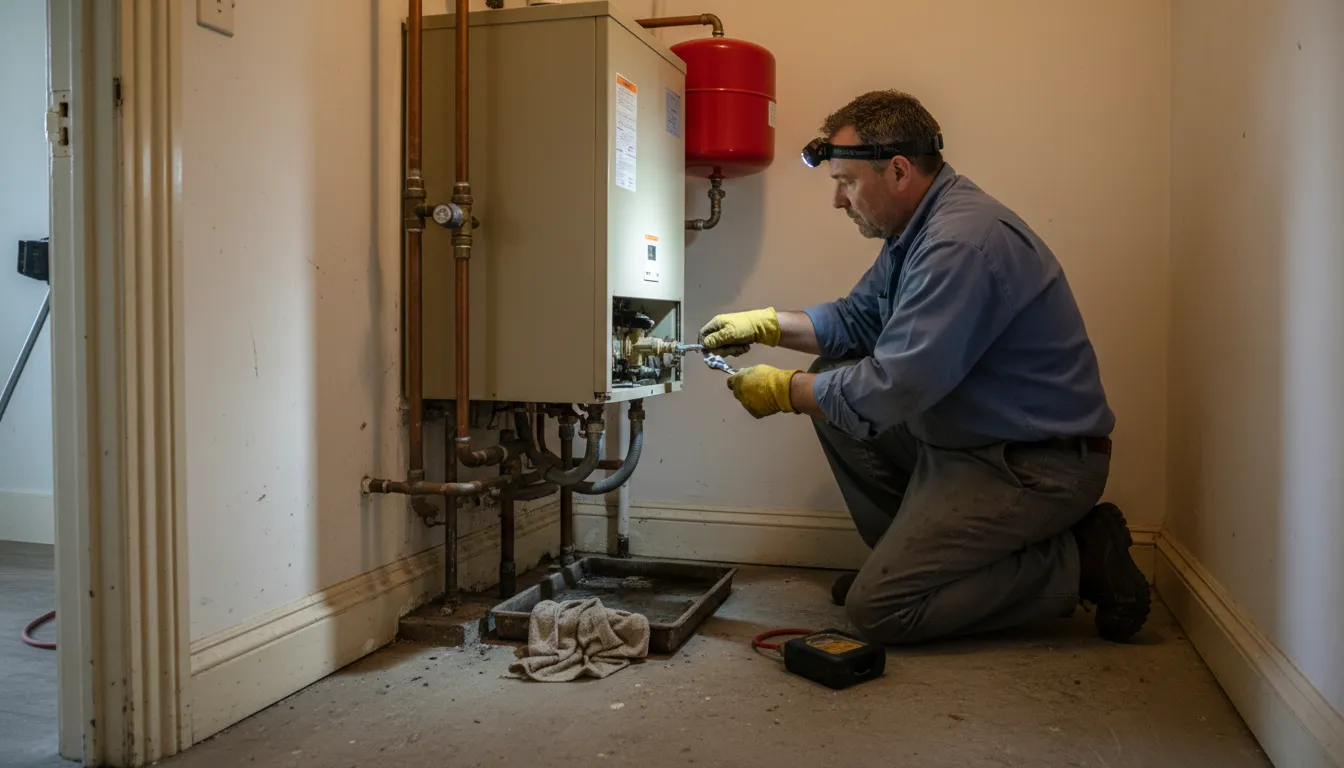
Find the Best Boiler Repair Contractors for Your Business
No obligation • Fast responses • Nationwide coverage

Why you can trust HVAC Firms
HVAC Firms is a leading United States resource for evaluating HVAC service providers. Our team researches companies, checks credentials, and reviews customer feedback to present clear, unbiased information. Listings and rankings are based on merit, and companies cannot pay to change our editorial content.
Search providers near you
Top Boiler Repair Contractors in New Haven, Connecticut Ranked
When the winter chill settles into the Elm City, a reliable heating system isn't just a comfort-it's a necessity. Boiler repair services in New Haven address the critical need to maintain and restore your home's hydronic heating system, ensuring consistent warmth and hot water through Connecticut's cold seasons. This guide helps you understand your boiler system, recognize when it needs attention, and navigate the decision between repair and replacement, empowering you to find the right local expertise to keep your home comfortable and efficient.
Heating, Cooling & Electric Solutions
New York, NY
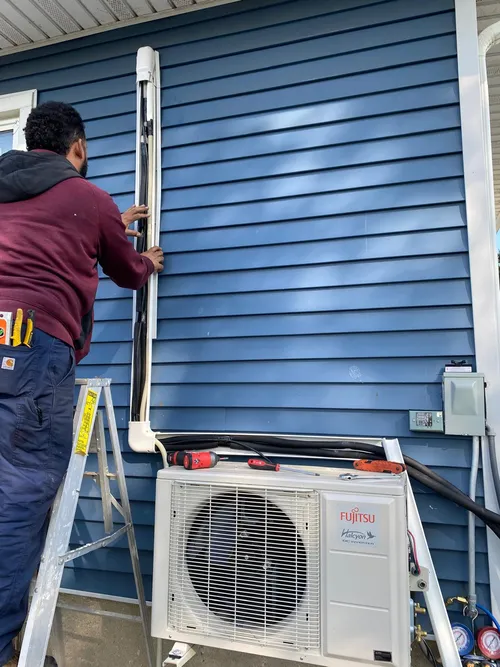
Heating, Cooling & Electric Solutions provides a full range of HVAC repair and maintenance services in New York, NY. The company handles air conditioner, furnace, and boiler repairs, as well as tune-ups for heating and cooling systems. Their experienced technicians work on all major brands and models to ensure systems operate efficiently year-round. They offer scheduled maintenance plans to prevent breakdowns and extend system lifespan. Heating, Cooling & Electric Solutions also prioritizes emergency HVAC repairs, providing fast response times to restore home comfort quickly.
Hellas Air Temp Inc
52 Connecticut Ave, Norwalk, CT 06850
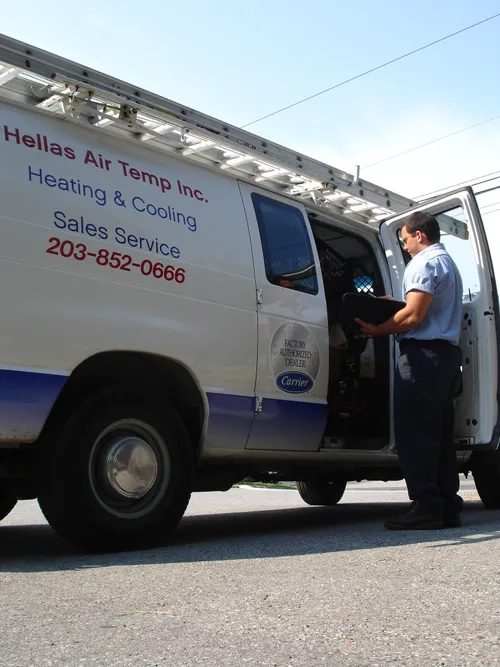
Hellas Air Temp Inc provides residential and commercial heating and cooling services in New York, NY. They offer sales, service, maintenance, and installation for a wide range of HVAC systems including central air, forced air, gas and propane boilers, ductless systems, rooftop units, and custom refrigeration solutions. Established in 1978, the company brings decades of experience to climate control solutions and specializes in customizable systems such as manifolds and circulation pumps.
Understanding Your New Haven Boiler System
In many New Haven homes, especially older properties, heating is provided by a hydronic system. This means a boiler heats water, which is then circulated through a network of pipes to radiators, baseboard heaters, or even radiant floor tubing to warm your living spaces 1. These systems are prized for their consistent, comfortable heat and durability, making them a common fixture in the region.
The type of boiler you have significantly impacts its operation and repair needs:
- Hot Water or Steam Boilers: These traditional systems heat water (or generate steam) that travels to radiators. The cooled water or condensed steam then returns to the boiler to be reheated. They are robust but can be less energy-efficient than newer models.
- Combi Boilers (Combination Boilers): These space-saving units provide both home heating and on-demand domestic hot water from a single appliance, eliminating the need for a separate water storage tank. Their integrated nature means repairs can sometimes involve both heating and plumbing components.
- Condensing Boilers: Representing the high-efficiency standard, these models capture heat from exhaust gases that would otherwise be wasted, making them exceptionally efficient for systems like radiant floors or modern baseboards 2 3. While they have a higher upfront cost, they can lead to substantial savings on energy bills during New Haven's long heating season.
Common Boiler Issues in Cold Climates
New Haven's cold winters demand a lot from heating equipment. The sustained periods of operation can expose weaknesses and lead to specific problems. Common issues that necessitate a boiler service call include:
- No Heat or Inconsistent Heat: This could stem from a faulty thermostat, a broken circulator pump, low water pressure, or issues with the ignition system.
- Strange Noises: Banging, whistling, or gurgling sounds (often called "kettling") are typically caused by limescale buildup, air in the system, or low water flow.
- Leaks: Dripping water or signs of corrosion around the boiler or pipes indicate a breach that needs immediate attention to prevent water damage and system failure.
- Pilot Light or Ignition Problems: If the pilot light won't stay lit or the electronic ignition fails, the boiler cannot start. This is often related to a faulty thermocouple, gas supply issue, or ignition control module.
- Pressure Problems: Hydronic systems operate within a specific pressure range. Pressure that is too high or too low will trigger safety shut-offs or reduce heating efficiency.
Repair vs. Replacement: Making the Right Call
Facing a malfunctioning boiler presents a critical decision. A quick fix might be sufficient, but sometimes investing in a new system is more cost-effective in the long run. Here's how to evaluate your situation in the New Haven context.
When Boiler Repair is the Best Path: Consider scheduling a repair if your system is relatively young (typically under 10 years old) and the problem is isolated and minor. Examples include replacing a faulty thermostat, fixing a small valve leak, or addressing a single radiator that isn't heating. If the repair cost is reasonable and doesn't approach half the cost of a new installation, fixing the existing unit is usually the prudent choice.
When Boiler Replacement is the Smarter Investment: There are several clear signs that a new boiler installation is warranted:
- Age: Most boilers have a lifespan of 15-30 years. If your unit is approaching or has exceeded 15 years and is experiencing problems, replacement often makes more financial sense than pouring money into an aging system.
- Frequent Breakdowns: If you're calling for boiler service multiple times a season, the cumulative repair costs and inconvenience signal that the system is failing.
- Rising Energy Bills: A gradual but steady increase in your heating costs, despite consistent usage, indicates declining efficiency. Modern high-efficiency models can drastically reduce your monthly bills.
- Inconsistent or Inadequate Heat: If some rooms are cold while others are too hot, or the system struggles to maintain the set temperature, it may be undersized, failing, or suffering from distribution problems that a new system can resolve.
- The 50% Rule: A standard rule of thumb among HVAC professionals is that if the repair estimate exceeds 50% of the cost of a new, high-efficiency boiler, replacement is generally the more economical long-term solution 4 5.
Find the perfect boiler repair contractors for your needs
Get personalized recommendations and expert advice
Navigating Costs and Connecticut Incentives
The cost for boiler work in New Haven varies based on the job's complexity, the boiler type, and the parts required. Simple repairs might range from a few hundred dollars to over $1,000. A full boiler replacement is a more significant investment, typically ranging from $4,000 to $10,000 or more, depending on the unit's efficiency rating and the complexity of the installation 6 7.
However, Connecticut residents have access to valuable incentives that can offset these costs. The state offers programs like Home Energy Solutions and various utility-sponsored rebates for installing high-efficiency heating equipment. These incentives can significantly reduce the upfront cost of a new condensing boiler, improve your home's energy efficiency, and increase your long-term savings. It's essential to consult with a qualified local provider who is knowledgeable about current rebates and can help you navigate the application process.
Choosing a Qualified New Haven Boiler Specialist
Selecting the right professional is crucial for a job done safely and correctly. Look for a service provider with:
- Proper Licensing & Insurance: Ensure they hold all required Connecticut state and local licenses for plumbing and heating work and carry liability insurance.
- Proven Experience with Hydronic Systems: Specifically seek out technicians experienced with the types of boilers common in New Haven homes.
- Transparent Pricing & Diagnostics: A reputable company will provide a clear, written estimate after diagnosing the problem, explaining what needs to be done and why.
- Knowledge of Local Incentives: They should be able to inform you about relevant CT rebates and efficiency programs.
- Positive Reviews & References: Check online reviews and ask for references to gauge their reputation for quality work and customer service.
Maintaining Your Boiler for Longevity
Once your boiler is repaired or newly installed, regular maintenance is key to ensuring its efficiency, safety, and lifespan. An annual tune-up by a professional before the heating season begins should include:
- Inspecting and cleaning the heat exchanger, burners, and flue passages.
- Checking all system controls and safety devices.
- Testing water pressure and inspecting for leaks.
- Lubricating moving parts as needed.
- Flushing the system if recommended to remove sediment.
This proactive approach can prevent minor issues from becoming major breakdowns and help your boiler operate at peak efficiency throughout New Haven's winter.
Frequently asked questions
Sources
Footnotes
-
Pros and Cons of Hydronic Heating | First Supply - https://www.firstsupply.com/Knowledge-Center/pros-and-cons-of-hydronic-heating ↩
-
Understanding Heating and Furnace Costs in Connecticut - https://tmscomfort.com/understanding-heating-and-furnace-costs-in-connecticut-your-comprehensive-guide/ ↩
-
What Are the Different Boilers Types? | BWS Plumbing, Heat & Air - https://bwsheatingandair.com/blog/what-are-the-different-types-of-boilers/ ↩
-
Boiler Troubles? How to Tell If It's Time for Repair or Replacement - https://www.halcoenergy.com/about-us/blog/49647-boiler-troubles-how-to-tell-if-its-time-for-repair-or-replacement.html ↩
-
When to replace vs repair your boiler - https://yorkshireheatingrenewables.co.uk/advice/when-to-replace-vs-repair-your-boiler/ ↩
-
Boiler Installation & Replacement in Wallingford - https://www.climatechmechanical.com/boilers/ ↩
-
Connecticut Boiler Guide: Residential Installs and ... - https://egreenhvac.com/blog/connecticut-boiler-guide-residential-installs-and-replacements/ ↩