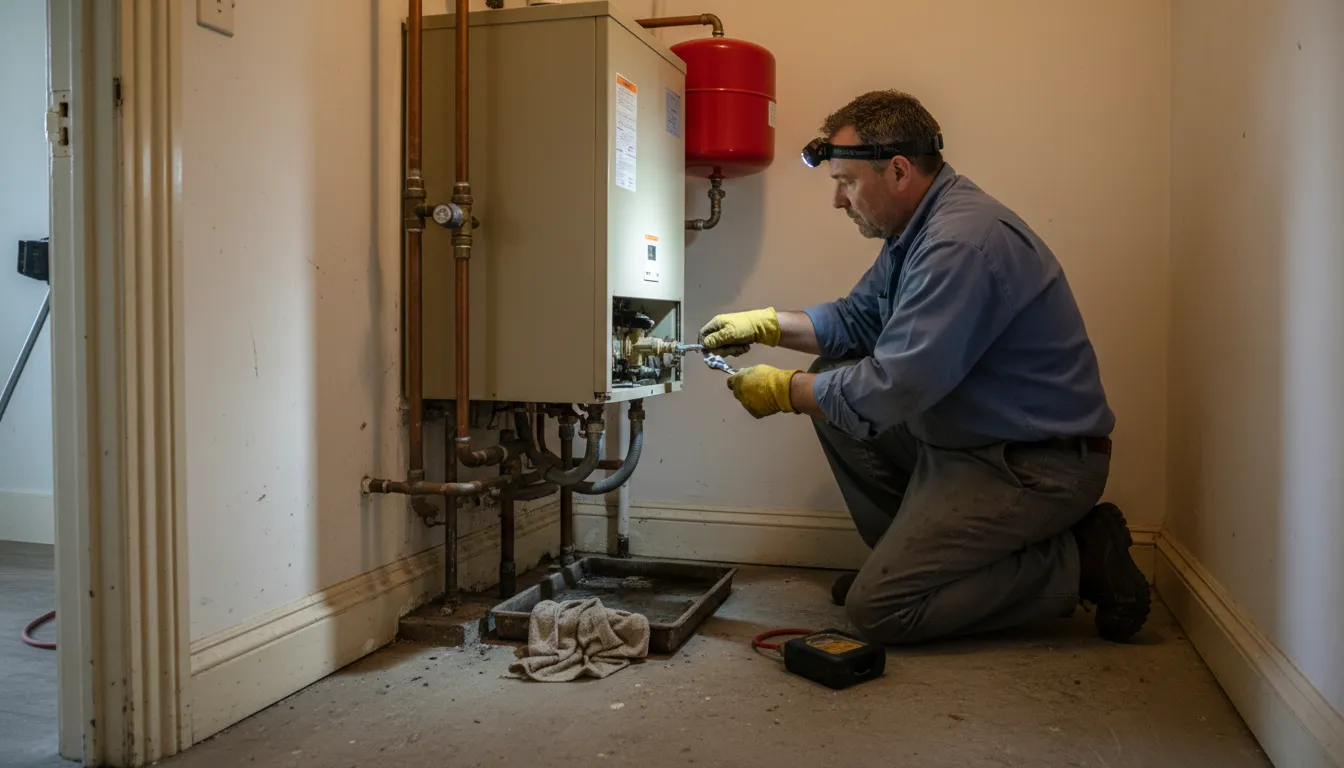
Find the Best Boiler Repair Contractors for Your Business
No obligation • Fast responses • Nationwide coverage

Why you can trust HVAC Firms
HVAC Firms is a leading United States resource for evaluating HVAC service providers. Our team researches companies, checks credentials, and reviews customer feedback to present clear, unbiased information. Listings and rankings are based on merit, and companies cannot pay to change our editorial content.
Search providers near you
Top Boiler Repair Contractors in Meriden, Connecticut Ranked
For homeowners in Meriden, a reliable heating system isn't just a comfort-it's a necessity during our cold Connecticut winters. When your boiler acts up, it can lead to chilly rooms, strange noises, or even the risk of frozen pipes. This guide is designed to help you understand your hydronic heating system, recognize common problems, and make informed decisions between repair and replacement. You can use the information here to find qualified local professionals who can assess your specific situation and provide a solution that ensures your home stays warm and efficient.
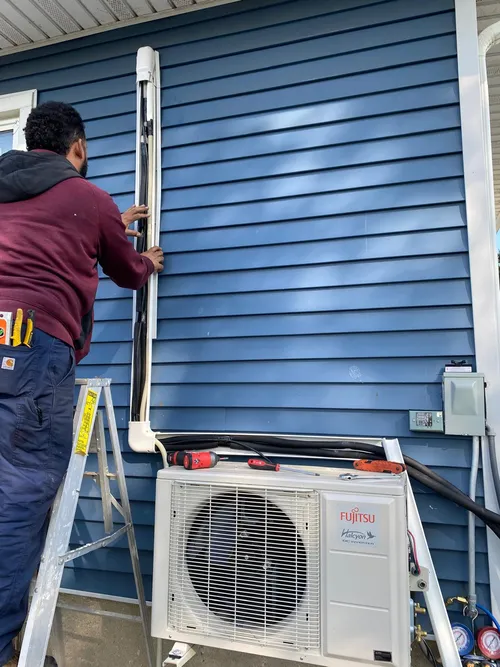
Understanding Your Meriden Home's Heating System
Many homes in Meriden and across Connecticut rely on hydronic heating systems, which use a boiler to heat water that is then circulated through pipes to radiators or baseboard heaters 1. This method, often called radiant heat, is prized for its consistent, comfortable warmth. The most common fuel sources for these boilers are natural gas or oil. Knowing you have a hot water boiler system is the first step in troubleshooting any issues, as its components and maintenance needs differ from forced-air furnaces.
The climate in Meriden plays a significant role in your system's demands. Our cold winters mean your boiler must work reliably and at full capacity for extended periods. A failure during a peak cold snap isn't just inconvenient; it can lead to more serious issues like frozen pipes. This makes proactive maintenance and timely repairs for your hydronic heating equipment critically important for both comfort and home protection.
Common Boiler Problems and What They Mean
Recognizing the signs of a struggling boiler can help you address problems before they escalate. Here are some frequent issues Meriden residents may encounter:
- No Heat or Inadequate Heat: This is the most obvious sign of trouble. It could stem from a faulty thermostat, a broken circulator pump, low water pressure, or a problem with the ignition system or heat exchanger.
- Strange Noises: Your heating system should operate relatively quietly. Banging, clanking, or whistling sounds (often called "kettling") are red flags 2. These noises can indicate limescale buildup, air in the lines, or a failing component.
- Uneven Heating: If some rooms are warm while others are cold, it may point to an imbalance in the system, a failing zone valve, or sludge buildup in the pipes or radiators preventing proper water flow.
- Frequent Cycling: If your boiler turns on and off more frequently than usual, it could be due to an incorrect setting, a faulty aquastat, or an oversized unit.
- Water Leaks: Any sign of water around the boiler or pipes requires immediate attention from a professional, as it can lead to water damage and system corrosion.
- Rising Energy Bills: A gradual increase in your heating costs, despite normal usage, often signals declining boiler efficiency.
Regular professional maintenance, including system flushing every 5-7 years especially in areas with hard water, can prevent many of these issues 3.
The Critical Decision: Repair or Replace Your Boiler?
When faced with a malfunctioning boiler, the biggest question is whether to fix the existing unit or invest in a new one. This decision hinges on several key factors specific to your Meriden home.
When Repair is Often the Best Choice:
- Age: Your boiler is less than 15 years old.
- Issue Severity: The problem is a minor, isolated component failure.
- Cost: The repair estimate is less than 25-50% of the cost of a new, installed system 4.
- History: The system has been reliable with few prior breakdowns and its efficiency is still acceptable.
When Replacement is Likely the Smarter Investment:
- Age: Your boiler is 15 years or older. This is a major tipping point, as efficiency drops and failure risk rises significantly.
- Chronic Problems: You are facing constant major repairs. If you're calling for service multiple times a season, you're throwing good money after bad.
- The 50% Rule: A widely cited guideline suggests that if the repair cost exceeds half the price of a new, high-efficiency system, replacement is the more economical long-term choice 5.
- Performance Issues: You're experiencing uneven heating, loud banging noises, or consistently high energy bills, all signs of a system nearing the end of its life 6.
- Efficiency: Your old boiler has a low Annual Fuel Utilization Efficiency (AFUE) rating. Modern condensing boilers can achieve efficiency ratings of 95% or higher, leading to substantial fuel savings.
Consider a hypothetical scenario for a Meriden homeowner: a 20-year-old boiler suffers a major heat exchanger failure with a repair quote of $2,500. A new, 95% efficient boiler with installation might cost $6,000. Applying the 50% rule, the repair is nearly half the cost of new, suggesting replacement. When you factor in potential energy savings and available rebates, the long-term financial and comfort benefits of replacement become clear.
Find the perfect boiler repair contractors for your needs
Get personalized recommendations and expert advice
Costs and Incentives for Meriden Homeowners
Understanding the financial landscape is crucial for planning. While prices vary based on your home's size, system complexity, and the unit selected, here are general estimates to guide your expectations:
- Repair Costs: Minor fixes can start around $200, while major component replacements (like a heat exchanger or circulator pump) can range from $500 to $1,000 or more.
- Replacement Costs: A new gas or oil boiler unit alone typically costs between $3,000 and $8,000+. Professional installation adds another $2,000 to $5,000+ depending on the complexity of the job (e.g., moving gas lines, updating piping) 7 8.
The good news is that investing in a high-efficiency boiler upgrade can be offset by incentives. Connecticut residents should explore programs through the CT Green Bank, which may offer rebates for qualifying high-efficiency heating equipment installations. These rebates can range from several hundred to over a thousand dollars, effectively lowering your upfront cost and improving your return on investment through ongoing energy savings.
Choosing a Qualified Professional in Meriden
Your boiler is a complex appliance that requires expert attention. When seeking service, always look for licensed and insured HVAC contractors who specialize in hydronic system service. They will have the specific tools and knowledge to properly diagnose issues with your radiators, baseboards, and piping. Be sure to:
- Get Multiple Quotes: Obtain 2-3 detailed estimates from different local providers for any significant repair or replacement project.
- Ask for a Full Assessment: A reputable technician will inspect your entire system, not just the boiler, and explain their findings clearly.
- Check for Incentives: A knowledgeable contractor should be aware of current CT Green Bank rebates and help you understand if your project qualifies.
- Compare Lifetime Value: Look beyond the initial price tag. A slightly more expensive, high-efficiency model with a good warranty may save you more money over 15+ years of operation.
Maintaining Your System for Longevity
Once your boiler is repaired or replaced, proper maintenance is key to ensuring its longevity and efficiency. Annual tune-ups by a professional are recommended. This service typically includes cleaning the burner and heat exchanger, checking for leaks, testing safety controls, and ensuring the system is operating at peak efficiency. Homeowners can also help by keeping the area around the boiler clean and unobstructed and by monitoring the system pressure gauge if one is present. Addressing small issues promptly can prevent them from turning into costly, large-scale repairs down the line.
Frequently asked questions
Sources
Footnotes
-
4 Different Types of Heating Systems | Martel Plumbing and Heating - https://www.martelplumbingri.com/blog/4-different-types-of-heating-systems/ ↩
-
How to Troubleshoot Common Issues with Your Hydronic Heating System - https://hydeheatingandcooling.com.au/blog/how-to-troubleshoot-common-issues-with-your-hydronic-heating-system/ ↩
-
Should Hydronic Heating Systems Be Flushed? - Fante's HVAC - https://fantesphvac.com/should-hydronic-heating-systems-be-flushed/ ↩
-
Boiler Repair vs Replacement Guide - Hahn Plumbing - https://hahnplumbing.com/is-it-better-to-repair-or-replace-a-broiler/ ↩
-
Should You Repair or Replace Your Boiler? | Westmore Fuel - https://www.westmorefuel.com/blog/planning-your-boiler-upgrade/ ↩
-
Boiler Troubles? How to Tell If It's Time for Repair or Replacement - https://www.halcoenergy.com/about-us/blog/49647-boiler-troubles-how-to-tell-if-its-time-for-repair-or-replacement.html ↩
-
Connecticut Boiler Guide: Residential Installs and ... - https://egreenhvac.com/blog/connecticut-boiler-guide-residential-installs-and-replacements/ ↩
-
I have boiler issues - should I repair or replace it? - Viessmann US - https://www.viessmann-us.com/en/guide/boiler-issues-repair-or-replace.html ↩