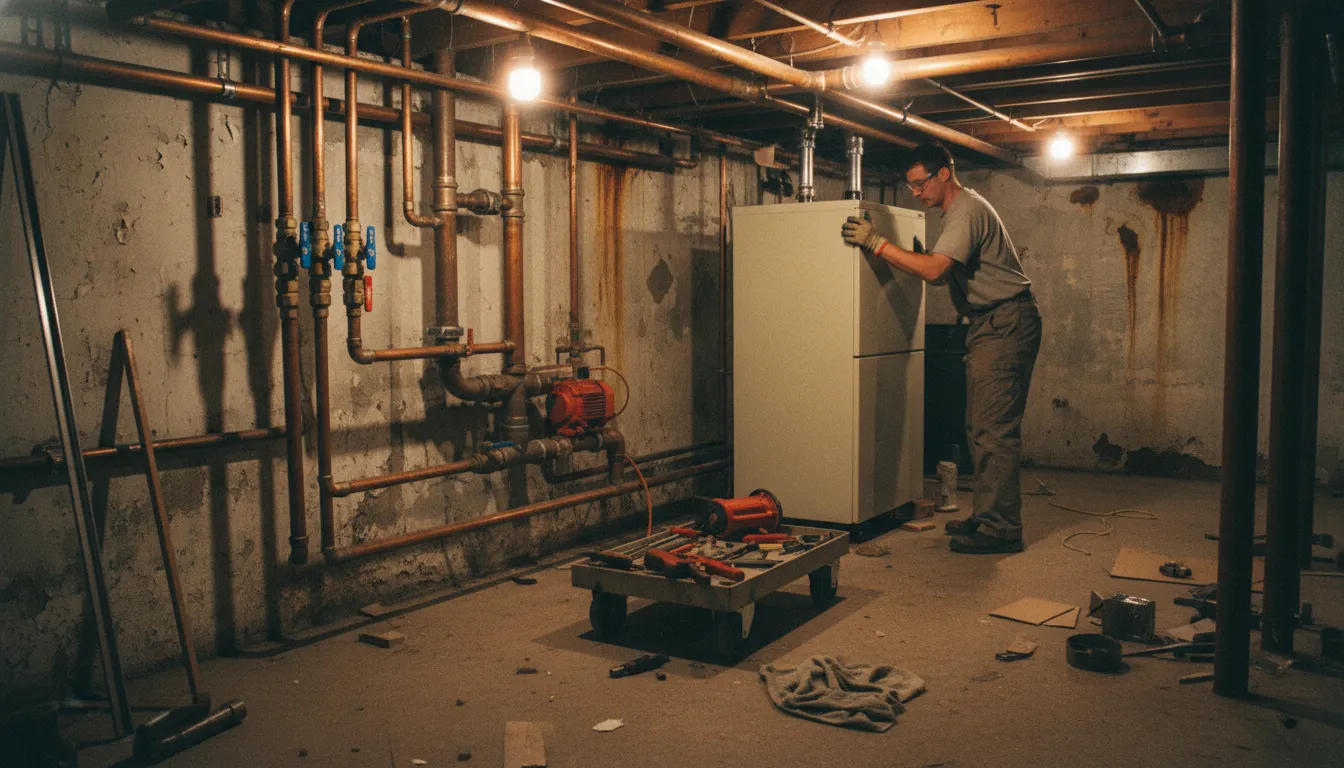
Find the Best Boiler Installation & Replacement Contractors for Your Business
No obligation • Fast responses • Nationwide coverage

Why you can trust HVAC Firms
HVAC Firms is a leading United States resource for evaluating HVAC service providers. Our team researches companies, checks credentials, and reviews customer feedback to present clear, unbiased information. Listings and rankings are based on merit, and companies cannot pay to change our editorial content.
Search providers near you
Top Boiler Installation & Replacement Contractors in Manassas, Virginia Ranked
A new boiler installation or replacement is a significant investment in your home's comfort, efficiency, and long-term value. Whether you're upgrading an aging system, converting from another fuel source, or installing heating in a new construction, the right boiler provides consistent, quiet warmth through Manassas's chilly winters. This guide helps you understand the types of systems available, the local requirements, and the process for a successful project, empowering you to make informed decisions when connecting with qualified local specialists.
AZA heating, cooling, plumbing & construction
5800 Quantrell Ave #1510, Alexandria, VA 22312
AZA heating, cooling, plumbing & construction is an HVAC contractor serving Washington, DC, and the surrounding Maryland and Virginia areas. They provide a range of services including air conditioning repair, heating system repair and installation, plumbing, duct cleaning, and HVAC system tune-ups. The company offers expertise in furnace and boiler repairs, as well as air conditioner installation and maintenance. With over 25 years of experience, AZA heating, cooling, plumbing & construction operates a 24/7 service model to address heating and cooling emergencies promptly.
C.D. Shanahan's HVAC, Plumbing, Electrical & Remodeling LLC
7950 Woodruff Ct, Springfield, VA 22151
C.D. Shanahan's HVAC, Plumbing, Electrical & Remodeling LLC provides heating and cooling services in Washington, DC. They offer repair and installation for air conditioning, furnaces, heat pumps, boilers, and full HVAC systems. Their certified technicians bring extensive experience to each job, ensuring quality HVAC tune-ups and system maintenance. The company serves both residential and commercial customers in the area.
McDaniel Service, Inc
7300 Lockport Pl # 3, Lorton, VA 22079
McDaniel Service, Inc is a family-owned HVAC and plumbing contractor serving Washington, DC. They provide a wide range of services including installation, repair, and maintenance of air conditioning, heating systems such as furnaces, boilers, and heat pumps, as well as duct cleaning and indoor air quality solutions. Their capabilities extend to plumbing services like water heaters, gas piping, and backflow testing. The company handles both residential and commercial projects, offering expertise in water treatment and advanced indoor air quality installations such as air purifiers and UV lights. All work is performed by licensed, in-house technicians who service all major brands.

Commonwealth Cooling & Heating, LLC
7211 Telegraph Square Dr STE B, Lorton, VA 22079
Commonwealth Cooling & Heating, LLC is a family-owned HVAC company serving Washington, DC, and Northern Virginia since 2002. They provide full-service heating and air conditioning solutions, including repair, installation, and maintenance for air conditioners, furnaces, heat pumps, and boilers. The company is a Bryant Factory Authorized Dealer with NATE-certified technicians, offering 24/7 emergency services and expertise in indoor air quality products such as humidifiers and air purifiers. Their services cover residential and light commercial customers across Northern Virginia, including areas like Fairfax, Burke, and Arlington.
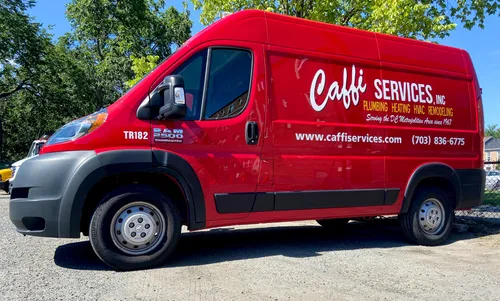
Caffi Services
1313 Powhatan St, Alexandria, VA 22314
Caffi Services is an HVAC, plumbing, and remodeling company serving Washington, DC and Northern Virginia. They offer a wide range of services including installation, repair, and maintenance of heating and cooling systems such as boilers, furnaces, heat pumps, air conditioners, and ductless mini-splits. Their NATE-certified technicians handle both residential and commercial HVAC systems, with capabilities including emergency 24/7 heating services and comprehensive plumbing solutions like leak detection and drain cleaning. With over 50 years of experience, Caffi Services also provides kitchen and bathroom remodeling and offers maintenance agreements to help keep systems running efficiently.
Understanding Boiler Systems for Your Home
Modern boiler technology offers several configurations, each with distinct advantages depending on your home's layout and hot water needs. The core function is the same: to heat water (or produce steam) that is then circulated to provide warmth. The most common setup in our region is a hydronic heating system, which uses water circulated through pipes to radiators, baseboard heaters, or in-floor radiant tubing, known for delivering even, draft-free heat 1.
- Conventional Boilers: Often found in older homes, these traditional systems use a separate hot water storage cylinder and a cold water tank (frequently located in an attic). They are reliable and can supply high volumes of hot water to multiple outlets simultaneously, making them suitable for larger households with higher demand.
- System Boilers (Combi Units): These integrated units are increasingly popular for space-saving designs. A combination, or "combi," boiler heats water directly from the mains, providing both central heating and instant domestic hot water on demand without the need for a storage tank. They are ideal for homes with limited space and good water pressure.
- Condensing Boilers: Now the standard for high-efficiency installations, condensing units capture heat from the exhaust gases that would otherwise be wasted, achieving Annual Fuel Utilization Efficiency (AFUE) ratings of 90% or higher. They work most efficiently with lower-temperature distribution systems like radiant floor heating or specially designed low-temperature radiators, leading to substantial energy savings over time 2 3.
Local Codes, Permits, and Inspection Requirements in Manassas
Safety and compliance are paramount for any boiler installation. In Virginia, all work must adhere to the state-adopted International Mechanical Code (IMC), specifically Chapter 20 covering Boilers and Water Heaters. A licensed professional will ensure the installation meets these stringent standards.
- Permits Are Mandatory: Before any work begins, a permit must be obtained from the local building department. This process ensures the planned installation is reviewed for code compliance, covering critical safety aspects like proper venting, gas line sizing (for gas-fired units), combustion air supply, and pressure relief valve installation.
- The Role of the Installer: A qualified technician is responsible for following both the local codes and the boiler manufacturer's specific installation instructions. This includes correctly setting controls, providing system diagrams, ensuring adequate ventilation for fuel-burning appliances, and conducting thorough final testing.
- Final Inspection: Once installation is complete, a municipal inspector will visit to verify the work meets all code requirements. This final inspection is crucial for signing off on the permit and ensuring your system is safe for operation. It typically checks gas connections, venting, electrical wiring, and overall installation integrity.
Investment and Cost Considerations
The total cost for a boiler replacement in Manassas can vary widely based on system type, home size, and project complexity. For a typical residential replacement, homeowners can expect a total installed cost ranging from $6,000 to over $11,500. This estimate generally includes the equipment, all labor, and permit fees.
- Equipment Costs: The boiler unit itself typically ranges from $2,000 to $7,000. Higher-efficiency condensing models and larger-capacity units command a higher price but offer greater long-term savings on fuel bills 4 5.
- Labor & Ancillary Costs: Professional installation labor, along with materials like piping, valves, and controls, usually adds $1,500 to $3,000 or more. This portion of the cost is influenced by the job's complexity, such as whether it involves moving the boiler location, upgrading fuel lines, or integrating with existing radiant floor systems 6 7 8.
- Key Cost Factors:
- Fuel Type: Converting from an old oil-fired boiler to a new high-efficiency gas model involves additional costs for running a new gas line and modifying venting, but often results in lower operating costs.
- Home Size & Heat Loss: Proper sizing is critical. A technician will perform a heat loss calculation (measured in BTUs) to determine the correct boiler capacity for your specific home, preventing under- or over-sizing.
- Efficiency (AFUE): Units with higher AFUE ratings have a higher upfront cost but significantly reduce monthly heating expenses. The premium for a high-efficiency model is often recouped through energy savings within a few years.
Find the perfect boiler installation & replacement contractors for your needs
Get personalized recommendations and expert advice
The Step-by-Step Installation Process
A professional boiler replacement follows a structured process to ensure reliability and safety from start to finish.
- Initial Assessment and Sizing: The first step is a comprehensive evaluation of your home. A technician will calculate the heat loss based on insulation, window quality, square footage, and layout. This determines the precise BTU/hour output required, ensuring your new boiler is neither overworked nor inefficiently short-cycling.
- System Selection and Planning: Based on the assessment and your household's hot water needs, you'll choose the appropriate boiler type (conventional, system, or condensing), fuel source, and efficiency level. Your contractor will also plan the installation details, including placement, venting route, and any necessary upgrades to piping or electrical service 9.
- Permitting and Preparation: Your contractor will pull the required local permits. On installation day, the old boiler and related components are safely disconnected and removed, with proper disposal of any old equipment.
- New Installation: The new boiler is positioned, leveled, and secured. All connections are made: water supply and return lines, fuel line (gas or oil), electrical wiring, venting/flue, and the connection to your thermostat and control system. For gas boilers, gas line work is particularly critical and must be pressure-tested.
- System Start-up, Testing, and Inspection: Once physically installed, the system is filled with water, purged of air, and fired up. The technician will test all safety controls, check for leaks, verify proper venting and combustion, and calibrate the controls for optimal performance. After this testing, the final municipal inspection is scheduled to close out the permit 10 11.
Maintaining Your New Boiler System
To protect your investment and ensure years of efficient, trouble-free operation, regular maintenance is essential. An annual professional tune-up before the heating season is recommended. This service typically includes cleaning the heat exchanger, checking and adjusting the burner, testing safety devices, and inspecting the venting system. For homeowners, regularly checking the system pressure gauge and ensuring vents and air intakes are unobstructed are good practices.
Frequently asked questions
Sources
Footnotes
-
Boiler System Repair & Replacement In Northern VA | Book Now - https://www.fhfurr.com/dc-metro-area/heating/boilers/ ↩
-
Heating Installation Contractors In The DMV - https://www.michaelbonsbyhvac.com/heating/installation ↩
-
Boiler Replacement Cost and Price - Carrier - https://www.carrier.com/residential/en/us/products/boilers/cost-buying-boiler-replacement/ ↩
-
How Much Does Boiler Replacement Cost in 2026? Price by Type - https://modernize.com/hvac/heating-repair-installation/boiler ↩
-
How Much Does a Boiler Cost? A Budget Guide for Homeowners - https://www.bobvila.com/articles/residential-boiler-prices/ ↩
-
Boiler Replacement Costs: Smart Budgeting and Planning ... - https://www.tcmemt.com/post/the-cost-of-boiler-replacement-expert-guide-to-smart-budgeting-and-installation-planning ↩
-
How Much Does an Oil Boiler Cost? | Replace, Install & Operation Costs - https://modernize.com/hvac/heating-repair-installation/boiler/oil ↩
-
How much does a new boiler cost to install or replace? - HomeGuide - https://homeguide.com/costs/boiler-replacement-cost ↩
-
How Much Does Residential Boiler Installation Cost? - https://www.aeroenergy.com/how-much-does-residential-boiler-installation-cost/ ↩
-
Residential & Commercial Boiler Installation in Richmond, VA - https://www.bradleymechanical.com/hvac/heating/boiler-installation ↩
-
CHAPTER 20 BOILERS AND WATER HEATERS - ICC Digital Codes - https://codes.iccsafe.org/content/VARC2021P1/chapter-20-boilers-and-water-heaters ↩