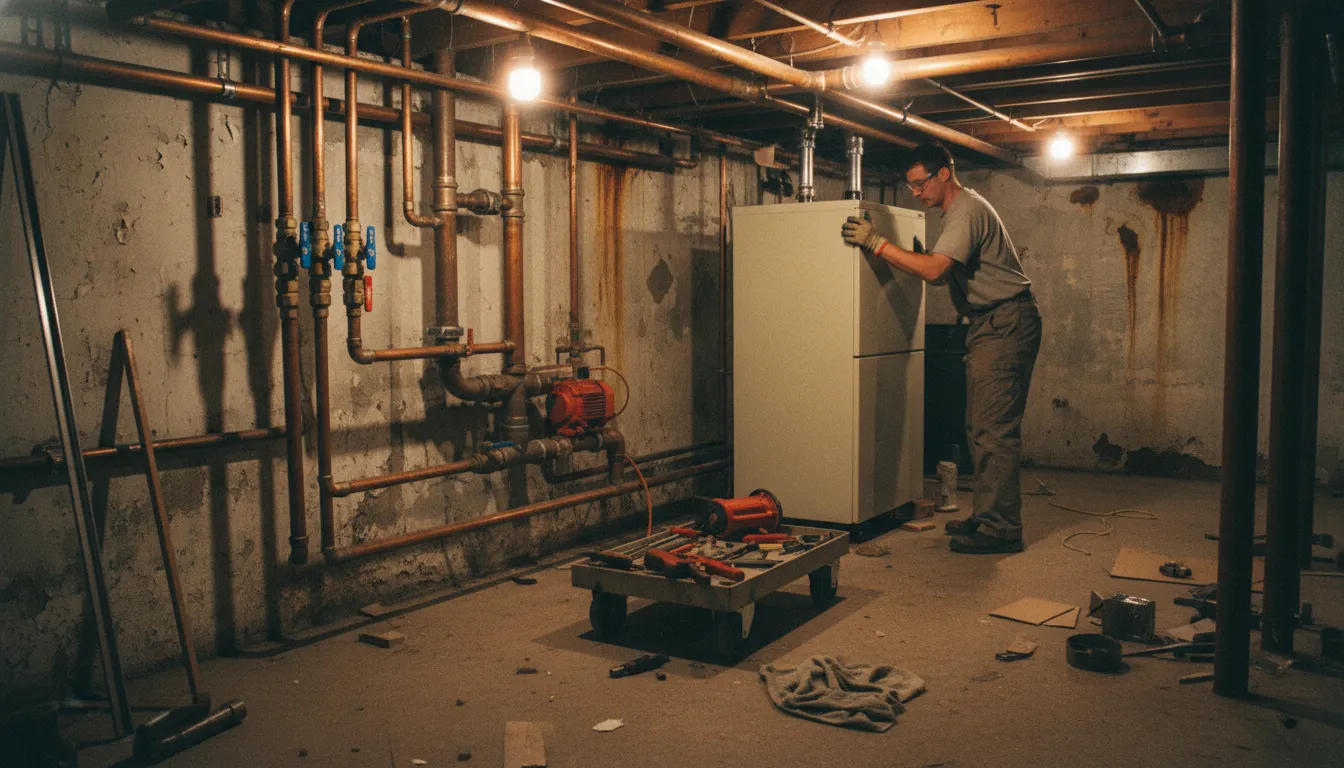
Find the Best Boiler Installation & Replacement Contractors for Your Business
No obligation • Fast responses • Nationwide coverage

Why you can trust HVAC Firms
HVAC Firms is a leading United States resource for evaluating HVAC service providers. Our team researches companies, checks credentials, and reviews customer feedback to present clear, unbiased information. Listings and rankings are based on merit, and companies cannot pay to change our editorial content.
Search providers near you
Top Boiler Installation & Replacement Contractors in Dallas, Texas Ranked
A boiler is the heart of a hydronic heating system, providing reliable warmth by circulating hot water through radiators, baseboards, or radiant floor tubing. Whether you're upgrading an aging system for efficiency or installing a new boiler for a home addition, choosing the right unit and a qualified professional is crucial for comfort, safety, and long-term value. This guide provides the essential information you need to understand your options, navigate local regulations, and connect with experienced specialists for your boiler project in Dallas.
Conover Heating & Air
4200 Gus Thomasson Rd Suite 114, Mesquite, TX 75150
Conover Heating & Air is a family-owned HVAC company serving Dallas, TX, and surrounding areas since 1975. They provide residential heating and cooling services including repair and installation of air conditioners, furnaces, heat pumps, and boilers. Their technicians also offer HVAC tune-ups and indoor air quality solutions. With over 50 years of experience, Conover Heating & Air emphasizes honest service without unnecessary upselling and maintains a well-stocked inventory to support long-lasting repairs. Their service area includes Mesquite, Garland, Forney, Rockwall, Fate, Lake Highlands, North Dallas, Richardson, and University Park.

Temp Pro Mechanical
3643 Lawnwood St, Fort Worth, TX 76111
Temp Pro Mechanical provides a full range of HVAC services in Fort Worth, TX, including installation and repair of air conditioners, furnaces, heat pumps, and boilers. Their licensed technicians handle heating, cooling, and ventilation needs with a focus on energy-efficient solutions. The company offers 24/7 emergency services to address urgent HVAC issues promptly.
Prestige Heating & Air LLC
2484 Country Meadow Ln, Wylie, TX 75098
Prestige Heating & Air LLC is an HVAC company serving Plano, TX, and the surrounding DFW area. They provide repair and installation services for air conditioning, furnaces, heat pumps, and boilers. The company emphasizes honest and reliable service, aiming to build long-term relationships with customers through tailored solutions that maintain comfort year-round.
All City Air
1209 N Ave STE 1, Plano, TX 75074
All City Air is an HVAC company based in Plano, TX, providing installation, maintenance, and repair services for air conditioning, furnaces, heat pumps, and boilers. They serve both residential and commercial clients throughout the region, including nearby cities such as McKinney, Dallas, and Frisco. Their capabilities include comprehensive HVAC tune-ups and system installations tailored to customer needs.
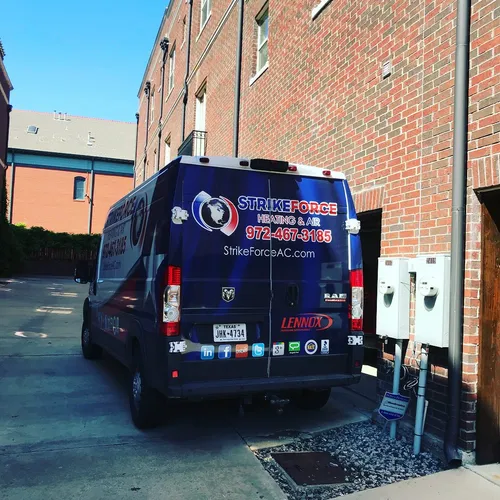
StrikeForce Heating & Air LLC
9734 Skillman St, Dallas, TX 75243
StrikeForce Heating & Air LLC is an HVAC company based in Dallas, TX, offering installation, repair, and maintenance services for air conditioning, heating systems, heat pumps, boilers, and furnaces. They also provide indoor air quality improvements and energy audits to help customers choose the best solutions for their homes. The company has been serving Dallas and nearby areas since 2011 and is known for servicing all major brands, including Lennox as a preferred Premier Dealer. StrikeForce Heating & Air LLC offers 24/7 emergency repair services for heating and cooling systems, ensuring help is available whenever needed.
Understanding Your Boiler Options in Dallas
When considering a new boiler installation or a replacement, the first step is understanding the different types of systems and fuels available. Your choice will impact upfront costs, long-term energy bills, and the compatibility with your existing heating distribution system.
Fuel Types: Gas vs. Electric In Dallas, natural gas is the most common fuel for residential boilers due to its widespread availability and typically lower operating costs compared to electricity 1. Gas boilers are well-suited for whole-home heating. Electric boilers are an option, often used for smaller spaces, supplemental heat, or in areas without gas service. They are generally simpler to install but can be more expensive to operate, depending on local electricity rates.
Efficiency Ratings: AFUE A boiler's efficiency is measured by its Annual Fuel Utilization Efficiency (AFUE) percentage. This indicates how much of the fuel's energy is converted into usable heat.
- Standard Efficiency: Units with an AFUE between 80% and 89%. These are often non-condensing models and are typically the most budget-friendly option upfront.
- High-Efficiency/Condensing Boilers: These models have an AFUE of 90% or higher. They extract more heat from combustion gases, which condense water vapor in the process. While they have a higher initial purchase price, they can lead to significant savings on your gas bills over the system's lifespan, making them a popular choice for long-term homeowners.
Hydronic System Types Your boiler heats water, but how that heat is delivered depends on your home's hydronic system:
- Baseboard Radiators: Common in many Dallas homes, these units run along walls and provide convective heat.
- Radiant Floor Heating: Tubing is installed within the floor, providing even, comfortable warmth from the ground up. This is a premium and efficient option, though installation costs can be higher, especially in retrofits 2.
- Traditional Radiators: Less common in newer builds, these standalone units provide radiant heat.
Key Factors Influencing Boiler Installation Cost
The cost of a boiler installation or replacement in Dallas is not a single flat fee. It's a composite of the equipment, labor, and ancillary work required for a safe, code-compliant job. Understanding these variables will help you interpret quotes more accurately.
Equipment Costs The boiler unit itself is a major cost driver. Prices vary significantly based on type, brand, capacity (measured in BTUs), and efficiency rating. On average, homeowners in Dallas can expect the total project cost for a replacement to range from approximately $3,600 to $8,500, with high-efficiency condensing models reaching $12,000 or more for complex installations 3.
Labor and Installation Complexity Professional labor includes removing and disposing of the old boiler, installing the new unit, connecting fuel and water lines, integrating controls and thermostats, and testing the system. Complexity increases with factors like:
- Relocation: Moving the boiler to a new location requires extended piping and venting.
- System Updates: Integrating with a new type of distribution system (e.g., adding zones for radiant heat).
- Access Issues: Tight spaces or difficult access can increase labor time.
Additional Potential Costs Be sure your quote details if these items are included or will be extra:
- New Gas Line: If your new boiler requires a larger gas supply line, running a new line can add $2,000 or more to the project 4 5.
- Venting System: High-efficiency condensing boilers require special PVC venting, which may be a new cost if you're replacing a standard boiler.
- Asbestos Abatement: Older boilers and pipe insulation may contain asbestos, requiring professional and costly remediation.
- Oil Tank Removal: If replacing an old oil-fired boiler, the underground tank must be properly decommissioned and removed.
- Electrical Updates: New boilers may require updated electrical circuits or connections.
- Permits and Inspections: These are mandatory and are typically handled by your contractor, but their fees are part of the overall cost.
Find the perfect boiler installation & replacement contractors for your needs
Get personalized recommendations and expert advice
Navigating Dallas and Texas Regulations
Boiler work is highly regulated to ensure public safety. In Texas, installations are governed by both state and local codes. Working with a licensed professional is non-negotiable, as they will manage this critical compliance process.
Texas Department of Licensing and Regulation (TDLR) All boilers in Texas must be registered with the TDLR. Your installer is responsible for filing the manufacturer's data report and registering the boiler after installation. The TDLR also mandates periodic inspections-annually, biennially, or triennially depending on the boiler type-to check structural integrity, safety controls, and pressure relief devices.
Local Permits and the Dallas Building Code Before work begins, your contractor must pull the necessary permits from the City of Dallas. Installation must adhere to the Dallas Building Code, which incorporates the International Residential Code (IRC). Chapter 20 of the IRC specifically covers boilers and water heaters, dictating requirements for clearances, combustion air, venting, and pressure relief 6. The installation must also comply with the ASME Boiler and Pressure Vessel Code and the manufacturer's instructions.
Why Licensing Matters A licensed HVAC professional understands these intricate codes. They ensure the installation is safe, passes inspection, and preserves your manufacturer's warranty. Unpermitted or improper work can lead to failed inspections, safety hazards (like carbon monoxide risk), and voided warranties, costing you far more in the long run.
Sizing and Selecting the Right Boiler
Choosing a boiler that is correctly sized for your Dallas home is paramount. An oversized boiler will short-cycle (turn on and off frequently), reducing efficiency, increasing wear, and creating uncomfortable temperature swings. An undersized boiler will struggle to keep your home warm during colder spells.
The Importance of a Heat Load Calculation The only accurate way to determine the proper boiler size is through a Manual J heat load calculation. This professional assessment considers your home's square footage, insulation quality, window types and orientation, air infiltration rates, and local climate data. For a general estimate in Dallas's climate, a rule of thumb is approximately 35 BTUs per square foot of living space 7. This means an average 2,500-square-foot home might require a boiler in the range of 54,000 to 87,500 BTUs 8 7. However, only a detailed calculation can provide the precise number.
Matching the Boiler to Your Home's Needs Beyond size, selection involves:
- Compatibility: Ensuring the new boiler works with your existing pipes, radiators, or radiant system.
- Modulating vs. Fixed-Rate: Modulating-condensing boilers adjust their flame and output to match the exact heat demand, providing superior efficiency and comfort compared to single-stage models.
- Domestic Hot Water: Some boilers can also heat your household water through an indirect water heater tank, known as a combi-system.
The Professional Installation Process
Knowing what to expect during a professional boiler installation can help the project run smoothly.
- Initial Consultation & Quote: A technician assesses your current system, discusses your needs, performs a heat load calculation, and provides a detailed written estimate.
- Permitting: Your contractor obtains all required city and state permits.
- Preparation & Removal: The old boiler is safely disconnected, removed, and disposed of. The area is prepped for the new unit.
- Installation: The new boiler is set, leveled, and connected to fuel, water, electrical, and venting systems. New circulator pumps, expansion tanks, and controls are installed as needed.
- System Flush & Fill: The entire hydronic piping system is thoroughly flushed to remove debris and then filled with treated water to prevent corrosion.
- Start-up & Testing: The boiler is fired up, all controls are calibrated, and the system is tested for proper operation, efficiency, and safety.
- Inspection & Registration: The installer schedules the required municipal inspection. Once passed, they register the boiler with the TDLR 9 10.
- Homeowner Orientation: A final walk-through ensures you understand how to operate and maintain your new system.
Frequently asked questions
Sources
Footnotes
-
The Price of Comfort: Exploring Hydronic Heating System Cost - https://choosesanford.com/hydronic-heating-system-cost/ ↩
-
Cost to install radiant floor heating in Dallas, TX - https://www.handoff.ai/construction-costs/install-radiant-floor-heating/dallas-tx ↩
-
How Much Does Boiler Replacement Cost in Dallas, TX? | Angi - https://www.angi.com/articles/how-much-does-boiler-installation-cost/tx/dallas ↩
-
Boiler Replacement Costs: Smart Budgeting and Planning ... - https://www.tcmemt.com/post/the-cost-of-boiler-replacement-expert-guide-to-smart-budgeting-and-installation-planning ↩
-
How Much Does Boiler Installation and Replacement Cost? [2026 ... - https://www.angi.com/articles/how-much-does-boiler-installation-cost.htm ↩
-
Chapter 20 Boilers and Water Heaters - UpCodes - https://up.codes/viewer/dallas/irc-2021/chapter/20/boilers-and-water-heaters ↩
-
What Size Boiler Do I Need for My House? A Complete Guide - https://greenenergymech.com/blog/what-size-boiler-need-for-house/ ↩ ↩2
-
Comprehensive Boiler Installation Guide - PlumbersStock - https://www.plumbersstock.com/how-to-hvac/boilers/comprehensive-installation-guide.html ↩
-
Boiler Information - https://www.tdlr.texas.gov/boilers/blrinfo.htm ↩
-
16 Tex. Admin. Code § 65.200 - New Boiler Installations - https://www.law.cornell.edu/regulations/texas/16-Tex-Admin-Code-SS-65-200 ↩