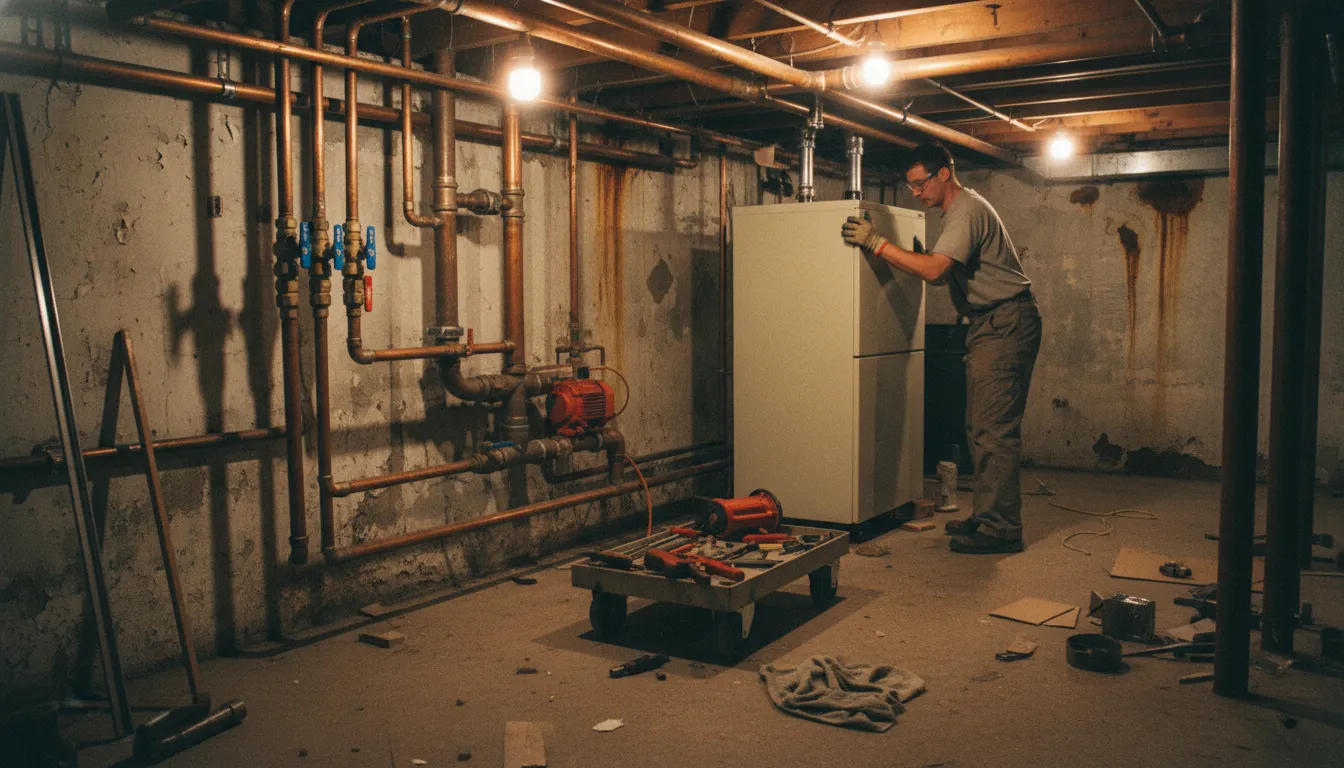
Find the Best Boiler Installation & Replacement Contractors for Your Business
No obligation • Fast responses • Nationwide coverage

Why you can trust HVAC Firms
HVAC Firms is a leading United States resource for evaluating HVAC service providers. Our team researches companies, checks credentials, and reviews customer feedback to present clear, unbiased information. Listings and rankings are based on merit, and companies cannot pay to change our editorial content.
Search providers near you
Top Boiler Installation & Replacement Contractors in Spring Hill, Tennessee Ranked
Installing or replacing a boiler is a significant home improvement decision that directly impacts your comfort, energy bills, and safety. A properly sized and installed hydronic heating system provides consistent, efficient warmth throughout your home. This guide is designed to help Spring Hill homeowners understand the process, costs, and local requirements for boiler work, empowering you to make informed decisions and connect with qualified local professionals for your project.
Mechanical Standard Plumbing
Nashville, TN
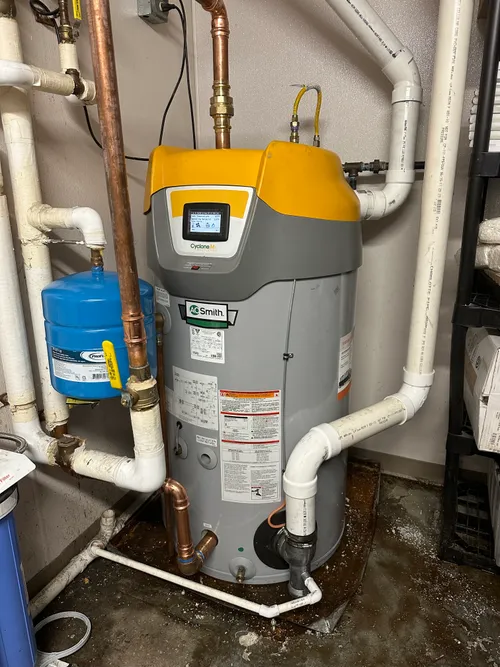
Mechanical Standard Plumbing is a commercial plumbing company based in Nashville, TN, specializing in boiler repair and installation along with water heater services, backflow testing, lift station maintenance, drain cleaning, and pump systems. They focus on maintaining and replacing equipment to ensure efficient operation in commercial settings. Their certified technicians handle a variety of boiler and water heater systems, including tankless models, and provide preventive maintenance to extend equipment lifespan. Mechanical Standard Plumbing also offers service subscriptions to keep plumbing and mechanical equipment maintained year-round.

Brilliant Mechanical LLC
6201 Charlotte Pike, Nashville, TN 37209
Brilliant Mechanical LLC is a locally owned HVAC company based in Nashville, TN, offering a wide range of heating and cooling services for both residential and commercial clients. Their services include repair and installation of air conditioners, furnaces, heat pumps, boilers, mini splits, and full HVAC systems. The company is licensed and certified by NATE, EPA, and Mitsubishi VRF, ensuring skilled and knowledgeable technicians. With over 40 years of experience, Brilliant Mechanical LLC operates a full-service sheet metal shop and provides 24/7 service availability.
Action Mechanical, LLC
195 Industrial Blvd, La Vergne, TN 37086
Action Mechanical, LLC provides HVAC installation and repair services in Nashville, TN. They specialize in air conditioning, furnace, heat pump, and boiler systems, offering comprehensive solutions to maintain home comfort year-round. With over 37 years of combined industry experience, their team is State Certified Mechanical Contractors focused on delivering dependable and efficient HVAC and plumbing services.

Roscoe Brown Heating, Cooling, and Plumbing
959 N Thompson Ln, Murfreesboro, TN 37129
Roscoe Brown Heating, Cooling, and Plumbing has been serving Nashville, TN, and the surrounding Middle Tennessee area for over 80 years. The company offers a wide range of HVAC services including air conditioning, furnace, heat pump, boiler, and mini split installation and repair, as well as HVAC tune-up services. With a legacy dating back to 1940, Roscoe Brown combines deep local roots with expertise in maintaining and restoring heating, cooling, and plumbing systems for both residential and commercial clients.

Lee Company
7071 Old Harding Pike, Nashville, TN 37221
Lee Company is a home and facility services provider based in Nashville, TN. They offer a wide range of HVAC services including air conditioning, furnace, heat pump, and boiler repair and installation. With over 80 years of experience, Lee Company serves Tennessee and neighboring states, providing licensed technicians who deliver lasting solutions. The company is available 24/7 for heating and air conditioning needs, ensuring support whenever required.
Understanding Your Home's Hydronic Heating System
Before diving into installation, it's crucial to understand what a boiler does. Unlike a furnace that heats air, a boiler heats water. This hot water (or steam) is then circulated through a network of pipes to deliver heat via radiators, baseboard heaters, or in-floor radiant tubing. This method, known as hydronic heating, is prized for its even, comfortable heat and quiet operation.
The core components include the boiler unit itself, a circulator pump, piping, expansion tank, and the heat emitters (like radiators). The system is closed-loop, meaning the same water is heated and recirculated. Choosing the right system for your Spring Hill home depends on several factors, including your existing infrastructure, fuel type, and desired efficiency.
Types of Boilers: Choosing the Right Unit
Selecting the correct boiler type is the first major step. The right choice balances upfront cost with long-term efficiency and performance.
Standard Efficiency Boilers: These are non-condensing units with Annual Fuel Utilization Efficiency (AFUE) ratings typically between 80% and 85%. They have a lower initial purchase price but lose more heat through the flue. They are often a straightforward replacement for an older, similar model.
High-Efficiency Condensing Boilers: This is the modern standard for new installations. Condensing boilers capture heat from the exhaust gases that would otherwise be wasted, achieving AFUE ratings of 90% to 98%. While they have a higher upfront cost, they significantly reduce fuel consumption and utility bills. They require specific venting materials (like PVC) due to their cooler exhaust temperatures.
Combination (Combi) Boilers: A popular space-saving option, a combi-boiler provides both space heating and domestic hot water on demand from a single, wall-mounted unit 1. They eliminate the need for a separate water heater tank, making them ideal for homes with limited mechanical space.
Fuel Sources: In Spring Hill, the primary fuel options are natural gas and propane (LP). Some older homes may still have oil-fired boilers. Converting from oil to gas is common and involves running a new gas line and removing the old oil tank, which adds to the project cost.
The Importance of Professional Sizing and Installation
A boiler that is too large will short-cycle (turn on and off frequently), reducing efficiency, increasing wear, and creating uncomfortable temperature swings. One that is too small will struggle to heat your home on the coldest days. Proper sizing is not a guess; it's a calculation.
Licensed HVAC professionals perform a Manual J load calculation. This complex assessment considers your home's square footage, insulation levels, window quality, air infiltration, and local climate data for Spring Hill. The result is an accurate heating load measured in British Thermal Units per hour (BTU/hr), ensuring your new boiler is perfectly matched to your home's needs 2.
Professional installation is non-negotiable for safety and performance. A proper install includes:
- Correctly positioning and leveling the unit.
- Safely connecting fuel and water lines.
- Installing appropriate venting and combustion air provisions.
- Integrating system controls, pumps, and expansion tanks.
- Thoroughly testing for leaks and proper operation.
Find the perfect boiler installation & replacement contractors for your needs
Get personalized recommendations and expert advice
Navigating Spring Hill Permits and Inspections
All boiler installation and replacement work in Spring Hill requires permits and inspections to ensure safety and code compliance. This process protects you, the homeowner.
Local Permits: You or your contractor must obtain a permit from the City of Spring Hill Building Department before work begins. The permit application will detail the scope of work. Licensed contractors typically handle this process for you.
State Regulations: For larger commercial systems or high-pressure boilers, the Tennessee Boiler Unit under the Department of Labor and Workforce Development provides additional oversight, enforcing ASME codes (like CSD-1) for boilers over a certain capacity 3 4.
Key Codes: Installations must comply with the International Residential Code (IRC), specifically Chapter 20 for boilers and water heaters, as adopted by Tennessee and Spring Hill 5. Adherence to the manufacturer's installation instructions is also legally part of the code.
The Inspection: Once installation is complete, a city inspector will visit to verify that the work meets all safety and building codes. This includes checking fuel connections, venting, pressure relief valves, and clearances. The system must pass inspection before it is put into regular use 6. Your contractor will coordinate this final, critical step.
Understanding the Costs of Boiler Replacement
The total investment for a new boiler system in Spring Hill varies widely based on your choices and home's specifics. Here's a breakdown of what to expect 7:
Equipment Costs: The boiler unit itself typically ranges from $2,000 to $5,000, with high-efficiency condensing and combi models at the higher end of the spectrum.
Installation Labor: Professional labor for removal of the old unit, installation, and testing generally falls between $1,500 and $2,500+. Complexity, such as re-piping or moving the unit's location, increases labor time and cost.
Additional Project Costs:
- Permit Fees: $50 to $200 for the required city permit.
- Old Unit Removal & Disposal: $500 to $1,000.
- Oil-to-Gas Conversion: If switching fuels, budget an additional ~$2,000 for running a new gas line and safe oil tank removal 8.
Total Project Range: Considering all factors, a standard efficiency boiler replacement often costs between $4,000 and $8,000 installed. A high-efficiency condensing boiler system typically ranges from $6,000 to $10,000 or more for a complete installation 9 10.
The best way to get an accurate price for your home is to obtain detailed written estimates from multiple licensed Spring Hill HVAC contractors. These quotes should include all equipment, labor, permits, and ancillary costs.
Maintaining Your New Boiler System
To protect your investment and ensure longevity, annual maintenance is essential. A yearly service visit by a qualified technician should include:
- Inspecting and cleaning the heat exchanger.
- Checking and testing all safety controls and valves.
- Verifying proper water pressure and inspecting the expansion tank.
- Analyzing combustion efficiency (for gas/propane units).
- Flushing the system if needed to remove sediment.
Regular maintenance not only prevents mid-winter breakdowns but also keeps your system running at peak efficiency, saving you money on fuel over the long term.
Frequently asked questions
Sources
Footnotes
-
Get a Combi Boiler...It could save you $1,000's - YouTube - https://www.youtube.com/watch?v=1EwEc8eAoP0 ↩
-
How To Choose the Right Boiler for Your Home | AHS - https://www.ahs.com/home-matters/quick-tips/how-to-choose-residential-boiler/ ↩
-
Boiler Unit - https://www.tn.gov/workforce/employers/safety---health/regulations-compliance/regulations---compliance-redirect/boiler-unit.html ↩
-
Tenn. Comp. R. & Regs. 0800-03-03-.04 | State Regulations - https://www.law.cornell.edu/regulations/tennessee/Tenn-Comp-R-Regs-0800-03-03-.04 ↩
-
Chapter 20 Boilers and Water Heaters - UpCodes - https://up.codes/viewer/tennessee/irc-2009/chapter/20/boilers-and-water-heaters ↩
-
Building Codes & Inspections | Spring Hill, TN - Official Website - https://www.springhilltn.org/145/Building-Codes-Inspection-Information ↩
-
Tennessee Water Heater Permit: Requirements & How to Apply - https://www.rootermanchatt.com/blog/2025/march/tennessee-water-heater-permit-requirements-costs/ ↩
-
How Much Does an Oil Boiler Cost? | Replace, Install & Operation Costs - https://modernize.com/hvac/heating-repair-installation/boiler/oil ↩
-
How Much Does Boiler Replacement Cost? (2026) - This Old House - https://www.thisoldhouse.com/heating-cooling/boiler-replacement-cost ↩
-
Boiler Replacement Costs: Smart Budgeting and Planning ... - https://www.tcmemt.com/post/the-cost-of-boiler-replacement-expert-guide-to-smart-budgeting-and-installation-planning ↩