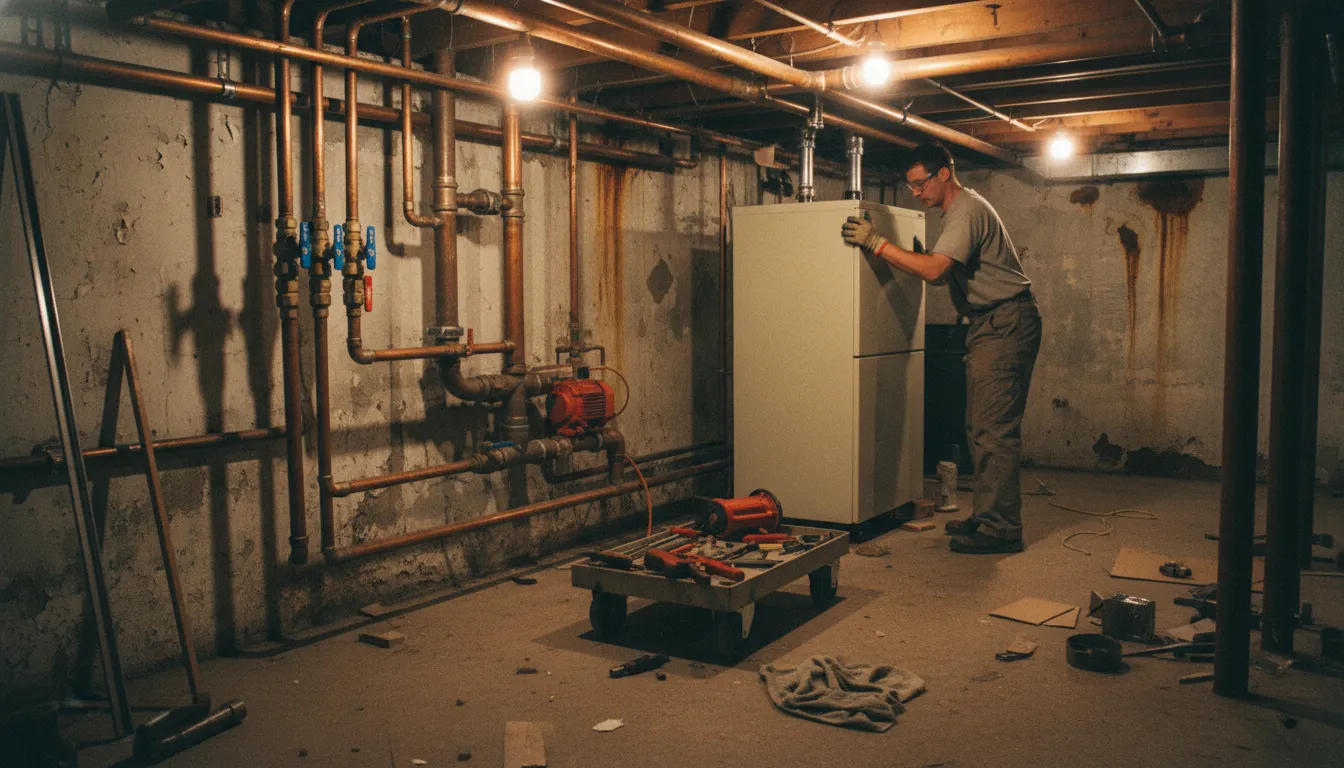
Find the Best Boiler Installation & Replacement Contractors for Your Business
No obligation • Fast responses • Nationwide coverage

Why you can trust HVAC Firms
HVAC Firms is a leading United States resource for evaluating HVAC service providers. Our team researches companies, checks credentials, and reviews customer feedback to present clear, unbiased information. Listings and rankings are based on merit, and companies cannot pay to change our editorial content.
Search providers near you
Best Boiler Installation & Replacement Contractors in Tennessee Ranked
Upgrading or replacing your home's boiler is a significant investment that directly impacts your comfort, energy bills, and safety. In Tennessee, this process is governed by specific state and local codes to ensure installations are safe and efficient. This guide is designed to help you understand the key considerations, from navigating permit requirements and choosing the right equipment to budgeting for the total project cost. Use the information here to make informed decisions and connect with qualified local professionals who can handle your project from start to finish.

Automatic Air Conditioning, Heating, Plumbing & Electric
3470 Tchulahoma Rd, Memphis, TN 38118
Automatic Air Conditioning, Heating, Plumbing & Electric has been serving Memphis, TN, and the surrounding areas since 1943. The company offers a wide range of services including HVAC installation, repair, and maintenance, as well as plumbing and electrical work. They are experienced in handling air conditioning, furnace, boiler, and geothermal heat pump systems, and provide 24/7 emergency service for HVAC, plumbing, and electrical needs. As a long-standing Carrier partner since 1956, they install locally manufactured units and support the local economy.
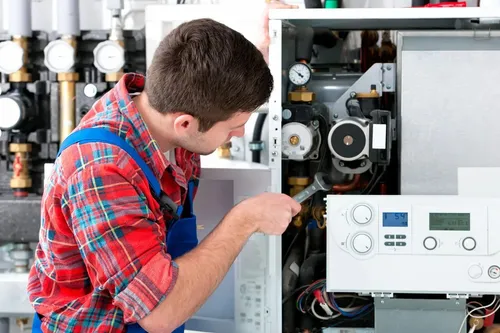
Memphis Air Conditioning & Heating
2125 Hillshire Cir, Memphis, TN 38133
Memphis Air Conditioning & Heating is a family-owned HVAC company serving Memphis, TN, and surrounding areas since 1968. They provide a wide range of heating and cooling services including installation, repair, and maintenance of air conditioners, furnaces, heat pumps, and boilers. The company also offers indoor air quality solutions such as air purification systems and humidifiers. As Trane Comfort Specialists, their technicians are trained in the latest HVAC technologies. They provide 24/7 emergency heating and air repair services to ensure comfort at any time.
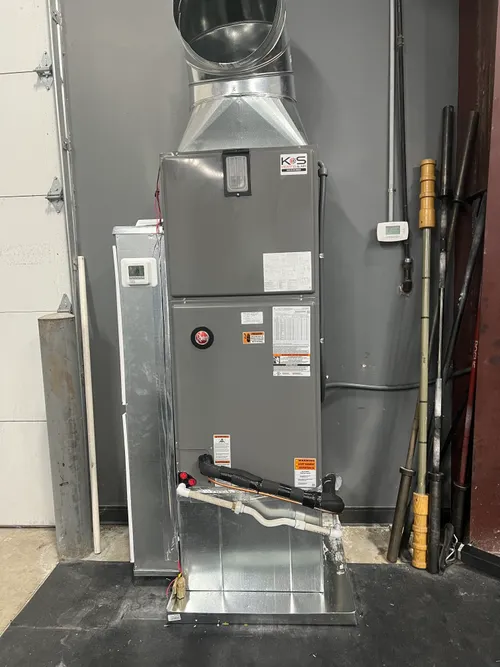
KandS HVAC
2055 Holloway Rd, Lebanon, TN 37090
KandS HVAC is an HVAC company based in Nashville, TN, providing repair, installation, and maintenance services for air conditioning, furnaces, heat pumps, and boilers. They offer convenient options for obtaining quotes, including in-home visits and remote assessments using photos. KandS HVAC handles a range of services from urgent repairs to routine tune-ups and new system installations, aiming to meet various heating and cooling needs efficiently.
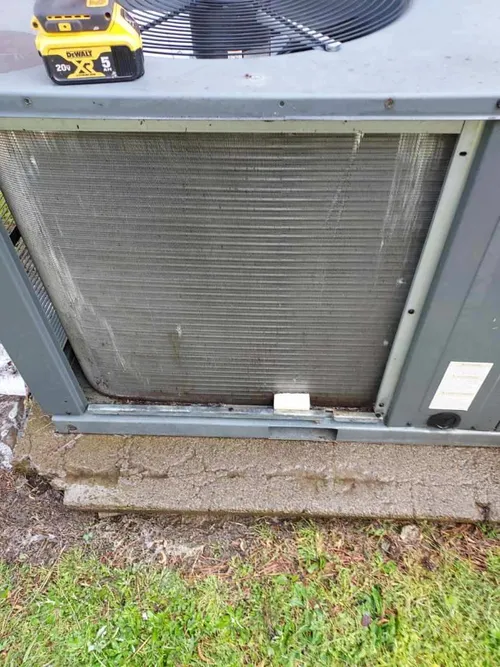
ADA Air Conditioning & Heating
144 Rosedale St, Jackson, TN 38301
ADA Air Conditioning & Heating is a third-generation, family-owned HVAC contractor serving Memphis, TN. They provide a full range of heating and cooling services, including installation, repair, and maintenance of air conditioners, furnaces, heat pumps, and boilers. The company focuses on tailored solutions that improve energy efficiency and indoor air quality, addressing the specific needs of the regional climate. ADA Air Conditioning & Heating emphasizes cost-effective approaches and uses the latest technology to enhance comfort for their customers.
B&B HVAC LLC
Memphis, TN
B&B HVAC LLC is a family and friend owned HVAC company serving Memphis, TN. They provide a range of heating, ventilation, refrigeration, and air conditioning services including installation, repair, and tune-ups for systems such as air conditioners, furnaces, heat pumps, boilers, and mini splits. Their licensed and insured technicians focus on delivering transparent and reliable service while building lasting client relationships based on trust and satisfaction.
Understanding Tennessee's Boiler Installation Regulations
A successful boiler installation in Tennessee begins with compliance. The state adopts the International Mechanical Code (IMC) and has its own administrative rules (Title 0800-03-03) that set the standard for safe installation. These regulations are not mere suggestions; they are legal requirements designed to prevent hazards like carbon monoxide poisoning, fires, and system failures.
The cornerstone of compliance is obtaining a permit from your local city or county building department before any work begins. This permit triggers a mandatory inspection process where a municipal inspector will verify that the installation meets all code requirements for clearances, venting, fuel lines, and safety controls. Working with a licensed HVAC professional is crucial, as they understand these local nuances and will ensure the job passes inspection the first time.
Key Code Requirements for Tennessee Homes
Tennessee's codes specify several critical installation details that every homeowner should be aware of:
- Clearances: Your new boiler must have adequate space around it for service access and safe operation. Codes typically require at least 18 inches of clearance on the sides and front, with specific top clearances to ceilings or overhead combustibles detailed in tables like IMC Table 1004.3.1.
- Venting and Combustion Air: Proper venting is non-negotiable. The boiler must have a dedicated, correctly sized flue to exhaust combustion gases to the exterior. Equally important is providing an adequate supply of fresh combustion air. Vent terminals must have specific setbacks from windows, doors, and property lines 1.
- Mandatory Safety Controls: For your protection, Tennessee codes require several safety devices to be installed with the boiler. These include a pressure relief valve, a pressure gauge, and, for many systems, a low-water cutoff to prevent the boiler from operating without adequate water 2.
- Larger System Rules: For high-capacity boilers (generally those over 400,000 BTU/hr), additional state rules governed by the Tennessee Board of Boiler Rules and standards like ASME CSD-1 may apply, adding another layer of oversight.
Choosing the Right Boiler: Efficiency & Types
The heart of your heating system is the boiler itself. The primary choice you'll face is between standard efficiency and high-efficiency condensing models.
- Standard Efficiency Boilers: These are typically non-condensing units with an Annual Fuel Utilization Efficiency (AFUE) rating between 80% and 85%. They have a lower upfront equipment cost and are often simpler to install, making them a common choice for replacement projects where existing venting can be reused. However, they convert less of their fuel into usable heat, leading to higher long-term operating costs.
- High-Efficiency Condensing Boilers: These modern units achieve AFUE ratings above 90%, often reaching 95% or higher. They extract so much heat from the combustion gases that water vapor condenses, requiring a condensate drain line. While the equipment and installation costs are higher, they offer substantial savings on monthly energy bills, especially in regions with colder winters. They are an excellent choice for new installations or when upgrading an entire system 3.
Your choice will depend on your budget, your home's existing infrastructure (like venting), and how long you plan to stay in the home to recoup the higher initial investment through energy savings.
Find the perfect boiler installation & replacement contractors for your needs
Get personalized recommendations and expert advice
Breaking Down the Cost of Boiler Installation
The total cost for a boiler installation or replacement in Tennessee is not a single number but a sum of several components. Prices can range widely from $3,500 for a basic, like-for-like replacement to $10,000 or more for a high-efficiency system with complex installation needs.
Here's a typical cost breakdown:
- Equipment: The boiler unit itself typically represents the largest variable, costing between $2,000 and $5,000+, with high-efficiency condensing models at the top end of that range.
- Labor: Professional installation labor generally falls between $1,500 and $2,500. This covers removal of the old unit, installation of the new boiler, connection to fuel and water lines, and setup of controls 4.
- Permits & Fees: Local building permit fees in Tennessee usually cost between $50 and $200.
- Old Unit Removal & Disposal: Contractors typically charge $500 to $1,000 to properly disconnect, remove, and dispose of your old boiler.
- Additional Work: If your project involves switching fuel types (e.g., from oil to natural gas), you must budget for adding a gas line and removing the old oil tank, which can add approximately $2,000 to the project cost 5.
The Professional Installation Process
A proper installation follows a structured process to ensure safety, efficiency, and compliance.
- Consultation and Load Calculation: A reputable professional will first perform a heat load calculation on your home. This determines the correctly sized boiler you need-one that is neither too small (struggling to heat) nor too large (short-cycling and inefficient).
- System Design and Permitting: The contractor will design the installation layout, select appropriate equipment, and pull the required local building permit on your behalf 6.
- Preparation and Removal: The job site is prepared, and the old boiler is safely disconnected, removed, and prepared for disposal.
- New Installation: The new boiler is positioned, leveled, and connected to the water, fuel, and electrical systems. All required safety controls and venting are installed per code 7.
- System Start-up and Testing: The contractor will fill the system, purge air from the lines, fire the boiler, and test all operations and safety devices. They will also provide you with basic operating instructions.
- Final Inspection: The local building inspector will visit to verify the installation meets all code requirements before authorizing the system for regular use.
Why Professional Expertise is Non-Negotiable
While some home projects are suitable for DIY, boiler installation is not one of them. The risks of improper installation-including gas leaks, carbon monoxide production, water damage, and fire-are too great. A licensed Tennessee HVAC professional brings essential expertise:
- Code Knowledge: They navigate the specific requirements of the Tennessee Residential Code, IMC, and local amendments 8 9 10.
- Safety Assurance: They ensure critical safety devices are installed and functioning correctly.
- Manufacturer Warranty Protection: Most boiler manufacturers require professional installation by a certified technician to keep the product warranty valid.
- Efficiency Optimization: Proper sizing, piping, and setup ensure your new boiler delivers its rated efficiency, saving you money for years to come.
Always verify that a contractor is licensed, insured, and has positive local references before hiring them for your boiler project.
Frequently asked questions
Sources
Footnotes
-
Chapter 10 Boilers, Water Heaters and Pressure Vessels - UpCodes - https://up.codes/viewer/tennessee/imc-2021/chapter/10/boilers-water-heaters-and-pressure-vessels ↩
-
Tenn. Comp. R. & Regs. 0800-03-03-.04 | State Regulations - https://www.law.cornell.edu/regulations/tennessee/Tenn-Comp-R-Regs-0800-03-03-.04 ↩
-
Guide to Installing a New Boiler System - Aspen Creek HVAC - https://www.aspencreekhc.com/guide-to-installing-a-new-boiler-system/ ↩
-
Boiler Replacement Costs: Smart Budgeting and Planning ... - https://www.tcmemt.com/post/the-cost-of-boiler-replacement-expert-guide-to-smart-budgeting-and-installation-planning ↩
-
Boiler Replacement Cost and Price - Carrier - https://www.carrier.com/residential/en/us/products/boilers/cost-buying-boiler-replacement/ ↩
-
Tennessee Water Heater Permit: Requirements, Costs & How to Apply - https://www.rootermanchatt.com/blog/2025/march/tennessee-water-heater-permit-requirements-costs/ ↩
-
Chapter 10 Boilers, Water Heaters and Pressure Vessels - https://up.codes/viewer/tennessee/imc-2012/chapter/10/boilers-water-heaters-and-pressure-vessels ↩
-
Rules, Interpretations, and Laws - TN.gov - https://www.tn.gov/workforce/employers/safety---health/regulations-compliance/regulations---compliance-redirect/boiler-unit/boiler-unit-redirect/rules--interpretations--and-laws.html ↩
-
Memphis Heating Replacement | Heater Installation Company - https://www.airmastersac.com/heating/heating-replacement/ ↩
-
Chapter 20 Boilers and Water Heaters: Tennessee Residential Code 2009 | UpCodes - https://up.codes/viewer/tennessee/irc-2009/chapter/20/boilers-and-water-heaters ↩