Find the Best Boiler Installation & Replacement Contractors for Your Business
No obligation • Fast responses • Nationwide coverage

Why you can trust HVAC Firms
HVAC Firms is a leading United States resource for evaluating HVAC service providers. Our team researches companies, checks credentials, and reviews customer feedback to present clear, unbiased information. Listings and rankings are based on merit, and companies cannot pay to change our editorial content.
Search providers near you
Top Boiler Installation & Replacement Contractors in Baltimore, Maryland Ranked
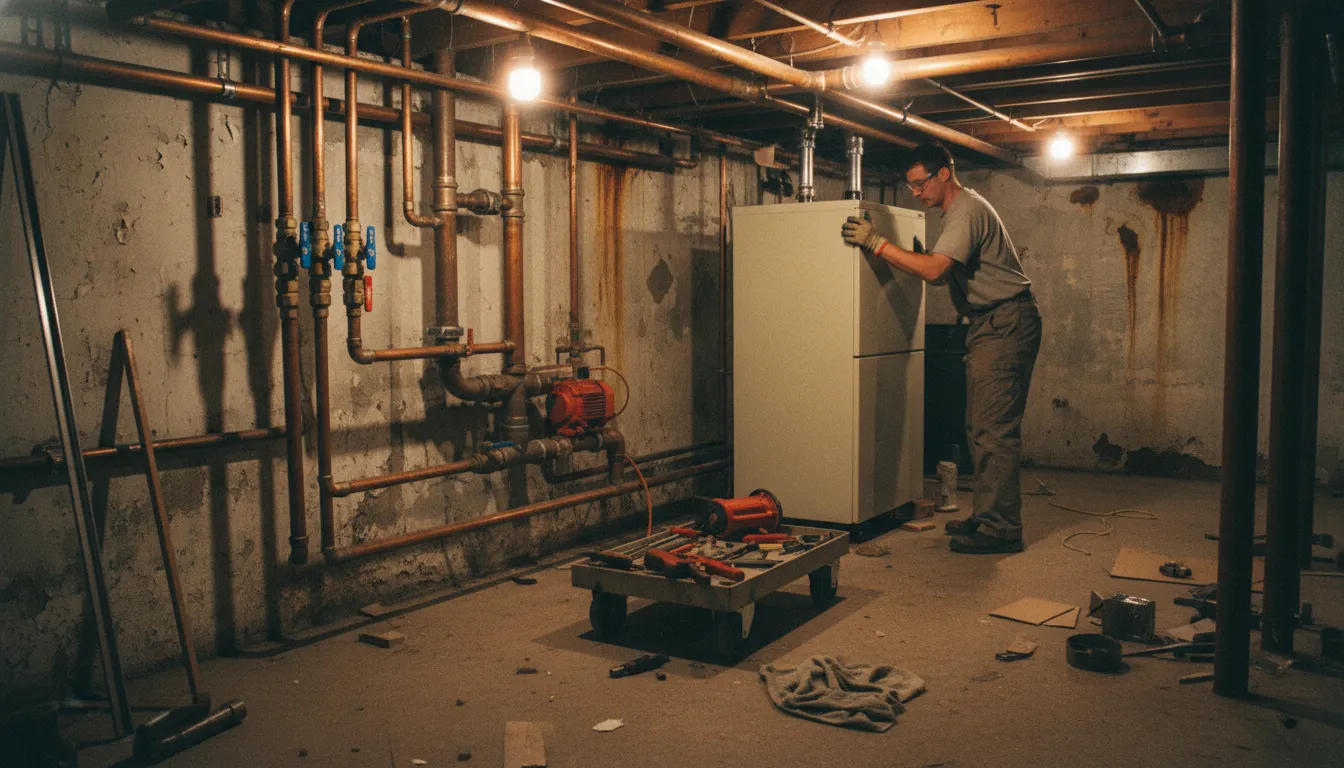
A new boiler installation or replacement is a significant investment in your home's comfort, efficiency, and safety. Whether you're upgrading an aging system, converting from another heat source, or building new, understanding the process and local requirements is crucial. This guide provides essential information for Baltimore homeowners considering a new boiler, helping you navigate options, costs, and the important legal steps required in Maryland.
Cornett Heating & Cooling
104 Ritchie Hwy, Pasadena, MD 21122
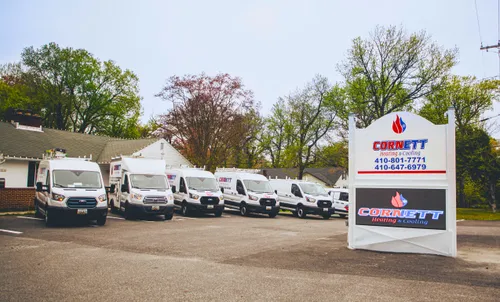
Cornett Heating & Cooling is a family-owned HVAC company serving Baltimore, MD, and Anne Arundel County. Established in 1991, the company provides installation, repair, and maintenance services for air conditioning, furnaces, heat pumps, boilers, and other HVAC systems. They specialize in working with a variety of makes and models, including Bosch units, and offer comprehensive HVAC tune-up services. The business is led by Josh Cornett, who took over the family operation in 2016, continuing a legacy of skilled service and local expertise.
Complete Climate Services LLC
204 S Chapel St, Baltimore, MD 21231
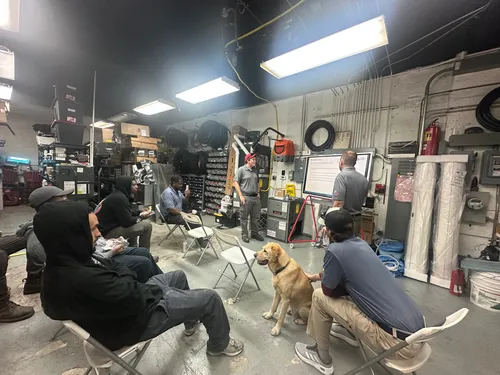
Complete Climate Services LLC is an HVAC company based in Baltimore, MD, offering a full range of heating, ventilation, and air conditioning services. They provide AC, furnace, and boiler repair, installation, and maintenance for both residential and commercial properties. Their commercial maintenance contracts include seasonal start-ups, shutdowns, filter changes, and refrigerant checks to ensure HVAC systems operate safely and meet building codes. The company also offers 24/7 emergency repair services with technicians available to respond quickly and minimize downtime.
Belair Engineering and Service Company, Inc.
15881 Commerce Ct, Upper Marlboro, MD 20774
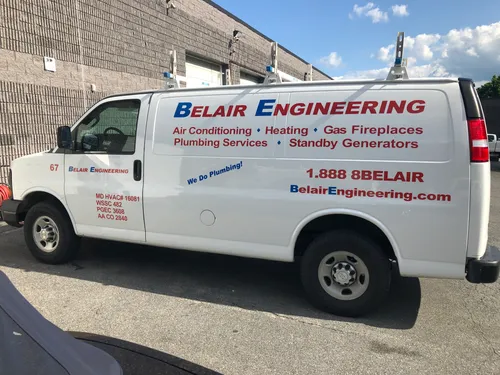
Belair Engineering and Service Company, Inc. is a woman-owned HVAC and plumbing company serving Washington, DC, and the surrounding Prince George's County area. Established in 1962, Belair offers a wide range of services including installation, repair, and maintenance of furnaces, heat pumps, boilers, air conditioners, mini splits, thermostats, and standby generators. The company is known for its comprehensive home comfort solutions and provides 24/7 furnace repair services to ensure customers have reliable heating whenever needed. With over six decades of experience, Belair combines licensed technicians and a strong local presence to support homes in Bowie, Crofton, Annapolis, and nearby communities.
GAC Services
2409 Peppermill Dr, Glen Burnie, MD 21061
GAC Services is a home services provider based in Glen Burnie, Maryland, offering HVAC, plumbing, and electrical solutions to residents in Baltimore and the surrounding Anne Arundel County area. They provide a wide range of heating and cooling services including furnace, heat pump, boiler, and air conditioning repair and installation, as well as ductless mini-split systems and seasonal tune-ups. Their capabilities also extend to indoor air quality improvements with humidifiers, air purifiers, and UV sanitation systems. Established in the 1970s, GAC Services has decades of experience serving local homeowners and offers same-day and emergency service options.
Alpha Heating & Air Conditioning, LLC
Baltimore, MD
Alpha Heating & Air Conditioning, LLC is an HVAC company serving Baltimore, MD, and nearby areas including Perry Hall and Owings Mills. They provide a range of heating and cooling services such as AC and furnace repair, installation of heat pumps, boilers, mini-splits, and full HVAC systems. With 25 years of experience, they focus on honest advice and transparent flat-rate pricing without sales pressure. Their mini-split services offer zoned comfort solutions without ductwork, and they handle both residential and light commercial properties.
Understanding Boiler Systems for Baltimore Homes
Boilers are a popular and effective heating solution, especially in Baltimore's older, historic neighborhoods. Unlike forced-air furnaces that heat air, boilers heat water or produce steam, which is then circulated throughout your home to radiators, baseboards, or radiant floor systems. This method provides a consistent, comfortable heat without the drafts or noise associated with ductwork.
The two primary types of residential boilers are hot water and steam systems. A hot water boiler heats water and circulates it via a pump through a closed loop of pipes to terminal units like baseboard heaters or cast-iron radiators 1 2. The cooler water then returns to the boiler to be reheated. This system is known for providing even, gentle heat and can often be integrated with your domestic hot water supply. A steam boiler, common in many of Baltimore's historic rowhomes, heats water until it turns to steam. The steam rises through pipes to radiators, releases its heat as it condenses back into water, and then returns to the boiler 2. Steam systems are excellent for heating large spaces quickly and are a hallmark of older construction.
Key Factors in Choosing a New Boiler
Selecting the right boiler involves more than just picking a brand. Several critical factors will determine your system's performance, operating costs, and suitability for your home.
- Fuel Type: In Baltimore, natural gas is the most common and typically most cost-effective fuel for boiler systems. Electric boilers are also an option and can be highly efficient, though operating costs depend heavily on local electricity rates.
- System Size (BTU Output): A boiler must be properly sized for your home's square footage, insulation levels, window quality, and climate zone. An undersized unit will struggle to heat your home, while an oversized one will cycle on and off too frequently ("short-cycle"), reducing efficiency and lifespan. A professional load calculation is essential.
- Efficiency (AFUE): The Annual Fuel Utilization Efficiency (AFUE) rating measures how efficiently a boiler converts fuel into heat over a typical year. Modern high-efficiency boilers have AFUE ratings of 90% or higher, meaning 90 cents of every fuel dollar goes directly to heating your home 3. Upgrading from an old 70% AFUE model to a new 95% AFUE model can lead to substantial savings on your energy bills.
- Compatibility with Existing Distribution: If you are replacing an existing boiler, your new unit must be compatible with your current heat distribution system (e.g., steam pipes, radiators, baseboards). A qualified installer will assess this.
The Cost of Boiler Installation & Replacement in Baltimore
The cost for a full boiler replacement in Baltimore typically ranges from $3,000 to over $8,000, with an average cost around $5,473 4. However, complex projects or premium high-efficiency systems can push the total to $12,000 or more 5. This wide range is due to several variables:
- Equipment: The boiler unit itself is the largest cost factor. High-efficiency condensing models cost more than standard-efficiency units. A high-efficiency (90%+ AFUE) boiler installation typically costs between $6,000 and $8,500+ 6.
- Labor: Professional installation is non-negotiable. Labor costs cover the removal and disposal of the old unit (often $500-$1,000), installation of the new boiler, and connection to fuel, water, and venting systems.
- Home Size & BTU Needs: Larger homes require larger, more expensive boilers with higher BTU outputs.
- System Type: Steam boiler installations can have different complexities and costs compared to hot water systems.
- Additional Work: The installation may reveal the need for system upgrades, such as new venting (especially important for high-efficiency models), an expansion tank, or updates to piping and radiators.
- Permits and Inspections: Baltimore and Maryland state law require permits and a mandatory inspection, which add to the overall project cost (see Legal Requirements below).
Find the perfect boiler installation & replacement contractors for your needs
Get personalized recommendations and expert advice
Maryland's Legal Requirements: Permits, Registration & Inspection
Installing a boiler in Baltimore isn't just a home improvement project-it's a regulated activity governed by Maryland state law. Compliance is mandatory for your safety and legal protection.
- Permits: Before any work begins, your licensed contractor must pull the necessary mechanical and plumbing permits from the local jurisdiction. Permit fees in Baltimore typically range from $50 to $200 7.
- Registration: Maryland law requires that all new boilers be registered with the state. Your installer must notify the Chief Boiler Inspector at least 30 days before the installation is scheduled to begin.
- Standards: The new boiler must be constructed to meet the American Society of Mechanical Engineers (ASME) Boiler and Pressure Vessel Code 8.
- Inspection: This is a critical step. After installation but before the boiler is fired up for regular use, it must be inspected by a Maryland-commissioned inspector from an Authorized Inspection Agency (AIA) 9 10. The inspector will check the installation, safety controls, and paperwork. The boiler cannot legally operate without a valid inspection certificate issued by the state 10.
A reputable, licensed Baltimore boiler installer will manage this entire process for you, ensuring all paperwork and inspections are completed correctly.
The Professional Installation Process
A proper boiler replacement is a multi-day process performed by skilled technicians. Here's what you can generally expect:
- Initial Consultation & Load Calculation: A technician will visit your home to assess your needs, discuss options, perform a heat load calculation, and provide a detailed written estimate.
- Equipment Selection & Scheduling: Once you approve the estimate, the specific boiler model will be ordered, and an installation date will be scheduled.
- Preparation & Removal: On installation day, the crew will prepare the work area, safely disconnect utilities (gas, water, electricity), and remove the old boiler and any ancillary equipment being replaced.
- New Installation: The new boiler is positioned, leveled, and secured. All new connections are made for water, gas, electricity, and venting. The system is filled with water, and air is purged from the lines.
- Start-Up & Testing: The system is fired up and tested. The technician will check for proper operation, adjust controls, and verify that all safety devices are functioning.
- Inspection & Final Walkthrough: After the state inspection is passed, your installer should provide a final walkthrough, explaining your new system's operation and maintenance needs, and leave you with all manuals and warranty information.
Maintaining Your New Boiler
To protect your investment and ensure long-term efficiency and safety, annual maintenance is key. A yearly tune-up by a professional should include checking the heat exchanger, cleaning the burner and combustion chamber, testing safety controls, and inspecting the venting system. For homeowners, regularly checking the system pressure gauge (on hot water systems) and ensuring vents and radiators are unobstructed are good practices.
Frequently asked questions
Sources
Footnotes
-
Residential Heating Services in Greater baltimore, MD - https://www.mrrooter.com/baltimore/residential-services/heating-services/ ↩
-
Boiler Repair, Installation & Replacement | Baltimore, MD - https://www.safferplumbing.com/plumbing-heating/steam-hot-water-boilers/ ↩ ↩2
-
Boilers in Baltimore MD SM Mechanical Boiler Heating Repair - https://www.smmechanicalhvac.com/hvac/heating/boilers/ ↩
-
How Much Does Boiler Replacement Cost in Baltimore, MD? - https://www.angi.com/articles/how-much-does-boiler-installation-cost/md/baltimore ↩
-
How much does a new heating system installation typically ... - https://www.frhvac.com/about/hvac-blog/heating/heating-system-installation-cost-maryland ↩
-
How Much Does Residential Boiler Installation Cost? - Aero Energy - https://www.aeroenergy.com/how-much-does-residential-boiler-installation-cost/ ↩
-
Boiler Replacement Costs: Smart Budgeting and Planning Guide - https://www.tcmemt.com/post/the-cost-of-boiler-replacement-expert-guide-to-smart-budgeting-and-installation-planning ↩
-
MD Boiler Law: Everything You Need to Know - Blog - Tate - https://blog.tate.com/md-boiler-law-everything-you-need-to-know ↩
-
Boiler and Pressure Vessel Safety - Safety Inspection - https://labor.maryland.gov/labor/safety/boil.shtml ↩
-
Boiler and Pressure Vessel Safety - Safety Inspection - Division of Labor and Industry - https://labor.maryland.gov/labor/safety/boil.shtml ↩ ↩2