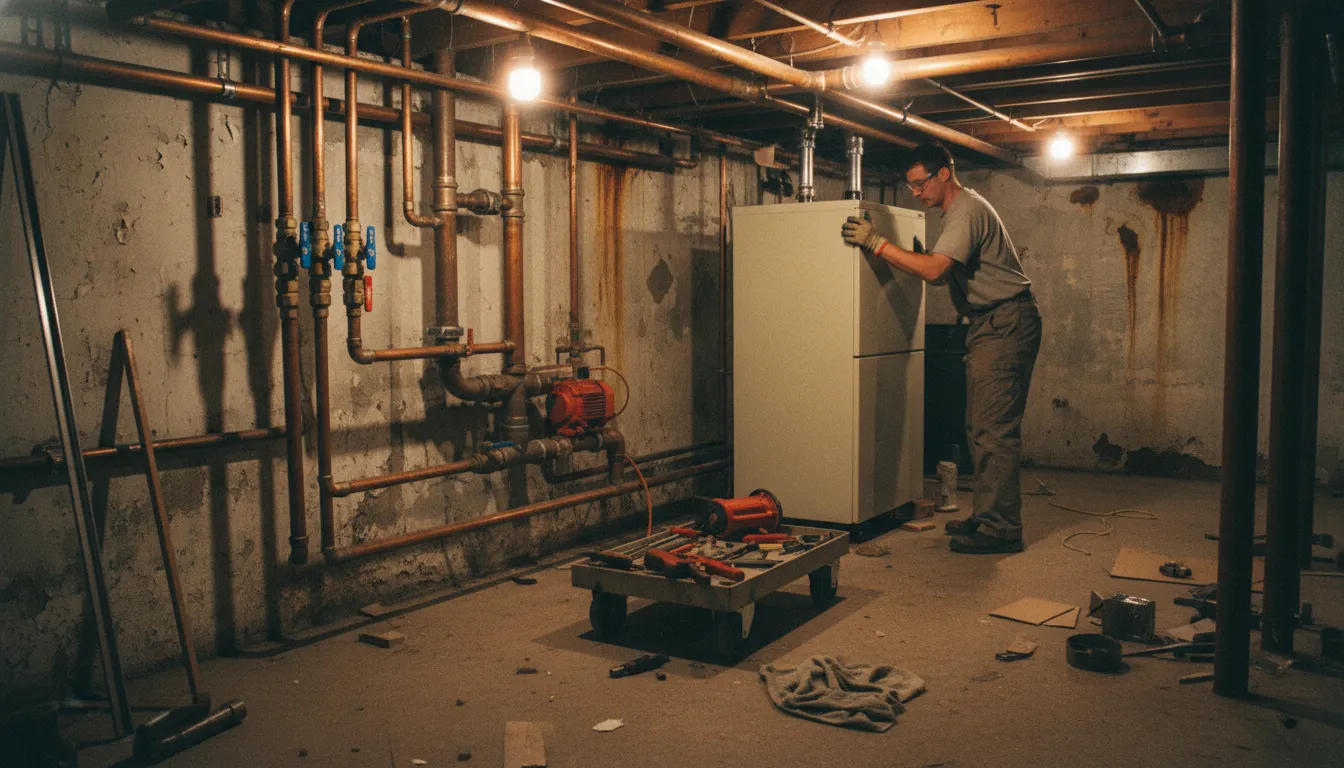
Find the Best Boiler Installation & Replacement Contractors for Your Business
No obligation • Fast responses • Nationwide coverage

Why you can trust HVAC Firms
HVAC Firms is a leading United States resource for evaluating HVAC service providers. Our team researches companies, checks credentials, and reviews customer feedback to present clear, unbiased information. Listings and rankings are based on merit, and companies cannot pay to change our editorial content.
Search providers near you
Best Boiler Installation & Replacement Contractors in Indiana Ranked
Installing or replacing a boiler is a significant home improvement decision that directly impacts your comfort, energy bills, and safety. In Indiana, this work is governed by specific state and local codes to ensure safe, efficient operation. This guide provides a clear overview of what you need to know about boiler installation and replacement in the Hoosier State, from understanding regulations and costs to choosing the right equipment and finding qualified local professionals.
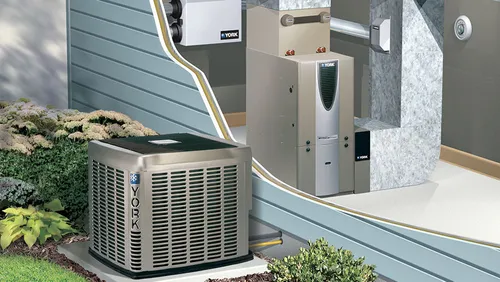
Northeast Mechanical Services, Inc.
3620 Metro Park Dr N, Fort Wayne, IN 46818
Northeast Mechanical Services, Inc. is an HVAC and plumbing contractor based in Fort Wayne, IN. They provide a wide range of services including installation and repair of air conditioning, furnaces, heat pumps, boilers, mini splits, geothermal heat pumps, and indoor air quality systems. The company also offers generator installation and maintenance, ensuring reliable power solutions for homes and businesses. Northeast Mechanical Services emphasizes honest recommendations and fair pricing, serving Fort Wayne and nearby communities such as New Haven, Auburn, and Huntington. Their expertise includes energy consultations and eco-friendly geothermal HVAC systems.
Flow-Tech Plumbing & Heating, Inc.
8131 N Clinton St, Fort Wayne, IN 46825
Flow-Tech Plumbing & Heating, Inc. has been serving Fort Wayne, IN, and surrounding areas since 1991. They provide a wide range of plumbing and HVAC services including installation, repair, and maintenance of air conditioners, furnaces, boilers, and indoor air quality systems. Their team handles both residential and commercial projects, offering specialized services such as backflow prevention, gas line work, and water purification system installation. Flow-Tech also provides 24/7 emergency service to address urgent plumbing and HVAC needs at any time.
King of Comfort Heating & Cooling
7009 E 56th St, Indianapolis, IN 46226
King of Comfort Heating & Cooling is an HVAC company based in Indianapolis, IN, offering a wide range of heating and cooling services. Their team provides installation, repair, and maintenance for air conditioners, furnaces, heat pumps, boilers, mini splits, geothermal heat pumps, and thermostats. They emphasize comprehensive service and staying current with industry developments to meet diverse HVAC needs. The company also offers 24/7 emergency repair services to ensure reliable heating and cooling during extreme weather conditions. Their technicians handle everything from routine tune-ups to complex repairs, including cracked heat exchangers and faulty thermostats.
Bowers Heating and Cooling
Indianapolis, IN
Bowers Heating and Cooling provides HVAC installation, repair, and tune-up services in Indianapolis, IN. They handle air conditioning, furnace, heat pump, and boiler systems with tailored solutions based on thorough consultations. The company serves several surrounding areas including Westfield, Carmel, Fishers, Noblesville, and Zionsville. Their process emphasizes transparency and consistent updates throughout each project.
Blazing Heat HVAC LLC
Fort Wayne, IN
Blazing Heat HVAC LLC is a heating and cooling company serving Fort Wayne, IN, and nearby communities. They provide a wide range of HVAC services including installation, repair, diagnostics, maintenance, tune-ups, indoor air quality solutions, commercial refrigeration, boiler services, and geothermal system support. With over 36 years of combined experience, their certified technicians focus on energy efficiency, system longevity, and indoor comfort for both residential and commercial customers. They also offer emergency repair services to minimize downtime and maintain reliable system operation.
Understanding Indiana's Boiler Regulations
Boiler work in Indiana is not a simple DIY project; it's regulated for your safety. The primary authority is the Indiana Department of Homeland Security (IDHS) Boilers and Pressure Vessels Section 1. They enforce rules based on nationally recognized standards to prevent hazards like fire, explosion, or carbon monoxide poisoning.
The state's technical rules, found under 675 IAC 30, are largely based on standards from the American Society of Mechanical Engineers (ASME) and the International Code Council (ICC). This means any professional you hire must be familiar with these codes. Key regulatory requirements include:
- Licensing: Installation must be performed by a licensed professional. While Indiana does not have a statewide HVAC license, contractors must be registered with the state, and many localities have their own licensing requirements. Proper licensing ensures the technician has the necessary training.
- Permits: A local building permit is almost always required for boiler replacement or new installation. For example, work in Indianapolis will need a permit from the Department of Business and Neighborhood Services. Your contractor should typically handle pulling this permit.
- Safety Devices: Controls and safety devices on residential boilers (under 12.5 million BTU/hr) must meet ASME CSD-1 standards. This includes proper pressure relief valves, low-water cutoffs, and other essential safeguards.
- Combustion Air and Venting: Fuel-burning boilers require a specific, code-compliant supply of combustion air and a properly sized venting system to operate safely and efficiently. Incorrect venting is a major safety risk.
Types of Boilers for Indiana Homes
Choosing the right type of boiler is crucial for efficiency and comfort, especially given Indiana's cold winters. The main categories are:
- Standard Efficiency Boilers: These are older or basic models, typically with an Annual Fuel Utilization Efficiency (AFUE) rating below 90%. They have a lower initial purchase price but result in higher long-term fuel costs. Replacing an old standard unit with a modern one can still offer significant savings.
- High-Efficiency Boilers: For new installations, aiming for a unit with an AFUE of 90% or higher is strongly recommended. These boilers extract more heat from the combustion gases, converting more fuel into usable warmth for your home.
- Condensing Boilers: This is the pinnacle of high-efficiency technology. Condensing boilers capture latent heat from water vapor in the exhaust gases, achieving AFUE ratings often above 95%. While they have a higher upfront cost, they offer the greatest energy savings and are ideal for modern, well-insulated Indiana homes.
Cost Breakdown for Boiler Installation & Replacement
The total cost of a boiler project in Indiana varies based on the unit's efficiency, your home's size, and the complexity of the installation. Here's a typical breakdown to help you budget effectively:
- Equipment & Standard Installation: For a basic, non-condensing boiler replacement, you can expect a total installed cost in the range of $3,500 to $6,000.
- High-Efficiency/Condensing Boiler Installation: Installing a new high-efficiency (90%+ AFUE) or condensing boiler system typically ranges from $6,000 to $8,500 or more for a complete job 2. The higher cost reflects more advanced equipment and potentially more complex venting requirements (often using PVC pipe instead of metal).
- Additional Cost Factors:
- Old Unit Removal: Disposing of your old boiler and any associated materials (like an old oil tank) can add $500 to $1,000.
- Permits: Local permit fees generally add around $150 to the project cost.
- Fuel System Conversion: Switching from an oil-fired boiler to a natural gas system involves running a new gas line and removing the old oil tank, which can add approximately $2,000 to the total.
- Labor Complexity: Labor costs ($1,500 to $4,000+) depend on factors like relocation of the unit, updating piping, integrating with radiant floor systems, or addressing difficult access 3.
Find the perfect boiler installation & replacement contractors for your needs
Get personalized recommendations and expert advice
The Critical Importance of Professional Installation
Hiring a qualified professional is non-negotiable for boiler work. The risks of improper installation-including gas leaks, carbon monoxide production, water damage, and even explosion-are too great. A professional ensures:
- Code Compliance: They know Indiana's specific codes (675 IAC 30) and local amendments, ensuring the installation passes inspection.
- Proper Sizing: They perform a heat load calculation (like a Manual J) to recommend a boiler that is neither too large (short-cycling, inefficient) nor too small (unable to heat your home).
- System Integration: They correctly integrate the boiler with your existing hydronic distribution system (radiators, baseboard heaters, radiant tubing), pumps, expansion tanks, and controls.
- Safety Validation: They verify all safety devices are installed and operational and that combustion air and venting are perfectly configured.
- Manufacturer Warranty: Most boiler manufacturers require professional installation by a certified technician to validate the equipment warranty.
Planning Your Project: Key Considerations
Before contacting professionals, consider these points to make the process smoother:
- Timing: Schedule replacements before the peak of winter. The best time is late summer or early fall when contractors are more readily available.
- Access: Indiana code requires that boilers have future access for service, repair, and eventual replacement. Ensure the proposed location isn't blocked by permanent finishes 4 5.
- System Flush & Water Quality: If replacing a boiler in an old system, discuss a power flush to remove sludge and corrosion. Installing a magnetic dirt separator can protect your new investment.
- Thermal Expansion: Modern closed-loop systems require an expansion tank to handle pressure changes as water heats and cools. This is a standard part of a proper installation 6.
- Documentation: The installer must attach the boiler's nameplate and leave the manufacturer's installation and operating instructions with the homeowner, as required by code 7.
Finding the Right Professional in Indiana
Look for contractors who specialize in hydronic heating (boilers) rather than general HVAC. They should be:
- Registered and Insured: Verify their state registration and carry ample liability and workers' compensation insurance.
- Local Experience: Familiar with your county or city's specific permit process and inspectors.
- Certified: Look for certifications from boiler manufacturers or organizations like the Hydronics Institute (I=B=R).
- Reference-Oriented: Willing to provide references from recent, similar boiler installation jobs.
- Detailed in Proposals: Provide a written, detailed quote that breaks down equipment model numbers, labor, permit fees, and all ancillary costs.
Frequently asked questions
Sources
Footnotes
-
Boilers and Pressure Vessels - DHS - https://www.in.gov/dhs/fire-and-building-safety/boilers-and-pressure-vessels/ ↩
-
Boiler Replacement Costs: Smart Budgeting and Planning ... - https://www.tcmemt.com/post/the-cost-of-boiler-replacement-expert-guide-to-smart-budgeting-and-installation-planning ↩
-
How Much Does Boiler Replacement Cost in Indianapolis, IN? - https://www.angi.com/articles/how-much-does-boiler-installation-cost/in/indianapolis ↩
-
CHAPTER 20 BOILERS AND WATER HEATERS - https://codes.iccsafe.org/content/INRC2020P2/chapter-20-boilers-and-water-heaters ↩
-
Chapter 20 Boilers and Water Heaters: Indiana Residential ... - https://up.codes/viewer/indiana/irc-2018/chapter/20/boilers-and-water-heaters ↩
-
Document Center - Water Heater Safety Tanks - Schererville.org - https://www.schererville.org/egov/apps/document/center.egov?view=item&id=188 ↩
-
Title 675, ARTICLE 30. INDIANA BOILER AND PRESSURE VESSEL RULES | IARP - https://iar.iga.in.gov/latestArticle/675/30 ↩