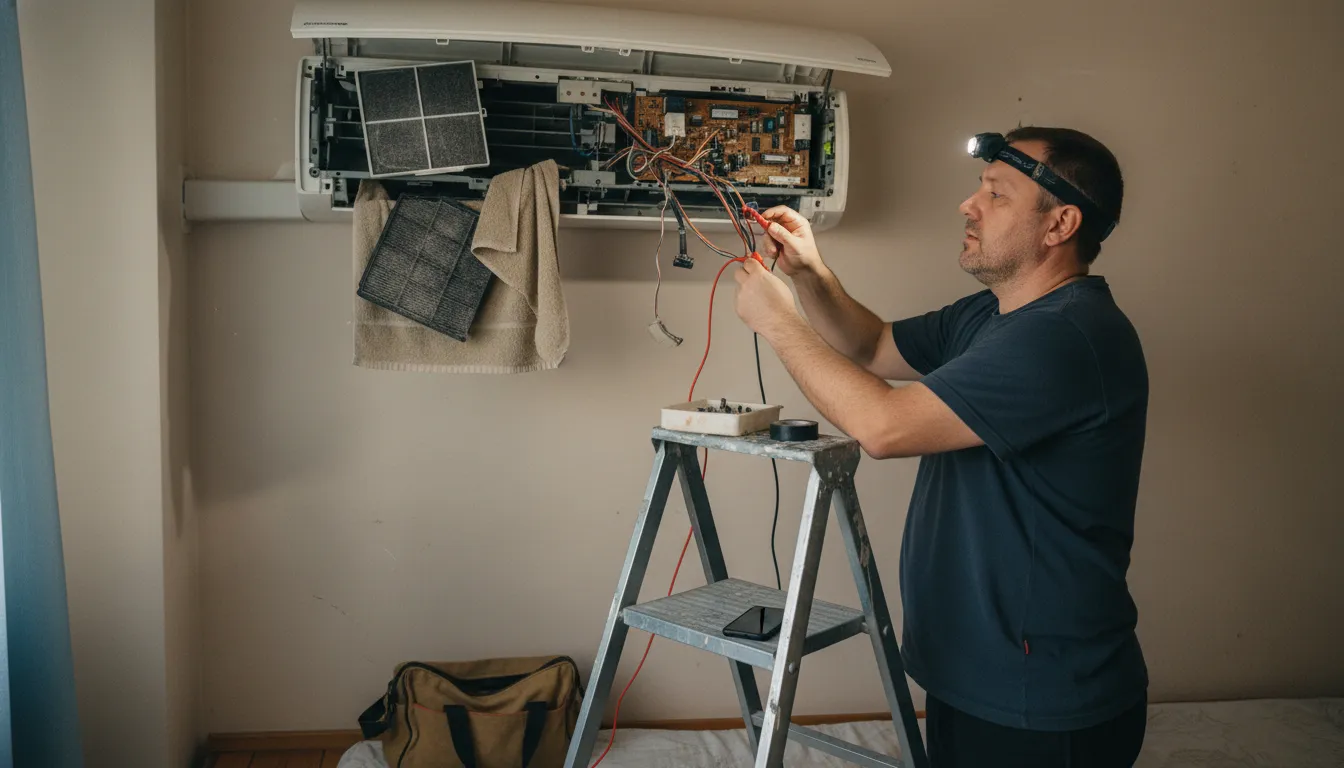
Find the Best AC Repair Contractors for Your Business
No obligation • Fast responses • Nationwide coverage

Why you can trust HVAC Firms
HVAC Firms is a leading United States resource for evaluating HVAC service providers. Our team researches companies, checks credentials, and reviews customer feedback to present clear, unbiased information. Listings and rankings are based on merit, and companies cannot pay to change our editorial content.
Search providers near you
Top AC Repair Contractors in Raleigh, North Carolina Ranked
Living in Raleigh means enjoying vibrant city life and beautiful parks, but it also means contending with a humid subtropical climate where a reliable air conditioning system isn't just a luxury-it's a necessity for comfort and health. When your cooling system falters, finding prompt, professional air conditioning repair is critical. This guide is designed to help you understand common AC problems in our area, what professional diagnosis and repair entail, and how to connect with skilled local technicians who can restore your cool quickly and effectively.
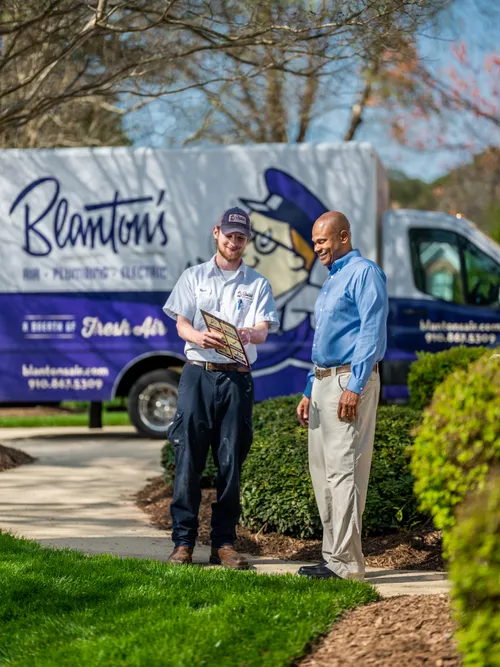
Blanton's Air, Plumbing & Electric
2000 Citation Dr Ste 100, Garner, NC 27529
Blanton's Air, Plumbing & Electric has been serving Raleigh, NC, and the surrounding Triangle area since 1951. They provide a wide range of home services including HVAC repair and installation for air conditioners, furnaces, heat pumps, and boilers. With over 75 years of experience, they offer comprehensive maintenance and emergency services to ensure home comfort and safety year-round. Their team is available 24/7, including after-hours support through an AI representative and live customer care, prioritizing urgent needs and flexible scheduling.
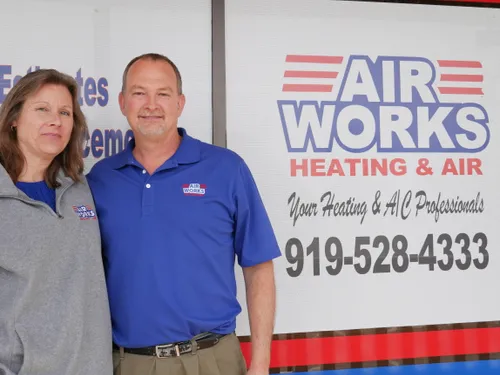
Air Works Heating & Air
5100 Unicon Dr #107, Wake Forest, NC 27587
Air Works Heating & Air is a family-owned HVAC and plumbing company serving Raleigh, NC, and the surrounding Wake County area. Since 2007, they have provided furnace and air conditioning repairs, installations, indoor air quality services, and duct cleaning. Their certified technicians work with top brands like American Standard and Mitsubishi Electric, offering services such as furnace replacements, AC tune-ups, and ductless mini split installations. The company emphasizes straightforward pricing and backs their work with a one-year parts and labor warranty.
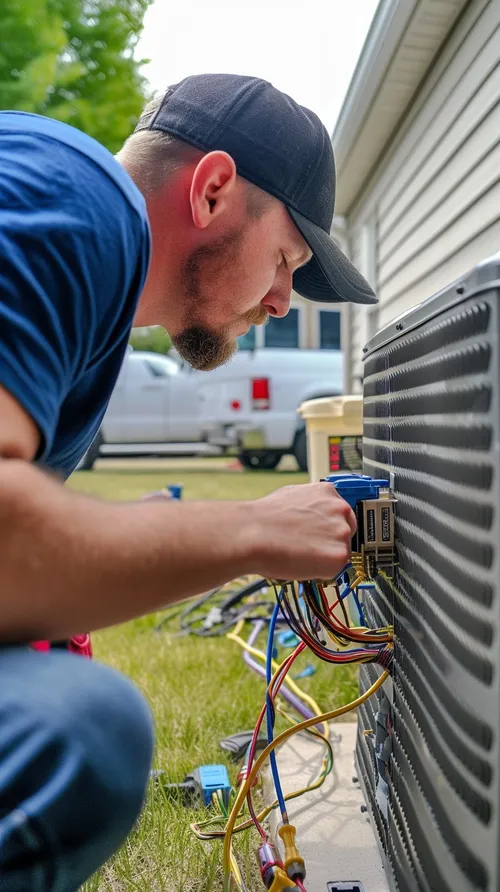
Jay's Heating and Cooling
6616 Prescott Shore Dr, Wake Forest, NC 27587
Jay's Heating and Cooling is a locally owned HVAC company serving Raleigh, NC. They provide a range of services including air conditioning repair and installation, furnace repair and installation, heat pump maintenance and repair, and HVAC tune-ups for both residential and commercial clients. The company uses advanced equipment and employs NATE certified technicians skilled in handling various HVAC systems, including those using A2L refrigerants. With over 60 years of combined experience, Jay's Heating and Cooling emphasizes quality workmanship and long-term client relationships.
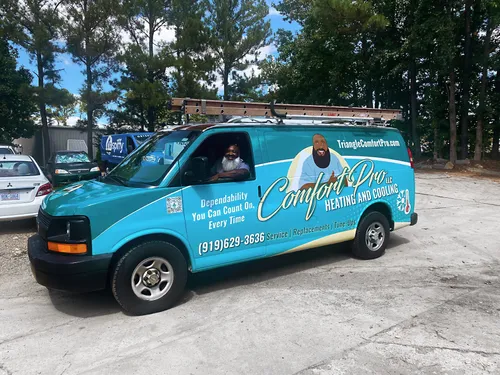
Comfort Pro LLC
101 Woodwinds Industrial Ct, Cary, NC 27511
Comfort Pro LLC is an AC and heating repair company serving Raleigh, NC. They provide repair and maintenance services for air conditioning and furnace systems, focusing on ensuring comfortable indoor environments. Their service area includes Holly Springs and Cary, reflecting a regional focus within the Raleigh area.
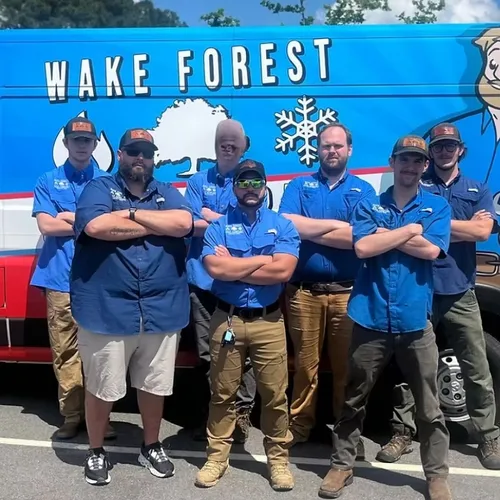
Wake Forest HVAC Company
107 E Young St, Rolesville, NC 27571
Wake Forest HVAC Company provides heating and cooling services in Raleigh, NC, and nearby areas including Rolesville, Wake Forest, and Youngsville. They offer a range of HVAC services such as air conditioning repair and installation, furnace and heat pump repair, thermostat installation, and regular maintenance tune-ups. Their preventative maintenance program includes two comprehensive visits annually to inspect and service HVAC systems, ensuring efficient operation. The company emphasizes professionalism, communication, and integrity in their work and supports their local community.
Understanding Raleigh's Climate and Your AC System
Raleigh's signature humidity and summer heat waves place significant stress on residential and commercial cooling systems. This consistent demand for cooling can accelerate wear and tear, making systems more susceptible to breakdowns during the hottest months. The high moisture content in the air also contributes to specific issues, such as excessive condensation that can lead to water damage or microbial growth if your system isn't functioning properly. A well-maintained air conditioner doesn't just cool; it dehumidifies your home, protecting your property and indoor air quality.
Most Common Air Conditioning Problems in Raleigh Homes
Local technicians frequently encounter a predictable set of issues driven by our environment and usage patterns. Recognizing the signs early can help you seek service before a minor fault becomes a major, costly failure.
- Refrigerant Leaks: The constant cycling in high heat can cause vibrations and stress on refrigerant lines, leading to small leaks. Symptoms include weak cooling, longer run times, and ice formation on the copper lines or evaporator coil. A system low on refrigerant must work harder, increasing energy bills and the risk of compressor failure.
- Dirty Coils and Clogged Air Filters: Raleigh's abundant pollen in spring and general dust can quickly clog your system's air filter. A dirty filter restricts airflow, causing the evaporator coil to freeze. Similarly, the outdoor condenser coil can become matted with grass clippings, leaves, and dirt, drastically reducing its ability to expel heat, which strains the entire system.
- Compressor Failure: The compressor is the heart of your AC system. Overworking due to dirty coils, low refrigerant, or electrical issues can cause this expensive component to overheat and fail. You may hear a humming sound without the fan starting, or the system may trip the circuit breaker.
- Frozen Evaporator Coil: This is often a symptom, not a root cause. It typically results from restricted airflow (dirty filter/coil) or low refrigerant levels. You'll see ice on the indoor unit and little to no cool air coming from your vents.
- Clogged Condensate Drain Lines: Due to our high humidity, AC units produce a lot of condensation. This water drains through a PVC pipe, which can become clogged with algae or mold. A clog can cause water to back up into your drain pan and overflow, potentially leading to ceiling or floor damage 1.
The Professional Diagnostic Process: What to Expect
When a technician arrives, they follow a systematic approach to pinpoint the exact issue. This professional diagnosis is key to an effective and lasting repair.
- Visual Inspection: The technician will start by checking the thermostat settings, inspecting the air filter, ensuring circuit breakers are on, and looking for obvious signs of damage, ice, or water around both the indoor and outdoor units.
- Electrical Testing: Using tools like multimeters and clamp meters, they will test vital electrical components such as capacitors (which help motors start), contactors (electrical relays), and the compressor and fan motors for proper voltage, amperage, and continuity.
- Pressure and Refrigerant Check: Connecting manifold gauges to the service ports on your refrigerant lines allows the technician to measure the system's high and low-side pressures. Incorrect pressures are a clear indicator of problems like a refrigerant leak, a restriction in the line, or a failing compressor.
- Airflow and Temperature Measurement: They will check the temperature drop between the air going into the return vent and coming out of the supply vents. An inadequate temperature drop can point to airflow problems or refrigerant issues. Ductwork may also be inspected for leaks or restrictions.
- Leak Detection: If low refrigerant is suspected, the technician will use electronic leak detectors, ultraviolet dye, or soap-bubble solution to find the exact location of the leak, which is necessary for a proper repair.
This comprehensive process typically takes between 30 minutes to 1.5 hours.
Find the perfect ac repair contractors for your needs
Get personalized recommendations and expert advice
Common Air Conditioner Repairs and What They Involve
Once diagnosed, the repair plan is formulated. The scope can range from a simple, quick fix to a more involved component replacement.
- Filter Replacement and Coil Cleaning: Often the simplest and most effective service. Cleaning the evaporator and condenser coils and replacing a dirty filter can restore airflow and efficiency dramatically2.
- Replacing Electrical Components: Failed capacitors or contactors are common repairs. These components are relatively inexpensive, but their failure prevents motors from starting. Replacement usually resolves the issue and takes about 1-2 hours.
- Repairing Refrigerant Leaks and Recharging: After locating the leak, the technician will repair the schrader valve, braze a puncture in the copper line, or replace a faulty component. The system is then evacuated of air and moisture before being recharged with the correct type and amount of refrigerant 3.
- Clearing Condensate Drain Lines: Technicians use specialized vacuums or pressurized nitrogen to clear the clog from the PVC drain line. They may also apply an algaecide tablet to the drain pan to prevent future clogs4.
- Major Component Replacement: Replacing a compressor, condenser coil, or evaporator coil is a major repair. It requires recovering all refrigerant, swapping the component, and carefully recharging the system. These jobs are more time-intensive and costly5.
Service Timelines and Emergency Response
In a Raleigh summer, a broken AC is an urgent situation. Most reputable local service companies offer same-day or 24-hour emergency response for these critical breakdowns. The speed of the repair itself depends on the problem and part availability:
- Simple Repairs: Fixes like replacing a capacitor, contactor, or clearing a drain line can often be completed in 1-2 hours during the initial service visit.
- Complex Repairs: If a major part like a compressor needs replacing, the technician may complete the diagnosis and order the part. The replacement work is then scheduled, often within a day or two, depending on part availability6.
Understanding Air Conditioning Repair Costs in Raleigh
Costs can vary based on the repair's complexity, the parts required, and the time of day (emergency after-hours service may carry a premium). Many companies charge a diagnostic fee, typically between $89 and $200, which is often waived if you proceed with the recommended repair.
- Minor Repairs: Replacing a capacitor, contactor, or clearing a drain line generally ranges from $150 to $400.
- Average Repair Cost: For common mid-level repairs, such as fixing a refrigerant leak and recharging the system, homeowners can expect an average cost around $1,000, though this can fluctuate based on the leak's location and refrigerant type7.
- Major Component Replacement: Replacing a compressor, condenser coil, or evaporator coil is a significant investment, often ranging from $1,000 to over $3,000, depending on the unit's make and model8 9.
Frequently asked questions
Sources
Footnotes
-
15 Air Conditioner Problems Homeowners Face & Their Solutions - https://cielowigle.com/blog/air-conditioner-problems/ ↩
-
AC Maintenance & Tune-Ups In Raleigh, NC - Air Experts - https://yourairexperts.com/air-conditioning/maintenance/ ↩
-
Troubleshooting Common Split System AC Problems - Style Crest - https://stylecrestinc.com/blog/troubleshooting-common-split-system-ac-problems/ ↩
-
Common AC Problems & DIY Troubleshooting Tips for a Cooler ... - https://www.haier.com/in/blogs/common-ac-problems-and-troubleshooting-tips-diy-fixes-for-a-cool-home.shtml ↩
-
Expert AC Repair Services in Raleigh - Fogg HVAC - https://www.fogghvac.net/air-conditioning/ac-repair-raleigh-nc ↩
-
How Fast Are 24 Hour AC Repairs? Understanding the Process - https://omegaheatingandair.net/how-fast-are-24-hour-ac-repairs-understanding-the-process/ ↩
-
AC Diagnostics Raleigh NC: Accurate Repair - https://ultraairhvacnc.com/air-conditioning-repair-in-raleigh-north-carolina ↩
-
Central Air Conditioning Repairs in Raleigh, NC - Michael & Son - https://michaelandson.com/raleigh/cooling/central-ac-repair ↩
-
Why Is the Emergency AC Repair Cost So Expensive? - Hoover Electric - https://www.callhoover.com/blog/why-is-the-emergency-ac-repair-cost-so-expensive/ ↩