Find the Best Thermostat Installation & Repair Companies for Your Business
No obligation • Fast responses • Nationwide coverage

Why you can trust HVAC Firms
HVAC Firms is a leading United States resource for evaluating HVAC service providers. Our team researches companies, checks credentials, and reviews customer feedback to present clear, unbiased information. Listings and rankings are based on merit, and companies cannot pay to change our editorial content.
Search providers near you
Top Thermostat Installation & Repair Companies in Methuen, Massachusetts Ranked
Keeping your Methuen home comfortable year-round depends on a reliable connection between your HVAC system and the device that controls it: your thermostat. Whether you're upgrading to a smart model for better energy savings, troubleshooting a furnace that won't turn on, or ensuring a new heat pump works perfectly, proper thermostat services are crucial. This guide will help you understand how these devices work, what to consider for your specific home, and how to connect with qualified local professionals for installation, repair, and maintenance.
EML Mechanical
28 Pine St, Stoneham, MA 02180
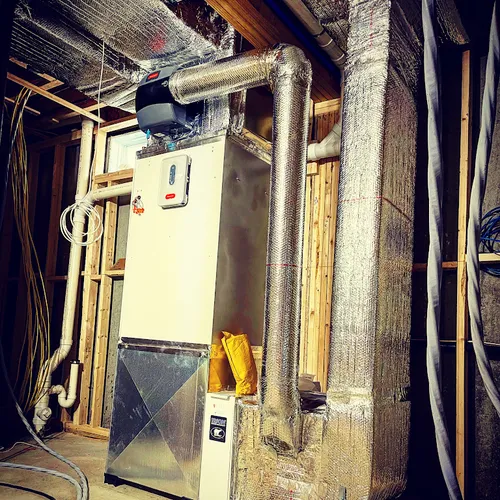
EML Mechanical is an HVAC company serving Boston, MA, and the Greater Northshore Community. They provide residential and commercial heating, ventilation, and air conditioning services, including installation, repair, and tune-ups for systems like furnaces, heat pumps, and air conditioners. EML Mechanical is a MassSave-approved contractor, offering access to energy efficiency rebates and financing options. Their services also include indoor air quality solutions and thermostat installation. The company emphasizes integrity, expertise, and customer-focused service, with 24/7 emergency support available through their service membership plans.
Max Heating and Cooling
11 Dean Street, Stoneham, MA 02180
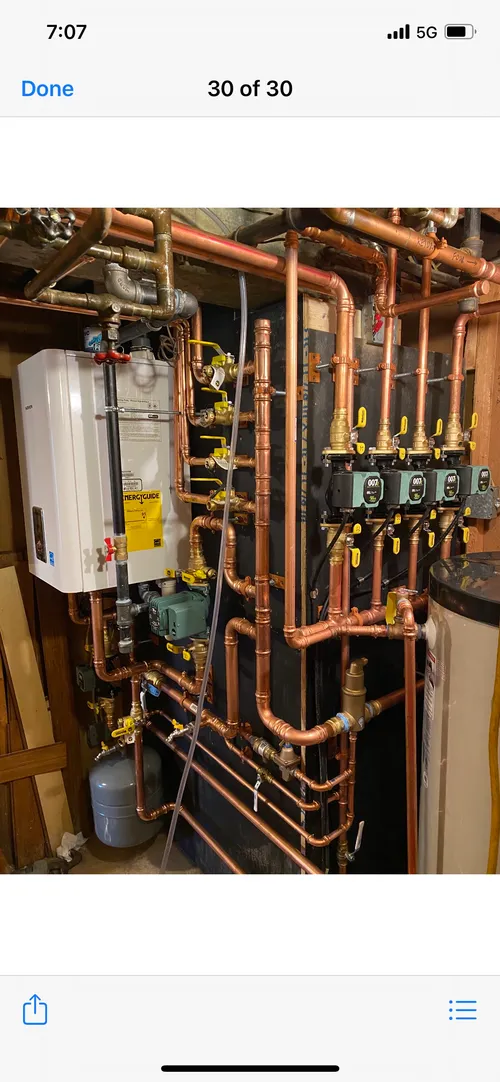
Max Heating and Cooling provides comprehensive HVAC, plumbing, and electrical services in Boston, MA. Since 2019, they have served both residential and commercial clients, offering heating and cooling system installation, repair, and maintenance, including furnaces, heat pumps, mini-splits, and advanced indoor air quality solutions. Their integrated approach allows customers to manage multiple home systems through a single provider, ensuring compatibility and streamlined service. The company also offers professional plumbing and electrical services, including water heater installation and electrical panel upgrades.
KEN's HVAC SERVICE
28 College Farm Rd, Waltham, MA 02451
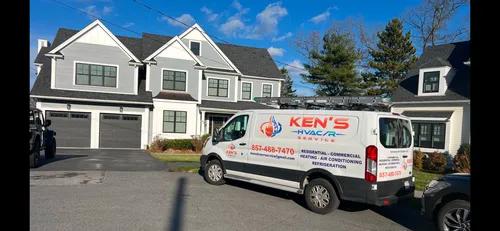
KEN's HVAC SERVICE provides heating, air conditioning, and thermostat installation and repair services in Boston, MA. They offer installation, maintenance, and repair for residential and commercial HVAC systems, including energy efficiency optimization. The company specializes in both heating and cooling system tune-ups and repairs, servicing all brands. Based in Waltham, they recommend biannual tune-ups to maintain system performance throughout the year.
Excel Mechanical
2261 Main St, Tewksbury, MA 01876
Excel Mechanical is an HVAC and plumbing company serving Boston, MA, and the surrounding areas including Greater Boston, Southern New Hampshire, and Cape Cod. They provide a range of services including repair and installation of air conditioning, furnaces, boilers, and thermostats, as well as plumbing and water filtration solutions. With over 28 years of experience, Excel Mechanical offers expertise in diagnosing and fixing HVAC and plumbing issues efficiently. They also provide emergency services for urgent heating, cooling, or plumbing problems.
Champion Heating & Air Conditioning
1643 Beacon St, Waban, MA 02468
Champion Heating & Air Conditioning is a family-owned HVAC company based in Boston, MA. They offer a range of services including AC repair, furnace and heat pump repair, new AC installation, thermostat installation, duct cleaning, and indoor air quality services. Their NATE Certified technicians provide same-day and emergency services, ensuring availability when needed. Champion Heating & Air Conditioning is known for their air handler services and 24-hour emergency AC service.
How Your Thermostat Controls Comfort
At its core, a thermostat is the command center for your heating and cooling. It continuously senses the air temperature in your home and compares it to your desired setting. When the room gets too cold, it sends an electrical signal to your furnace or heat pump to start producing heat. When it's too warm, it signals your air conditioner to kick on. This cycle of sensing and switching happens seamlessly when everything is working correctly.
Most residential systems in Methuen use low-voltage control wiring. You'll typically find a bundle of thin wires (each with a standard color code like red/R, white/W, yellow/Y, green/G, and blue/C) running from your HVAC equipment to the thermostat. This setup allows for safe, reliable communication. Understanding this basic wiring is key for any installation or troubleshooting, which is why many homeowners opt for professional help to avoid miswiring that can lead to system damage or inefficient operation 1.
Types of Thermostats Found in Methuen Homes
Choosing the right control device depends on your lifestyle, HVAC system, and goals for efficiency.
- Traditional Manual Thermostats: These simple dial or lever models are purely mechanical. They are reliable and inexpensive but offer no programming capabilities, often leading to energy waste when you forget to adjust them.
- Programmable Thermostats: A significant step up in efficiency, these digital models allow you to set a schedule (e.g., cooler at night, warmer before you wake up). They automate temperature changes to reduce energy use without sacrificing comfort.
- Smart/Wi-Fi Thermostats: Increasingly popular in Methuen, models like Nest or Ecobee learn your habits, allow remote control via smartphone, and provide detailed energy reports. They can optimize the runtime of complex systems like heat pumps and often qualify for utility rebates 2. Their installation, however, often has specific requirements, like the need for a C-wire.
Key Compatibility Considerations Before You Buy
Installing a new thermostat isn't always a simple swap. Compatibility with your existing HVAC system is the most critical factor.
- The Essential C-Wire: Many smart and advanced digital thermostats require a constant 24-volt power source, provided by a "common" or C-wire. Older homes may not have this wire run to the thermostat location, which can complicate a DIY upgrade. A professional can diagnose this and often provide solutions, such as installing an adapter.
- System Type Matters: Not all thermostats work with all systems. If you have a heat pump, you need a thermostat specifically designed to control its unique reversing valve and auxiliary heat stages. Similarly, homes with multi-stage furnaces or dual-fuel systems (like a heat pump paired with a gas furnace) require compatible controls to operate efficiently and prevent equipment damage 3.
- Voltage and Wiring: While most forced-air systems use low-voltage (24V) wiring, some older heating systems, like line-voltage electric baseboards, operate on 120V or 240V and need a specialized thermostat. Attempting to install a standard low-voltage thermostat on a high-voltage system is dangerous and can cause serious damage.
Common Thermostat Repairs and Issues
When your HVAC system isn't responding, the thermostat is a logical first place to check. Many problems have simple fixes.
- No Power or Blank Screen: This is often solved by replacing old batteries in digital models. If that doesn't work, checking the circuit breaker for the HVAC system and ensuring the furnace door is securely closed (which engages a safety switch) are good next steps.
- Inaccurate Temperature Readings: A thermostat placed in direct sunlight, on an exterior wall, near a heat-producing appliance, or in the path of an air vent will give false readings, causing your system to short-cycle or run excessively. Relocating the thermostat to a properly shaded, interior wall is the solution.
- System Won't Turn On/Off: This could be due to dust and debris inside the thermostat interfering with its mechanical components or electrical connections. Gently cleaning the interior can help. More persistently, loose or corroded wiring connections at the thermostat or at the HVAC equipment end can break the signal.
If these basic checks don't resolve the issue, the problem may be with the thermostat's internal circuitry or a deeper issue within the HVAC system itself, signaling it's time to call a professional.
The Professional Service Process: Installation & Repair
Hiring a certified technician for thermostat services in Methuen ensures the job is done safely and correctly, especially for complex systems.
- Diagnosis & System Check: A technician won't just look at the thermostat. They will assess your entire HVAC system to confirm its type (single-stage, multi-stage, heat pump), check the existing wiring at the furnace and thermostat, and verify voltage. This comprehensive check is vital for selecting a compatible replacement 4.
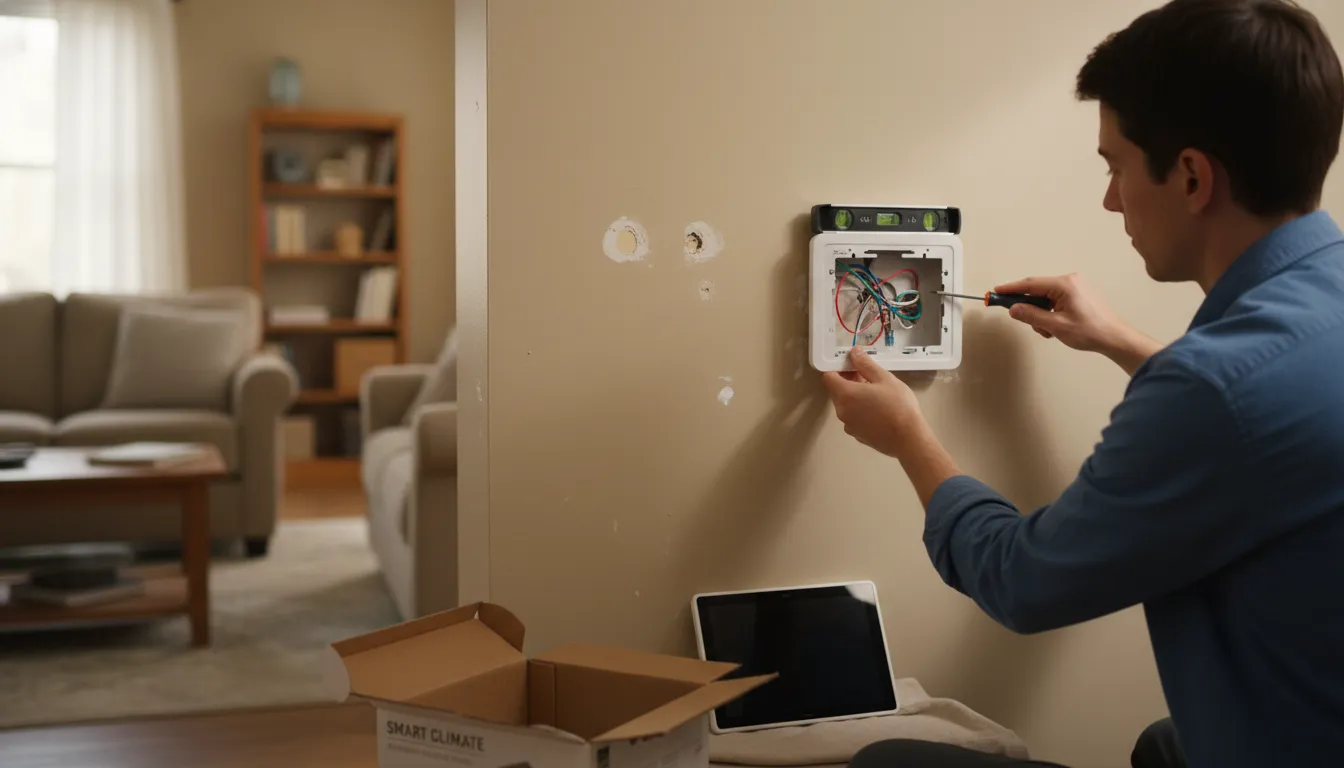
- Installation & Wiring: For a new install, the technician will safely disconnect power, label and transfer wires according to the new thermostat's manual, securely mount the unit level on the wall (critical for accuracy in some older models), and restore power. For smart thermostats, they will ensure the C-wire is connected or an adapter is properly installed.
- Configuration & Calibration: This is where expertise shines. The tech will program the thermostat for your system's specific stages, configure heating and cooling setpoints, set up schedules, and connect it to your Wi-Fi if applicable. They will also calibrate it to ensure the temperature reading is accurate and test the system to verify all modes (heat, cool, fan) operate correctly.
Find the perfect thermostat installation & repair companies for your needs
Get personalized recommendations and expert advice
Understanding Service Costs in Methuen
While prices can vary based on the company, time of year, and job complexity, the research provides a general framework for what Methuen homeowners might expect 5 6 7:
- Service Call/Diagnostic Fee: Typically ranges from $75 to $150. This fee covers the technician's time to assess the problem. Many companies apply this charge toward the total cost if you proceed with the recommended repair or installation.
- Basic Thermostat Repair: For straightforward fixes like replacing batteries, cleaning internal components, or re-securing loose wires, costs generally fall between $100 and $250.
- Full Thermostat Replacement (Parts & Labor): This is the most variable cost. Replacing an old manual thermostat with a basic programmable model might start around $250. Installing a high-end smart thermostat compatible with a complex system like a heat pump or multi-stage furnace can range from $400 to $600 or more, factoring in the price of the unit itself and the labor for proper configuration.
Investing in professional installation avoids future headaches and ensures your new thermostat maximizes both your comfort and your system's efficiency.
Optimal Thermostat Placement for Accuracy
Where you place your thermostat has a direct impact on its performance and your energy bills. To get a true reading of your home's average temperature, follow these guidelines 8:
- Do install it on an interior wall, roughly 5 feet off the floor.
- Do place it in a frequently used room, like a living room or hallway.
- Don't install it near windows, doors, or supply air vents where drafts can skew readings.
- Don't place it in direct sunlight or on an exterior wall that gets very cold.
- Don't put it near heat-producing appliances like lamps, televisions, or kitchen ovens.
If your current thermostat is poorly located, a technician can discuss the feasibility and cost of relocating it to a more ideal spot, which may involve running new low-voltage wiring.
Frequently asked questions
Sources
Footnotes
-
Occupational Outlook Handbook: : U.S. Bureau of Labor Statistics - https://www.bls.gov/ooh/installation-maintenance-and-repair/heating-air-conditioning-and-refrigeration-mechanics-and-installers.htm ↩
-
How Does a Thermostat Work? | Understanding HVAC Controls - https://www.bryant.com/en/us/products/controls-thermostats/how-they-work/ ↩
-
Smart Thermostat Compatibility: Common Issues & Fixes - https://harmonmechanical.com/smart-thermostat-compatibility-issues/ ↩
-
How to Know If Your Thermostat and HVAC System Are Compatible - https://environmentmasters.com/how-to-know-if-your-thermostat-and-hvac-system-are-compatible/ ↩
-
Thermostat Repair & Install Services Near Methuen, MA - https://erservicesph.com/service/thermostat-repair/ ↩
-
How to Install a Thermostat | The Home Depot - https://www.youtube.com/watch?v=1_TxXw-NvVY&t=138 ↩
-
7 Ways to Tell Your Thermostat Is Broken - HB McClure Company - https://hbmcclure.com/hbhome/blog/7-ways-to-tell-your-thermostat-is-broken/ ↩
-
Best Placement for Your Thermostat | Save on Energy - https://saveonenergy.ca/en/For-Your-Home/Advice-and-Tips/Best-Thermostat-Placement ↩