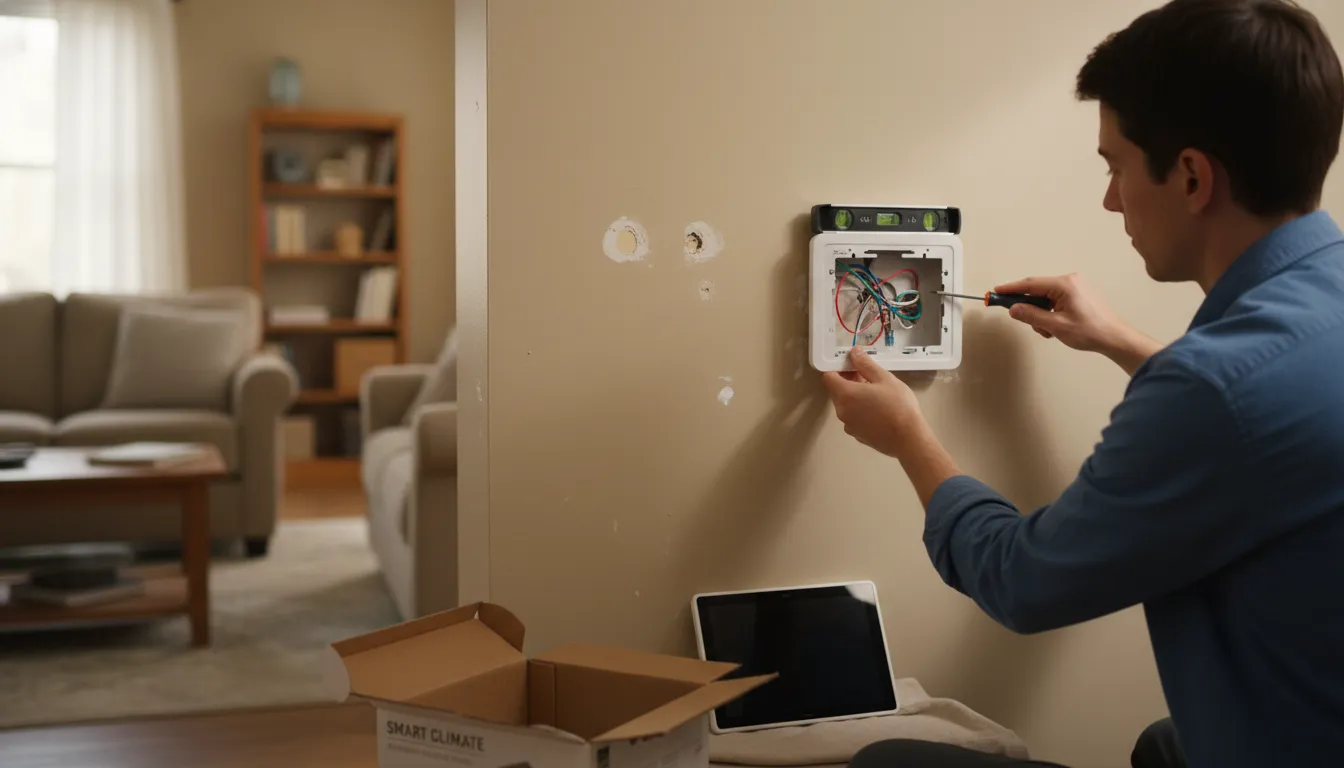
Find the Best Thermostat Installation & Repair Companies for Your Business
No obligation • Fast responses • Nationwide coverage

Why you can trust HVAC Firms
HVAC Firms is a leading United States resource for evaluating HVAC service providers. Our team researches companies, checks credentials, and reviews customer feedback to present clear, unbiased information. Listings and rankings are based on merit, and companies cannot pay to change our editorial content.
Search providers near you
Top Thermostat Installation & Repair Companies in Lowell, Massachusetts Ranked
Your home's comfort and energy efficiency hinge on a small but critical device: the thermostat. This temperature control center acts as the brain of your heating and cooling system, signaling your furnace, air conditioner, or heat pump when to turn on and off. In Lowell's climate, with its cold winters and warm summers, ensuring your thermostat is correctly installed and functioning is essential for maintaining a consistent indoor environment and managing utility bills. This guide will help you understand the process, costs, and key considerations for professional thermostat services, connecting you with the expertise needed for a reliable setup.
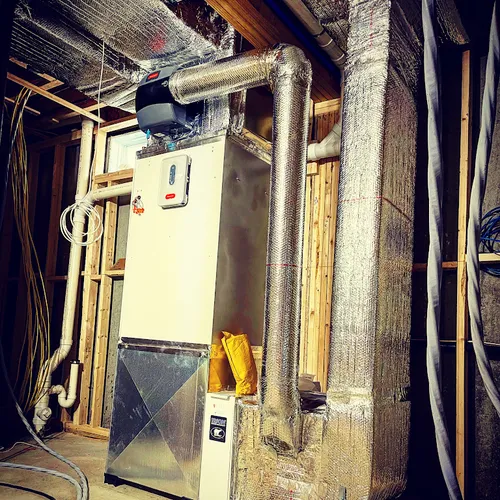
EML Mechanical
28 Pine St, Stoneham, MA 02180
EML Mechanical is an HVAC company serving Boston, MA, and the Greater Northshore Community. They provide residential and commercial heating, ventilation, and air conditioning services, including installation, repair, and tune-ups for systems like furnaces, heat pumps, and air conditioners. EML Mechanical is a MassSave-approved contractor, offering access to energy efficiency rebates and financing options. Their services also include indoor air quality solutions and thermostat installation. The company emphasizes integrity, expertise, and customer-focused service, with 24/7 emergency support available through their service membership plans.
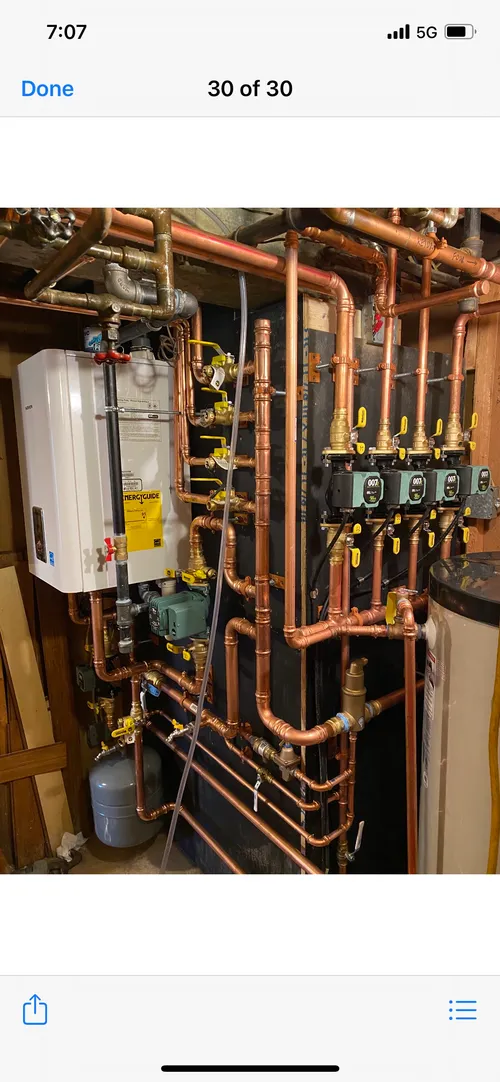
Max Heating and Cooling
11 Dean Street, Stoneham, MA 02180
Max Heating and Cooling provides comprehensive HVAC, plumbing, and electrical services in Boston, MA. Since 2019, they have served both residential and commercial clients, offering heating and cooling system installation, repair, and maintenance, including furnaces, heat pumps, mini-splits, and advanced indoor air quality solutions. Their integrated approach allows customers to manage multiple home systems through a single provider, ensuring compatibility and streamlined service. The company also offers professional plumbing and electrical services, including water heater installation and electrical panel upgrades.
KEN's HVAC SERVICE
28 College Farm Rd, Waltham, MA 02451
KEN's HVAC SERVICE provides heating, air conditioning, and thermostat installation and repair services in Boston, MA. They offer installation, maintenance, and repair for residential and commercial HVAC systems, including energy efficiency optimization. The company specializes in both heating and cooling system tune-ups and repairs, servicing all brands. Based in Waltham, they recommend biannual tune-ups to maintain system performance throughout the year.
Excel Mechanical
2261 Main St, Tewksbury, MA 01876
Excel Mechanical is an HVAC and plumbing company serving Boston, MA, and the surrounding areas including Greater Boston, Southern New Hampshire, and Cape Cod. They provide a range of services including repair and installation of air conditioning, furnaces, boilers, and thermostats, as well as plumbing and water filtration solutions. With over 28 years of experience, Excel Mechanical offers expertise in diagnosing and fixing HVAC and plumbing issues efficiently. They also provide emergency services for urgent heating, cooling, or plumbing problems.
Champion Heating & Air Conditioning
1643 Beacon St, Waban, MA 02468
Champion Heating & Air Conditioning is a family-owned HVAC company based in Boston, MA. They offer a range of services including AC repair, furnace and heat pump repair, new AC installation, thermostat installation, duct cleaning, and indoor air quality services. Their NATE Certified technicians provide same-day and emergency services, ensuring availability when needed. Champion Heating & Air Conditioning is known for their air handler services and 24-hour emergency AC service.
How Your Thermostat Controls Comfort
At its core, a thermostat is a temperature-activated switch. It contains a sensor that continuously monitors the ambient air temperature in your home. In older models, this is often a bimetallic strip that expands or contracts with temperature changes; modern digital thermostats use electronic sensors 1. This sensor compares the room temperature to your desired set point. When the temperature drifts too far from this setting, the device completes an electrical circuit, sending a low-voltage signal to your HVAC system to start heating or cooling 2 3. Once the target temperature is reached, it breaks the circuit, turning the system off. This cycle of sensing and signaling is what maintains your home's comfort level.
A malfunctioning or improperly calibrated temperature control can lead to short cycling (frequent on/off bursts), failure to reach the set temperature, or a complete lack of response from your furnace or AC. Understanding this basic operation is the first step in diagnosing issues and appreciating why professional installation matters for system harmony.
The Professional Installation Process in Lowell
Installing a new thermostat is more than just swapping an old unit for a shiny new one. Local HVAC professionals follow a meticulous process to ensure safety, compatibility, and optimal performance.
First, a technician from a Lowell-based company will assess your existing HVAC system. They identify whether you have a conventional furnace and air conditioner, a heat pump, or a dual-fuel system. This is crucial because heat pumps, for example, require thermostats specifically designed to manage their unique reversing valve and auxiliary heat operations. Next, they examine the existing wiring at your wall plate. A common challenge, especially in older Lowell homes, is the absence of a "C-wire" or common wire, which provides continuous power to modern smart thermostats. The technician will determine if an adapter can be used or if new wiring needs to be run.
After confirming compatibility and preparing the wiring, the professional will install the new unit, connecting each wire to its correct terminal. They then secure the thermostat to the wall, restore power, and thoroughly test the installation. This testing phase involves commanding the system to heat and cool, verifying that all stages of operation (like auxiliary heat on a heat pump) engage correctly. Finally, a good technician will walk you through the features of your new programmable or smart thermostat, ensuring you know how to set schedules and use energy-saving functions 4.
Common Repairs and Troubleshooting
Not all thermostat issues require a full replacement. Many problems can be resolved through skilled repair and troubleshooting. Common repairs handled by Lowell technicians include:
- Power and Connectivity Issues: The thermostat may have a blank screen or be unresponsive. Technicians check for tripped circuit breakers, blown fuses, or a drained battery in older models. They also inspect the low-voltage wiring connections at both the thermostat and the HVAC equipment for loose or corroded terminals.
- Inaccurate Temperature Readings: If your thermostat seems to be reading the room temperature incorrectly, it could be due to its location. Placement in direct sunlight, near heat-producing appliances, or in a drafty hallway can cause false readings. A technician might recommend relocating the thermostat or can sometimes recalibrate the sensor 5.
- Communication Failures with the HVAC System: Sometimes the thermostat appears to work, but it fails to turn the furnace or AC on. This requires systematic troubleshooting of the control wiring, the HVAC system's control board, and safety switches. Professionals use multimeters to trace the 24-volt signals and identify where the communication is breaking down.
- Short Cycling: This is when your system turns on and off too frequently, which is inefficient and wears out components. While the cause can be within the HVAC unit itself, it can also stem from a faulty thermostat anticipator (in older models) or incorrect calibration.
Basic maintenance homeowners can perform includes ensuring the device is level, gently cleaning inside the cover to remove dust, and verifying that no furniture or curtains are blocking airflow to the unit. For anything involving electrical wiring or system diagnostics, calling a professional is the safest and most effective course.
Key Considerations: Compatibility and Wiring
Two of the most critical technical factors in a successful thermostat project are system compatibility and wiring configuration. Overlooking these is a primary cause of post-installation problems.
System Compatibility: Your new thermostat must be designed to work with your specific type of HVAC equipment. The main categories are:
- Conventional Systems: Separate furnace and air conditioner.
- Heat Pump Systems: A single unit that provides both heating and cooling.
- Dual-Fuel Systems: A heat pump paired with a gas furnace for supplemental heat during very cold spells.
- Multi-Stage Systems: Furnaces or ACs with high and low settings for better efficiency.
Installing a thermostat meant for a conventional system on a heat pump can lead to incorrect operation and potential equipment damage 6. Always check the manufacturer's compatibility guide or, better yet, have a professional verify.
Wiring: The bundle of low-voltage wires behind your thermostat is its communication link to the HVAC system. Each wire (typically labeled R, G, Y, W, and C) has a specific function. The "C-wire" is increasingly important for Wi-Fi and smart thermostats, as they require constant power for their displays and connectivity. If your existing wiring doesn't include a C-wire, an HVAC technician can install an adapter kit or run a new wire, which adds to the project complexity and cost 7.
Find the perfect thermostat installation & repair companies for your needs
Get personalized recommendations and expert advice
Understanding Costs for Thermostat Services
The cost for thermostat installation or replacement in Lowell typically involves parts and labor. On average, homeowners can expect to pay around $184 for a standard replacement, with a common range between $114 and $264 8 9. This price usually includes a mid-grade programmable thermostat and the labor to install it. The final cost is influenced by several factors:
- Type of Thermostat: Basic non-programmable models are the least expensive. Programmable thermostats, which allow you to set temperature schedules, cost more. Smart thermostats (like Nest, Ecobee, or Honeywell Home) with Wi-Fi, learning capabilities, and geofencing are the premium option.
- Labor Complexity: The standard professional labor rate for HVAC technicians in the area ranges from $65 to $100 per hour 10. A straightforward swap with compatible wiring will be on the lower end. Jobs requiring new wire runs, installing a C-wire adapter, or integrating with a complex multi-stage or dual-fuel system will take more time and increase labor costs.
- Additional HVAC Work: Often, a thermostat issue can be a symptom of a larger problem with the furnace, air handler, or condensate system. If the technician discovers related issues during diagnostics, repairs will be additional 11.
Investing in a proper installation by a certified technician prevents future headaches and ensures your new device delivers its promised energy savings and comfort.
The Value of Professional Expertise
While DIY thermostat installation videos are plentiful, the value of a professional technician's expertise cannot be overstated. Certified HVAC professionals bring a systematic approach to troubleshooting that goes beyond the thermostat itself. They understand how the thermostat interacts with the entire system-from the control board in your furnace to the contactor in your outdoor AC unit 12.
Their training allows them to safely handle electrical components, interpret wiring diagrams, and use diagnostic tools like multimeters and manometers. Perhaps most importantly, they can identify underlying issues that a homeowner might miss, such as a failing transformer, a dirty flame sensor that's causing the furnace to shut off, or low refrigerant in an AC system that's causing it to cycle incorrectly 13 14. This holistic system knowledge ensures the root cause of a problem is addressed, not just its symptom at the thermostat.
For Lowell residents, partnering with a local expert also means support is readily available for future maintenance, seasonal check-ups, or if any questions arise about your system's performance.
Frequently asked questions
Sources
Footnotes
-
How Does a Thermostat Work? | Understanding HVAC Controls - https://www.bryant.com/en/us/products/controls-thermostats/how-they-work/ ↩
-
How Does a Thermostat Work? A Guide to Temperature Control - https://gulfshorecooling.com/how-does-a-thermostat-work/ ↩
-
AC Thermostat: How it Works - Temprite Climate Solutions - https://www.tempriteclimatesolutions.com/blog/air-conditioning-service/how-your-thermostat-works-with-your-ac-and-how-you-can-take-advantage-of-it ↩
-
Lowell, MA Plumbing, HVAC, & Electrical Services - https://www.merrimackvalleyplumbing.com/service-area/lowell-ma/ ↩
-
Thermostat Service for Home HVAC | QRC - https://qrc123.com/residential-heating-and-cooling/thermostats/ ↩
-
How to Know If Your Thermostat and HVAC System Are Compatible - https://environmentmasters.com/how-to-know-if-your-thermostat-and-hvac-system-are-compatible/ ↩
-
Thermostat Replacement Cost: 5 Common Issues + Fixes - https://smockhvac.com/blog/thermostat-replacement-cost/ ↩
-
How to Know If Your Thermostat and HVAC System Are Compatible - https://environmentmasters.com/how-to-know-if-your-thermostat-and-hvac-system-are-compatible/ ↩
-
How Much Does Thermostat Installation or Replacement Cost? - https://www.homeadvisor.com/cost/heating-and-cooling/install-a-thermostat/ ↩
-
Thermostat Installation in Lowell - Village Home Services - https://www.villagehomeservices.com/hvac/thermostats/ ↩
-
Heating Repair & Installation in Lowell, MA - https://www.afphpro.com/heating/heating-repair-installation/ ↩
-
What Skills Do You Need to Be an HVAC Technician? - Charter College - https://chartercollege.edu/news-hub/skills-you-need-be-hvac-technician/ ↩
-
Common HVAC Troubleshooting Scenarios: A Technician's Guide - https://www.servicetitan.com/blog/hvac-troubleshooting-scenarios ↩
-
HVAC Troubleshooting Guide: Step-by-Step Solutions Made Easy - https://projecthvac.com/2026/01/07/hvac-troubleshooting-guide-step-by-step/ ↩