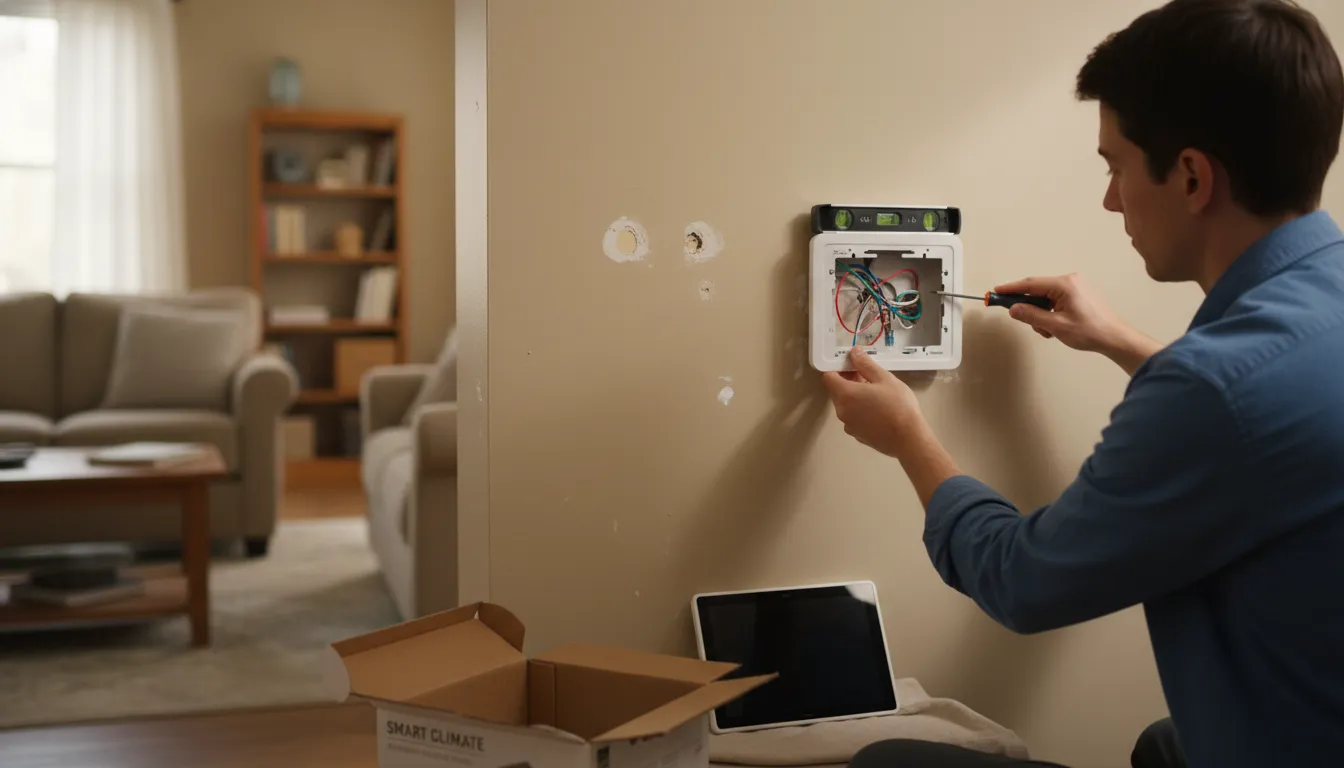
Find the Best Thermostat Installation & Repair Companies for Your Business
No obligation • Fast responses • Nationwide coverage

Why you can trust HVAC Firms
HVAC Firms is a leading United States resource for evaluating HVAC service providers. Our team researches companies, checks credentials, and reviews customer feedback to present clear, unbiased information. Listings and rankings are based on merit, and companies cannot pay to change our editorial content.
Search providers near you
Top Thermostat Installation & Repair Companies in Schaumburg, Illinois Ranked
Your thermostat is the command center for your home's heating and cooling, responsible for maintaining your comfort and managing energy use. Whether you're dealing with a malfunctioning unit, looking to upgrade to a smart model, or installing a new system, professional thermostat services ensure your HVAC system operates efficiently and reliably. This guide will help you understand how thermostats work, what to consider for your Schaumburg home, and how to connect with qualified local experts for installation, troubleshooting, and repair.
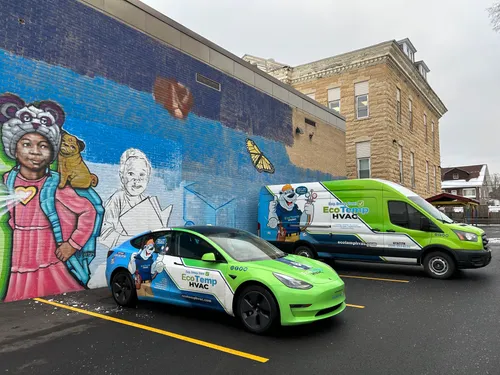
Eco Temp HVAC
1210 S Indiana Ave APT 4611, Chicago, IL 60605
Eco Temp HVAC is a Chicago, IL-based company specializing in heating and cooling services. They offer installation, repair, and maintenance for air conditioners, furnaces, boilers, ductless mini split systems, and thermostats. The company also provides indoor air quality solutions and professional air duct cleaning. Eco Temp HVAC is certified by American Standard, Mitsubishi, and Navien, and has been serving the Chicago area since 2016. They provide 24/7 availability, ensuring assistance is always accessible for urgent HVAC needs.
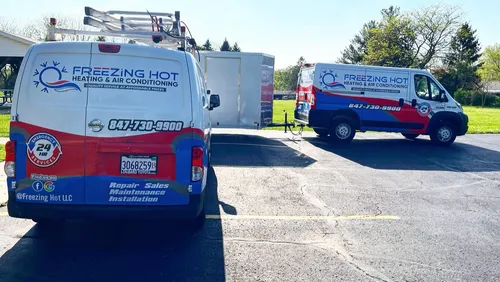
Freezing Hot LLC
Chicago, IL
Freezing Hot LLC is an HVAC company based in Chicago, IL, providing heating, air conditioning, indoor air quality, and hot water heater services. They serve the Chicagoland area, including suburbs such as Des Plaines, Mount Prospect, and Arlington Heights. Their services include furnace and boiler repair and installation, air conditioning repair and installation, thermostat installation, and indoor air quality improvements like air filtration and humidifiers. The company handles both routine maintenance and full system replacements to maintain comfortable indoor environments throughout the year.
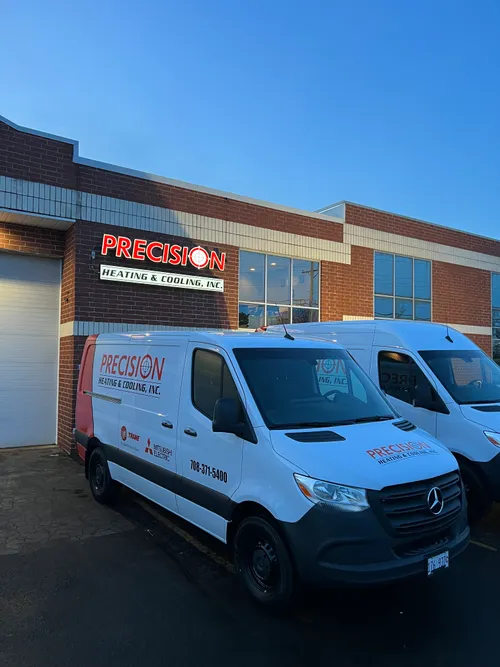
Precision Heating and Cooling
12004 S Central Ave, Alsip, IL 60803
Precision Heating and Cooling is an HVAC company based in Chicago, IL, offering a range of heating and air conditioning services for both residential and commercial customers. Their NATE-Certified technicians provide installation, repair, and tune-up services for furnaces, air conditioners, mini splits, thermostats, humidifiers, and air filtration systems. The company emphasizes quick problem evaluation and practical recommendations to maintain safe and comfortable indoor environments. Precision Heating and Cooling serves a wide area around Chicago and is known for its expertise in HVAC system inspections and efficient repairs.
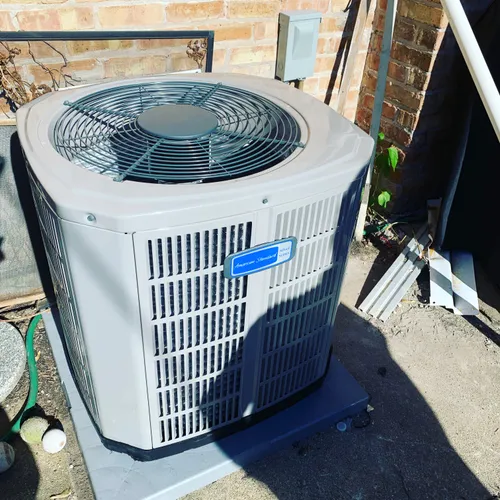
Polar Vortex Heating & Cooling
3646 W Oakdale Ave Apt #2, Chicago, IL 60618
Polar Vortex Heating & Cooling is an HVAC company based in Chicago, IL, specializing in heating and cooling system installation, repair, and maintenance. They provide services for air conditioning, boilers, forced air systems, rooftop units, and indoor air quality products. The company installs American Standard heating and cooling products as well as Mitsubishi mini splits. Polar Vortex is NATE certified and a ComEd ICC certified energy efficiency installer, ensuring energy-efficient solutions for their clients. They offer 24/7 emergency services to address urgent HVAC needs promptly.
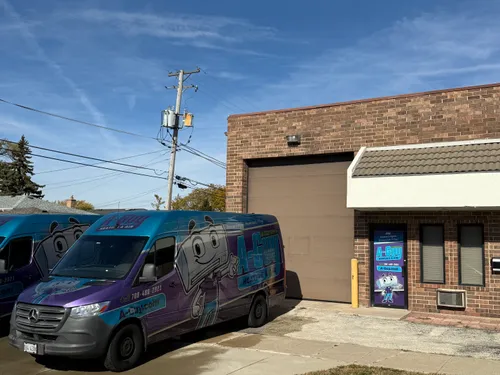
A-Guy Heating & Air
8398 S 77th Ave, Bridgeview, IL 60455
A-Guy Heating & Air is an HVAC contractor based in Chicago, IL, specializing in air conditioning and furnace repair and installation. They also provide mini split and thermostat installation services. The company is experienced in handling Mitsubishi home mini ductless heat and air systems, offering clean and efficient installations. Customers appreciate their thorough approach and attention to detail. A-Guy Heating & Air is known for working closely with clients to find the best solutions for their heating and cooling needs.
How Your Thermostat Controls Comfort
A thermostat acts as the "brain" of your HVAC system, constantly monitoring and controlling the indoor temperature to match your desired setpoint 1. This simple device is the key interface between you and your furnace, air conditioner, or heat pump.
The Basics of Operation: The core function is sensing and responding. Older, mechanical thermostats use a bimetallic strip-two different metals bonded together-that bends with temperature changes. This physical movement completes or breaks a low-voltage electrical circuit, turning your system on or off 2. Modern digital and smart thermostats use highly accurate electronic sensors called thermistors to measure ambient temperature 3 4.
The Control Cycle: Once the thermostat senses the room temperature, it compares that reading to your chosen setting. If the room is too cold, it sends a 24-volt electrical signal to start the furnace. If it's too warm, it signals the air conditioner to begin cooling. This cycle continues until the temperature stabilizes at the setpoint, at which point the thermostat signals the system to shut off 5 6. This precise control is what keeps your Schaumburg home comfortable through every season.
Understanding Your Schaumburg Home's HVAC System
Most residential HVAC systems in Schaumburg are low-voltage (24V) forced-air setups, typically combining a furnace with central air conditioning. This standardization is good news for homeowners, as it means a wide variety of thermostats are compatible. However, understanding your specific system is crucial before selecting a new temperature control device.
System Types and Compatibility: While forced-air systems are common, some homes may have heat pumps, multi-stage heating/cooling, or zoned systems. These configurations have specific wiring needs that not all thermostats can support. For instance, a heat pump thermostat requires terminals for reversing valve control, which a standard furnace-only thermostat lacks. Checking your system's manual or having a professional assess your wiring is the best way to ensure compatibility.
The Critical C-Wire: One of the most important factors for modern upgrades is the presence of a "C," or common, wire. This wire provides continuous 24V power from your HVAC system to the thermostat. Many older homes were wired without one, as simple mechanical thermostats didn't need constant power. Today's smart and Wi-Fi thermostats almost always require a C-wire to power their displays, processors, and wireless connections 7 8. If your home lacks this wire, a technician can often install an adapter or run a new wire, but it's a key consideration for installation cost and feasibility.
Key Considerations for Thermostat Selection and Placement
Choosing the right thermostat involves more than just picking a model with appealing features. Proper selection and installation location are vital for performance, accuracy, and longevity.
Compatibility Checklist:
- Voltage: Confirm your system is 24V. Using a thermostat designed for line-voltage (120V or 240V) systems, like those for baseboard heaters, can cause serious damage to a standard low-voltage HVAC system.
- Wiring: Take a clear photo of your existing thermostat's wiring before removal. This helps professionals determine compatibility and plan the installation. Note if you have a C-wire.
- Features: Match the thermostat to your system's capabilities. Do you have a single-stage or multi-stage system? Do you want geofencing, learning schedules, or remote sensors? Your HVAC professional can help translate your system's wiring into the features you can actually use.
Optimal Placement for Accuracy: Where you mount your thermostat significantly impacts its ability to read your home's true temperature. It should be installed on an interior wall, away from direct sunlight, drafts, doorways, windows, and heat sources like lamps, appliances, or electronics. Placing it in a frequently used room, like a living room or hallway, ensures it regulates temperature where you spend the most time. Avoid kitchens and laundry rooms, as heat from ovens and dryers can trigger unnecessary cooling cycles.
Find the perfect thermostat installation & repair companies for your needs
Get personalized recommendations and expert advice
Thermostat Repair vs. Replacement: Making the Right Choice
When your thermostat malfunctions-causing temperature swings, a blank display, or a non-responsive system-you face a decision: repair or replace? The right choice depends on the age of the unit, the nature of the problem, and your long-term goals for comfort and efficiency.
Common Repairable Issues: Many problems are simple and inexpensive to fix. These include:
- Dead Batteries: A blank screen on a digital model is often solved with fresh batteries.
- Loose Wiring: Connections can loosen over time, interrupting the signal to your HVAC equipment.
- Dust and Debris: Inside mechanical thermostats, dust can interfere with the bimetallic strip's movement, causing inaccurate readings.
- Calibration Drift: Older thermostats can lose calibration, meaning the set temperature no longer matches the actual room temperature. A professional can often recalibrate it 9.
For these issues, repair is typically the most cost-effective route, with basic service costs in the Schaumburg area often ranging from $50 to $180 10 11.
When Replacement is the Smarter Investment: There are several scenarios where installing a new thermostat makes more financial sense than repeated repairs:
- Frequent Failures: If you're constantly troubleshooting the same unit, replacement offers reliability.
- Outdated Technology: Older mechanical or non-programmable digital thermostats are less efficient. Upgrading to a programmable or smart model can lead to significant energy savings.
- Incompatibility with New HVAC Equipment: If you've recently installed a new high-efficiency furnace or heat pump, your old thermostat may not support its advanced features, like multi-stage operation.
- Major Component Failure: If the internal sensor or motherboard fails, the repair cost can approach or exceed the price of a new, basic thermostat 12.
Cost Guide for Schaumburg Homeowners
Costs for thermostat services in Schaumburg can vary based on the thermostat type, your system's complexity, and the specific labor rates of the provider. The following table provides estimated ranges to help you budget.
| Service | Estimated Cost Range (Schaumburg, IL area) |
|---|---|
| Basic Repairs (batteries, loose wires, minor adjustments) | $50 - $180 |
| Wiring/Sensor Repairs | $100 - $250 |
| Full Thermostat Replacement (unit + labor) | $150 - $500 |
| Smart Thermostat Installation (unit + labor) | $300 - $650 |
Understanding the Costs: A basic replacement involves swapping a like-for-like model, which is generally straightforward. Smart thermostat installation costs more due to the price of the advanced unit itself and the additional labor, which may include installing a C-wire, configuring the device on your Wi-Fi network, and programming its features 13 14. The average professional installation cost in the region is around $184 13. Always request a detailed quote that separates equipment and labor.
The Benefits of Professional Installation and Service
While some homeowners are comfortable with basic tasks like changing batteries, professional service is highly recommended for most thermostat work. A licensed HVAC technician brings expertise that ensures safety, compatibility, and optimal performance.
Expertise You Can Rely On: Professionals understand the intricacies of low-voltage wiring and can quickly diagnose whether a problem lies with the thermostat, the HVAC system, or the wiring between them. They ensure wires are correctly connected and securely fastened, preventing future intermittent operation or potential short circuits.
Avoiding Costly Mistakes: Incorrect installation can lead to a range of problems, from a system that doesn't turn on to one that runs continuously, driving up energy bills and causing premature wear. In worst-case scenarios, wiring a thermostat incorrectly can damage the control board in your furnace or air handler, leading to a much more expensive repair 15 16. A professional installation comes with the peace of mind that the job is done correctly the first time.
Maximizing New Technology: When installing a smart thermostat, a professional can ensure it's fully integrated with your HVAC system's capabilities. They can set up advanced schedules, connect remote sensors for better zoning, and explain how to use energy-saving features like geofencing or utility company demand-response programs, helping you get the full return on your investment 17 18.
Frequently asked questions
Sources
Footnotes
-
How Does a Thermostat Work? A Guide to Temperature Control - https://gulfshorecooling.com/how-does-a-thermostat-work/ ↩
-
Home Thermostats: What You Need to Know - Rod Miller HVAC - https://www.rodmillerhvac.com/education/blog/home-thermostats-what-you-need-to-know/ ↩
-
How a Thermostat Works, Comfort & Energy Efficiency - https://www.kenco.org/blog/how-does-a-thermostat-work ↩
-
Digital Thermostat - https://boldcityac.com/digital-thermostat/ ↩
-
How Do Thermostats Work? - Ultimate Heating and Air - https://ultimateheatingandair.com/blog/how-do-thermostats-work/ ↩
-
Thermostat Buying Guide - How to Pick the Perfect Thermostat - https://www.ecomfort.com/stories/1139-How-to-Pick-the-Perfect-Thermostat.html ↩
-
The Essential Guide to Thermostat Installation - https://chambersburgsupertechs.com/uncategorized/the-essential-guide-to-thermostat-installation/ ↩
-
Make Sure Your Thermostat Is Compatible With Your HVAC - https://carefreecomfort.com/blog/make-sure-your-thermostat-is-compatible-with-your-hvac ↩
-
2026 Thermostat Repair Costs - Fix Broken, Leaking House ... - https://www.homeadvisor.com/cost/heating-and-cooling/repair-a-thermostat/ ↩
-
Thermostat Repair Costs: Factors & Budgeting Tips - https://www.mahaloheatingandairconditioning.com/blog/heating-service/thermostat-repair-cost-what-to-expect/ ↩
-
How much does Thermostat repair cost? - Yelp - https://www.yelp.com/costs/thermostat_repair ↩
-
Thermostat Installation Schaumburg IL | On The Mark - https://onthemarkhvac.com/thermostats/ ↩
-
How Much Does It Cost to Install a Thermostat? [2026 Data] - https://www.angi.com/articles/how-much-does-it-cost-install-thermostat.htm ↩ ↩2
-
How Much Are Thermostat Installation And Replacement [2025] - https://www.airtasker.com/us/costs/thermostat-replacement-installation/thermostat-installation-replacement-cost/ ↩
-
How to Know If Your Thermostat and HVAC System Are ... - https://environmentmasters.com/how-to-know-if-your-thermostat-and-hvac-system-are-compatible/ ↩
-
Is Your HVAC System Compatible With a New Thermostat? - https://burkholders-hvac.com/uncategorized/hvac-compatible-with-thermostat/ ↩
-
Smart Thermostat Compatibility Guide for HVAC Systems - https://ecotemphvac.com/hvac-services/smart-thermostat-compatibility-guide-hvac-systems/ ↩
-
The Role of Thermostats in HVAC Installation - Armstrong Air and Electric - https://www.armstrongairinc.com/blog/2024/may/the-role-of-thermostats-in-hvac-installation/ ↩