Find the Best Mini-Split Installers for Your Business
No obligation • Fast responses • Nationwide coverage

Why you can trust HVAC Firms
HVAC Firms is a leading United States resource for evaluating HVAC service providers. Our team researches companies, checks credentials, and reviews customer feedback to present clear, unbiased information. Listings and rankings are based on merit, and companies cannot pay to change our editorial content.
Search providers near you
Top Mini-Split Installers in Grapevine, Texas Ranked
Looking for a flexible and efficient way to cool or heat a specific area of your Grapevine home? Ductless mini-split systems offer a powerful solution for room additions, converted spaces, or homes without existing ductwork. These systems provide zoned comfort, allowing you to control the temperature in individual rooms independently, which can lead to significant energy savings. This guide will help you understand the process, benefits, and key considerations for installing a ductless system, connecting you with the information needed to find qualified local professionals for your project.

Cozy - D Heating & A/C LLC
117 Elston Dr, Dallas, TX 75232
Cozy - D Heating & A/C LLC is an HVAC company based in Dallas, TX, serving the Dallas-Fort Worth metroplex. They provide heating, ventilation, and air conditioning services including installation, repair, and maintenance of systems such as furnaces, heat pumps, central air systems, and ductless mini-splits. With over 27 years in business since 1997, Cozy - D offers comprehensive HVAC solutions and emphasizes quality workmanship. Their technicians are drug tested and background checked, and they provide support six days a week.

Fix My Air DFW AC Repair Fort Worth
600 W 6th St, W 4th St Floor – Suite 70, Fort Worth, TX 76102
Fix My Air DFW AC Repair Fort Worth is an HVAC contractor serving Fort Worth, TX, and nearby cities including Saginaw, Keller, and Grapevine. They provide a wide range of residential and commercial HVAC services such as air conditioning repair and installation, furnace and heat pump services, duct cleaning, and indoor air quality solutions. Their team is skilled in handling complex HVAC systems, including geothermal heat pumps and duct modifications, ensuring efficient heating and cooling year-round. Established four years ago with over 15 years of combined experience, Fix My Air DFW offers 24-hour emergency HVAC repair to address urgent heating and cooling needs promptly.
David Services, Inc
3105 Lomita Dr #108 #108, Lancaster, TX 75146
David Services, Inc is a heating, cooling, and heat pump specialist serving Dallas, TX. They provide residential and commercial HVAC installation, repair, and maintenance services, including air conditioners, heat pumps, gas furnaces, programmable thermostats, humidifiers, ductless split systems, and indoor air quality products. The company offers 24/7 emergency service and service agreements to maintain system performance. With over 20 years of experience, David Services, Inc supports a wide range of brands and specializes in heat pump systems.
Bear Air Services
2801 Justin Rd Bldg 200 Suite 220, Flower Mound, TX 75028
Bear Air Services is a licensed heating and cooling contractor serving Irving, TX, and nearby communities. They offer residential HVAC installation, repair, and maintenance services, including air conditioners, heat pumps, furnaces, mini splits, thermostats, and indoor air quality solutions. As a Bryant dealer, they provide a range of products and specialize in equipment retrofit and replacement. The company emphasizes employee training and safety, and offers 24/7 emergency service to support customers whenever needed.
Air Patrol Air Conditioning & Heating
13644 Neutron Rd #100, Farmers Branch, TX 75244
Air Patrol Air Conditioning & Heating is an HVAC company serving Dallas, TX, and nearby areas including Farmers Branch and Carrollton. They provide a wide range of heating and cooling services such as furnace repair and installation, air conditioner service, heat pump repair, thermostat installation, and indoor air quality solutions. The company is also a certified dealer for gas fireplaces and offers related installation and repair services. With over 20 years of experience since 2003, Air Patrol employs NATE-certified technicians skilled in servicing various HVAC brands and systems.
What is a Ductless Mini-Split System?
A ductless mini-split is a type of heating and cooling system that does not require extensive ductwork. It consists of two main components: an outdoor compressor/condenser unit and one or more indoor air-handling units. These components are connected by a small conduit that houses refrigerant lines, power cables, and a condensate drain line, which is run through a small hole in your wall. This setup makes ductless AC and heat pump installations far less invasive than traditional central HVAC systems.
The core appeal of a ductless installation is its ability to provide zoned climate control. Unlike a central system that cools or heats the entire house to one temperature, you can set different temperatures for each room with an indoor unit. This is not only more comfortable but also more efficient, as you're not wasting energy conditioning unoccupied spaces.
Ideal Uses for Mini-Splits in Grapevine Homes
Ductless technology is exceptionally versatile, making it a perfect fit for many common situations in North Texas homes.
- Room Additions & Sunrooms: Adding a ductless unit is often the most cost-effective way to condition a new family room, home office, or enclosed patio without extending your existing ductwork.
- Garage Conversions: Transform your garage into a workshop, gym, or living space with its own dedicated and efficient temperature control.
- Older Homes Without Ducts: Many historic or older homes in the area were built without a central air system. A ductless mini-split installation provides whole-home comfort without the major renovation required to install ducts.
- Supplemental Cooling & Heating: If you have a room that's always too hot or too cold (like a master bedroom or south-facing living room), a mini-split can solve the problem without overtaxing your main system.
- Efficiency Upgrades: For homeowners looking to reduce their energy bills, installing a high-efficiency ductless system for specific zones can take the load off an older, less efficient central system.
Understanding the Installation Process
Professional installation is crucial for performance, safety, and maintaining the manufacturer's warranty. Here's what a standard ductless setup involves:
- Assessment & Planning: A technician will evaluate your space to determine the optimal location for the indoor and outdoor units, calculate the required cooling/heating capacity (in BTUs), and plan the routing for the connecting lines.
- Mounting the Indoor Unit: The indoor air handler is typically mounted high on a wall to allow for optimal airflow. It's placed centrally in the room, away from direct sunlight, large furniture, or other obstructions that could block air circulation.
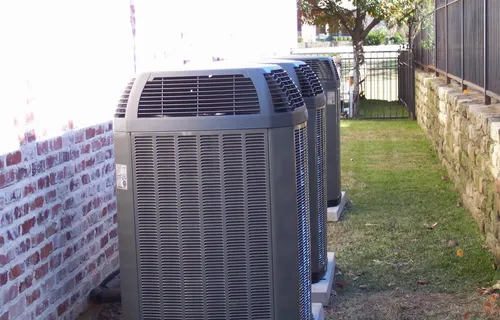
- Installing the Outdoor Unit: The condenser is placed outside on a stable, level surface-often a concrete pad-with adequate clearance (usually 2-3 feet) on all sides for proper airflow and future maintenance access.
- Making Connections: A small hole (about 3 inches) is drilled through the exterior wall. The technician runs the refrigerant lineset, electrical wiring, and condensate drain line through this hole, connecting the indoor and outdoor units.
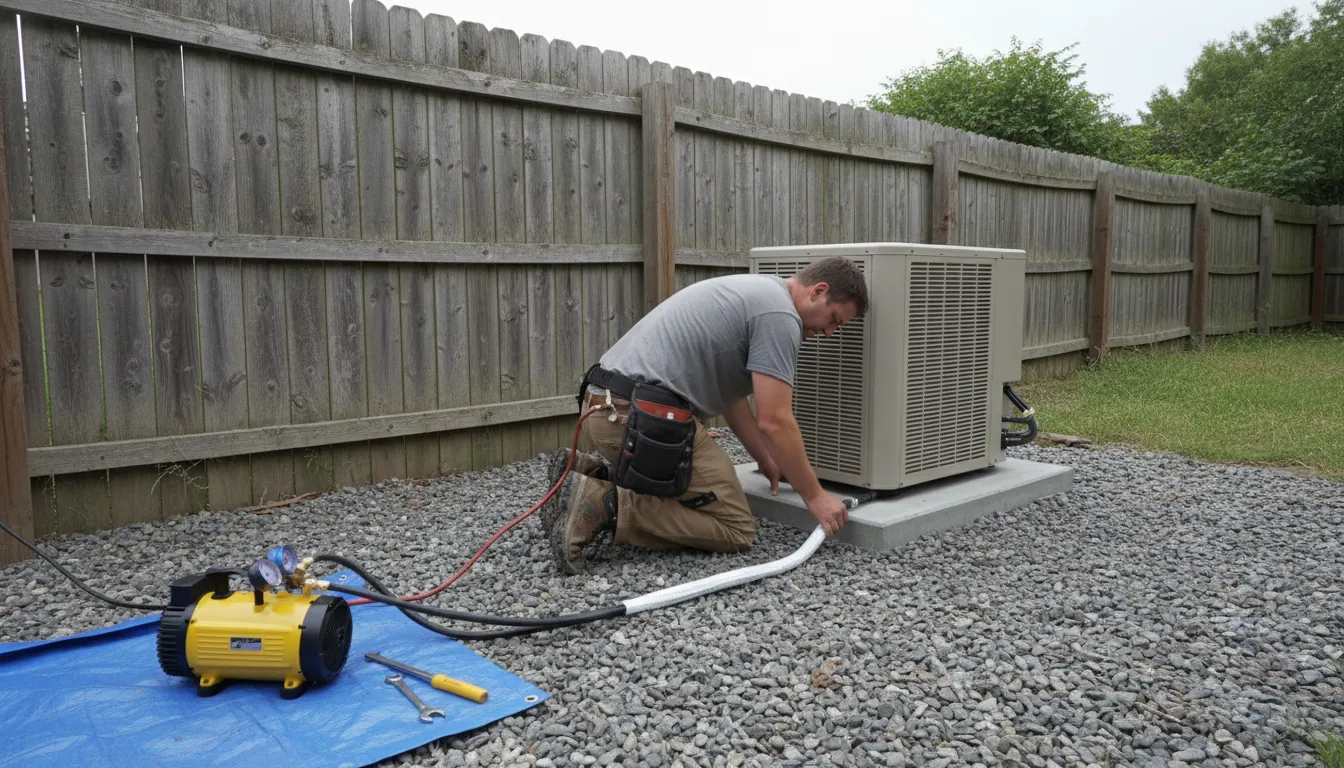
- Vacuuming & Charging: The system is evacuated of air and moisture using a vacuum pump, then charged with the correct amount of refrigerant. This step is critical for efficiency and longevity.
- Testing & Commissioning: Finally, the system is powered on and tested in both cooling and heating modes to ensure everything operates correctly and efficiently 1.
Find the perfect mini-split installers for your needs
Get personalized recommendations and expert advice
Key Installation Considerations: Placement and Zoning
Two of the most important decisions you'll make involve where to put the units and how many you need.
Indoor Unit Placement: The placement of the wall-mounted indoor unit directly impacts comfort. The best practice is to install it high on an interior wall, away from corners, to allow for long, sweeping airflow across the room. Avoid placing it directly above televisions, large pieces of furniture, or beds where the direct airflow might be uncomfortable 2. For open floor plans, strategic placement can often allow a single unit to effectively condition a larger area.
Outdoor Unit Placement: The outdoor condenser needs a location with good airflow and easy access for service. It should be on a stable pad, away from debris, garden beds, and areas where exhaust heat could be a nuisance (like near a patio seating area). Proper clearance is non-negotiable for system performance.
Single-Zone vs. Multi-Zone Systems:
- Single-Zone: This system connects one outdoor condenser to one indoor air handler. It's the most common and cost-effective setup for conditioning a single room, like a garage or addition 3.
- Multi-Zone: One outdoor unit can connect to multiple indoor units (e.g., two, three, or four). This is an excellent solution for cooling and heating several rooms or an entire floor independently. It provides the zoning benefits of multiple systems with only one outdoor unit to maintain.
Cost Factors for Ductless Installation in Grapevine
The cost of a ductless mini-split installation in Grapevine can vary widely based on your specific project's scope and requirements. Understanding the factors involved can help you budget effectively.
Primary Cost Drivers:
- Number of Zones & Indoor Units: This is the biggest factor. A single-zone system for one room is the entry point, while costs increase with each additional indoor unit in a multi-zone setup 4.
- System Capacity & Efficiency: Larger units with higher BTU ratings for bigger spaces, and models with higher SEER (cooling) and HSPF (heating) ratings for greater efficiency, come at a higher equipment cost.
- Installation Complexity: The difficulty of running the lineset (e.g., through multiple walls, across an attic, or to a second story) significantly affects labor time and cost. If new electrical circuits or a sub-panel are needed, this will add to the project.
- Equipment Brand & Features: Premium brands and units with advanced features like Wi-Fi controls, ultra-quiet operation, or specialized filters will be more expensive.
- Local Permits & Regulations: In Grapevine, your installer will typically handle pulling any required permits, and their cost will be factored into the overall quote.
As a general range, based on local market factors, homeowners can expect professional installation costs to start around $2,000 for a basic single-zone system and can range up to $10,500 or more for a complex multi-zone installation covering several rooms 5 6 7. While this represents a significant upfront investment, the long-term energy savings from zoned, efficient operation, along with potential utility rebates, often make a ductless system a financially sound home upgrade over time 8 7.
Benefits Beyond the Initial Investment
Choosing a mini-split installation brings several long-term advantages:
- Energy Efficiency: Ductless systems avoid the energy losses (which can be 30% or more) associated with ductwork in attics and crawlspaces. Each zone operates independently, so you're only conditioning the spaces you use 9 10.
- Improved Indoor Air Quality: Without ducts that can accumulate dust, pollen, and mold, ductless systems can provide cleaner air. Many indoor units feature multi-stage filtration.
- Flexibility & Comfort: Zoned control means no more family debates over the thermostat. You can keep common areas cool while letting bedrooms be slightly warmer, tailoring comfort to each occupant's preference.
- Quiet Operation: The loudest component-the compressor-is located outside. Indoor units operate at very low sound levels, making them ideal for bedrooms, studies, and media rooms.
Frequently asked questions
Sources
Footnotes
-
How to Install a Mini Split - The Home Depot - https://www.homedepot.com/c/ah/how-to-install-a-mini-split/9ba683603be9fa5395fab90c887a9dd ↩
-
Mini-Split Placement Guide: Best and Worst Spots for Installation - https://gulfshorecooling.com/mini-split-placement-guide/ ↩
-
What is a 3 Zone Mini Split, and What is its Installation Cost? - https://www.acdirect.com/blog/what-is-a-3-zone-mini-split-and-what-is-its-installation-cost/ ↩
-
Ductless Mini-Split Installation Cost in 2025: Full Breakdown - https://osborneheatingncooling.com/ductless-mini-split-installation-cost/ ↩
-
Ductless mini-split installation: Cool 2025 Guide - Southern Air - https://www.southern-air.com/blog/ductless-mini-split-installation ↩
-
Ductless Mini Split Installation Costs in 2026 - Carrier - https://www.carrier.com/residential/en/us/products/ductless-mini-splits/ductless-mini-split-installation-cost/ ↩
-
The 10 Best AC Installation Companies in Grapevine, TX (2025) - https://homeguide.com/tx/grapevine/central-air-conditioning-installation/ ↩ ↩2
-
How Much Does It Cost To Install A Ductless Mini Split? | TX - https://beyerairconditioningheating.com/cost-to-install-a-ductless-unit/ ↩
-
Mini-Splits Explained: Costs, Benefits, and Use Cases - https://petermanhvac.com/about-us/blog/mini-splits-complete-guide/ ↩
-
Ductless Mini Split Installation Guide for Texas Homes - https://colleyrefrigeration.com/ductless-mini-split-installation-guide-texas/ ↩