Find the Best Mini-Split Installers for Your Business
No obligation • Fast responses • Nationwide coverage

Why you can trust HVAC Firms
HVAC Firms is a leading United States resource for evaluating HVAC service providers. Our team researches companies, checks credentials, and reviews customer feedback to present clear, unbiased information. Listings and rankings are based on merit, and companies cannot pay to change our editorial content.
Search providers near you
Top Mini-Split Installers in Cedar Park, Texas Ranked
A ductless mini-split system is a versatile heating and cooling solution perfect for the varied homes and lifestyles in Cedar Park. This type of installation provides zoned comfort, allowing you to control the temperature in specific rooms or additions without the need for extensive ductwork. Whether you're looking to cool a sunroom, heat a garage workshop, or add efficient climate control to a home without existing ducts, understanding the process and local considerations is key to a successful project. This guide will help you navigate the essentials of ductless AC and heat pump installation so you can connect with qualified local professionals.
Airsheen Services LLC
11817 Buckner Rd, Austin, TX 78726
Airsheen Services LLC offers a range of heating and cooling solutions in Austin, TX. Their services include air conditioning repair, furnace installation and repair, HVAC tune-ups, and indoor air quality improvements such as air purifiers and ventilation systems. They also specialize in ductless mini-split installations to provide efficient heating and cooling without ductwork. Airsheen Services LLC focuses on maintaining comfortable and energy-efficient homes throughout the year.

All About TEXAS Cooling and Heating
2125 Downing Ln, Leander, TX 78641
All About TEXAS Cooling and Heating is an HVAC company based in Austin, TX, offering a wide range of services including air conditioning, furnace, heat pump, and mini-split installation and repair. They also provide HVAC tune-ups and indoor air quality solutions. With over 34 years of experience, they specialize in advanced systems such as zoning, two-stage, and fully modulating inverter technology. The company emphasizes local values and respectful service practices.
RedHome HVAC Services
1306 E 7th St FL 3, Austin, TX 78702
RedHome HVAC Services is a locally owned and operated company serving Austin, TX. They provide a range of HVAC services including air conditioning and furnace repair, installation of HVAC systems and mini-splits, as well as tune-up and maintenance services. Their team uses diagnostic tools to identify issues and offers detailed assessments and repair options. With over 25 years of experience, RedHome specializes in installing and replacing HVAC systems tailored to customer needs and ensures efficient system performance. They also provide comprehensive maintenance to help prevent future problems and maintain system efficiency.
Air Runs Services LLC
Austin, TX
Air Runs Services LLC is an HVAC and plumbing company based in Austin, TX. They provide heating, cooling, plumbing, air quality, and generator services for single-family, multi-family, and commercial properties. Their offerings include installations, repairs, and maintenance with a focus on HVAC systems such as air conditioners, furnaces, heat pumps, and mini splits. As a Diamond Elite Contractor for Mitsubishi Electric, they deliver factory-certified installations with exclusive extended warranties. The company has over 20 years of experience serving the Austin area.
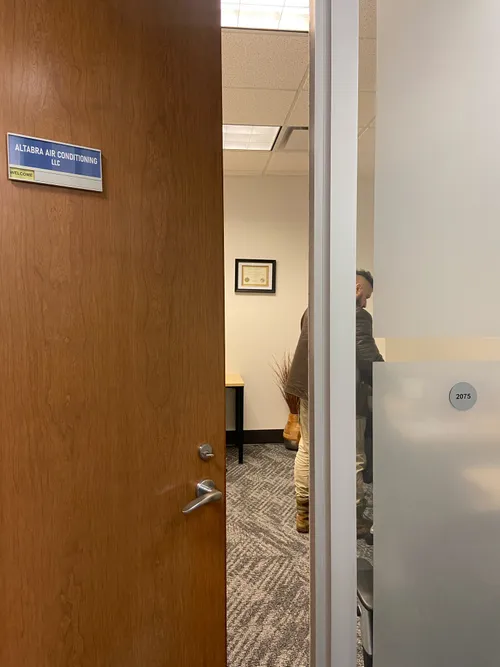
Altabra Air Conditioning
7000 N Mopac Expy suite 200-2075, Austin, TX 78731
Altabra Air Conditioning is an HVAC company based in Austin, TX, offering a range of heating and cooling services. They provide AC and furnace repair, installation of mini splits and central air systems, as well as HVAC tune-ups for both residential and commercial clients. Their technicians hold EPA certification and have experience handling various HVAC brands. Altabra Air Conditioning also offers services such as refrigerant leak detection and repair, water heater installation, and furnace maintenance. The company emphasizes proper sizing and professional installation to ensure system efficiency and longevity. They provide 24/7 emergency HVAC repair services to support the Austin community.
What is a Ductless Mini-Split System?
A ductless mini-split, often simply called a ductless AC or heat pump, consists of two main components: a quiet outdoor compressor/condenser and one or more sleek indoor air-handling units. These are connected by a small conduit that houses refrigerant lines, a condensate drain, and power wiring, which only requires a three-inch hole through an exterior wall 1 2. This setup eliminates the need for the bulky ductwork required by traditional central air systems, making it an ideal retrofit solution for older homes, room additions, or spaces where extending ducts is impractical or too costly 1.
The core appeal of a mini-split installation is its zoning capability. Each indoor unit, or "head," operates independently, allowing you to set different temperatures in different zones of your home. This not only enhances personal comfort but also improves energy efficiency, as you're not conditioning unoccupied spaces 3.
Common Applications for Cedar Park Homes
The architecture and climate in Cedar Park make ductless systems a particularly smart choice for several scenarios:
- Room Additions and Finished Garages: Adding a sunroom, converting a garage into a living space, or finishing an attic often falls outside the reach of an existing central HVAC system. A mini-split provides dedicated, efficient climate control for these new zones without overburdening your old system.
- Homes Without Ductwork: Many older homes or certain builds rely on window units or wall heaters. A ductless installation offers a whole-home or partial-home solution that is far more efficient, quiet, and aesthetically pleasing.
- Targeted Comfort and Efficiency: Do you have a home office that gets too warm or a bedroom that's always cold? Installing a single indoor unit in that specific area allows for personalized temperature settings, resolving comfort issues without cooling or heating the entire house 4.
Understanding Zoning: Single-Zone vs. Multi-Zone
Your project will fall into one of two primary categories, which significantly impacts the scope and cost.
- Single-Zone Installation: This involves one outdoor condenser connected to one indoor air handler. It's the most straightforward and cost-effective option, perfect for conditioning a single room like a master bedroom, home office, or garage.
- Multi-Zone Installation: A single, more powerful outdoor unit can be connected to multiple indoor heads (typically 2 to 5). This allows you to create several independent climate zones throughout your home from one central compressor. It's an excellent solution for whole-home comfort in a ductless property or for adding conditioned air to multiple new spaces 5.
The Professional Installation Process
A proper ductless mini-split installation is a technical job that requires expertise to ensure efficiency, reliability, and warranty validity. Here's what a professional installation by a Cedar Park technician typically entails:
- Site Assessment and Preparation: A technician will evaluate the best locations for both indoor and outdoor units, considering airflow, drainage, structural support, and electrical access. They will clear the necessary spaces and plan the routing for the connecting lines.
- Mounting the Units: The indoor unit is securely mounted high on a wall, recessed into the ceiling as a cassette, or positioned near the floor, depending on the model and your preference. The outdoor condenser is placed on a stable, level concrete pad or sturdy wall brackets, with proper clearances for airflow and maintenance.
- Drilling and Running Lines: A small, clean hole (about 3 inches in diameter) is drilled through the exterior wall. The conduit containing the refrigerant lines, condensate drain line, and electrical cable is run between the two units.
- Making Electrical Connections: A dedicated electrical circuit is typically run from your home's main panel to the outdoor unit to provide safe and adequate power.
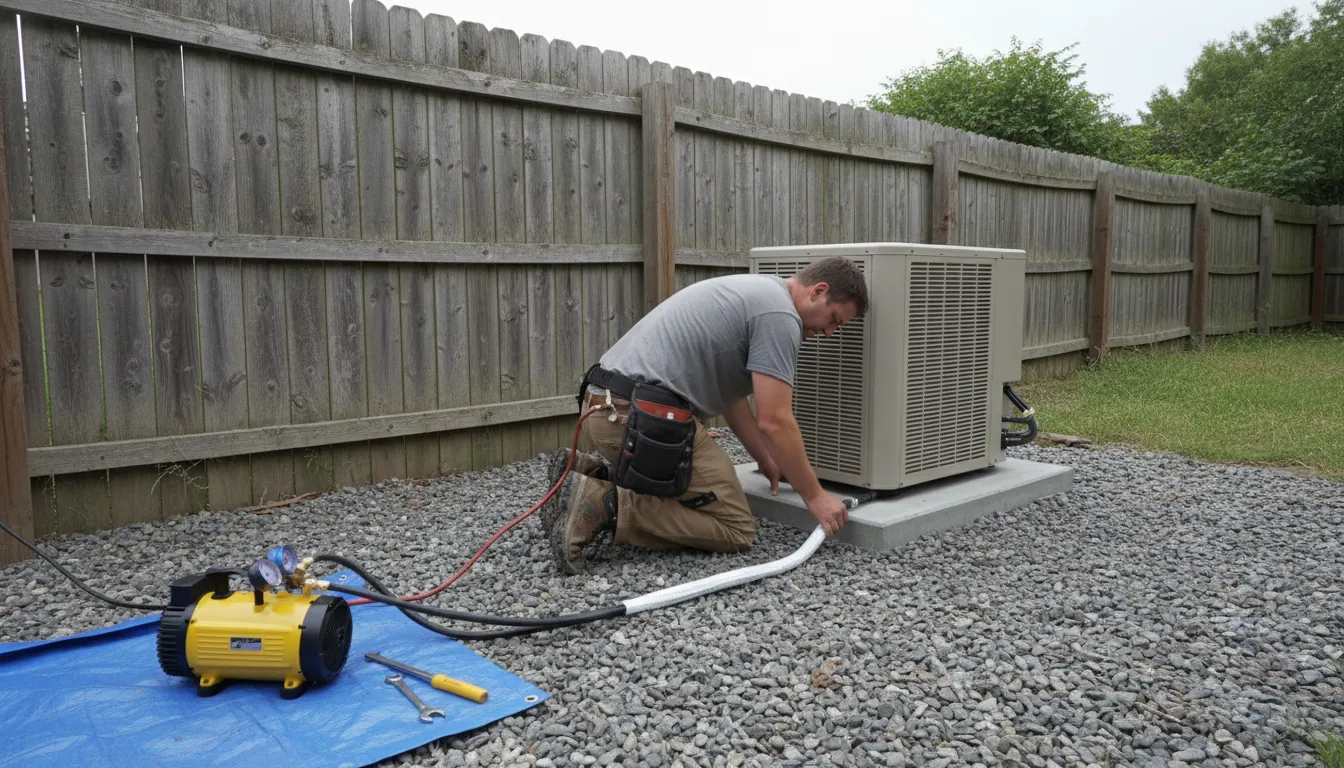
- Sealing, Insulating, and Vacuuming: The wall penetration is sealed to prevent air and water infiltration. The refrigerant lines are insulated. A critical step is when the technician uses a vacuum pump to remove all air and moisture from the refrigerant lineset, which is essential for system longevity and performance 6.
- System Charging and Testing: The system is charged with refrigerant, activated, and thoroughly tested for proper cooling, heating, drainage, and airflow. The technician will also ensure the system meets all local building codes.
Find the perfect mini-split installers for your needs
Get personalized recommendations and expert advice
Key Considerations for Your Installation
Choosing the Right Indoor Unit Style
The indoor component of your system isn't one-size-fits-all. The most common is the wall-mounted unit, which is high-profile and provides excellent air circulation. For a more discreet look, a ceiling cassette installs flush with your ceiling, distributing air in four directions. A floor-mounted model sits low on the wall, similar to a traditional radiator, and can be a good choice for rooms with high ceilings or limited wall space 7 8.
Importance of the Outdoor Unit Placement
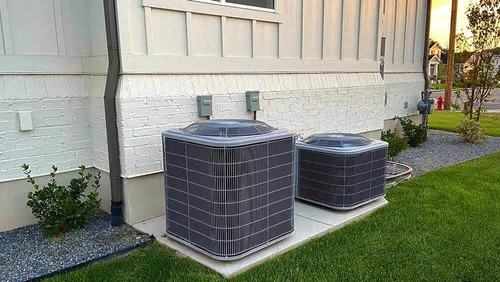
Where you place the outdoor condenser is crucial. It requires ample clearance (usually 1-2 feet on all sides) for proper airflow and future service. It should be positioned on a stable, level surface away from debris, landscaping that will grow, and areas where exhaust heat could be a nuisance or recirculate back into the unit. Your installer will help you find a location that is both practical and compliant with local ordinances.
Cost Factors Specific to Cedar Park
Installation costs in Cedar Park can vary widely based on your specific project needs. For a single-zone system, you might expect a range of $2,000 to $10,500 or more, which includes the equipment and professional installation 9 10. A multi-zone system for multiple rooms will naturally cost more, with three-zone installations often ranging from $5,800 to $11,000, and larger 4-5 zone systems potentially reaching $10,000 to $20,000+ 11 12.
Several key factors drive these costs:
- Equipment Brand and Efficiency: High-efficiency brands like Mitsubishi or Daikin with superior SEER2 ratings have a higher upfront cost but offer long-term energy savings.
- Labor and Complexity: The difficulty of running lines, the need for an electrical panel upgrade, and the amount of drywall repair or finishing needed after installation all affect labor time and cost.
- Permits: Most municipalities, including Cedar Park, require permits for HVAC installations, which add to the project cost but ensure the work is inspected for safety and code compliance.
Why Professional Installation is Non-Negotiable
While DIY kits exist, installing a ductless mini-split is not a recommended weekend project. The process requires handling refrigerants (which requires an EPA certification), performing precise electrical work, and using specialized tools like a vacuum pump and manifold gauge set 13. Most importantly, professional installation is almost always required to activate the manufacturer's equipment warranty. A certified technician ensures the system is charged correctly, leak-free, and operating at peak efficiency, protecting your investment and your home.
Frequently asked questions
Sources
Footnotes
-
Ductless Mini Split Installation in Cedar Park, TX - https://www.advancedairconditioningandheating.com/air-conditioning/ductless-mini-split-systems/ ↩ ↩2
-
Ductless Mini Split Setup: An Ultimate Guide - Airflow Heating & Air - https://www.goairflow.com/blog/ductless-mini-split-installation/ ↩
-
Understanding Mini Split Installation Costs A Complete Guide - https://armusmech.net/understanding-mini-split-installation-costs-a-complete-guide/ ↩
-
Mini Split AC Services in Cedar Park, TX - https://trustedacaustin.com/mini-split-cedar-park/ ↩
-
Ductless mini-split installation: Cool 2025 Guide - https://www.southern-air.com/blog/ductless-mini-split-installation ↩
-
How to Install a Ductless Mini-Split Air Conditioner | This Old ... - https://www.youtube.com/watch?v=ozaw9QhxkQU&t=25 ↩
-
How Much Does a Mini-Split Installation Cost? - Taskrabbit Blog - https://www.taskrabbit.com/blog/mini-split-installation-cost/ ↩
-
How Much Does It Cost to Install a Mini-Split? [2026 Data] | Angi - https://www.angi.com/articles/how-much-does-it-cost-install-ductless-mini-split-ac.htm ↩
-
Ductless mini-split installation: Cool 2025 Guide - Southern Air - https://www.southern-air.com/blog/ductless-mini-split-installation ↩
-
Ductless Mini-Split Installation Cost in 2025: Full Breakdown - https://osborneheatingncooling.com/ductless-mini-split-installation-cost/ ↩
-
Install Your Own Mini Split AC and Save Big - AC Superheroes - https://www.acsuperheroestx.com/blog/ductless-ac-installation ↩
-
Cost to Install Mini Split AC System in 2025 - https://dellahome.com/blogs/della-blog/cost-to-install-mini-split-ac-system ↩
-
Is a Ductless Mini-Split Installation a DIY Project A Complete Guide - https://www.heating-ac.com/blog/is-a-ductless-mini-split-installation-a-diy-project-a-complete-guide ↩