Find the Best Mini-Split Installers for Your Business
No obligation • Fast responses • Nationwide coverage

Why you can trust HVAC Firms
HVAC Firms is a leading United States resource for evaluating HVAC service providers. Our team researches companies, checks credentials, and reviews customer feedback to present clear, unbiased information. Listings and rankings are based on merit, and companies cannot pay to change our editorial content.
Search providers near you
Top Mini-Split Installers in Burleson, Texas Ranked
A ductless mini-split system is a versatile heating and cooling solution that provides targeted comfort without the need for extensive ductwork. This technology is particularly valuable for managing the hot Texas climate efficiently, offering zoned temperature control that can lead to significant energy savings. This guide will help you understand the key considerations for installing a mini-split in your Burleson home, from system types and placement to costs and local benefits.
Understanding Ductless Mini-Split Systems
A ductless mini-split, often simply called a ductless system, consists of two main components: a compact outdoor condenser/compressor unit and one or more indoor air handling units, commonly referred to as "heads." These components are connected by a small conduit housing refrigerant lines, power cables, and a condensate drain, requiring only a small hole in the wall for installation. This design makes them an ideal solution for spaces where extending or installing traditional ducted HVAC is impractical or prohibitively expensive.
In Burleson, these systems are perfect for a variety of applications. They are frequently chosen for home additions, converted garages, sunrooms, and workshops. They are also an excellent option for older homes that were built without any ductwork or for providing supplemental cooling to rooms that are consistently warmer than the rest of the house 1. For some homeowners, a multi-zone ductless installation can serve as the primary heating and cooling system for the entire home, offering unparalleled efficiency through zoning.
The Power of Zoned Comfort
One of the most significant advantages of a ductless air conditioner installation is the ability to create independent climate zones within your home. A single outdoor unit can be connected to multiple indoor heads, each controlling the temperature in its specific area. This zoning capability means you can cool the frequently used living room during the day while setting the bedrooms to a more economical temperature, then reverse the settings at night.
This targeted approach eliminates the energy waste common with central forced-air systems, which cool the entire house uniformly regardless of occupancy. By conditioning only the spaces you are using, you can achieve substantial savings on your monthly energy bills, a crucial benefit given Burleson's long, hot summers. The independent control also enhances comfort by allowing different family members to set temperatures to their personal preferences in their own zones.
Choosing Your Indoor Air Handler
The indoor unit is the visible component of your system and comes in several styles to suit different room layouts and aesthetic preferences. The most common and generally most affordable type is the wall-mounted unit. These are installed high on a wall, typically 6 to 10 feet from the floor, and provide excellent airflow distribution across the room.
For a more discreet appearance, a ceiling cassette model can be flush-mounted into a drop ceiling, with only the decorative grille visible. This is a popular choice for finished basements, offices, or media rooms. In rooms with low walls, sloped ceilings (like in many attics or bonus rooms), or where wall space is limited, a floor-mounted unit is an excellent alternative, delivering air at a lower level 2. For the ultimate in concealed installations, a concealed ducted mini-split can be installed above a ceiling or in a closet, using short duct runs to deliver air through vents, similar to a traditional system but on a much smaller scale.
Critical Installation Considerations: Placement and Clearance
Proper placement of both the indoor and outdoor units is essential for optimal performance, efficiency, and longevity. For wall-mounted indoor heads, installers must ensure there is at least 6 inches of clearance above and on all sides of the unit to allow for proper air intake and exhaust 3. They should be positioned on an interior wall, away from direct sunlight or heat sources, and in a location that allows for even airflow throughout the space without obstructions.
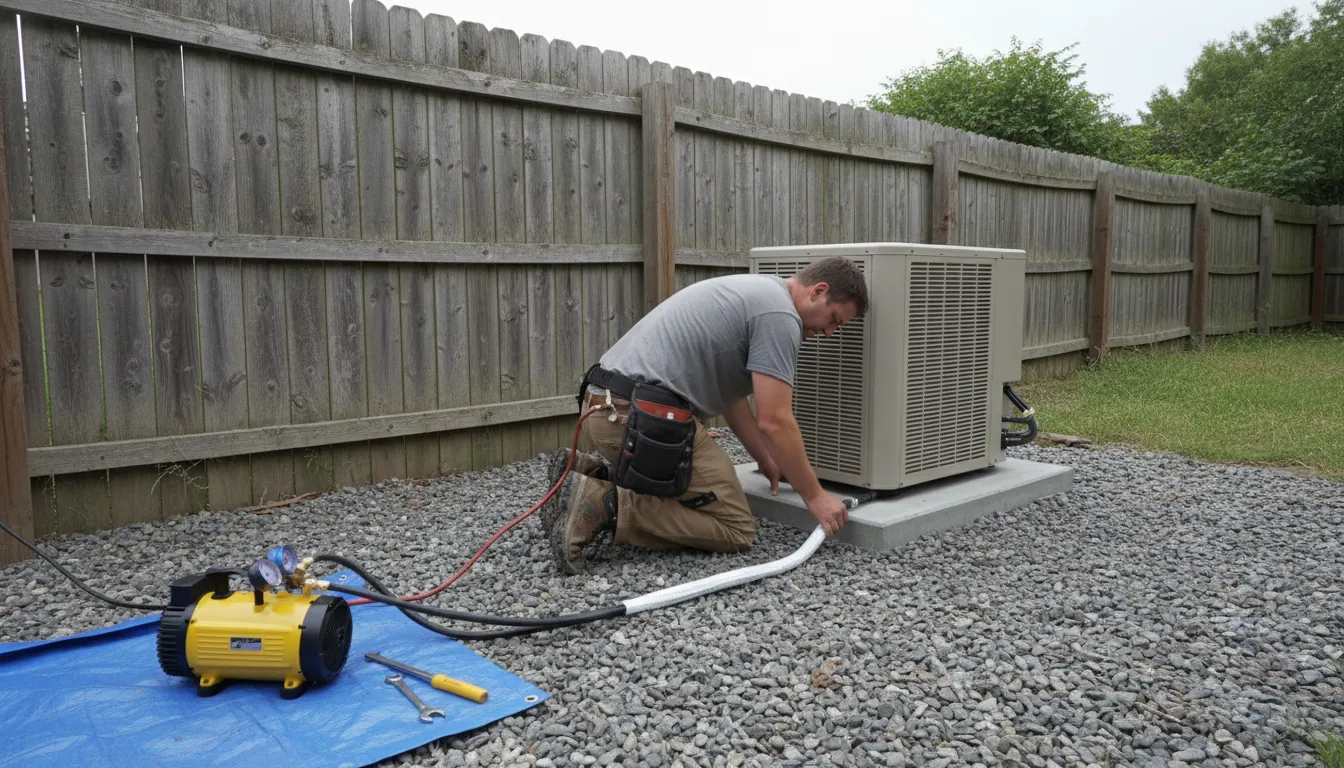
The outdoor condenser requires careful siting. It must be placed on a stable, level pad (often concrete) and positioned with ample clearance-usually 12 to 24 inches or more on all sides-from walls, fences, shrubs, or debris to ensure unimpeded airflow for the coil and fan 4. In Burleson, it's also wise to consider shade; placing the unit in a spot that receives some afternoon shade can help it run more efficiently during the peak of summer, though it should never be in an enclosed space. The location should also allow service technicians easy access for maintenance.
Find the perfect mini-split installers for your needs
Get personalized recommendations and expert advice
Efficiency and Climate Considerations for Burleson Homes
When selecting a ductless mini-split for your Burleson home, efficiency ratings are paramount due to our intense summer heat. The key metric is the SEER2 (Seasonal Energy Efficiency Ratio) rating for cooling. The higher the SEER2 number, the more efficiently the unit converts electricity into cooling power 5. While higher-efficiency models may have a higher upfront cost, they can translate to noticeably lower electricity bills over many cooling seasons, making them a smart long-term investment for Texas homeowners.
Modern ductless systems are also extremely effective heat pumps, providing efficient heating during our milder winters. The heating efficiency is measured by HSPF2 (Heating Seasonal Performance Factor). A high-quality system can serve as a year-round comfort solution, reducing or eliminating the need for separate electric resistance heat, which is very costly to operate. When consulting with a professional, discuss the specific efficiency ratings of different models to find the best balance of performance and operating cost for your needs.
Understanding Installation Costs and Variables
The cost of a ductless mini-split installation in Burleson can vary widely based on the project's scope and specifications. As a baseline, a single-zone system (one outdoor unit paired with one indoor head) typically ranges from $3,000 to $5,000 for the equipment and professional installation 6 7. For a multi-zone system designed to cool two or three rooms, homeowners can expect costs in the range of $5,500 to $8,500 or more 6 8.
Several key factors influence the final price:
- Number of Zones: Each additional indoor head increases the cost for equipment, labor, and line-set runs.
- Brand and Model: Premium brands like Mitsubishi, Daikin, and Carrier often command a higher price but may offer better reliability, efficiency, and features.
- System Efficiency: Units with higher SEER2 ratings generally cost more upfront.
- Installation Complexity: Factors like the need for new electrical circuits, upgrading an electrical panel, reinforcing walls for mounting, or navigating difficult attic or crawlspace access can add to the labor cost.
- Indoor Unit Type: Ceiling cassettes or concealed ducted units often involve more labor and materials than standard wall-mounted models.
Potential Savings: Rebates and Incentives
It's important to investigate potential financial incentives that can reduce the net cost of your new energy-efficient system. Federal incentives, such as those available through the Inflation Reduction Act, may offer tax credits for qualifying high-efficiency heat pump installations 9. Additionally, local utility companies, such as Oncor (the primary transmission and distribution utility in the Burleson area), or retail electric providers like TXU Energy, occasionally offer rebates for installing efficient HVAC equipment. A qualified local installer should be aware of current available rebates and can help you determine your eligibility.
Frequently asked questions
Sources
Footnotes
-
How to Install a Ductless Mini-Split Air Conditioner - Blueridge - https://www.youtube.com/watch?v=DzVJiSQNbew&t=2 ↩
-
How Much Does a Mini Split Installation Cost? (2026) - HomeGuide - https://homeguide.com/costs/ductless-mini-split-ac-cost ↩
-
Ductless Mini Splits: All You Need to Know - https://nexgenairandplumbing.com/blog/guide-on-ductless-mini-splits/ ↩
-
DIY Mini Split Install - All the Things Nobody Shows You - https://www.youtube.com/watch?v=2mKwCmaR5Qg&t=16 ↩
-
Ductless Mini Split Installation Guide for Texas Homes - https://colleyrefrigeration.com/ductless-mini-split-installation-guide-texas/ ↩
-
Ductless Mini-Split Installation Cost in 2025: Full Breakdown - https://osborneheatingncooling.com/ductless-mini-split-installation-cost/ ↩ ↩2
-
Ductless Mini Split Installation: A Complete Guide - https://www.goairflow.com/blog/ductless-mini-split-installation/ ↩
-
Ductless Mini Split Installation Costs in 2026 - Carrier - https://www.carrier.com/residential/en/us/products/ductless-mini-splits/ductless-mini-split-installation-cost/ ↩
-
Ductless mini-split installation: Cool 2025 Guide - Southern Air - https://www.southern-air.com/blog/ductless-mini-split-installation ↩