Find the Best Mini-Split Installers for Your Business
No obligation • Fast responses • Nationwide coverage

Why you can trust HVAC Firms
HVAC Firms is a leading United States resource for evaluating HVAC service providers. Our team researches companies, checks credentials, and reviews customer feedback to present clear, unbiased information. Listings and rankings are based on merit, and companies cannot pay to change our editorial content.
Search providers near you
Top Mini-Split Installers in Beaumont, Texas Ranked
A ductless mini-split system is an efficient and versatile solution for heating and cooling specific areas of your home. This type of installation is particularly valuable in Beaumont's climate, offering targeted comfort without the need for extensive ductwork. Whether you're looking to cool a new addition, manage temperatures in a garage, or simply add zoned control to your living space, understanding your options for ductless AC and heat pump installation can help you find the right local professional for the job.

Sumrall Air Conditioning
7064 Patillo Road, Beaumont, TX 77705
Sumrall Air Conditioning is an HVAC company serving Houston, TX, specializing in air conditioning, furnace, heat pump, and ductless HVAC installation and repair. They also provide indoor air quality services to improve home environments and offer commercial HVAC and refrigeration solutions. Their capabilities include comprehensive HVAC system installations and repairs tailored to residential and commercial needs. The company operates with extensive industry experience and a commitment to reliable, customized climate control solutions.

Innovative Air Solutions
2435 Martin Luther King Dr, Orange, TX 77630
Innovative Air Solutions provides heating, cooling, and plumbing services in Houston, TX. They offer installation, repair, and maintenance for air conditioners, furnaces, heat pumps, ductless systems, and plumbing fixtures. Their services also include indoor air quality improvements and biannual HVAC maintenance to enhance system efficiency and longevity. The company serves a broad area including Houston and surrounding communities. Innovative Air Solutions emphasizes clear communication and thorough service, with 24/7 emergency plumbing assistance available.
Why Choose a Ductless Mini-Split System?
Ductless systems, often called mini-splits, are ideal for homes where extending traditional ducted HVAC is impractical or too costly. They consist of a compact outdoor unit connected by a small conduit to one or more indoor air handlers. This setup is perfect for room additions, sunrooms, converted garages, or older Beaumont homes that lack existing ductwork 1. The primary benefit is zone control, allowing you to set different temperatures in different rooms, which can lead to significant energy savings by not conditioning unoccupied spaces.
Common Applications in Beaumont Homes
Understanding where a ductless installation makes the most sense can help you plan your project.
- Room Additions and Garages: Adding a sunroom, home office, or finishing a garage? A mini-split provides efficient climate control without the major renovation required for duct extensions.
- Older or Historic Homes: For Beaumont's charming older properties where installing ducts would damage original walls or ceilings, a ductless system is a minimally invasive and highly effective solution.
- Specific Room Comfort: Target problem areas like a perpetually hot upstairs bedroom, a stuffy home office, or a kitchen that gets warm from cooking. A single-zone system can solve these isolated comfort issues.
Types of Mini-Split Systems: Single-Zone vs. Multi-Zone
The first major decision is how many areas you want to condition.
- Single-Zone Systems: This is a one-to-one setup: one outdoor condenser supports one indoor air handler. It's the most straightforward and cost-effective option for cooling or heating a single space, such as a master bedroom suite, garage workshop, or attic conversion 2.
- Multi-Zone Systems: A single outdoor unit can connect to multiple indoor units (e.g., two, three, or four). This allows for independent temperature control in several rooms or zones from one central compressor. It's an excellent whole-home solution for smaller houses or for efficiently managing the climate in multiple key living areas.
Indoor Unit Styles and Placement Considerations
The indoor unit, or air handler, comes in several styles to suit different room layouts and aesthetic preferences. Proper placement is critical for both performance and comfort.
- Wall-Mounted Units: The most common and typically least expensive option. They are mounted high on an interior wall for optimal air circulation. Professional installers will ensure it's placed for even airflow and minimal visual intrusion.
- Ceiling Cassette Units: These are recessed into the ceiling, offering a very discreet look. They distribute air in four directions for excellent coverage but require more complex installation involving ceiling cavity access.
- Floor-Mounted Units: Installed low on a wall, similar to a baseboard heater. This style is ideal for rooms with high ceilings, limited wall space, or where wall mounting isn't feasible, such as a room with extensive glass 3 4 5.
A key part of the installation process is determining the best route for the refrigerant lineset, drain line, and electrical wiring from the indoor unit to the outdoor condenser. This requires careful planning to minimize run length and maintain the home's appearance.
Outdoor Unit Clearance and Location
The placement of the outdoor condenser is not arbitrary. Specific clearance is required for proper airflow, efficient operation, and future servicing. Installers will follow manufacturer guidelines to ensure the unit is positioned with enough space from walls, shrubs, fences, and other obstructions 6. This prevents overheating, reduces noise reverberation, and ensures easy access for maintenance. In Beaumont, placement also considers sun exposure and proximity to outdoor living areas.
Understanding Installation Costs in Beaumont
The cost of a ductless mini-split installation can vary widely based on system capacity, efficiency, and the complexity of the setup. While prices fluctuate, general ranges provide a helpful framework for budgeting.
- Single-Zone System (1-1.5 Ton): $2,000 - $5,000.
- Dual-Zone System (2 Indoor Units): $4,500 - $8,000.
- Three to Four-Zone System: $6,500 - $12,000+.
These figures are influenced by several factors:
- Labor and Complexity: Difficult installations (e.g., second-story units, long refrigerant line runs, complex electrical) can add $500 to $2,000 or more to the total 7 8.
- Permits: Local Beaumont permits may cost between $100 and $300 9.
- Electrical Work: If a new dedicated circuit is needed, a licensed electrician will need to perform this work, which is a separate but essential cost.
- Equipment Features: Higher SEER2 ratings for efficiency, advanced filtration systems, and Wi-Fi controls can increase the initial equipment cost.
Find the perfect mini-split installers for your needs
Get personalized recommendations and expert advice
The Professional Installation Process: What to Expect
A proper ductless installation is a technical job that ensures safety, efficiency, and warranty compliance. Here's what a qualified Beaumont technician will do:
- Site Preparation & Mounting: The installer will secure the mounting bracket for the indoor air handler and drill a small, precise hole (typically 3 inches) through the exterior wall for the lineset conduit.
- Running the Lineset: The refrigerant lines, electrical wiring, and condensate drain line are run through the wall from the indoor unit to the outdoor condenser location. These lines are carefully insulated.
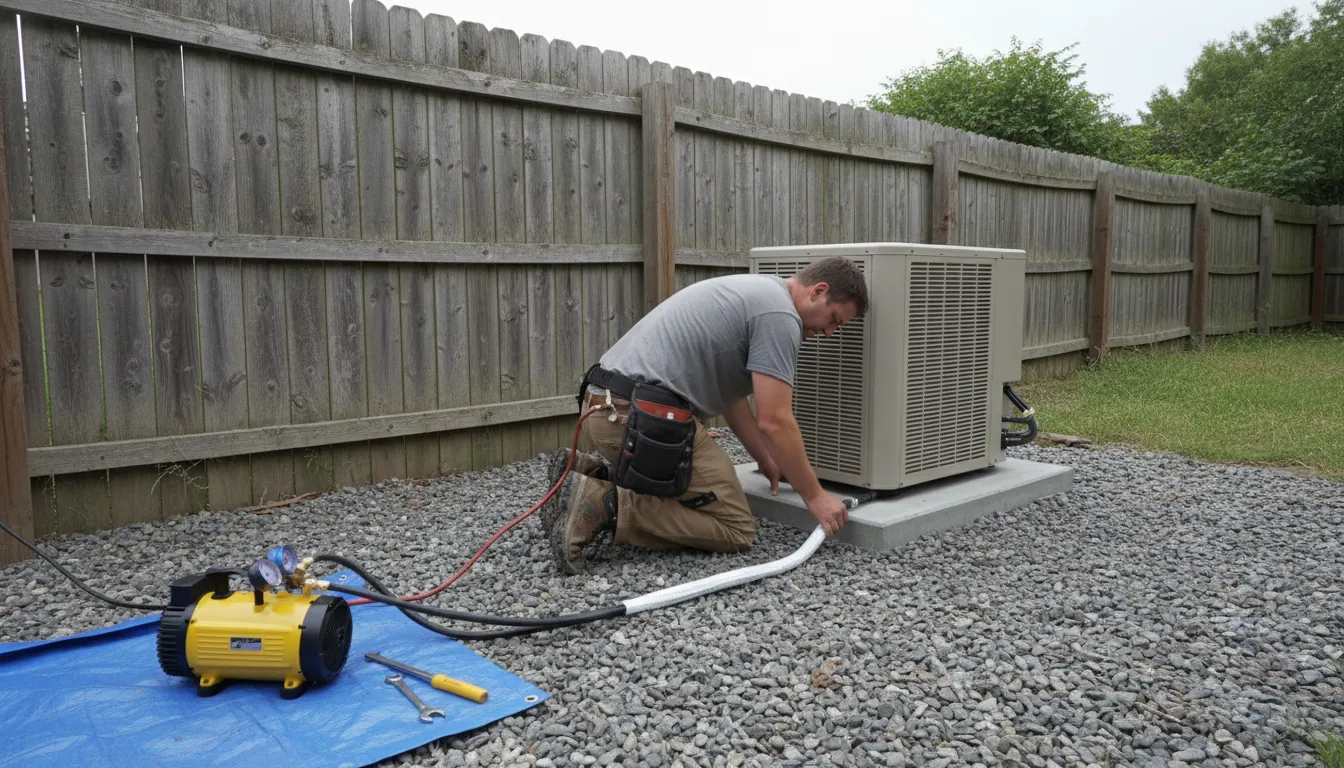
- Making Connections: Using specialized tools like flaring kits and vacuum pumps, the technician will make leak-free connections between the refrigerant lines and both the indoor and outdoor units. Proper evacuation of the system is critical to remove moisture and non-condensable gases 10.
- Electrical Hookup: A licensed electrician typically makes the final power connections to the outdoor disconnect and the home's electrical panel to ensure code compliance.
- System Testing & Commissioning: The system is pressure-tested, the refrigerant is charged to the exact manufacturer specification, and all functions (cooling, heating, fan modes) are tested. The installer will also demonstrate the thermostat or remote controls 11.
Why Professional Installation is Crucial
While DIY kits exist, a professional installation is strongly recommended. Certified technicians have the training to handle refrigerants safely, the tools to perform critical steps like system evacuation, and the knowledge of local Beaumont building codes. Most importantly, a professional installation is almost always required to keep the manufacturer's warranty valid. Incorrect installation can lead to poor performance, refrigerant leaks, and costly repairs down the line 12.
Maintaining Your New Ductless System
Once installed, maintenance is straightforward but important. Regularly cleaning the reusable filters in the indoor units (usually every few weeks) is the most critical task to maintain airflow and efficiency. Keeping the outdoor condenser clear of leaves, grass clippings, and debris is also essential. An annual professional check-up can ensure the system is operating at peak efficiency, which is especially valuable in Beaumont's demanding summer heat.
Frequently asked questions
Sources
Footnotes
-
Ductless Mini Splits Beaumont TX | Expert HVAC Services | 24/7 ... - https://ductless-mini-splits-beaumont-tx.netlify.app/ ↩
-
How to Install a Mini Split - https://www.homedepot.com/c/ah/how-to-install-a-mini-split/9ba683603be9fa5395fab90c887a9dd ↩
-
Mini Split Installation: What You're Really Paying For - https://www.callmattioni.com/blog/t-mini-split-installation-guide/ ↩
-
How Much Does a Mini-Split Installation Cost? - Taskrabbit Blog - https://www.taskrabbit.com/blog/mini-split-installation-cost/ ↩
-
Ductless Mini-Splits: A Comprehensive Cost Breakdown - https://www.myfivestarhomeservices.com/ductless-mini-splits-a-comprehensive-cost-breakdown/ ↩
-
Ductless mini-split installation: Cool 2025 Guide - Southern Air - https://www.southern-air.com/blog/ductless-mini-split-installation ↩
-
Ductless Mini-Split Installation Cost in 2025: Full Breakdown - https://osborneheatingncooling.com/ductless-mini-split-installation-cost/ ↩
-
Cost to Install Mini Split AC System in 2025 - https://dellahome.com/blogs/della-blog/cost-to-install-mini-split-ac-system ↩
-
How Much Does It Cost To Install A Carrier Ductless Mini Split AC? - https://carrierohio.com/how-much-does-it-cost-to-install-a-carrier-ductless-mini-split-ac/ ↩
-
How to Install a Ductless Mini-Split Air Conditioner | This Old ... - https://www.youtube.com/watch?v=ozaw9QhxkQU&t=25 ↩
-
Ductless Mini Split Installation: A Complete Guide - https://www.goairflow.com/blog/ductless-mini-split-installation/ ↩
-
Is a Ductless Mini-Split Installation a DIY Project A Complete Guide - https://www.heating-ac.com/blog/is-a-ductless-mini-split-installation-a-diy-project-a-complete-guide ↩