Find the Best Mini-Split Installers for Your Business
No obligation • Fast responses • Nationwide coverage

Why you can trust HVAC Firms
HVAC Firms is a leading United States resource for evaluating HVAC service providers. Our team researches companies, checks credentials, and reviews customer feedback to present clear, unbiased information. Listings and rankings are based on merit, and companies cannot pay to change our editorial content.
Search providers near you
Top Mini-Split Installers in Reading, Pennsylvania Ranked
A ductless mini-split system is an efficient heating and cooling solution that provides targeted comfort for specific areas of your home. For homeowners in Reading, these systems are particularly valuable for room additions, older properties without ductwork, or for creating zoned climate control to improve energy efficiency. This guide will help you understand the process, benefits, and considerations for installing a mini-split system, connecting you with the information needed to find qualified local professionals for your project.
Air Temp Solutions - AC Repair, Heating Repair, Water Heater Repair & Plumbing Devon PA
Philadelphia, PA
Air Temp Solutions - AC Repair, Heating Repair, Water Heater Repair & Plumbing Devon PA is an HVAC and plumbing contractor serving Philadelphia, PA, and surrounding areas including Newark, DE. They offer a wide range of services such as heating repair and installation, furnace and boiler services, heat pump and geothermal system installation and maintenance, as well as ductless mini-split systems. Their plumbing services cover repairs, water heater installation and maintenance, gas line work, sump pump services, leak detection and repair, pipe and water line services, and comprehensive drain and sewer solutions including trenchless repairs. They also provide indoor air quality services like duct cleaning and UV light filtration installation. The company emphasizes specialized capabilities such as geothermal system installation and trenchless sewer line repairs to minimize disruption. While no specific business history is stated, their team includes technicians with an average of 16 years of experience in heating services.
Steckel Heating & Cooling LLC
Philadelphia, PA
Steckel Heating & Cooling LLC is an HVAC company based in Philadelphia, PA, specializing in heating and cooling system installation, repair, and maintenance. They offer services including air conditioning, furnace, heat pump, and mini-split system installation and repair, as well as HVAC tune-ups. The company is known for thorough evaluations and clear communication throughout the process. Since starting operations in 2020, Steckel Heating & Cooling has completed projects ranging from hybrid heat pump/furnace combos to full HVAC system installations with ductwork and zoning. Their capabilities include careful system placement and cleanup, with a focus on customer education and satisfaction.
Understanding Ductless Mini-Split Systems
Ductless mini-splits, often simply called ductless systems or mini-splits, consist of an outdoor condenser unit connected to one or more indoor air handlers via a small conduit that houses refrigerant lines, power cables, and a drain line. This setup eliminates the need for extensive ductwork, making it a versatile option for many homes in the Reading area. The core appeal is zone control, allowing you to heat or cool individual rooms independently, which can lead to significant energy savings compared to running a central system for the entire house.
These systems are ideal for targeted applications. They are a perfect match for room additions, finished basements, or garages where extending existing ductwork is impractical or prohibitively expensive 1. They are also an excellent solution for older homes in Berks County that were built without any ductwork, providing a way to add modern climate control without the major disruption and construction costs of installing ducts 2. For some homes, a multi-zone ductless system can even serve as a whole-home solution, replacing or supplementing an outdated central HVAC system 3 4.
Types of Mini-Split Systems: Single-Zone vs. Multi-Zone
Choosing the right configuration is key to meeting your comfort needs and budget. There are two primary types of ductless installations:
- Single-Zone Systems: This is the most basic setup, featuring one outdoor condenser unit connected to a single indoor air handler. It's designed to condition one specific room or area, such as a sunroom, home office, or master bedroom addition. This is often the most cost-effective entry point for ductless technology 5.
- Multi-Zone Systems: A single, more powerful outdoor unit can be connected to multiple indoor air handlers (typically up to eight). This allows you to create customized climate zones throughout your home. For example, you could have individual units in the living room, kitchen, and bedrooms, each with independent temperature control. This provides the ultimate in comfort and efficiency for whole-house applications.
Indoor Unit Placement and Styles
Proper placement of the indoor air handler is crucial for performance, efficiency, and comfort. Professional installers in Reading will assess your space to recommend the best style and location. Common options include:
- High-Wall Mount: This is the most common and generally most affordable installation type. The unit is mounted high on an interior wall, near the ceiling, where it can efficiently distribute conditioned air throughout the room.
- Ceiling Cassette: These units are recessed into the ceiling, offering a very discreet and streamlined look. They distribute air in four directions for even coverage and are ideal for rooms with limited wall space or where a minimalist aesthetic is desired.
- Floor-Mounted: Also known as a low-wall unit, this style is installed near the floor. It's an excellent choice for rooms with large windows, sloped ceilings (like in a finished attic), or where wall mounting is not feasible. It provides easy access for filter maintenance.
The goal is to place the unit where airflow is unobstructed by furniture or drapes and where the conditioned air can circulate effectively throughout the space.
The Professional Installation Process
A successful ductless mini-split installation requires technical expertise to ensure efficiency, reliability, and warranty compliance. Here's what a professional installation typically involves 6:
- Site Assessment & Planning: A technician will evaluate your home to determine the optimal locations for the indoor and outdoor units, assess electrical needs, and plan the refrigerant line routing.
- Mounting the Indoor Unit: The indoor air handler bracket is securely mounted to the wall, ceiling, or floor according to the chosen style.
- Drilling the Line Set Hole: A small, precise hole (typically about 3 inches in diameter) is drilled through the exterior wall to connect the indoor and outdoor units.
- Setting the Outdoor Condenser: The outdoor unit is placed on a stable, level surface. This is usually a pre-formed concrete pad or a dedicated wall bracket, ensuring it has clear space on all sides for proper ventilation and service access.
- Connecting the Line Set: The copper refrigerant lines, electrical wiring, and condensate drain tube are run through the wall hole and connected between the two units.
- Electrical Connection: A dedicated 240-volt circuit is often required from your home's electrical panel to the outdoor unit. This is critical work that must be performed to code.
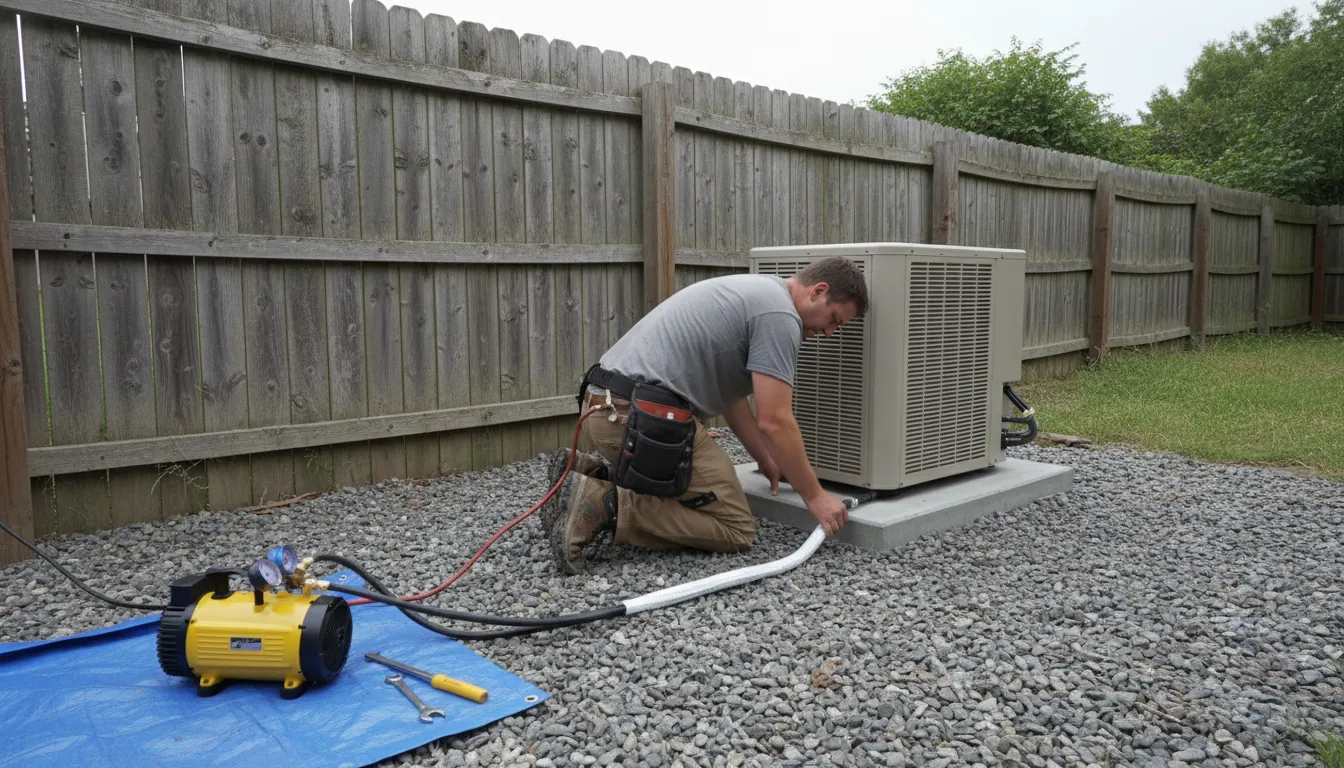
- System Evacuation & Testing: The installer will use a vacuum pump to remove all air and moisture from the refrigerant lines-a vital step for system longevity and performance. The system is then pressurized and tested for leaks before the refrigerant is charged.
- Final Startup & Demonstration: Once everything is sealed and tested, the system is powered on. The technician will test all modes (heating and cooling), program the remote controls or Wi-Fi thermostats, and show you how to operate and maintain your new system.
Find the perfect mini-split installers for your needs
Get personalized recommendations and expert advice
Key Factors Influencing Installation Cost in Reading
The cost of a ductless mini-split installation in Reading can vary widely based on several factors. Understanding these can help you interpret estimates from local providers.
- System Type and Capacity: A single-zone system for a small room is the most affordable starting point, with costs generally ranging from $3,000 to $5,000+ 7 8. A multi-zone system with multiple indoor heads can range from $1,400 per additional zone up to $12,000 or more for a complex whole-home setup 7 9. The BTU capacity (size) needed for your space is a primary cost driver.
- Equipment Brand and Features: Premium brands with higher efficiency ratings (SEER and HSPF) and advanced features like hyper-heating for very cold climates will cost more than basic models.
- Labor and Complexity: Labor is a significant portion of the cost. Installations that require longer refrigerant line runs, complex electrical work, or difficult access (e.g., a condenser mounted on a second-story wall bracket) will increase labor time and cost.
- Electrical Work: Most systems require a new 240-volt circuit. If your electrical panel has capacity, this might cost $200-$1,000. If a panel upgrade is needed, costs will be higher 10.
- Permits: Local building permits in Berks County may be required for the electrical and HVAC work, adding to the total project cost.
- Site Preparation: This includes the cost of the condenser pad, any necessary wall brackets, and repairing drywall or siding after installation.
Why Professional Installation is Non-Negotiable
While DIY kits exist, professional installation is strongly recommended-and often required to keep the manufacturer's warranty valid 11. Proper installation is technical, involving precise refrigerant handling, electrical work, and vacuum procedures that require specialized tools and training. An incorrect installation can lead to poor performance, refrigerant leaks, reduced efficiency, and premature system failure. A licensed, insured HVAC professional ensures the job is done safely, to code, and optimized for long-term reliability and comfort.
Frequently asked questions
Sources
Footnotes
-
Ductless Mini Split Setup: An Ultimate Guide - Airflow Heating & Air - https://www.goairflow.com/blog/ductless-mini-split-installation/ ↩
-
Ductless Mini Split Air Conditioning Systems in Pittsburgh - https://calfohomeservices.com/blog/mini-split-systems-advantages-disadvantages/ ↩
-
Ductless Mini-Split Installation Cost in 2025: Full Breakdown - https://osborneheatingncooling.com/ductless-mini-split-installation-cost/ ↩
-
How Much Does It Cost To Install A Ductless Mini Split? | PA - https://linkservicehvac.com/how-much-does-it-cost-to-install-a-ductless-mini-split/ ↩
-
How Much Does a Mini Split Installation Cost? (2026) - HomeGuide - https://homeguide.com/costs/ductless-mini-split-ac-cost ↩
-
Mini Split Installation Guide | Process, Costs & Benefits - Bryant - https://www.bryant.com/en/ca/products/ductless-systems/mini-split-installation/ ↩
-
Ductless Mini Split System Cost in Central PA | Zimmerman - https://www.ezimmerman.com/what-is-the-cost-of-a-ductless-mini-split-system/ ↩ ↩2
-
How Much Does It Cost to Install a Mini-Split? [2026 Data] | Angi - https://www.angi.com/articles/how-much-does-it-cost-install-ductless-mini-split-ac.htm ↩
-
Ductless Mini Split Installation Costs in 2026 - Carrier - https://www.carrier.com/residential/en/us/products/ductless-mini-splits/ductless-mini-split-installation-cost/ ↩
-
The Cost of a Carrier Ductless Mini-Split Installation Near Oxford, PA - https://calloxford.com/carrier-ductless-mini-splits/cost-of-ductless-mini-split-installation-near-oxford-pa/ ↩
-
Ductless mini-split installation: Cool 2025 Guide - Southern Air - https://www.southern-air.com/blog/ductless-mini-split-installation ↩