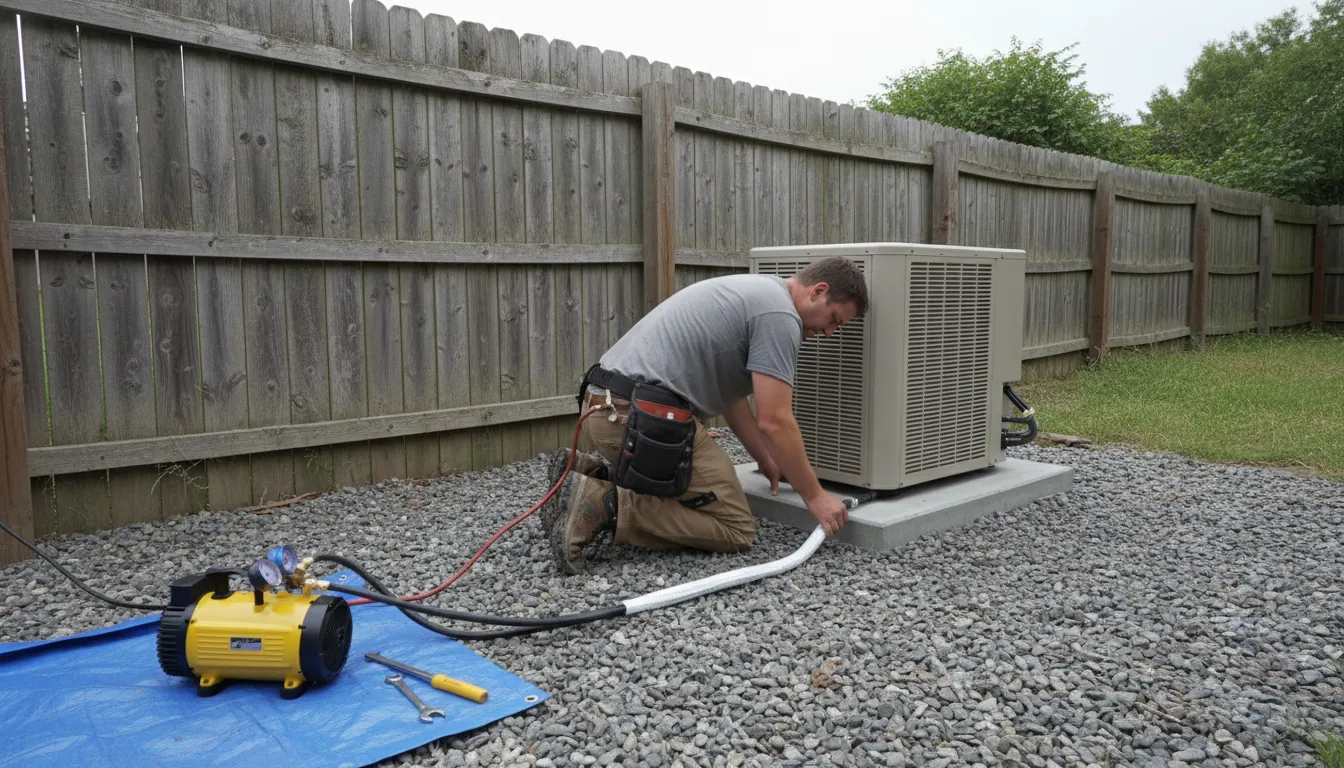
Find the Best Mini-Split Installers for Your Business
No obligation • Fast responses • Nationwide coverage

Why you can trust HVAC Firms
HVAC Firms is a leading United States resource for evaluating HVAC service providers. Our team researches companies, checks credentials, and reviews customer feedback to present clear, unbiased information. Listings and rankings are based on merit, and companies cannot pay to change our editorial content.
Search providers near you
Best Mini-Split Installers in Nevada Ranked
Installing a ductless mini-split system is a smart, efficient way to cool and heat your Nevada home. These systems provide targeted comfort without the need for extensive ductwork, making them ideal for room additions, sunrooms, or homes without existing ducts. A proper installation is critical for safety, efficiency, and long-term reliability. This guide explains the key requirements, best practices, and financial incentives for Nevada homeowners, helping you connect with qualified local professionals who can ensure your project is done right.
Sun Country Heating & Cooling
6394 Montessouri St. suite a, Las Vegas, NV 89113
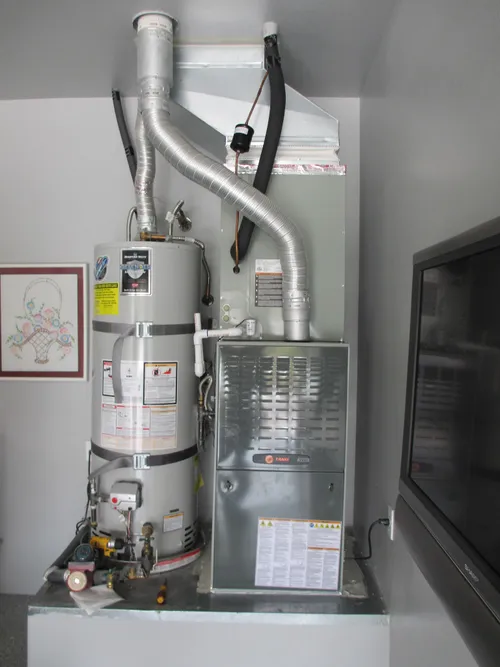
Sun Country Heating & Cooling is an HVAC company based in Las Vegas, NV, offering a full range of heating and cooling services. Their expertise includes air conditioning repair, furnace installation and repair, mini-split installation, and HVAC tune-ups. As a Trane Comfort Specialist, they install and maintain systems from a leading manufacturer, ensuring efficient and reliable home comfort. The company provides 24/7 emergency repair services to address urgent HVAC issues promptly.
Black Mountain Air
660 Middlegate Rd, Henderson, NV 89011
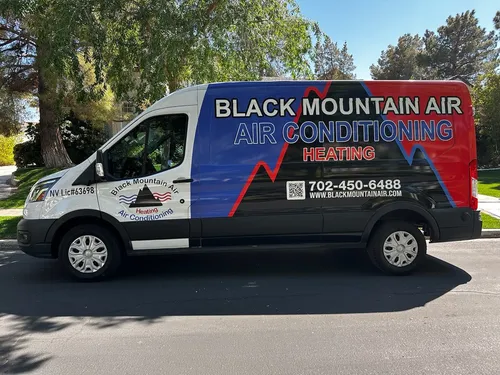
Black Mountain Air is a family-owned HVAC company serving residential and commercial clients in Las Vegas, NV. They offer a wide range of heating and cooling services including air conditioner and furnace repair, installation, maintenance, and ductless mini-split system installation. Their technicians are licensed, insured, and trained to handle various HVAC brands and models. With over 10 years of experience, Black Mountain Air provides service throughout the Las Vegas Valley and surrounding areas, focusing on transparent pricing and customer education.
Hometown Air
Reno, NV
Hometown Air is an HVAC company based in Reno, NV, providing residential and commercial heating and cooling services. Their offerings include air conditioning repair, furnace repair, mini split installation, and indoor air quality consultations. The company focuses on home environment comfort and climate control, serving the Reno area with a range of heating and cooling solutions.
Super Service Cooling, Heating & Plumbing
6625 S Valley View Blvd #304-306, Las Vegas, NV 89118
Super Service Cooling, Heating & Plumbing is a family-owned HVAC and plumbing company serving Las Vegas, NV, and nearby communities. They offer a wide range of services including air conditioning and furnace repair, installation of heat pumps and mini-split systems, duct cleaning, thermostat installation, and indoor air quality solutions. The company is known for its licensed and insured technicians and provides 24/7 emergency service without extra fees. With over 20 years of experience, Super Service Cooling, Heating & Plumbing also offers comprehensive home care plans to maintain HVAC and plumbing systems.
Anderson Heating & A/C
2578 S Curry St #8, Carson City, NV 89703
Anderson Heating & A/C is an HVAC company serving Reno, NV, and surrounding areas. They provide a range of services including air conditioning and furnace repair, installation, maintenance, duct cleaning, indoor air quality solutions, and thermostat installation. The company is a longtime Lennox partner and offers expertise with Lennox heating and cooling products. Established in 1984, Anderson Heating & A/C has decades of experience in HVAC services. They also provide 24/7 emergency support for urgent heating and cooling needs.
Understanding Nevada's Licensing and Permit Requirements
In Nevada, installing a ductless mini-split is a regulated trade for good reason. It involves high-voltage electricity, refrigerant handling, and mechanical work that must meet strict state and local codes for safety and performance. The cornerstone of a legal and safe installation is hiring a contractor with the proper state license.
Required Contractor License: C-21 Any contractor performing mini-split installation in Nevada must hold a C-21 Refrigeration and Air Conditioning Contractor license from the Nevada State Contractors Board. This license ensures the contractor has passed exams, demonstrated experience, and carries the required insurance. Always verify a contractor's license status before hiring.
Permits Are Mandatory Nearly all mini-split installations will require permits from your local city or county building department. This is not just bureaucracy; it's a safety check. The permitting process typically involves:
- Mechanical Permit: Covers the refrigerant lines, mounting of indoor and outdoor units, and the overall system assembly.
- Electrical Permit: Required for running the dedicated circuit from your electrical panel to the outdoor condenser unit 1.
The contractor usually pulls these permits, and the work will be inspected by local officials to ensure it complies with the National Electrical Code (NEC), International Mechanical Code (IMC), and any local amendments. Failing to get permits can result in fines, problems during a home sale, and could void your equipment warranty 2.
Key Electrical and Installation Codes
Nevada's arid climate and specific building codes dictate how a ductless system must be installed. Adherence to these codes is non-negotiable for a safe, functional system.
Dedicated Electrical Circuit Every mini-split outdoor unit requires its own dedicated circuit from your main electrical panel. This means a specific circuit breaker is allocated solely to the mini-split, preventing overloads. The installer must use the correct wire gauge (size) for the system's amperage and install a properly rated disconnect box within sight of the outdoor unit 3 4.
Proper Placement and Mounting
- Outdoor Unit: Must be placed on a stable, level pad or mounted on sturdy wall brackets. It should have adequate clearance (usually 12-24 inches on all sides) for airflow and service access, and be positioned away from areas prone to debris or snow drift.
- Indoor Unit: Should be mounted on an interior wall, high enough for optimal air distribution, and in a location where condensation can drain properly via a gravity-fed line.
- Line Set Installation: The copper refrigerant lines connecting the indoor and outdoor units must be carefully routed, sealed, and insulated. A critical professional step is pulling a deep vacuum on these lines to remove all moisture and non-condensable gases, which is essential for efficiency and compressor longevity 5.
System Sizing is Critical An oversized or undersized system will perform poorly, waste energy, and lead to premature failure. A qualified professional will perform a Manual J load calculation, which considers your home's square footage, insulation, window types, and local climate (like Nevada's extreme heat) to determine the exact cooling and heating capacity (measured in BTUs) you need 6.
Find the perfect mini-split installers for your needs
Get personalized recommendations and expert advice
Financial Incentives and Rebates for Nevada Homeowners
Investing in a high-efficiency mini-split can be more affordable thanks to several financial incentives. These programs reward homeowners for choosing energy-efficient equipment that reduces strain on the electrical grid.
NV Energy Rebates NV Energy offers incentives for residential customers who install qualifying high-efficiency air conditioning systems, including ductless mini-splits. To be eligible, systems must meet minimum efficiency ratings (SEER2, EER2, HSPF2) and be installed by a participating contractor. The rebate amount can vary, so it's important to check the NV Energy website for the most current program details and eligibility requirements before purchasing 7 8.
Federal Tax Credits The federal government offers a tax credit for energy-efficient home improvements. You may be eligible for a credit of up to 30% of the project cost (including equipment and installation labor), with a maximum annual benefit. To qualify, the ductless mini-split must be ENERGY STAR® certified and meet specific SEER2 and HSPF2 ratings. Always consult with a tax professional, but this can significantly reduce your net cost 9.
Nevada Clean Energy Fund (NCEF) Resources The NCEF provides valuable guides and information on electrifying home appliances. Their resources can help you understand the benefits of heat pump technology, which includes ductless mini-splits, and may point to additional local or special financing programs available for clean energy upgrades 10.
Cost Breakdown for Mini-Split Installation in Nevada
The total cost of a ductless mini-split installation in Nevada is influenced by system complexity, brand, and your home's specific requirements. Here's a general breakdown of what to expect:
Typical Total Cost Range: $2,000 to $10,500 or more 11 12. A single-zone system for one room is at the lower end, while a multi-zone system cooling multiple rooms with one outdoor unit will be higher.
Cost Components:
- Equipment: The cost of the indoor wall units, outdoor condenser, and line sets. Higher efficiency models (like those qualifying for rebates) cost more upfront but save on energy bills.
- Labor: Professional installation by a licensed C-21 contractor. This includes mounting, electrical work, refrigerant line installation, vacuuming, and system testing.
- Permits: Plan for $250 to $400 in permit fees, which are typically included in the contractor's quote.
- Electrical Work: Installing a new dedicated circuit from your panel can add $250 or more, depending on the distance and panel complexity.
- Accessories: Concrete pads, decorative line-set covers, wall brackets, and upgraded thermostats add to the total.
A Note on DIY Kits Some brands sell "DIY" pre-charged line-set kits. While these may seem to lower equipment costs ($2,000-$3,000 for a single zone), significant caveats exist. You are still responsible for the complex and dangerous electrical connection, which in Nevada requires a permit and likely a licensed electrician. Furthermore, improper installation can lead to leaks, poor performance, and voided warranties. For most homeowners, the safety, warranty protection, and guaranteed performance of a professional installation are worth the investment 13.
The Professional Installation Process: What to Expect
When you hire a licensed Nevada contractor, the installation should follow a structured, professional process:
- Consultation & Load Calculation: The contractor assesses your home and calculates the correct system size.
- Permitting: They pull the required mechanical and electrical permits from your local jurisdiction.
- Site Preparation: Mounting brackets or pad are set, and the pathway for the line set and electrical conduit is planned.
- Electrical Work: A licensed electrician (or the licensed HVAC contractor) runs the dedicated circuit and installs the disconnect.
- Unit Placement: The indoor and outdoor units are securely mounted.
- Refrigerant Line Connection: Lines are connected, insulated, and a deep vacuum is pulled to clean and dry the system.
- System Test & Commissioning: The system is charged with refrigerant, turned on, and tested for proper operation in both cooling and heating modes. The installer should explain basic operation and maintenance to you.
- Final Inspection: The contractor coordinates the final building department inspection to close out the permits.
Frequently asked questions
Sources
Footnotes
-
Do Mini Splits Need Permits? Installation Requirements Guide - https://www.greecomfort.com/news-and-events/do-mini-splits-need-permits/ ↩
-
Do You Need a Permit to Install a Mini Split? Find Out Now - https://www.edsheatingandcooling.com/blog/do-you-need-a-permit-to-install-a-mini-split-find-out-now/ ↩
-
Ductless mini-split installation: Cool 2025 Guide - Southern Air - https://www.southern-air.com/blog/ductless-mini-split-installation ↩
-
Las Vegas HVAC Installation Requirements for Residential ... - https://nrs.vegas/blog/air-conditioners/hvac-installation-requirements-for-residential-properties ↩
-
Ductless Mini Split Installation Guide: What Every Homeowner ... - https://www.aceanda.com/blog/ductless-mini-split-installation-guide-what-every-homeowner-should-know/ ↩
-
Ductless Mini Split Setup: An Ultimate Guide - Airflow Heating & Air - https://www.goairflow.com/blog/ductless-mini-split-installation/ ↩
-
Residential Air Conditioning - NV Energy - https://www.nvenergy.com/save-with-powershift/home-energy-saver/residential-ac-and-mid-stream/residential-air-conditioning ↩
-
Instant rebates for 'ASHP' or 'ccASHP' hybrid heat projects with efficiency requirements, sizing, and different customer categories. - https://homeenergy.pseg.com/heatingandcooling ↩
-
Energy Efficiency and Tax Credits: Do Ductless Mini-Splits Qualify? - https://thefurnaceoutlet.com/blogs/hvac-tips/energy-efficiency-and-tax-credits-do-ductless-mini-splits-qualify ↩
-
Electric Appliance Guide | Nevada Clean Energy Fund - https://nevadacef.org/wp-content/uploads/2024/11/NCEF_Electric-Appliance-Guide13.pdf ↩
-
Ductless Mini Split Installation Costs in 2026 - Carrier - https://www.carrier.com/residential/en/us/products/ductless-mini-splits/ductless-mini-split-installation-cost/ ↩
-
Ductless Mini-Split Installation Cost in 2025: Full Breakdown - https://osborneheatingncooling.com/ductless-mini-split-installation-cost/ ↩
-
Is a Ductless Mini-Split Installation a DIY Project A Complete Guide - https://www.heating-ac.com/blog/is-a-ductless-mini-split-installation-a-diy-project-a-complete-guide ↩