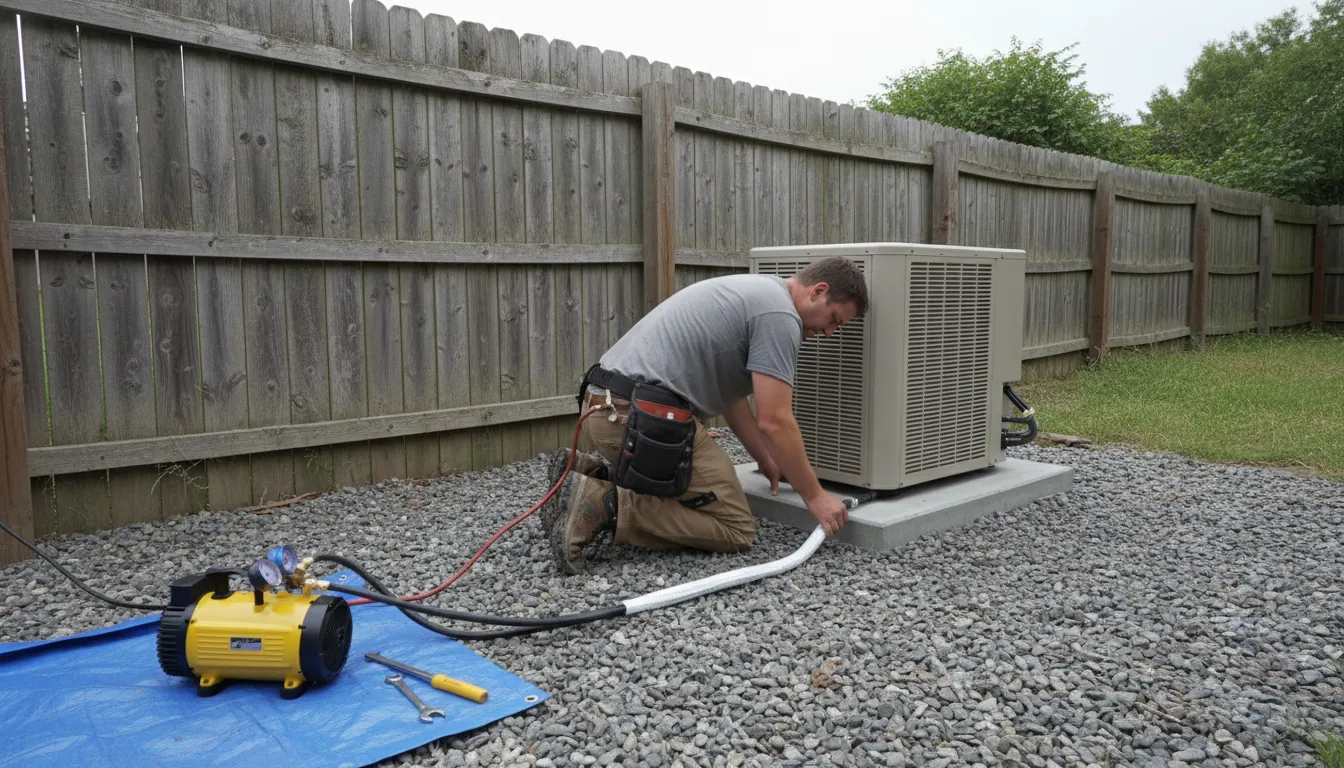
Find the Best Mini-Split Installers for Your Business
No obligation • Fast responses • Nationwide coverage

Why you can trust HVAC Firms
HVAC Firms is a leading United States resource for evaluating HVAC service providers. Our team researches companies, checks credentials, and reviews customer feedback to present clear, unbiased information. Listings and rankings are based on merit, and companies cannot pay to change our editorial content.
Search providers near you
Top Mini-Split Installers in Bridgewater, New Jersey Ranked
A ductless mini-split system is a versatile heating and cooling solution that provides targeted comfort without the need for extensive ductwork. For Bridgewater homeowners, this technology is particularly valuable for managing New Jersey's humid summers and chilly winters with greater efficiency and control. This guide explains how ductless systems work, their ideal applications, and the key factors to consider when planning an installation for your home.
Aeromark Mechanical Inc
153 Morgan St, Jersey City, NJ 07302
Aeromark Mechanical Inc provides residential and commercial HVAC services in New York, NY, and the surrounding Northern New Jersey area. They specialize in heating and air conditioning repair, installation, and maintenance, including heat pumps, ductless HVAC systems, and indoor air quality solutions. With over 15 years of experience, Aeromark Mechanical offers seasonal maintenance plans and has expertise in installing advanced systems like VRF and high-velocity HVAC. Their certified technicians also handle smart thermostat installations and duct repair services.
Meyer & Depew Co., Inc.
309 Lafayette Ave, Kenilworth, NJ 07033
Meyer & Depew Co., Inc. is an HVAC company serving Newark, NJ, specializing in air conditioning, furnace, and boiler installation, repair, and maintenance. They offer services including central AC installation, heating system tune-ups, and ductless mini split system installations. The company provides 24/7 availability for heating and air conditioning repairs and maintenance. Their technicians are licensed and experienced in handling high-efficiency heating and cooling systems, including Energy Star® boilers and furnaces. Meyer & Depew has a strong presence in central and northern New Jersey and is known for its preventative maintenance plans and technical expertise.
Airtek Mechanical Heating & Cooling LLC
400 Valley Brook Ave, Lyndhurst, NJ 07071
Airtek Mechanical Heating & Cooling LLC is an HVAC contractor based in Newark, NJ, providing residential and commercial heating, cooling, and refrigeration services. They offer repairs, installations, and maintenance for air conditioning, furnaces, boilers, and ductless mini-split systems. Their capabilities include 24-hour emergency HVAC repairs and servicing a variety of unit types such as rooftop package units and wall air conditioners. With over 10 years of experience, Airtek Mechanical serves Newark and surrounding areas with a focus on comprehensive HVAC solutions.
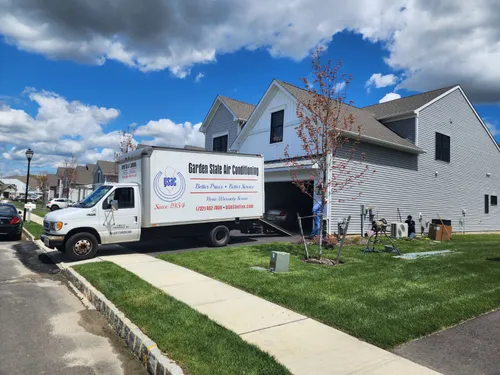
Garden State Air Conditioning and Heat
819 NJ-33 Business, Freehold, NJ 07728
Garden State Air Conditioning and Heat is a family-owned HVAC company serving New York, NY, and nearby communities. Established in 1954 and based in Freehold, NJ, they provide a wide range of services including air conditioner, furnace, heat pump, and mini split installation and repair, as well as indoor air quality solutions. The company offers 24/7 emergency services and preventative maintenance agreements to help maintain system reliability. Their capabilities include installing programmable thermostats, humidifiers, ductless split systems, air cleaners, UV lights, ventilators, and zoning products to improve indoor comfort and air quality.
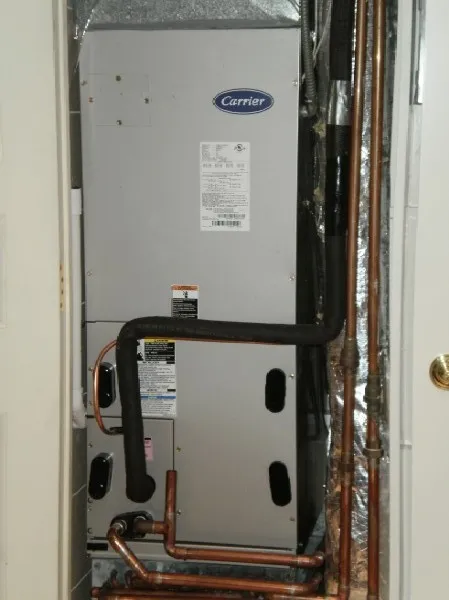
Arnica Heating and Air Conditioning Inc
9728 3rd Ave, Brooklyn, NY 11209
Arnica Heating and Air Conditioning Inc is an HVAC contractor serving New York, NY, including Brooklyn, Queens, Manhattan, and Staten Island. They provide a full range of residential and commercial HVAC services such as installation, repair, and maintenance of heating and air conditioning systems, including modern ductless solutions. As a Mitsubishi Elite Diamond Contractor and authorized installer for major brands like Trane and Carrier, Arnica offers expertise in installing advanced HVAC systems. Established in 2008, the company has over a decade of experience and provides 24-hour live answering service for emergency assistance.
Understanding Ductless Mini-Split Systems
Often called ductless air conditioners or heat pumps, a mini-split system consists of two main components: a quiet outdoor condenser unit and one or more indoor air handlers. These are connected by a small conduit that houses refrigerant lines, power cables, and a condensate drain line. This setup eliminates the need for bulky, energy-wasting ductwork, making it a perfect retrofit for older homes, room additions, or spaces where extending existing ducts is impractical or too costly.
The core appeal of a ductless installation is its ability to provide zoned comfort. Unlike a traditional central air system that cools or heats the entire house to one temperature, a mini-split allows you to control the climate in individual rooms or "zones." This means you can keep a home office cool during the day while letting unused bedrooms stay at a more energy-efficient temperature, significantly reducing wasted energy and lowering utility bills.
Ideal Applications for Bridgewater Homes
Mini-split systems solve specific comfort challenges common in our area. Here are the most popular uses:
- Room Additions, Garages, and Sunrooms: If you've added a family room, converted a garage, or enjoy a three-season sunroom, extending ductwork from your main system can be disruptive and expensive. A ductless unit provides independent, efficient heating and cooling for these spaces.
- Supplemental Zoned Comfort: Do you have a bedroom that's always too hot or a basement that's too cold? A single-zone mini-split can target that specific area, solving persistent comfort issues without overhauling your entire HVAC system.
- Whole-Home Solutions: For homes without any existing ductwork (like many older properties in Bridgewater), a multi-zone ductless system can serve as the primary heating and cooling solution. Multiple indoor units connected to one or more outdoor condensers can efficiently manage the climate throughout the entire house.
System Types: Single-Zone vs. Multi-Zone
Choosing the right system configuration is the first critical step in planning your installation.
- Single-Zone Systems: This setup involves one outdoor condenser connected to one indoor air handler. It's designed to condition a single room or open space. This is the most straightforward and often most cost-effective option for targeted applications like a garage, attic apartment, or home office 1.
- Multi-Zone Systems: A single outdoor condenser can be connected to multiple indoor units (typically 2 to 5+). This allows you to create several independent zones within your home. Each indoor unit can be set to a different temperature, providing customized comfort for bedrooms, living areas, and kitchens from one efficient outdoor unit 2.
Key Installation Considerations
A successful ductless installation hinges on proper planning and professional execution. Several technical factors must be addressed.
Indoor Unit Placement
Where you mount the indoor air handler (or "head") is crucial for performance and comfort.
- High on a Wall: The most common placement. The unit should be mounted on an exterior wall, high up and in a central location of the room to ensure even air distribution. Avoid placing it directly above furniture or in a corner where airflow would be obstructed.
- Ceiling Cassettes: These units are recessed into the ceiling for a sleek, nearly invisible look. Installation is more complex, often requiring carpentry work, which can increase the project cost 3 4.
- Strategic Positioning: Consider the room's heat load. Placing a unit on a wall that receives afternoon sun or near a home office with multiple computers can help counteract those specific heat sources more effectively.
Outdoor Unit Location
The outdoor condenser requires careful siting.
- Adequate Clearance: The unit needs sufficient space around it for proper airflow and service access. Manufacturers typically require at least 2-3 feet of clearance on all sides, especially the front (where the fan is) and the back (where the coils are).
- Aesthetics and Noise: While modern units are very quiet, consider placing the condenser away from bedroom windows or outdoor living areas. Local Bridgewater ordinances may also have rules about how close a unit can be to a property line.
The Installation Process
A professional installer will manage several critical steps:
- Line Set Routing: A small hole (1-3 inches in diameter) is drilled through the wall to connect the indoor and outdoor units. The refrigerant lines and electrical wiring are run through this conduit in a sealed, insulated bundle. Longer line set runs increase material and labor costs 5.
- Condensate Drainage: As the unit cools, it removes humidity and produces condensate water. The ideal method is a gravity-fed drain line. If the indoor unit cannot be positioned for gravity drainage, a condensate pump must be installed, adding to the project complexity and cost 6.
- Electrical Requirements: Mini-splits require a dedicated electrical circuit. Your installer will assess if your home's electrical panel has the capacity or if a sub-panel or panel upgrade is necessary, which will require a licensed electrician.
Find the perfect mini-split installers for your needs
Get personalized recommendations and expert advice
Cost Factors for Mini-Split Installation
The total investment for a ductless system in Bridgewater varies widely based on your specific needs. It's important to view quotes in the context of system scope and quality.
-
System Size and Zones: This is the primary cost driver.
-
A multi-zone system for 2-3 areas of your home generally falls between $5,500 and $10,000+ 9.
-
Equipment Brand and Efficiency: Premium brands like Mitsubishi and Carrier often come with a higher initial cost but may offer superior reliability, longer warranties, and higher efficiency ratings (measured as SEER2 for cooling). A higher SEER2 unit will cost more upfront but can lead to significant long-term energy savings.
-
Installation Complexity: The factors discussed above directly impact labor costs. A simple installation on a ground-floor room with easy electrical access will cost less than a second-story install requiring long line set runs, a condensate pump, and an electrical panel upgrade 13 14.
The Importance of Professional Assessment
Given the variables involved-from home layout and insulation to electrical capacity and local codes-a professional assessment is not just recommended; it's essential. A qualified HVAC specialist will perform a load calculation to determine the correct system size, recommend optimal unit placement for performance and aesthetics, and identify any potential challenges like electrical upgrades before work begins. This step ensures your ductless mini-split installation delivers efficient, reliable comfort for years to come.
Frequently asked questions
Sources
Footnotes
-
How Much Space Can You Cool With a Ductless Mini-Split? | AJ Danboise - https://ajdanboise.com/how-much-space-can-you-cool-with-a-ductless-mini-split/ ↩
-
Mini Split Air Conditioners | HVACDirect.com - https://hvacdirect.com/ductless-mini-splits.html ↩
-
Ductless Mini-Splits: A Comprehensive Cost Breakdown - https://www.myfivestarhomeservices.com/ductless-mini-splits-a-comprehensive-cost-breakdown/ ↩
-
Mini-Split Placement Guide: Best and Worst Spots for Installation - https://gulfshorecooling.com/mini-split-placement-guide/ ↩
-
Whole House Ductless Mini Split Walk Through - https://www.youtube.com/watch?v=lDwutt_ywsA&t=2 ↩
-
Ductless Mini-Split Installs In Central Jersey | HVAC Services - https://www.arcticac.com/air-conditioning/ductless/installation/ ↩
-
Average Cost of Ductless Heating and Cooling Installation in NJ - https://kriseservices.com/cost-of-ductless-cooling-installation-nj/ ↩
-
How Much Does It Cost To Install A Ductless Mini Split? | NJ - https://www.celticair.com/how-much-does-it-cost-to-install-a-ductless-mini-split/ ↩
-
Ductless Mini-Split Installation Cost in 2025: Full Breakdown - https://osborneheatingncooling.com/ductless-mini-split-installation-cost/ ↩
-
Ductless Mini Split Installation Costs in 2026 - Carrier - https://www.carrier.com/residential/en/us/products/ductless-mini-splits/ductless-mini-split-installation-cost/ ↩
-
Premier Ductless Mini Split Systems Installation in Lyndhurst, NJ 07071 - https://www.richaircomfort.com/service-area/ductless-mini-split-in-lyndhurst-nj-07071/ ↩
-
How Much Does It Cost to Install a Mini Split System? - https://elementairco.com/how-much-does-it-cost-to-install-a-mini-split-system/ ↩
-
Ductless mini-split installation: Cool 2025 Guide - Southern Air - https://www.southern-air.com/blog/ductless-mini-split-installation ↩
-
How much to install mini split? - Mr. Good Guy HVAC - https://mrgoodguyhvac.com/how-much-to-install-mini-split/ ↩