Find the Best Mini-Split Installers for Your Business
No obligation • Fast responses • Nationwide coverage

Why you can trust HVAC Firms
HVAC Firms is a leading United States resource for evaluating HVAC service providers. Our team researches companies, checks credentials, and reviews customer feedback to present clear, unbiased information. Listings and rankings are based on merit, and companies cannot pay to change our editorial content.
Search providers near you
Best Mini-Split Installers in New Hampshire Ranked
Ductless mini-split systems are a versatile and energy-efficient solution for heating and cooling homes across New Hampshire. These systems provide targeted comfort control for individual rooms or entire homes without the need for extensive ductwork, making them ideal for additions, older homes, or spaces where traditional HVAC is impractical. Understanding the local requirements, best practices, and available incentives is key to a successful installation that maximizes efficiency, savings, and long-term reliability. This guide provides the essential information New Hampshire homeowners need to navigate the process of selecting and installing a mini-split system.
Understanding Mini-Split Systems
A ductless mini-split system consists of one outdoor compressor/condenser unit connected by refrigerant lines to one or more indoor air-handling units. This design offers significant advantages over traditional forced-air systems, particularly in New Hampshire's climate with its cold winters and humid summers.
- Zoned Comfort: Each indoor unit can be controlled independently, allowing you to heat or cool only the rooms you're using. This eliminates the energy waste of conditioning an entire home when only part of it is occupied.
- High Efficiency: Modern mini-splits, especially cold-climate heat pump models, are exceptionally efficient. They can provide over three times more heating energy than the electrical energy they consume, even in sub-freezing temperatures.
- Flexible Installation: Without the need for ducts, installation is less invasive. The connection between indoor and outdoor units requires only a small, three-inch hole in the wall for the conduit containing power, refrigerant, and drain lines.
New Hampshire Installation: Codes, Permits, and Licensing
Professional installation is strongly recommended and often legally required for key components of a mini-split system in New Hampshire. Adherence to state and local codes ensures safety, system performance, and eligibility for rebates and warranties.
Electrical Work and Licensing
The high-voltage electrical connection for a mini-split is not a DIY task. All wiring, except for low-voltage control wiring, must be performed by a licensed electrician 1 2. This is a critical safety requirement to prevent fire hazards and ensure the system operates correctly with your home's electrical panel.
Required Permits
Most municipalities in New Hampshire require permits for mini-split installation. These are not just bureaucratic hurdles; they ensure the work is inspected and meets code.
- Mechanical Permit: This covers the HVAC aspects of the installation, including refrigerant handling and the physical mounting of units.
- Electrical Permit: Required for the new electrical circuit run from your panel to the outdoor unit 3 4. Pulling permits protects you as a homeowner by verifying the installation is safe and up to standard, which is also a common requirement for manufacturer warranties and utility rebates.
HVAC Contractor Considerations
While New Hampshire does not have a statewide licensing requirement specifically for HVAC contractors, hiring a qualified, insured professional is non-negotiable for a proper installation 5. A reputable installer will handle the complex tasks of refrigerant charging, system evacuation, and balancing, which are essential for efficiency and longevity. They will also be familiar with local code variations and the permit process.
The Professional Installation Process & Best Practices
A proper installation by a certified technician follows a meticulous process that directly impacts your system's performance and lifespan.
- Load Calculation and System Design: A technician will perform a Manual J load calculation to determine the correct heating and cooling capacity (in BTUs) needed for your space. Oversized or undersized units lead to inefficiency, discomfort, and increased wear.
- Optimal Unit Placement:
- Indoor Units: Should be mounted high on a wall, typically 6-8 inches from the ceiling, to allow for optimal air circulation. They must be placed on an unobstructed wall, away from direct sunlight or heat sources, and in a location where conditioned air can flow freely throughout the room 6.
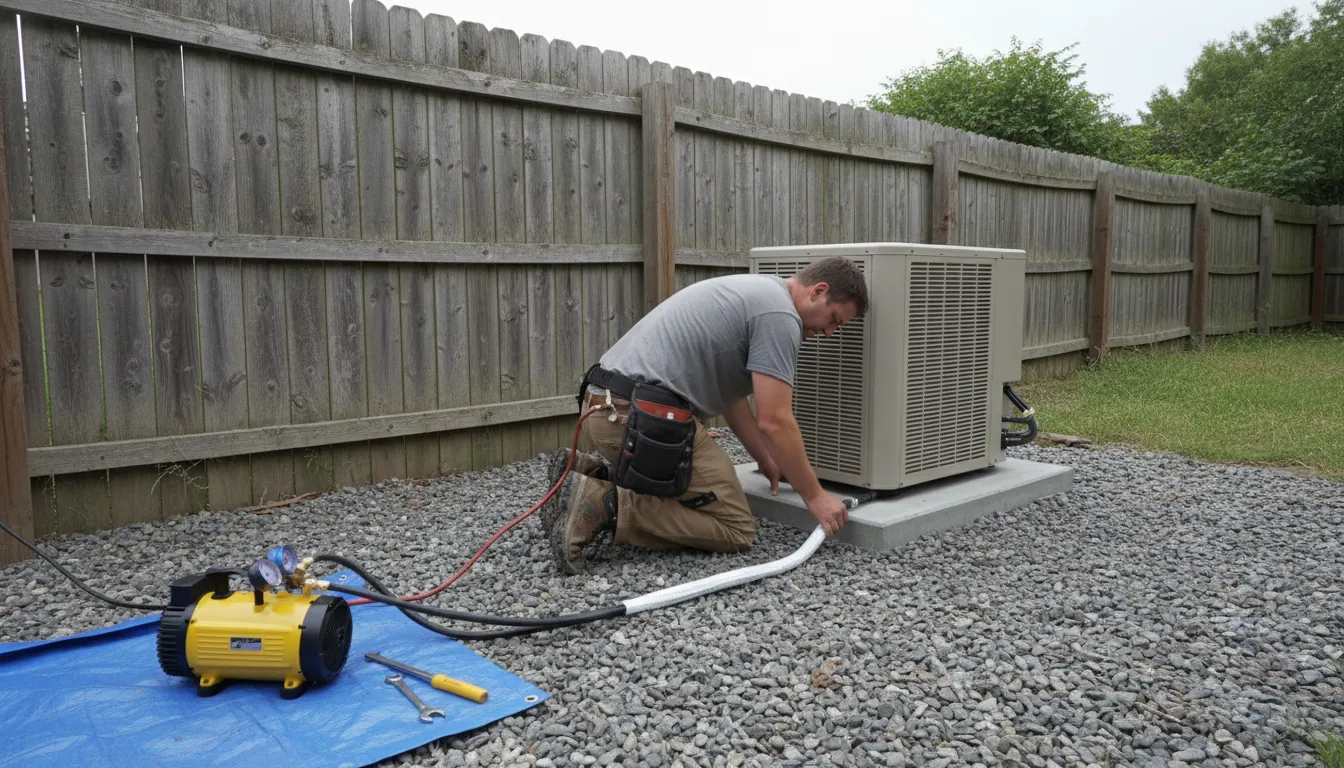
- Outdoor Unit: Requires a stable, level pad (often concrete) with ample clearance-usually at least 12-24 inches on all sides-for airflow and service access. It should be positioned away from windows, patios, and vegetation to minimize noise disturbance and ensure proper operation 7.
- Critical Technical Steps: The professional will then drill the penetration, mount the units, connect the refrigerant linesets, perform a pressure test and deep vacuum to remove all moisture and air from the lines, and charge the system with the exact amount of refrigerant specified by the manufacturer. Finally, they will connect and test the electrical and control wiring.
Find the perfect mini-split installers for your needs
Get personalized recommendations and expert advice
Financial Considerations: Costs and Incentives
Investing in a mini-split system involves upfront costs that are offset by long-term energy savings and significant available incentives.
Installation Cost Range
In New Hampshire, the total installed cost for a complete ductless mini-split system typically ranges from $7,000 to $12,000 or more 8 9. The final price depends on several factors:
- Number of Zones: A single-zone system (one outdoor unit, one indoor head) costs less than a multi-zone system.
- System Capacity and Features: Higher BTU capacity, advanced inverters, and hyper-heat models for extreme cold weather command a higher price.
- Installation Complexity: The difficulty of running linesets, the distance between indoor and outdoor units, and the need for new electrical service all affect labor costs.
Maximizing Savings with Rebates and Tax Credits
New Hampshire homeowners have access to powerful financial incentives that can reduce the net cost of a high-efficiency system by thousands of dollars.
- NHSaves Rebates: This program, funded by New Hampshire utilities like Eversource and Unitil, offers instant rebates for qualifying high-efficiency heat pumps. Rebates can be substantial, potentially up to $1,900 or more for eligible models 10 11. Your participating HVAC contractor will typically process this rebate directly at the point of sale.
- Federal Tax Credits: The federal Residential Clean Energy Tax Credit provides a 30% tax credit on the total cost (equipment and installation) of a qualifying heat pump system, with a maximum credit of $2,000 per year. This credit is claimed on your annual federal income tax return.
- Federal HEEHRA Rebates: The High-Efficiency Electric Home Rebate Act (HEEHRA) provides point-of-sale rebates for low- and moderate-income households. While program details are still being finalized at the state level, these rebates could provide up to $8,000 for a qualifying heat pump installation 12.
Choosing Between Single-Zone and Multi-Zone Systems
Your choice depends on your home's layout and your comfort goals.
- Single-Zone Systems: Best for conditioning a single room, such as a sunroom, garage conversion, or an addition. It's a cost-effective solution for a targeted space.
- Multi-Zone Systems: A single outdoor unit can connect to multiple indoor heads (typically 2-5). This is an excellent whole-home solution for smaller homes or to provide efficient, zoned comfort in key living areas, allowing for different temperatures in bedrooms, living rooms, and kitchens.
Frequently asked questions
Sources
Footnotes
-
Can I Install a Mini-Split Myself? What You Should Know 2025 - https://bigalsservices.com/blog/can-i-install-mini-split-myself/ ↩
-
Ductless Mini-Split Wiring. - Electrical License Renewal - https://www.electricallicenserenewal.com/Electrical-Continuing-Education-Courses/NEC-Content.php?sectionID=3086 ↩
-
Do Mini Splits Need Permits? Installation Requirements Guide - https://www.greecomfort.com/news-and-events/do-mini-splits-need-permits/ ↩
-
Do You Need a Permit to Install a Mini Split? Find Out Now - https://www.edsheatingandcooling.com/blog/do-you-need-a-permit-to-install-a-mini-split-find-out-now/ ↩
-
HVAC License Requirements by State - Next Insurance - https://www.nextinsurance.com/blog/hvac-license-requirements/ ↩
-
Is a Ductless Mini-Split Installation a DIY Project A Complete Guide - https://www.heating-ac.com/blog/is-a-ductless-mini-split-installation-a-diy-project-a-complete-guide ↩
-
How to Install a Mini-Split in 4 Steps - https://www.alpinehomeair.com/learning-center/ductless-mini-split-systems/how-to-install-a-mini-split-in-4-steps ↩
-
Understanding the Cost of Ductless Mini-Split Systems: A Guide for NH Homeowners - https://www.gsmsnh.com/understanding-the-cost-of-ductless-mini-split-systems-a-guide-for-nh-homeowners/ ↩
-
Ductless Mini Split Installation in NH - Heritage Home Service - https://justcallheritage.com/heating-cooling/ductless-mini-split-installation/ ↩
-
Heat Pumps & Central Air Conditioners - NHSaves - https://nhsaves.com/residential/electric-heating-cooling-equipment/ ↩
-
East Coast HVAC Rebates - https://eastcoasthvac.com/about/rebates/ ↩
-
Federal and State Rebates and Incentives for Mini Splits in NH - https://www.neminisplitinstallers.com/rebates/ ↩