Find the Best Mini-Split Installers for Your Business
No obligation • Fast responses • Nationwide coverage

Why you can trust HVAC Firms
HVAC Firms is a leading United States resource for evaluating HVAC service providers. Our team researches companies, checks credentials, and reviews customer feedback to present clear, unbiased information. Listings and rankings are based on merit, and companies cannot pay to change our editorial content.
Search providers near you
Best Mini-Split Installers in North Dakota Ranked
Installing a ductless mini-split system is an excellent way to efficiently heat and cool specific areas of your North Dakota home, from a sunroom addition to a finished basement. These systems provide targeted comfort without the need for extensive ductwork, making them ideal for older homes or room-specific upgrades. This guide explains the critical steps, costs, and regulations for a successful installation, helping you connect with qualified local professionals who can ensure your project meets all safety and efficiency standards.
Understanding Ductless Mini-Split Systems
A ductless mini-split system consists of an outdoor compressor/condenser unit connected by refrigerant lines to one or more indoor air-handling units. This setup allows for independent temperature control in different "zones" of your home. For North Dakota residents, these systems are particularly valuable for their efficiency in extreme temperatures, providing both powerful heating and cooling from a single unit. The absence of ducts eliminates energy losses associated with ductwork, which can account for more than 30% of energy consumption for space conditioning, especially if the ducts are in an unconditioned space like an attic 1.
Why Professional Installation is Essential in North Dakota
While a DIY approach might be tempting, installing a ductless system involves technical challenges that require a licensed expert. Proper installation is not just about mounting units on walls; it requires handling refrigerants under pressure, performing precise electrical work, and ensuring the system is vacuumed of all moisture and air to prevent future failures. An improper installation can lead to refrigerant leaks, reduced efficiency, electrical hazards, and voided manufacturer warranties. In North Dakota's climate, a correctly installed, high-efficiency system is crucial for managing both bitter winter cold and summer heat effectively and affordably.
Licensing and Permit Requirements
Adhering to local and state regulations is a non-negotiable part of the installation process.
- HVAC Contractor License: Any contractor performing work on HVAC systems in North Dakota must hold the appropriate state license. This ensures they have the necessary training and insurance.
- Electrical License: Connecting the outdoor unit to your home's electrical panel is electrical work that typically must be performed by or under the supervision of a licensed electrician 2.
- Local Building Permits: Most cities and counties in North Dakota require permits for mini-split installations. These permits typically cover both the electrical and mechanical (HVAC) aspects of the job. The permitting process ensures the work is inspected and complies with current building, electrical, and safety codes, such as the National Electrical Code (NEC) and local amendments 3 4. Failing to pull a required permit can result in fines, difficulties selling your home, and problems with your homeowner's insurance.
The Professional Installation Process: A Step-by-Step Overview
A professional installation by a qualified technician follows a meticulous process to ensure longevity and performance.
- Site Evaluation and Planning: A technician will assess your home to determine the optimal locations for the indoor and outdoor units, calculate heating/cooling loads, and plan the refrigerant line routing.
- Mounting the Units: The indoor unit(s) are mounted high on an interior wall, ensuring proper clearance for airflow. The outdoor unit is placed on a stable, level pad in a location with good airflow and away from debris 5.
- Running Connections: A small hole (typically 3 inches) is drilled through the exterior wall to run the refrigerant lines, condensate drain line, and electrical conduit between the indoor and outdoor units.
- Electrical Connection: Power is run from your home's electrical panel to a disconnect box near the outdoor unit, and then to the unit itself. This is a critical step that must meet code.
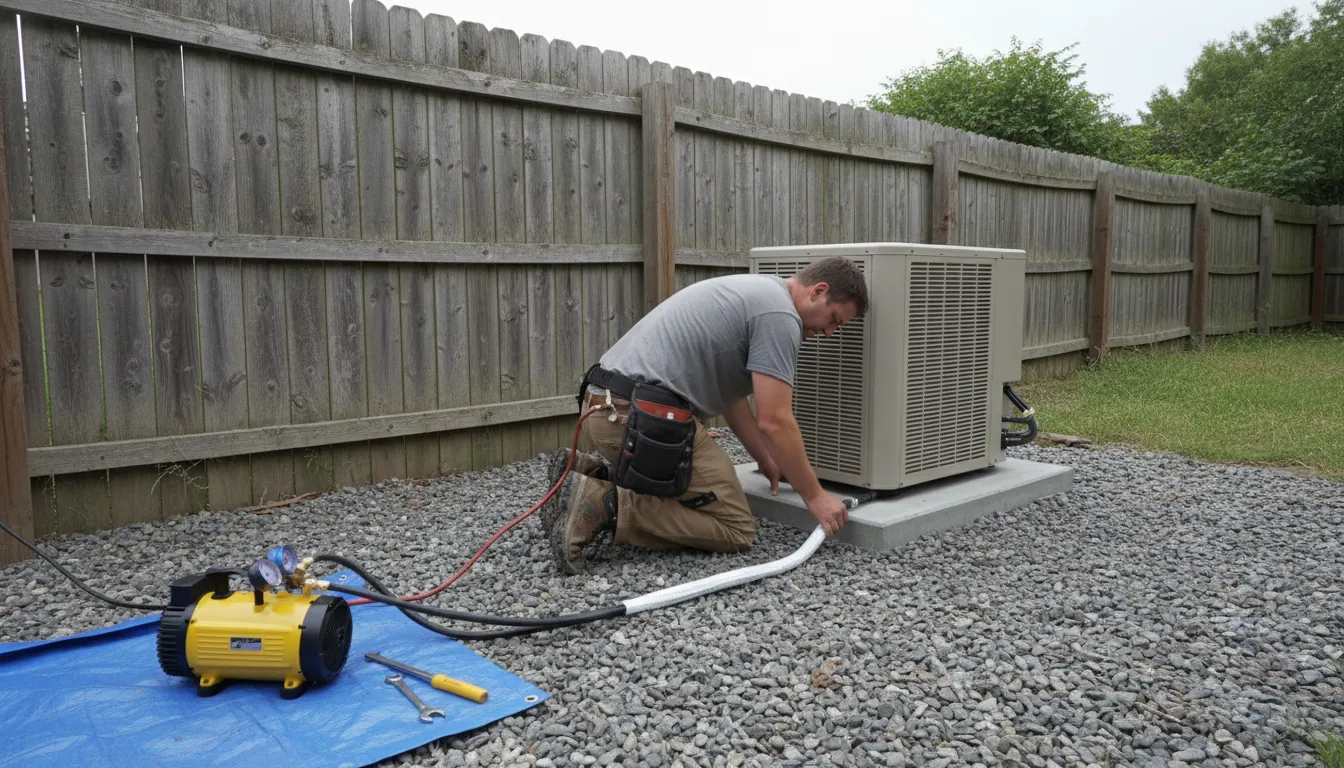
- Making Refrigerant Connections: The copper refrigerant lines are flared, connected, and checked. The system is then pressurized with nitrogen to test for leaks before being evacuated with a high-powered vacuum pump to remove all moisture and non-condensable gases-a vital step for efficiency and compressor life 6 7.
- System Charging and Testing: The system is charged with the precise amount of refrigerant specified by the manufacturer. The technician then starts the system, tests all modes of operation, and verifies performance metrics.
Find the perfect mini-split installers for your needs
Get personalized recommendations and expert advice
Cost Factors for Mini-Split Installation in North Dakota
The total cost of your ductless mini-split project depends on several variables. Here is a general cost breakdown based on system complexity:
- Single-Zone System (1 indoor unit): $3,000 - $5,000
- Multi-Zone System (2-3 indoor units): $5,500 - $8,500
- Multi-Zone System (4+ indoor units): $8,000 - $15,000+
Key factors influencing these costs include:
- Number of Zones: Each additional indoor air handler increases the cost for equipment and labor.
- System Efficiency: Units with higher SEER2 (Seasonal Energy Efficiency Ratio) and HSPF2 (Heating Seasonal Performance Factor) ratings are more expensive upfront but offer lower operating costs. Systems with a SEER2 rating above 15.2 may qualify for federal tax credits.
- Equipment Brand and Features: Premium brands and models with advanced inverters, Wi-Fi controls, or specialized filtration systems cost more.
- Installation Complexity: The difficulty of running linesets through walls, attic spaces, or between floors can impact labor time and cost.
Incentives and Rebates for High-Efficiency Systems
Investing in a high-efficiency ductless system can be offset by financial incentives.
- Federal Tax Credits: The Inflation Reduction Act offers a tax credit worth 30% of the project cost (up to a maximum of $2,000) for qualifying high-efficiency heat pumps installed through 2032. You must file IRS Form 5695 with your tax return 8 9.
- Utility and State Rebates: It's essential to check for local incentives. The Database of State Incentives for Renewables & Efficiency (DSIRE) is the most comprehensive source for North Dakota-specific programs, which may include rebates from local electric cooperatives or municipalities for installing energy-efficient equipment 10.
Choosing the Right System and Installer
Selecting equipment and a contractor are two of the most important decisions you'll make.
- Sizing is Critical: An oversized system will short-cycle (turn on and off frequently), reducing efficiency, dehumidification, and comfort. An undersized system will struggle to maintain temperature. A professional load calculation (Manual J) is necessary for correct sizing.
- Focus on Cold-Climate Performance: For North Dakota winters, look for models specifically rated for cold-climate operation, with a high HSPF2 rating and the ability to provide sufficient heat output at very low outdoor temperatures.
- Vet Your Installer: Choose a licensed, insured, and bonded HVAC contractor with specific experience installing ductless mini-splits. Ask for references, proof of license, and detailed written estimates. A quality installer will handle the entire process, including pulling permits and scheduling inspections.
Maintenance for Long-Term Performance
To protect your investment and ensure efficient operation, simple maintenance is key. Keep filters in the indoor units clean (typically monthly), ensure the outdoor unit remains clear of leaves, snow, and debris, and schedule an annual professional check-up. A technician can inspect refrigerant levels, electrical components, and overall system performance, catching small issues before they become major repairs.
Frequently asked questions
Sources
Footnotes
-
Do You Need a Permit to Install a Mini Split? Find Out Now - https://www.edsheatingandcooling.com/blog/do-you-need-a-permit-to-install-a-mini-split-find-out-now/ ↩
-
Can I Install a Mini-Split Myself? What You Should Know 2025 - https://bigalsservices.com/blog/can-i-install-mini-split-myself/ ↩
-
Is It Legal to Install a Ductless Mini Split Without Permission? - https://dellahome.com/blogs/della-blog/is-it-legal-to-install-a-ductless-mini-split-without-permission ↩
-
Do Mini Splits Need Permits? Installation Requirements Guide - https://www.greecomfort.com/news-and-events/do-mini-splits-need-permits/ ↩
-
Ductless Mini Split Installation: A Complete Guide - https://www.goairflow.com/blog/ductless-mini-split-installation/ ↩
-
Is a Ductless Mini-Split Installation a DIY Project A Complete Guide - https://www.heating-ac.com/blog/is-a-ductless-mini-split-installation-a-diy-project-a-complete-guide ↩
-
Ductless Mini Split Installation Guide: What Every Homeowner ... - https://www.aceanda.com/blog/ductless-mini-split-installation-guide-what-every-homeowner-should-know/ ↩
-
Energy Efficiency and Tax Credits: Do Ductless Mini-Splits Qualify? - https://thefurnaceoutlet.com/blogs/hvac-tips/energy-efficiency-and-tax-credits-do-ductless-mini-splits-qualify ↩
-
How Much Does a Mini Split Cost? | Ductless Price - https://www.bryant.com/en/ca/products/ductless-systems/mini-split-cost/ ↩
-
Ductless Mini-Split Installation Cost in 2025: Full Breakdown - https://osborneheatingncooling.com/ductless-mini-split-installation-cost/ ↩