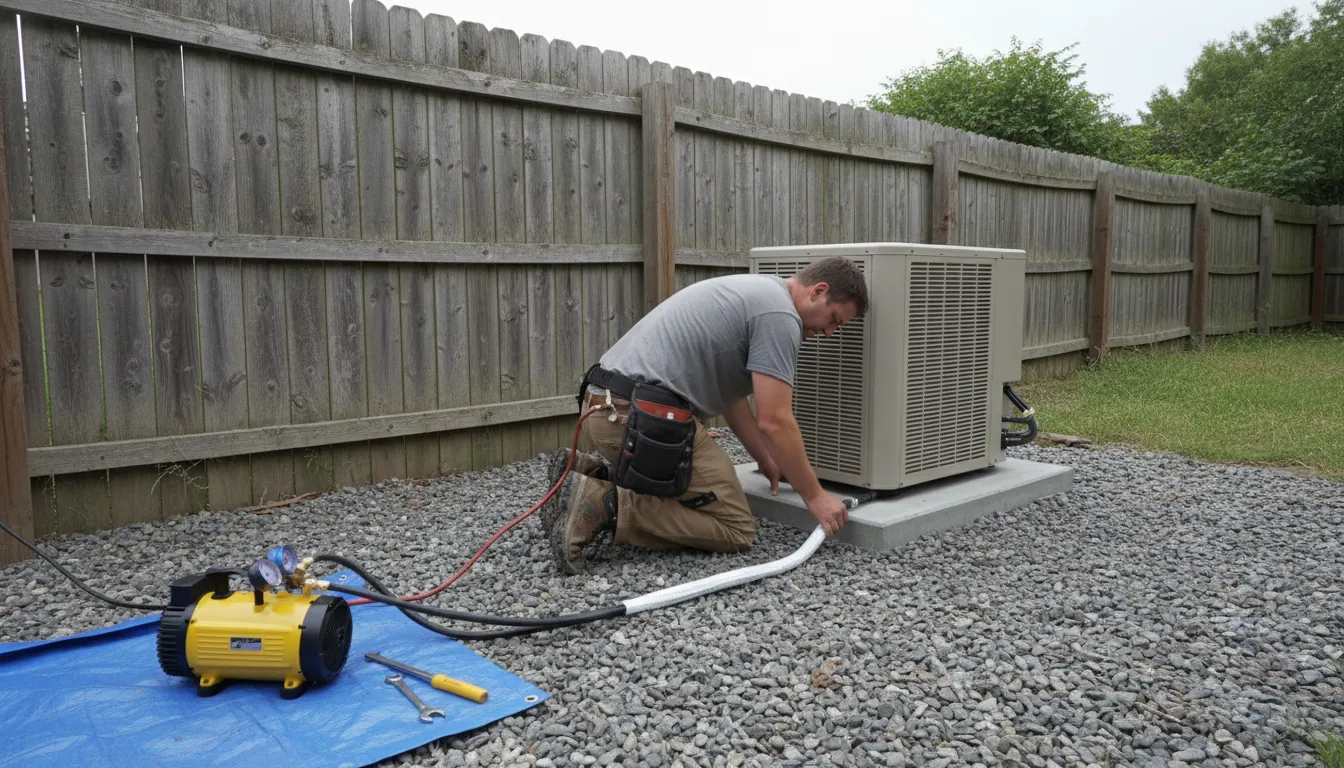
Find the Best Mini-Split Installers for Your Business
No obligation • Fast responses • Nationwide coverage

Why you can trust HVAC Firms
HVAC Firms is a leading United States resource for evaluating HVAC service providers. Our team researches companies, checks credentials, and reviews customer feedback to present clear, unbiased information. Listings and rankings are based on merit, and companies cannot pay to change our editorial content.
Search providers near you
Best Mini-Split Installers in Maryland Ranked
Installing a ductless mini-split system is a smart way to add efficient, zoned heating and cooling to Maryland homes, especially those without existing ductwork. This process involves more than just mounting units; it requires professional expertise to navigate state licensing, secure permits, and ensure a safe, code-compliant installation that maximizes performance and available financial incentives. The following guide provides a detailed overview of what Maryland homeowners need to know to successfully plan and execute a mini-split installation project with a qualified local professional.
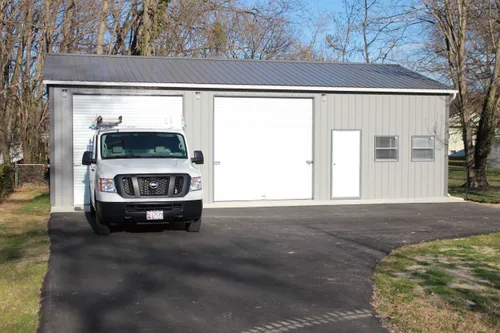
Elite Air Solutions, LLC-MD
1320 Innovation St Suite H, Baltimore, MD 21220
Elite Air Solutions, LLC-MD is an HVAC company serving Baltimore, MD, and central Maryland. They provide installation, repair, and maintenance services for air conditioning, furnaces, heat pumps, ductless units, and full duct systems. The company works with all major brands and offers preventive maintenance, new installations, and duct testing. Elite Air Solutions is available 24/7 to assist customers and aims to provide comfort in any weather condition.
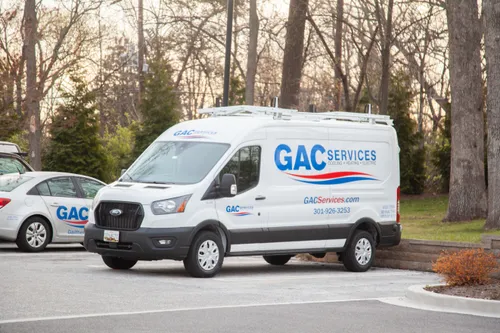
GAC Services
2409 Peppermill Dr, Glen Burnie, MD 21061
GAC Services is a home services provider based in Glen Burnie, Maryland, offering HVAC, plumbing, and electrical solutions to residents in Baltimore and the surrounding Anne Arundel County area. They provide a wide range of heating and cooling services including furnace, heat pump, boiler, and air conditioning repair and installation, as well as ductless mini-split systems and seasonal tune-ups. Their capabilities also extend to indoor air quality improvements with humidifiers, air purifiers, and UV sanitation systems. Established in the 1970s, GAC Services has decades of experience serving local homeowners and offers same-day and emergency service options.

Beltway Air Conditioning, Heating & Plumbing
3290 Pine Orchard Ln #A1, Ellicott City, MD 21042
Beltway Air Conditioning, Heating & Plumbing is an HVAC company serving Baltimore, MD, and nearby areas including Arbutus. They provide a range of services such as air conditioning and furnace repair, installation of HVAC systems including mini splits, and indoor air quality solutions. The company offers maintenance and tune-up services to help extend system life and improve efficiency. They also handle emergency replacements and ensure proper system sizing for homes. Beltway Air Conditioning, Heating & Plumbing emphasizes technical skill and customer care in their work.
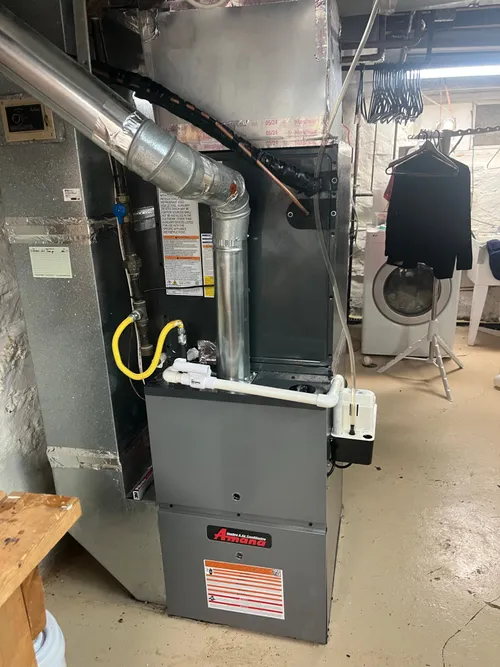
Alpha Heating & Air Conditioning, LLC
Baltimore, MD
Alpha Heating & Air Conditioning, LLC is an HVAC company serving Baltimore, MD, and nearby areas including Perry Hall and Owings Mills. They provide a range of heating and cooling services such as AC and furnace repair, installation of heat pumps, boilers, mini-splits, and full HVAC systems. With 25 years of experience, they focus on honest advice and transparent flat-rate pricing without sales pressure. Their mini-split services offer zoned comfort solutions without ductwork, and they handle both residential and light commercial properties.
Green Comfort Systems
8227 Philadelphia Rd, Rosedale, MD 21237
Green Comfort Systems is a licensed and insured HVAC contractor based in Baltimore, MD, offering a range of heating and cooling services. They specialize in air conditioning installation and repair, ductless mini-split systems, water heater services, and HVAC tune-ups. The company emphasizes energy-efficient solutions and personalized comfort, including the installation of ductless mini-splits for homes without existing ductwork. Green Comfort Systems partners with environmental initiatives to support reforestation through their service and installation work. They provide after-hours emergency repair and maintenance plans to help extend system lifespan and maintain efficiency.
Understanding Ductless Mini-Split Systems
A ductless mini-split system consists of an outdoor compressor/condenser unit connected by refrigerant lines to one or more indoor air-handling units. This design eliminates the need for extensive ductwork, making it an ideal solution for room additions, older historic homes, or spaces where extending central air is impractical or too costly 1. The primary advantage is zoned comfort, allowing you to control the temperature in individual rooms, which can lead to significant energy savings compared to cooling or heating an entire house with a central system.
In Maryland's climate, which features humid summers and cold winters, modern mini-split heat pumps are particularly effective. They provide both efficient cooling and electric heating, often operating efficiently even in lower temperatures. Choosing the right system-whether a single-zone unit for one room or a multi-zone system for several areas-is the first critical step in the planning process.
Maryland Licensing and Regulatory Requirements
Hiring a properly licensed professional is not just a recommendation; it's a legal and safety necessity for mini-split installation in Maryland. The work involves high-voltage electricity and refrigerant handling, both of which are strictly regulated.
Key Licenses to Look For:
- HVACR Contractor License: This state license is required for any contractor who installs, repairs, or services heating, ventilation, air conditioning, and refrigeration equipment. It ensures the contractor has met specific experience and knowledge standards.
- Master Electrician License: While some HVAC contractors hold the necessary electrical credentials, the electrical hook-up for the outdoor unit often requires work by or under the supervision of a licensed master electrician.
- Maryland Home Improvement Commission (MHIC) License: Any contractor performing home improvement work costing over $1,000 must be licensed by the MHIC. This provides homeowners with important consumer protections, including access to a guarantee fund 2 3.
Permit and Code Compliance: A permit is required for new HVAC system installations in Maryland 4. Your contractor should typically pull this permit through the Maryland OneStop online portal or your local county permitting office. The installation must adhere to:
- National Electrical Code (NEC): Governs the safe installation of electrical wiring and equipment.
- International Mechanical Code (IMC): Covers the installation of mechanical systems, including refrigerant line sets, drainage, and equipment mounting.
- EPA Section 608 Certification: Any technician handling refrigerant must be EPA-certified, which is a federal requirement.
The Professional Installation Process: Best Practices
A proper installation is crucial for system efficiency, longevity, and safety. Here's what a high-quality installation from a licensed Maryland pro should entail:
1. Load Calculation and System Sizing A professional will perform a Manual J load calculation. This is not a simple rule-of-thumb guess; it's a detailed analysis of your home's square footage, insulation, window types, and orientation to determine the exact heating and cooling capacity (measured in BTUs) needed for each zone. An incorrectly sized system will cycle too frequently, reduce comfort, increase wear, and raise energy bills.
2. Strategic Indoor Unit Placement The indoor air handlers should be mounted on an exterior wall, typically 6-7 feet off the floor, on a secure bracket. Placement is key for optimal air circulation. It should be located where conditioned air can flow freely across the room, away from direct sunlight or heat sources, and in a spot where the condensate drain line can easily run to the outside.
3. Precise Outdoor Unit Installation The condenser must be placed on a stable, level pad (often concrete) with adequate clearance-usually at least 1-2 feet on all sides-for airflow and service access. It should be positioned away from windows, patios, or vegetation to minimize noise disturbance and ensure unimpeded airflow.
4. Careful Refrigerant Line Installation The copper refrigerant lines connecting the indoor and outdoor units must be carefully routed, often through a small hole in the wall. They are insulated to prevent energy loss and condensation. A critical step is the evacuation and charging of the refrigerant lines; the system must be vacuumed to remove all moisture and air before the precise amount of refrigerant is charged, per the manufacturer's specifications 5.
Find the perfect mini-split installers for your needs
Get personalized recommendations and expert advice
Financial Incentives and Cost Considerations
The upfront cost of a mini-split system in Maryland is often offset by substantial long-term energy savings and immediate financial incentives.
Typical Cost Range: A complete professional installation for a ductless mini-split system in Maryland typically ranges from $3,000 to $15,000 6 7. The final price depends heavily on:
- Number of zones (single, dual, or multi-zone).
- Brand and efficiency rating (SEER and HSPF) of the equipment.
- Complexity of the installation (wall construction, electrical upgrades needed).
- Labor rates of the contractor.
While DIY-friendly kits exist (e.g., pre-charged lines), they still require significant electrical and carpentry skill, and improper installation can void warranties and reduce efficiency 8.
Available Incentives to Lower Net Cost: Maryland offers some of the best incentives in the country for energy-efficient upgrades like heat pumps.
- Federal Tax Credits: The Residential Clean Energy Credit offers a 30% tax credit on the cost of qualifying equipment and installation, up to a maximum of $3,200 per year. This applies directly to your income tax liability 9 10.
- EmPOWER Maryland Programs: This statewide initiative provides rebates for energy efficiency upgrades. Incentives can be significant for installing high-efficiency heat pumps, including ductless mini-splits. The specific rebate amount can vary by utility and income level 11.
- Local Utility Rebates: Many Maryland utilities, including BGE and Potomac Edison, offer their own rebate programs for installing ENERGY STAR® certified heat pumps. These are often stackable with federal credits.
Net Cost Example: A $10,000 system could qualify for a $3,000 federal tax credit (30%), plus a potential utility rebate of $500-$1,000, bringing the out-of-pocket cost down to the $6,000-$6,500 range.
Operation and Maintenance for Longevity
Once installed, proper care ensures your system runs efficiently for years.
- Filter Maintenance: The most critical task is cleaning or replacing the filters in the indoor air handlers every month during peak season. Clogged filters restrict airflow, forcing the system to work harder and reducing efficiency.
- Annual Professional Service: Schedule a tune-up with a licensed HVAC technician once a year. This service includes checking refrigerant levels, cleaning the outdoor coil, inspecting electrical connections, and ensuring all components are operating correctly.
- Seasonal Care: Keep the area around the outdoor unit clear of leaves, grass clippings, and snow to maintain proper airflow.
Choosing a ductless mini-split system is a significant investment in your Maryland home's comfort and efficiency. By understanding the regulatory landscape, the installation process, and the financial incentives available, you can make an informed decision and partner effectively with a qualified local professional to ensure a successful outcome.
Frequently asked questions
Sources
Footnotes
-
Ductless AC installation in Older Maryland Homes? - https://www.constellationhome.com/blog/better-to-install-a-ductless-ac-in-your-older-maryland-home/ ↩
-
Ultimate Guide to Maryland HVAC Regulations for Homeowners - https://www.acaircare.com/maryland-hvac-regulations/ ↩
-
Understanding Maryland's Licensing Requirements for Green ... - https://labor.maryland.gov/license/mhic/mhicgreen.shtml ↩
-
HVAC Permit | Maryland OneStop - https://onestop.md.gov/licenses/hvac-permit-5d1540c954f24d03e9998af5 ↩
-
Ductless mini-split installation: Cool 2025 Guide - Southern Air - https://www.southern-air.com/blog/ductless-mini-split-installation ↩
-
Are Ductless Mini-Split Installations More Cost-Effective Than ... - https://www.frhvac.com/about/hvac-blog/ac-installation/mini-split-vs-central-ac-installation-cost-maryland ↩
-
Ductless Mini-Split AC Installation In Ellicott City MD - https://www.supremeservicetoday.com/mini-split-installation-ellicott-city-md/ ↩
-
Ductless Mini-Split Installation Cost in 2025: Full Breakdown - https://osborneheatingncooling.com/ductless-mini-split-installation-cost/ ↩
-
The Best Maryland Energy Efficiency Incentives in 2025 - Community Action Council of Howard County - https://cac-hc.org/2025/02/19/the-best-maryland-energy-efficiency-incentives-in-2025/ ↩
-
Understanding Maryland's HVAC Tax Credits and Rebates - https://www.gomaxair.com/blog/understanding-maryland%E2%80%99s-hvac-tax-credits-and-rebates ↩
-
ENERGY EFFICIENCY PROGRAM OPERATIONS MANUAL - https://dhcd.maryland.gov/Energy-Home-Repair/Documents/WAP/EnergyEfficiencyProgramOperationsManual.pdf ↩