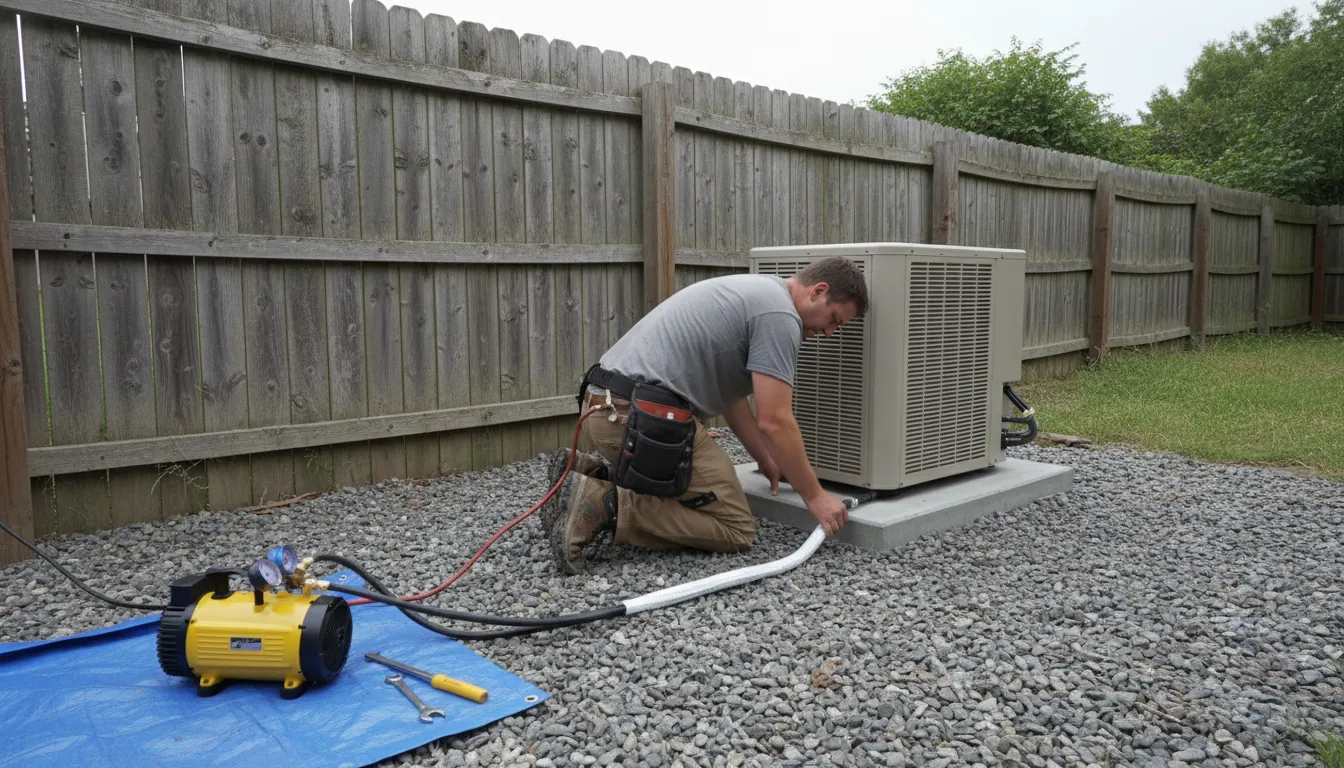
Find the Best Mini-Split Installers for Your Business
No obligation • Fast responses • Nationwide coverage

Why you can trust HVAC Firms
HVAC Firms is a leading United States resource for evaluating HVAC service providers. Our team researches companies, checks credentials, and reviews customer feedback to present clear, unbiased information. Listings and rankings are based on merit, and companies cannot pay to change our editorial content.
Search providers near you
Best Mini-Split Installers in Massachusetts Ranked
Installing a ductless mini-split system is a smart way to add efficient, zoned heating and cooling to your Massachusetts home. These systems are particularly valuable for older homes without existing ductwork, room additions, or for targeting specific areas that are difficult to keep comfortable. A successful installation requires careful planning, professional expertise, and navigating state-specific rebates and regulations. This guide will help you understand the key considerations, from selecting a qualified contractor to maximizing financial incentives, ensuring your project enhances your home's comfort and energy efficiency.
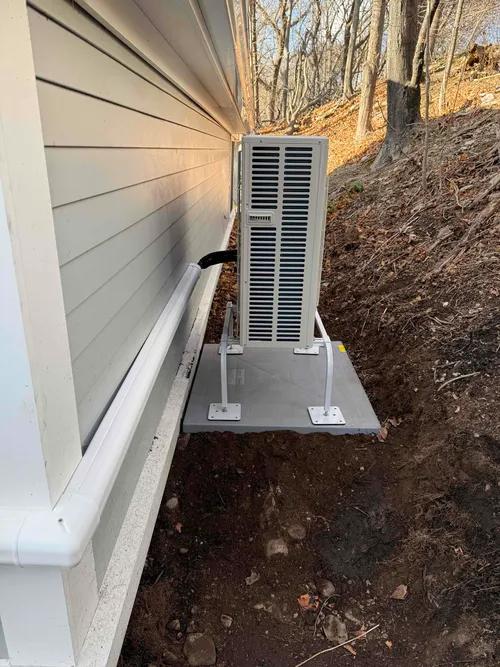
Yellow Dog Plumbing, Heating & Cooling
19 Kearney Rd, Needham, MA 02494
Yellow Dog Plumbing, Heating & Cooling is a plumbing and HVAC company serving Boston, MA, and nearby areas. They offer a wide range of services including air conditioning, furnace, heat pump, and boiler repair and installation, as well as HVAC tune-ups and indoor air quality solutions. Their technicians are equipped to handle both residential and light commercial HVAC needs, with well-stocked trucks to complete most repairs on the first visit. Yellow Dog emphasizes clear communication and customer care, providing same-day service and 24/7 live answering to support their clients' comfort and safety.
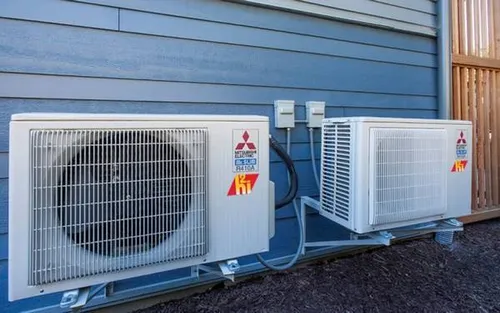
Frontier Air HVAC in Stoneham MA
92 William St #3, Stoneham, MA 02180
Frontier Air HVAC in Stoneham MA offers heating and cooling services including installation, repair, and maintenance of air conditioning systems, furnaces, heat pumps, and mini-splits. Located near Boston, MA, the company is a Mitsubishi Diamond Contractor, providing expert installation and up to a 12-year manufacturer's warranty on Mitsubishi equipment. They also assist customers with MassSave loan and rebate paperwork for heat pump installations.
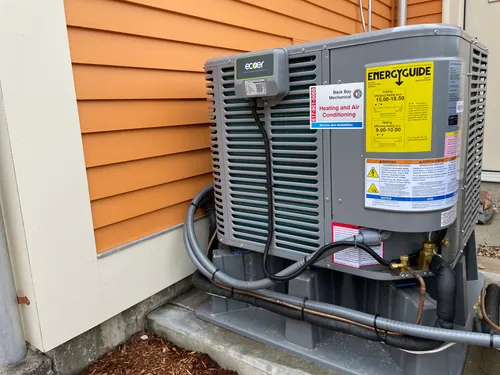
Back Bay Mechanical AC Repair & Heating
654 Washington St, Braintree, MA 02184
Back Bay Mechanical AC Repair & Heating is a licensed and insured HVAC company serving Boston, MA. They provide a range of services including furnace, heat pump, boiler, and water heater repair, as well as AC installation and duct cleaning. Their technicians evaluate all furnace components such as the combustion chamber, burners, heat exchanger, and thermostat to ensure safe and efficient operation. The company is recognized for its thorough maintenance plans and does not push unnecessary repairs or replacements. They offer emergency service and cover multiple Boston neighborhoods and surrounding areas.
Max Heating and Cooling
11 Dean Street, Stoneham, MA 02180
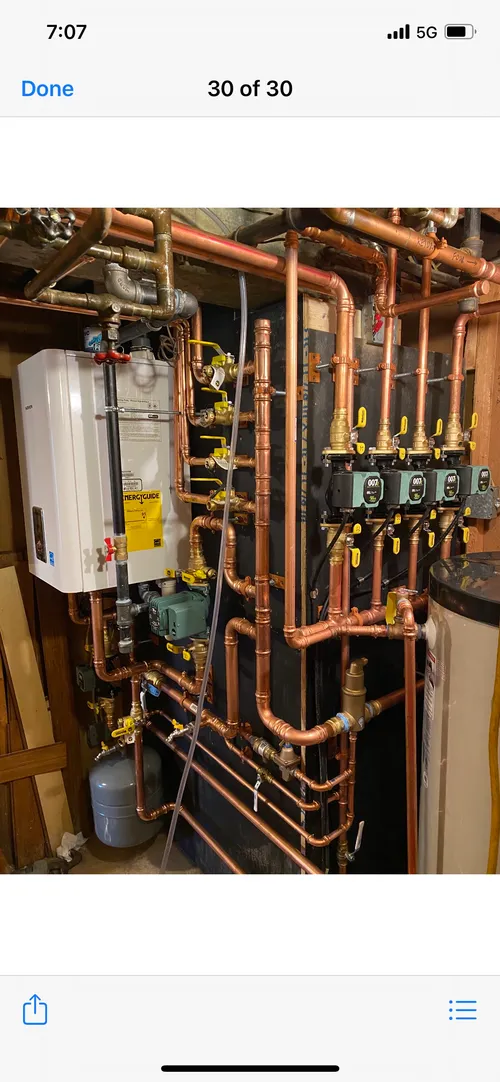
Max Heating and Cooling provides comprehensive HVAC, plumbing, and electrical services in Boston, MA. Since 2019, they have served both residential and commercial clients, offering heating and cooling system installation, repair, and maintenance, including furnaces, heat pumps, mini-splits, and advanced indoor air quality solutions. Their integrated approach allows customers to manage multiple home systems through a single provider, ensuring compatibility and streamlined service. The company also offers professional plumbing and electrical services, including water heater installation and electrical panel upgrades.
Presidential HVAC
31 Milk St, Boston, MA 02109
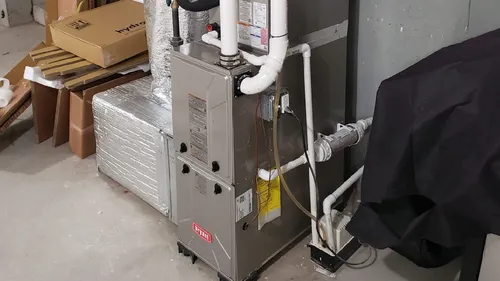
Presidential HVAC is an HVAC company based in Boston, MA, offering repair and installation services for central air conditioners, heat pumps, ductless systems, and mini splits. They provide 24/7 emergency repairs and have a large inventory of HVAC units ready for immediate installation. With over 10 years of experience in ductless and mini split installations, their technicians serve both residential and commercial customers in the Boston area. Their services include professional design, installation, and maintenance of energy-efficient heating and cooling systems.
Understanding Ductless Mini-Split Systems
A ductless mini-split system consists of an outdoor compressor/condenser unit connected by refrigerant lines to one or more indoor air-handling units. This design eliminates the energy losses associated with ductwork, which can account for more than 30% of energy consumption in a forced-air system. In Massachusetts, where winters are cold and summers can be humid, a properly sized heat pump mini-split provides both efficient heating and cooling from a single unit.
The primary appeal is zoned comfort. You can control the temperature in individual rooms, heating or cooling only the spaces you use. This is a significant advantage over central systems that treat the entire house as a single zone. For many Massachusetts homeowners, installing a mini-split is a strategic upgrade to replace inefficient electric baseboard heat, supplement an existing oil or gas system, or add air conditioning to a home that never had it.
The Critical Importance of Professional Sizing
The single most important step in your mini-split project is a proper load calculation. In Massachusetts, reputable HVAC contractors follow the ACCA Manual J standard to determine your home's precise heating and cooling load 1. This complex calculation considers your home's square footage, insulation levels, window types and orientation, air infiltration, and local climate data.
A system sized too large will short-cycle-turning on and off frequently-leading to poor humidity control, uneven temperatures, and increased wear. A system too small will struggle to maintain comfort during extreme weather. Professionals typically size a system for 90-120% of the calculated load to ensure efficiency and capacity. Never rely on rough estimates or "rules of thumb" based solely on square footage; an accurate Manual J is essential for system performance, longevity, and qualifying for rebates.
Licensing, Permits, and Regulations in MA
Installing a mini-split is not a DIY project. It involves electrical work, refrigerant handling, and structural modifications, all of which require licensed professionals.
Contractor Licensing: Any contractor performing HVAC work in Massachusetts must hold the appropriate state license. Always verify this before hiring. Furthermore, technicians who handle refrigerant must be certified under EPA Section 608 regulations 2.
Permit Requirements: Permits are almost always required and protect you by ensuring the installation meets state and local building codes.
- Electrical Permit: This is mandatory for connecting the outdoor unit to your home's electrical panel 3 4.
- Building or Mechanical Permit: Many municipalities in Massachusetts also require a separate permit for the mechanical installation itself. This covers the mounting of units, refrigerant line routing, and condensate drainage 5 6.
- Historic Districts: If your home is in a local historic district, you will likely need approval from the Historic District Commission before any exterior work, including placing the outdoor unit, can begin.
Your contractor should typically pull these permits on your behalf. A reputable pro will know the specific requirements in your town and include permit fees in their estimate.
Strategic Placement for Optimal Performance
Where your indoor and outdoor units are placed has a major impact on system efficiency and comfort.
Indoor Unit(s): Wall-mounted units should be installed high on a wall, typically at least 8 feet from the floor, to allow for optimal air distribution. The location should be free of obstructions like tall furniture and should be placed in a central area of the zone it's intended to serve. Avoid mounting directly above heat sources or electronics. A small, 3-inch hole is drilled through the wall to connect the refrigerant lines and condensate drain to the outdoor unit.
Outdoor Unit: The condenser should be placed on a stable, level pad (often concrete) in a location with good airflow and clearances as specified by the manufacturer. Consider noise: place it away from bedroom windows and neighboring properties. In snowy regions of Massachusetts, it may need to be mounted on a stand to keep it above snow accumulation. The lineset connecting the indoor and outdoor units should be as short and straight as possible to maintain efficiency.
Find the perfect mini-split installers for your needs
Get personalized recommendations and expert advice
Financial Incentives and Rebates in Massachusetts
One of the biggest advantages of installing a mini-split in Massachusetts is access to generous state-sponsored incentives designed to promote energy efficiency.
Mass Save® Rebates: The Mass Save program offers significant rebates for installing qualifying air-source heat pumps (which include heating-capable mini-splits).
- Whole-Home Rebates: You can receive up to $10,000 for a whole-home conversion to a ductless heat pump system.
- Partial System Rebates: Rebates are also available on a per-ton basis for systems that supplement existing heating 7.
- Bonus Rebates: Additional incentives are offered when you bundle a heat pump installation with other energy efficiency upgrades like insulation and air sealing.
HEAT Loan Program: Mass Save also provides 0% HEAT Loans for qualifying energy efficiency projects, making it easier to finance your installation with no-interest financing 8 9.
Federal Tax Credits: You may also qualify for federal energy efficiency tax credits for installing a qualifying system. Your contractor can help you understand which models meet the necessary SEER2 and HSPF2 efficiency ratings.
To receive these rebates, your system must be installed by a participating Mass Save contractor, and the installation must meet all program requirements, including proper sizing and permitting.
Cost Breakdown for Mini-Split Installation
The total cost of a ductless mini-split installation in Massachusetts varies widely based on system complexity, brand, and home-specific factors. Here is a general cost range:
- Basic Single-Zone System: Installing one indoor unit connected to one outdoor unit typically costs between $4,500 and $7,000.
- Multi-Zone System: A system with one outdoor compressor supporting two to four indoor units generally ranges from $8,000 to $12,000.
- Whole-Home Conversion: A comprehensive system designed to heat and cool an entire home can range from $12,000 to $20,000 or more 10 11.
These estimates usually include equipment, professional labor, basic materials, and standard permitting. The cost per additional zone after the first typically falls between $3,000 and $7,000 12.
Potential Hidden Costs: Be aware that your estimate may increase if your project requires:
- Electrical Service Upgrade: Older homes may need a panel upgrade to handle the new circuit.
- Complex Installations: Longer refrigerant line runs, difficult attic or crawlspace access, or the need for custom mounting solutions can add cost.
- Additional Indoor Unit Types: While wall-mounted units are most common, ceiling cassette or floor-mounted units may be preferred for certain spaces and can affect the price.
Maximizing Efficiency and Lifespan
A well-installed mini-split is a long-term investment. With proper maintenance, you can expect a system lifespan of 15 to 20 years or more 13. Their efficiency is a major benefit; a ductless heat pump can use up to 60% less energy than traditional electric resistance heating like baseboards 13.
To protect this investment:
- Schedule Annual Maintenance: Have a professional perform a yearly check-up, typically in the spring or fall. This includes cleaning filters and coils, checking refrigerant levels, and ensuring electrical connections are tight.
- Keep Filters Clean: Homeowners should clean the reusable filters in the indoor units every few weeks during peak season. This maintains airflow, efficiency, and indoor air quality.
- Keep Areas Clear: Ensure both indoor and outdoor units have plenty of clearance for air intake and exhaust.
Choosing a high-efficiency model, such as one with an ENERGY STAR® rating, will maximize your energy savings and often provide better performance in colder temperatures, which is crucial for Massachusetts winters.
Frequently asked questions
Sources
Footnotes
-
Air Source Heat Pumps | Residential - Mass Save - https://www.masssave.com/residential/rebates-offers-services/heating-and-cooling/heat-pumps/air-source-heat-pumps ↩
-
Mass Save® Mini Split Rebate: Benefits of Home Comfort & ... - Revise - https://www.callrevise.com/mass-save-mini-split-rebate/ ↩
-
Understanding Ductless Installation in Springfield, MA - Revise - https://www.callrevise.com/ductless-installation-in-springfield-ma/ ↩
-
Do Mini Splits Need Permits? Installation Requirements Guide - https://www.greecomfort.com/news-and-events/do-mini-splits-need-permits/ ↩
-
Permitting & Application Information - Reading, MA - https://www.readingma.gov/497/Permitting-Application-Information ↩
-
Do I need a permit for mini-split HVAC installation? - https://www.facebook.com/groups/1278151723069384/posts/1832008414350376/ ↩
-
Install Ductless AC in Massachusetts | Save Energy Year-Round - https://www.sumzeroenergysystems.com/blog/is-now-the-right-time-to-install-a-ductless-ac-system ↩
-
Rebates & Tax Credits | Canton, MA - SumZero Energy Systems - https://www.sumzeroenergysystems.com/heat-pump-location/rebates-and-tax-credits-canton-ma ↩
-
Mini Split Heat Pump Costs in MA | Save Energy & Cut Bills - https://www.sumzeroenergysystems.com/blog/mini-split-heat-pump-costs-what-every-homeowner-should-know ↩
-
Ductless mini split installation cost in MA | Save on energy bills - https://www.sumzeroenergysystems.com/blog/how-much-does-a-ductless-mini-split-installation-cost ↩
-
Cost to Install Mini Split Heat Pump in Massachusetts - https://shellyheating.com/post/cost-to-install-mini-split-heat-pump-ma-a-comprehensive-overview ↩
-
The Hidden Costs of HVAC Installations in Massachusetts - https://askgem.com/blog/hidden-costs-of-hvac-installations-in-massachusetts/ ↩
-
Ductless Mini Split Installation in Massachusetts - Endless Energy - https://goendlessenergy.com/ductless-mini-splits/ ↩ ↩2