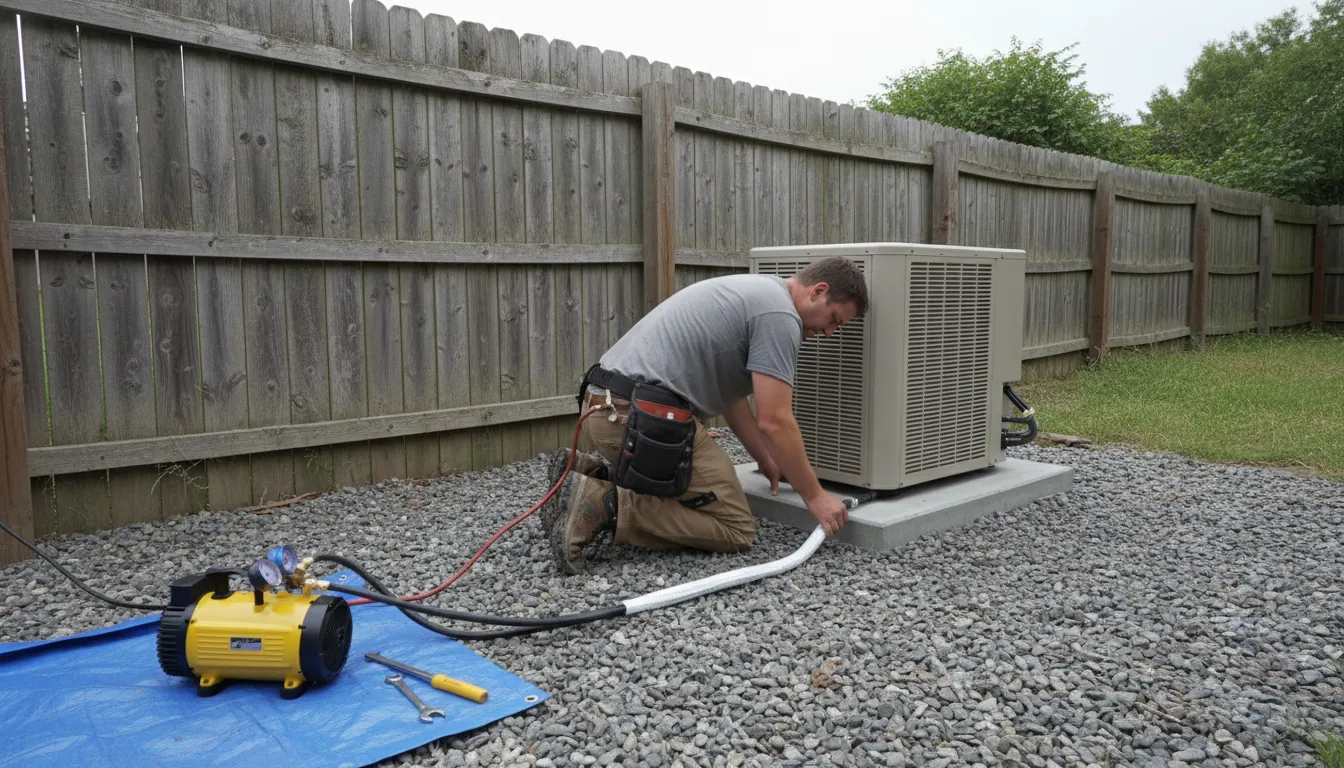
Find the Best Mini-Split Installers for Your Business
No obligation • Fast responses • Nationwide coverage

Why you can trust HVAC Firms
HVAC Firms is a leading United States resource for evaluating HVAC service providers. Our team researches companies, checks credentials, and reviews customer feedback to present clear, unbiased information. Listings and rankings are based on merit, and companies cannot pay to change our editorial content.
Search providers near you
Top Mini-Split Installers in Kenner, Louisiana Ranked
A ductless mini-split system is a versatile heating and cooling solution perfect for homes without existing ductwork, room additions, or for creating independent comfort zones. This type of installation is particularly valuable in Kenner, where managing humidity and achieving targeted temperature control can enhance home comfort and energy efficiency. The following guide provides detailed information on planning, costs, and key considerations for a ductless system, helping you connect with qualified local professionals for your project.
Natal's Air Conditioning, Plumbing & Electrical
2630 Banks St, New Orleans, LA 70119
Natal's Air Conditioning, Plumbing & Electrical is a family-owned company serving New Orleans, LA, since 1974. They provide a wide range of home services including HVAC repair, installation, and maintenance, as well as plumbing and electrical work. Their HVAC expertise includes ductless systems and indoor air quality services, supported by partnerships with leading brands like Daikin and Lennox. The company emphasizes community values and offers 24/7 phone support for customer inquiries and emergencies.
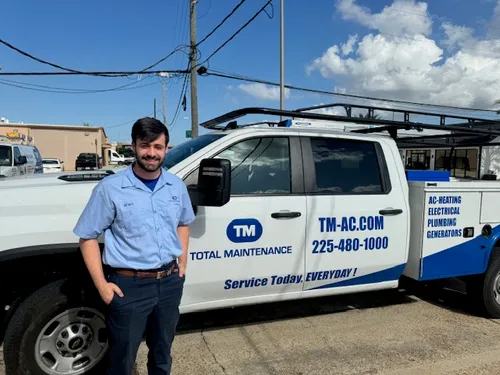
Total Maintenance of Southern Louisiana
5801 Plauche St, Harahan, LA 70123
Total Maintenance of Southern Louisiana is an HVAC, plumbing, and electrical service provider based in New Orleans, LA. Serving Southern Louisiana since 1980, they offer installation, repair, and maintenance for air conditioners, furnaces, heat pumps, ductless systems, and indoor air quality products. As a Carrier Factory Authorized Dealer with NATE-certified technicians, they handle all makes and models and specialize in solutions for older homes and renovations. Their capabilities include duct cleaning and sealing, and they provide same-day emergency service throughout the greater New Orleans area, including Kenner, Metairie, and Baton Rouge.
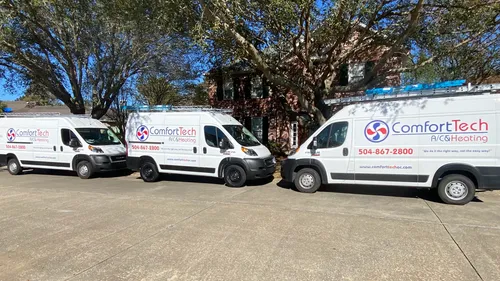
Palombo Air Conditioning
1904 Engineers Rd, Belle Chasse, LA 70037
Palombo Air Conditioning is a family-owned HVAC contractor serving New Orleans, LA, and surrounding areas including Baton Rouge. They provide residential and light commercial HVAC services such as air conditioning, furnace, heat pump, and ductless mini-split installation, repair, and maintenance. The company carries and installs top HVAC products and offers indoor air quality solutions. Their technicians are NATE-certified and trained to service all major HVAC brands.
Berner A/C & Heat
561 Marilyn Dr, Mandeville, LA 70448
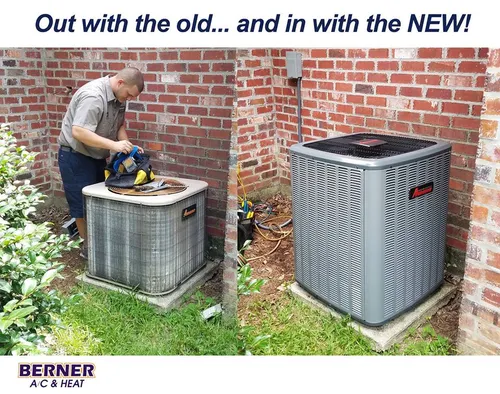
Berner A/C & Heat is a family-owned HVAC company serving New Orleans, LA, and the surrounding Southshore and Northshore areas. Since 2002, they have provided repair, installation, and maintenance services for air conditioning, heating, heat pumps, ductless mini-splits, thermostats, and indoor air quality systems. Their EPA certified technicians work with most brands and models, offering expertise in air purification and dehumidification as well. Berner A/C & Heat also provides urgent response service to address heating and cooling needs promptly.

Stuart Services
1500 S Lopez St, New Orleans, LA 70125
Stuart Services is a family-owned company providing HVAC, plumbing, and electrical services in New Orleans, LA. They offer installation, repair, and maintenance for air conditioning, heating systems including furnaces and heat pumps, as well as ductless mini-splits. Their licensed technicians use advanced tools like sewer camera inspections and provide services such as hydro jetting and emergency plumbing repairs. With over 65 years of experience, Stuart Services is committed to supporting the local community and is available for emergency calls.
Understanding Ductless Mini-Split Systems
A ductless mini-split, often simply called a ductless AC or heat pump, consists of one outdoor compressor/condenser unit connected by refrigerant lines to one or more indoor air-handling units. Unlike central forced-air systems, no ductwork is required, making these systems ideal for older homes, room additions, sunrooms, or garages 1. The core benefit is zoning-the ability to control the temperature in individual rooms or areas independently. This means you can cool a frequently used living room without wasting energy on an empty guest bedroom, leading to potential savings on utility bills, especially with high-efficiency models.
Common Applications and Zoning Strategies
Choosing the right system starts with identifying which areas of your Kenner home need conditioning. The zoning strategy directly impacts the system type and cost.
- Single-Zone Systems: A single-zone setup involves one outdoor unit connected to one indoor unit. This is the most common and cost-effective configuration for a dedicated space. It's an excellent choice for a home addition, a converted garage, a sunroom, or a single bedroom that never seems comfortable 2. It provides powerful, efficient climate control exactly where you need it.
- Multi-Zone Systems: For whole-home comfort or conditioning multiple rooms, a multi-zone ductless system is the answer. A single outdoor unit can connect to two, three, four, or even five or more indoor units. This allows you to set different temperatures in the living room, kitchen, and bedrooms simultaneously. While the upfront cost is higher, the energy savings from not conditioning unused spaces can be significant over time, and it often provides a cleaner aesthetic than installing multiple single-zone outdoor units 3.
Indoor Unit Types and Placement
The indoor unit is the visible component in your room, and its placement is critical for performance, comfort, and proper drainage. Professional installers will assess your space to recommend the best type and location.
- Wall-Mounted Units: This is the most popular and generally least expensive indoor unit style. It is mounted high on an exterior wall, allowing for good air circulation across the room. Key placement considerations include ensuring the wall can support the unit's weight, avoiding direct sunlight or heat sources, and positioning it so condensate can drain via gravity through the line set hole to the outside.
- Ceiling Cassette Units: These units are recessed into the ceiling tile, offering a very discreet, flush-mounted appearance. They distribute air in four directions for even coverage and are often used in commercial settings or homes with drop ceilings. Installation is more complex, often requiring more ceiling space and careful planning for drainage and access panels.
- Floor-Mounted and Console Units: Designed for situations where a wall mount isn't feasible, such as a room with extensive glass walls or limited wall space. These units sit low on the wall or on the floor and discharge air upward. They are a good solution for certain room layouts but may have different airflow patterns than overhead units.
Outdoor Unit Installation and Clearances
The outdoor condenser unit requires careful placement for longevity, efficiency, and ease of service.
- Mounting Surface: The unit must be placed on a stable, level surface. This is typically a concrete pad poured specifically for the unit or a heavy-duty wall bracket designed for the system's weight. Proper mounting prevents vibration and noise.
- Critical Clearances: Adequate airflow around the outdoor unit is non-negotiable. Installers will ensure there is typically 1 to 2 feet of clear space on all sides, especially where the fan exhausts. This prevents overheating, maintains efficiency, and allows technicians space to perform necessary maintenance and repairs 4. The location should also consider noise, directing airflow away from patios or neighbor's windows.
Find the perfect mini-split installers for your needs
Get personalized recommendations and expert advice
Cost Factors for Mini-Split Installation in Kenner
The total investment for a ductless mini-split installation varies widely based on your specific needs. Understanding the primary cost drivers can help you budget effectively.
- Number of Zones (Indoor Units): This is the most significant factor. Adding more indoor units increases the cost of equipment, labor, and materials (like refrigerant lines and electrical wiring). A system with multiple zones will have a higher total cost than a single-zone system for one room.
- System Capacity (BTUs): The size of the space you're cooling and heating determines the required British Thermal Unit (BTU) capacity. An undersized unit will struggle, while an oversized unit will short-cycle, reducing efficiency and comfort. A professional load calculation is essential to determine the correct BTU rating for each zone, which influences the equipment price.
- Equipment Brand and Efficiency (SEER2): Premium brands like Carrier, Mitsubishi, or Daikin often come at a higher initial cost than value-oriented brands. A key specification to compare is the SEER2 (Seasonal Energy Efficiency Ratio) rating. In Kenner's hot and humid climate, a higher SEER2 rating (e.g., 18+ SEER2) means significantly better energy efficiency, which can lead to lower monthly bills and may qualify for rebates, offsetting the higher purchase price 5.
- Installation Complexity: The final cost is heavily influenced by the job's specifics. Factors that can increase labor time and cost include:
- Running long refrigerant line sets between the outdoor and indoor units.
- Complex electrical work, such as installing a new dedicated circuit from the main panel.
- Challenging carpentry or drilling through thick or fire-rated walls.
- The need for a condensate pump if gravity drainage isn't possible.
Estimated Cost Ranges
While every project is unique, here are general cost ranges based on the number of zones, which incorporate equipment and professional installation 6 7 8 9 10:
- Single-Zone System (1 room): $2,500 - $5,000+
- Dual-Zone System (2 rooms): $4,500 - $7,500+
- Three-Zone System (3 rooms): $6,500 - $9,500+
- Four-Zone System (4 rooms): $8,000 - $12,000+
Why Professional Installation is Essential
A ductless mini-split is a sophisticated piece of HVAC equipment. Professional installation is strongly recommended-and often required for warranty validation-for several crucial reasons:
- Refrigerant Handling: The system must be pressure-tested, vacuumed to remove moisture and air, and charged with the exact amount of refrigerant. This requires specialized tools and EPA certification. Improper handling leads to poor performance, high energy use, and premature failure.
- Electrical Safety: Installation involves connecting high-voltage electrical components. A licensed professional ensures all connections are safe, meet National Electrical Code (NEC) standards, and that any new circuits are properly sized and installed 11.
- Optimal Performance: A pro ensures the system is perfectly level for proper condensate drainage, that line sets are insulated and routed correctly, and that all components are sealed against the elements. They will also perform a full system check and explain its operation to you 12.
- Permits and Codes: Reputable installers will know local Kenner permitting requirements and building codes, ensuring your installation is legal and safe.
Key Installation Considerations for Homeowners
- Gravity Drainage is Best: During the planning phase, discuss indoor unit placement with your installer to maximize the chance of using gravity to drain condensate. If the indoor unit cannot be positioned so the drain line slopes downward to the outside, a condensate pump will be required. While effective, a pump adds to the initial cost and introduces a mechanical component that may require future maintenance 13 14.
- The Importance of the Load Calculation: Avoid the temptation to guess on system size. A reputable contractor will perform a Manual J load calculation, which considers your home's square footage, insulation, window types, local climate, and more. This scientific approach ensures your system is correctly sized for efficiency and comfort.
- Understand Your Warranty: Equipment warranties (often 5-12 years on compressors) typically require professional installation and timely registration. The installing company may also offer a separate labor warranty on their workmanship. Clarify these details before work begins.
Frequently asked questions
Sources
Footnotes
-
Ductless Air Conditioning: What It Is and How It Works - https://www.trane.com/residential/en/resources/glossary/what-is-ductless-air-conditioning/ ↩
-
How Much Does It Cost to Install a Mini Split Unit in Garage? - https://dellahome.com/blogs/della-blog/cost-to-install-a-mini-split-unit-in-garage ↩
-
Single Vs. Multi-Zone Ductless System - https://www.delair.com/blog/single-vs-multi-zone-ductless-system-whats-the-difference/ ↩
-
Ductless Mini Split Installation: A Complete Guide - https://www.goairflow.com/blog/ductless-mini-split-installation/ ↩
-
How Much Does It Cost to Install a Mini Split System? - https://elementairco.com/how-much-does-it-cost-to-install-a-mini-split-system/ ↩
-
Ductless Mini-Split Installation Cost in 2025: Full Breakdown - https://osborneheatingncooling.com/ductless-mini-split-installation-cost/ ↩
-
How much to install mini split? - https://mrgoodguyhvac.com/how-much-to-install-mini-split/ ↩
-
Understanding Mini Split Installation Costs A Complete Guide - https://armusmech.net/understanding-mini-split-installation-costs-a-complete-guide/ ↩
-
How Much Does It Cost to Install a Mini Split in 2025? - AC Direct - https://www.acdirect.com/blog/how-much-does-it-cost-to-install-a-mini-split-in-2025/ ↩
-
Understanding mini split installation costs: A quick guide - Homeaglow - https://www.homeaglow.com/hub/content/mini-split-installation-cost ↩
-
How to Install a Mini Split - The Home Depot - https://www.homedepot.com/c/ah/how-to-install-a-mini-split/9ba683603be9fa5395fab90c887a9dd ↩
-
Ductless Mini Splits: What To Expect During the Installation - https://www.pioneerminisplit.com/blogs/news/ductless-mini-splits-what-to-expect-during-the-installation ↩
-
Ductless mini-split installation: Cool 2025 Guide - Southern Air - https://www.southern-air.com/blog/ductless-mini-split-installation ↩
-
Ductless Mini-Splits: A Comprehensive Cost Breakdown - https://www.myfivestarhomeservices.com/ductless-mini-splits-a-comprehensive-cost-breakdown/ ↩