Find the Best Mini-Split Installers for Your Business
No obligation • Fast responses • Nationwide coverage

Why you can trust HVAC Firms
HVAC Firms is a leading United States resource for evaluating HVAC service providers. Our team researches companies, checks credentials, and reviews customer feedback to present clear, unbiased information. Listings and rankings are based on merit, and companies cannot pay to change our editorial content.
Search providers near you
Best Mini-Split Installers in Kentucky Ranked
Installing a ductless mini-split system is a smart way to add efficient heating and cooling to specific rooms or areas of your Kentucky home. These systems are ideal for additions, sunrooms, older homes without ductwork, or for creating independent temperature zones. A proper installation is critical for performance, safety, and compliance with state and local regulations. This guide provides the essential information you need to understand the process, requirements, and considerations for a successful mini-split installation in the Bluegrass State.

Southern Comfort Heating & Cooling
1067 Whipple Ct, Lexington, KY 40511
Southern Comfort Heating & Cooling is an HVAC company serving Louisville, KY, specializing in air conditioning and furnace repair, installation, and maintenance. They offer services including mini split and thermostat installation, as well as HVAC tune-ups. Founded in 2010 by HVAC Master Technician Matt Helgerson, the company has decades of experience servicing residential and commercial systems. Southern Comfort Heating & Cooling provides 24/7 emergency repair services and covers most of the Bluegrass region within Central Kentucky.

Feistritzer Heating & Air Conditioning
105 Man O War Dr, Danville, KY 40422
Feistritzer Heating & Air Conditioning serves Lexington, KY, and surrounding areas including Danville, Harrodsburg, and Stanford. They provide a range of HVAC services such as air conditioning and furnace repair, heat pump and geothermal system installation, indoor air quality solutions, and thermostat and gas line installation. The company is staffed by NATE-certified technicians who handle residential and light commercial projects. They emphasize thorough assessments and offer financing options. Their capabilities include geothermal heating and cooling systems, which use underground temperatures for efficient climate control.
GraceLand Air
314 Stanford St, Lancaster, KY 40444
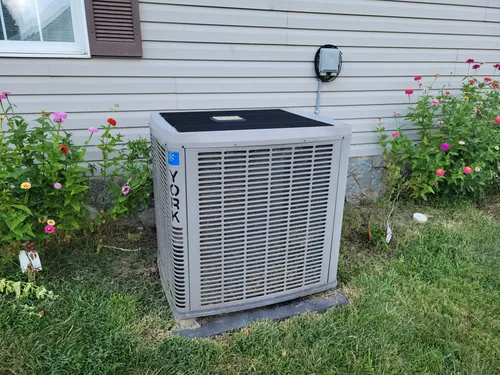
GraceLand Air is a local HVAC company serving Lexington, KY, and nearby areas including Lancaster. They provide a full range of heating and cooling services such as air conditioning and furnace repair, heat pump and boiler installation, ductless mini-split systems, and indoor air quality solutions. With over ten years of experience, GraceLand Air offers tailored solutions based on thorough diagnostics to ensure effective and long-term results. The company is a YORK® Certified Comfort Expert™ and serves all brands.
Energy Control Heating & Air
251 Terry Blvd, Louisville, KY 40229
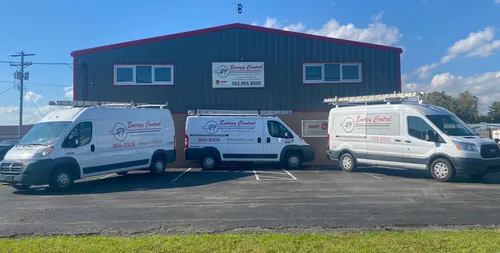
Energy Control Heating & Air is a family-owned HVAC company serving Louisville, KY, since 1987. They provide heating and cooling installation, repair, and maintenance services, including ductless mini-split systems and indoor air quality solutions. As a certified Trane Comfort Specialist, they offer premium HVAC products backed by extended warranties. Their team focuses on honest assessments and transparent pricing to meet each home's specific needs.
Comfort Technologies
Louisville, KY
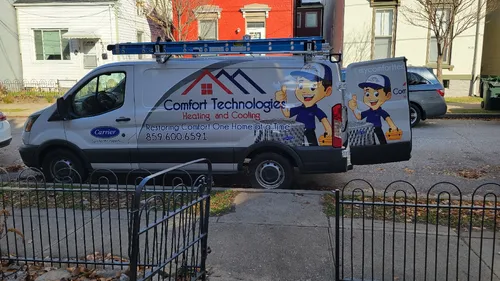
Comfort Technologies is an HVAC company serving Louisville, KY, and the surrounding communities, including Lexington. They provide installation, repair, and maintenance services for air conditioners, furnaces, heat pumps, geothermal systems, and ductless split systems. As a licensed Carrier dealer, they offer a range of indoor comfort products such as programmable thermostats, humidifiers, and air cleaners. Comfort Technologies specializes in HVAC tune-ups and emergency repairs, with 24/7 availability to assist customers. They emphasize customizing solutions to fit unique needs and have experience installing many systems in the area.
Understanding Ductless Mini-Split Systems
A ductless mini-split system consists of an outdoor compressor/condenser unit connected by refrigerant lines to one or more indoor air-handling units. Unlike traditional central HVAC, it requires no ductwork, which can reduce energy loss and make it a versatile solution for targeted comfort. In Kentucky's climate-with humid summers and chilly winters-a heat pump mini-split provides both efficient cooling and heating, making it a popular year-round choice for many homeowners.
Kentucky Licensing and Legal Requirements
Before any work begins, it's crucial to verify that your installer meets Kentucky's legal standards. State law requires that HVAC work, including the installation of ductless systems, be performed by a licensed professional.
- License Types: Kentucky issues Master and Journeyman HVAC licenses. A Master HVAC contractor can design, install, and supervise projects, while a Journeyman can perform installations under supervision. Always ensure your chosen professional holds an active, appropriate license.
- Why Licensing Matters: Hiring a licensed contractor ensures they have passed competency exams, carry required insurance, and are knowledgeable about state codes like the Kentucky Residential Code, which includes specific provisions for mini-split heat pumps (Section M1416) 1. This protects you from substandard work that could be unsafe or void equipment warranties.
Permitting Process for Mini-Splits in Kentucky
In nearly all Kentucky jurisdictions, installing a mini-split system requires obtaining permits. This is not just bureaucratic red tape; it's a safety check.
- Permit Necessity: Yes, you typically need both a mechanical and an electrical permit for a mini-split installation 2. The process ensures the planned work complies with building, electrical, and safety codes.
- Who Pulls Permits: The licensed HVAC contractor you hire should typically handle the permit application process. They will submit plans and specifications to your local city or county building department 3 4.
- The Inspection: After installation, a municipal inspector will visit to verify the work meets code before the system is activated. This provides an independent verification of safety and quality.
Adhering to Kentucky Building Codes
A proper installation follows specific codes designed for safety and performance. The primary reference in Kentucky is the Kentucky Residential Code, particularly Section M1416: Mini-Split Heat Pumps 5. Key code considerations include:
- Clearances: The outdoor unit must be placed with specified clearances from walls, property lines, and other obstructions for airflow and service access.
- Electrical Connections: Wiring must meet National Electrical Code (NEC) standards, often requiring a dedicated circuit from your home's main panel.
- Drainage: Indoor units produce condensate during cooling. Code specifies how this water must be drained away to prevent moisture damage.
- Line Set Installation: The refrigerant tubing connecting indoor and outdoor units must be properly sealed, insulated, and supported.
Your licensed installer will be familiar with these and all local amendments to the state code.
Key Steps in a Professional Installation
Understanding the installation process helps you evaluate contractor proposals and ensure best practices are followed.
- Site Evaluation and Load Calculation: A professional will assess your space to determine the correct size (in BTUs) for the indoor unit(s). An oversized or undersized unit leads to inefficiency and comfort issues.
- Optimal Unit Placement: The outdoor unit is placed on a stable, level pad or wall brackets, away from windows and areas where noise or airflow could be a nuisance. Indoor units are mounted high on a wall for optimal air circulation.
- Electrical Work: A new dedicated electrical circuit is often run from the breaker panel to the outdoor unit location.
- Drilling and Mounting: A small hole (typically 3 inches) is drilled through the exterior wall to pass the refrigerant lines, drain tube, and electrical conduit. The indoor unit is securely mounted.
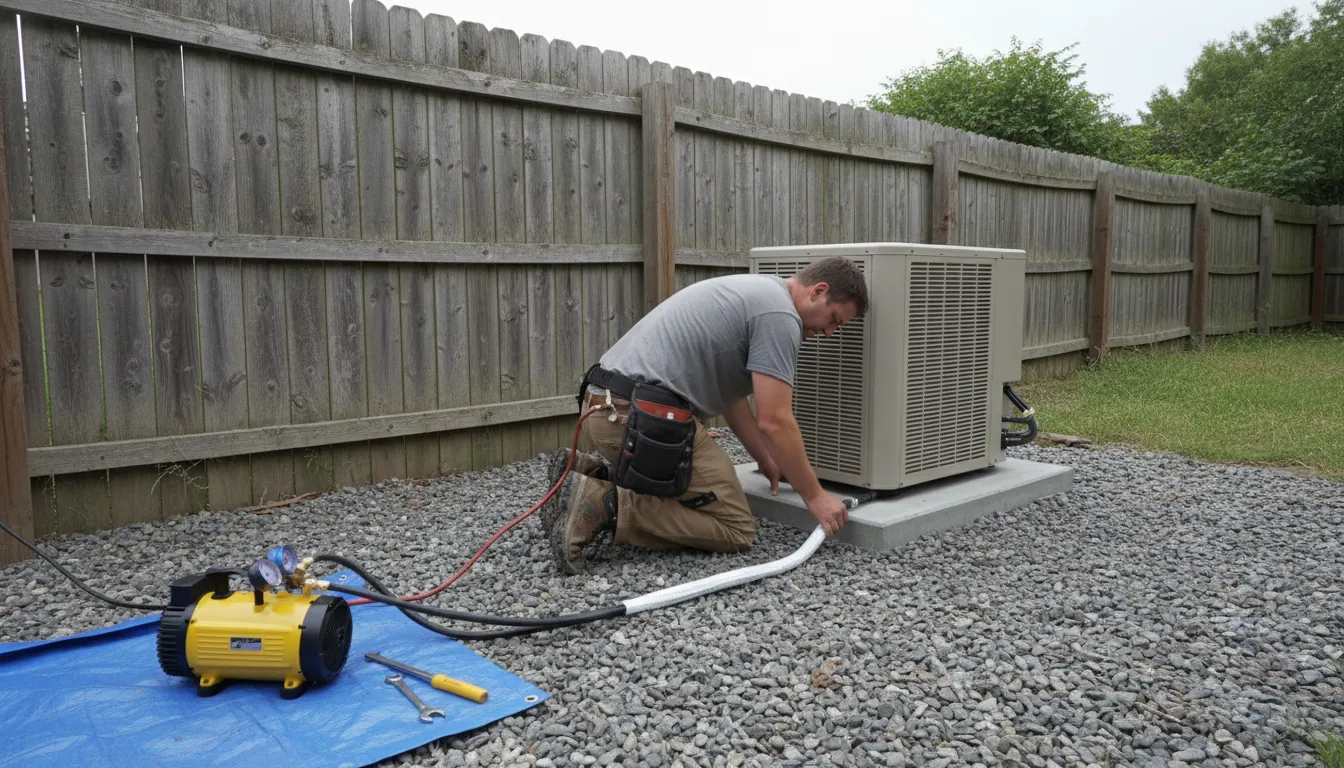
- Connecting Refrigerant Lines: This is a critical step. The copper lines must be flared and connected meticulously. The entire system must then be pressurized with an inert gas to check for leaks before a deep vacuum is pulled to remove all moisture and air-a process essential for longevity and efficiency 6 7.
- System Commissioning: Finally, the refrigerant is charged according to the manufacturer's specifications, and the system is tested in both heating and cooling modes.
Find the perfect mini-split installers for your needs
Get personalized recommendations and expert advice
Cost Considerations for Kentucky Homeowners
The cost of a mini-split installation in Kentucky varies based on several factors. Here's a general breakdown:
- Single-Zone System: Installing one indoor unit with one outdoor compressor typically ranges from $3,000 to $5,000+. This is a common solution for a single room or small addition.
- Multi-Zone System: Installing one outdoor unit that connects to two, three, or four indoor units can range from $6,000 to $12,000 or more 8. This is cost-effective for conditioning multiple rooms.
- Factors Influencing Cost:
- Equipment Brand and Efficiency: Higher SEER (cooling) and HSPF (heating) ratings cost more but save on energy bills.
- Electrical Complexity: If your electrical panel needs an upgrade or the circuit run is long, costs increase.
- Installation Challenges: Difficult access, multi-story installations, or extensive line-set runs add labor and materials.
- Permit and Inspection Fees: These are typically included in the contractor's quote but vary by locality.
Financial Incentives and Rebates
Investing in an energy-efficient mini-split can be offset by several financial incentives:
- Kentucky Home Energy Program: This state program may offer rebates for whole-home energy efficiency upgrades, which can include qualifying HVAC installations. Check the Kentucky Energy and Environment Cabinet website for the latest program details and availability 9.
- Local Utility Rebates: Many electric cooperatives and utilities in Kentucky offer incentives. For example, Owen Electric Cooperative provides rebates for the installation of qualifying mini-split heads 10. Contact your local utility provider directly to inquire about current offers.
- Federal Tax Credits: Federal incentives, such as those extended under the Inflation Reduction Act (IRA), may provide tax credits for installing qualifying energy-efficient heat pumps. Eligibility and amounts change; consult the IRS website or a tax professional for the most current information for the 2025/2026 tax years 11.
Choosing a Qualified Kentucky Installer
Selecting the right professional is the most important decision. Here's a checklist:
- Verify their Kentucky Master or Journeyman HVAC license is current.
- Ask for proof of liability insurance and workers' compensation.
- Ensure they will pull all required local permits and schedule inspections.
- Get detailed written estimates from at least three contractors.
- Check reviews and ask for references from past mini-split jobs.
- Confirm they are authorized dealers or installers for the equipment brand they propose.
Frequently asked questions
Sources
Footnotes
-
Kentucky HVAC License & Certification | 2025 Contractor Guide - https://www.servicetitan.com/licensing/hvac/kentucky ↩
-
Do Mini Splits Need Permits? Installation Requirements Guide - https://www.greecomfort.com/news-and-events/do-mini-splits-need-permits/ ↩
-
Do You Need a Permit to Install a Mini Split? Find Out Now - https://www.edsheatingandcooling.com/blog/do-you-need-a-permit-to-install-a-mini-split-find-out-now/ ↩
-
Title 815 Chapter 8 Regulation 070 • Kentucky Administrative ... - https://apps.legislature.ky.gov/law/kar/titles/815/008/070/ ↩
-
Section M1416 Mini-Split Heat Pumps - UpCodes - https://up.codes/s/mini-split-heat-pumps ↩
-
Ductless Mini Split Installation Guide: What Every Homeowner ... - https://www.aceanda.com/blog/ductless-mini-split-installation-guide-what-every-homeowner-should-know/ ↩
-
Ductless Mini Split Installation: A Complete Guide - https://www.goairflow.com/blog/ductless-mini-split-installation/ ↩
-
How Much Does It Cost to Install a Mini Split System? - Element Air Heating and Cooling - https://elementairco.com/how-much-does-it-cost-to-install-a-mini-split-system/ ↩
-
Kentucky Home Energy Rebates - https://eec.ky.gov/Energy/Pages/Kentucky-Home-Energy-Rebates.aspx ↩
-
Energy Efficiency Rebates | Owen Electric Cooperative. - https://owenelectric.com/energy-efficiency-rebates ↩
-
2025 HVAC Tax Benefits for Homeowners in KY and IN - https://ontimetoday.com/2025-hvac-tax-benefits-for-homeowners-in-kentucky-and-indiana/ ↩