Find the Best Mini-Split Installers for Your Business
No obligation • Fast responses • Nationwide coverage

Why you can trust HVAC Firms
HVAC Firms is a leading United States resource for evaluating HVAC service providers. Our team researches companies, checks credentials, and reviews customer feedback to present clear, unbiased information. Listings and rankings are based on merit, and companies cannot pay to change our editorial content.
Search providers near you
Best Mini-Split Installers in Idaho Ranked
Installing a ductless mini-split system is an excellent way to add efficient, zoned heating and cooling to your Idaho home. These systems are particularly valuable for room additions, sunrooms, or homes without existing ductwork. A proper installation is critical for safety, efficiency, and system longevity, and in Idaho, it must be performed by a licensed professional who adheres to state and local codes. This guide will help you understand the process, costs, and incentives for installing a mini-split in Idaho, so you can confidently find a qualified local provider for your project.
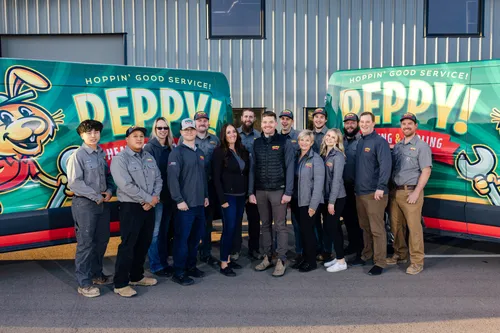
Peppy Heating and Cooling Boise
590 N Maple Grove Rd Ste #7, Boise, ID 83704
Peppy Heating and Cooling Boise is an HVAC company based in Boise, ID, offering a wide range of services including air conditioning, furnace, and heat pump repair and installation, as well as mini split systems, duct cleaning, thermostat installation, and indoor air quality solutions. They serve residential customers in the Boise area with expertise in installing and maintaining Trane systems and other reliable equipment. The company is known for thorough diagnostics and repairs, such as identifying and fixing ductwork issues and refrigerant leaks. Peppy Heating and Cooling Boise has built a reputation for honest, detailed service and clear communication with customers. They also provide maintenance plans and have experience with advanced air quality products like UV air scrubbers. While no specific business history or special availability is stated, customer feedback highlights their professionalism and technical knowledge.
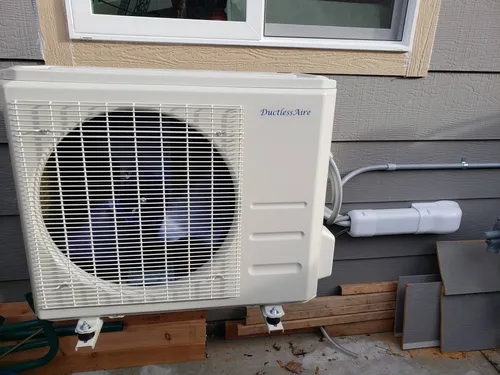
Casper Heating & Cooling Llc
3954 S Middlesex Pl, Boise, ID 83706
Casper Heating & Cooling LLC is an HVAC contractor based in Boise, ID, offering services such as AC repair, furnace repair, mini-split installation, and full HVAC system installation. With over 30 years of experience, they follow industry best practices and provide personalized consultations to address a wide range of heating and cooling needs. The company is fully licensed and insured, ensuring safety and compliance throughout their work.
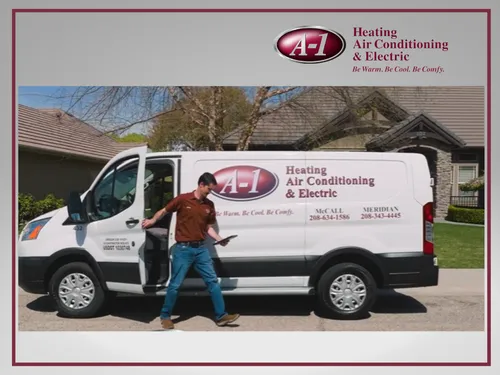
A-1 Heating, Air Conditioning & Electric
327 N Linder Rd, Meridian, ID 83642
A-1 Heating, Air Conditioning & Electric is a heating, cooling, and electrical contractor serving Boise, ID, and the surrounding Treasure Valley area. Established in 1956, the company offers a wide range of HVAC services including furnace and heat pump repair, AC installation, geothermal heat pump solutions, indoor air quality improvements, and electrical work for both residential and commercial clients. They provide 24/7 emergency HVAC services and have expertise in installing and maintaining energy-efficient systems tailored to each property's needs.
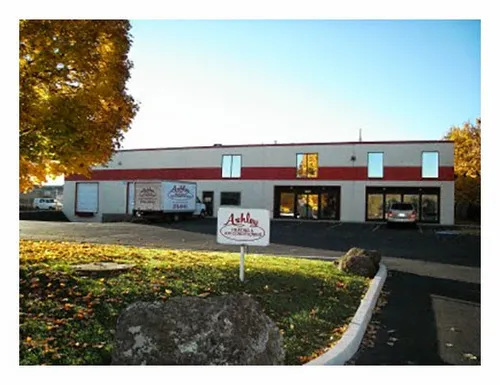
Ashley Heating Air & Water Systems
8243 W Westpark St, Boise, ID 83704
Ashley Heating Air & Water Systems is a locally owned HVAC company serving Boise, ID, and the Treasure Valley area. They provide a range of residential and commercial heating and cooling services, including air conditioning repair, furnace repair, HVAC installation, tune-ups, and indoor air quality solutions. As a proud Trane dealer with over 60 years of experience, they offer expertise in installing and maintaining reliable heating and cooling systems. The company also operates 24/7 to support customers whenever needed.
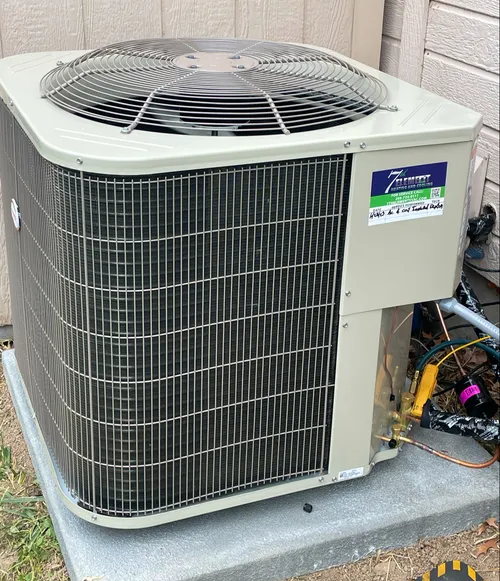
7th Element Heating & Cooling
1530 W State St Suite C, Meridian, ID 83642
7th Element Heating & Cooling is an HVAC company based in Meridian, serving Boise, Eagle, and surrounding areas in Idaho. They provide a range of services including air conditioning and furnace repair, installation of HVAC systems and mini splits, as well as indoor air quality solutions. The company services all major manufacturers and offers capabilities such as full system installations and HVAC tune-ups. 7th Element Heating & Cooling is licensed, bonded, and insured, emphasizing values like integrity and accountability in their work.
Understanding Mini-Split Systems
A ductless mini-split system consists of one outdoor compressor/condenser unit connected by refrigerant lines to one or more indoor air-handling units. Unlike central HVAC, it requires no ductwork, making it a versatile solution for targeted comfort. The "split" refers to the separation of the components, and "mini" denotes its compact size compared to traditional systems. In Idaho's climate, which features cold winters and hot, dry summers, a modern heat pump mini-split provides both efficient heating and cooling from a single unit.
Idaho Licensing and Permit Requirements
In Idaho, installing a ductless mini-split is not a DIY project for homeowners. State law requires that this work be performed by a licensed HVAC or specialty contractor. This ensures the individual has the necessary training to handle refrigerants and high-voltage electrical connections safely.
A permit is almost always required for mini-split installation from your local city or county building department 1. Your contractor will typically pull this permit. The inspection that follows ensures the installation meets all safety and building codes, protecting your home and investment. Skipping the permit process can lead to fines, voided equipment warranties, and problems when you sell your home.
Adherence to Building Codes
Installations in Idaho must comply with the International Mechanical Code (IMC), which is adopted statewide 2. This code governs:
- Electrical Work: Ensuring proper wiring, circuit breakers, and disconnects are installed to prevent fire hazards.
- Refrigerant Handling: Mandating that only EPA Section 608 certified technicians handle refrigerant lines to prevent leaks and environmental harm.
- Structural Integrity: Regulating how lines are run through walls and the secure mounting of both indoor and outdoor units.
A professional installer will be familiar with the IMC and any additional local amendments, guaranteeing a code-compliant installation.
Key Steps in a Professional Installation
A high-quality installation involves meticulous attention to detail at every stage. Here's what a reputable Idaho contractor will do:
- Load Calculation and Sizing: The most critical first step. A technician will perform a Manual J calculation to determine the exact heating and cooling needs (in BTUs) for the space. An oversized unit will short-cycle, reducing efficiency and comfort, while an undersized unit will struggle to maintain temperature 3.
- Strategic Placement: The indoor unit(s) are placed for optimal airflow and comfort, typically high on a wall. The outdoor unit is located on a stable, level pad with ample clearance for airflow and away from windows or patios to minimize noise.
- Precision Drilling and Line Set Installation: A small hole (typically 3 inches) is drilled through the exterior wall. The refrigerant lines, drain tube, and electrical wiring are bundled into a "line set," which is run through the wall. This penetration must be sealed meticulously to prevent air and moisture infiltration.
- Electrical Connection: A dedicated electrical circuit must be run from your home's main panel to the outdoor unit. This is high-voltage work that must be performed correctly to meet National Electrical Code (NEC) standards, which are incorporated into Idaho's codes 4.
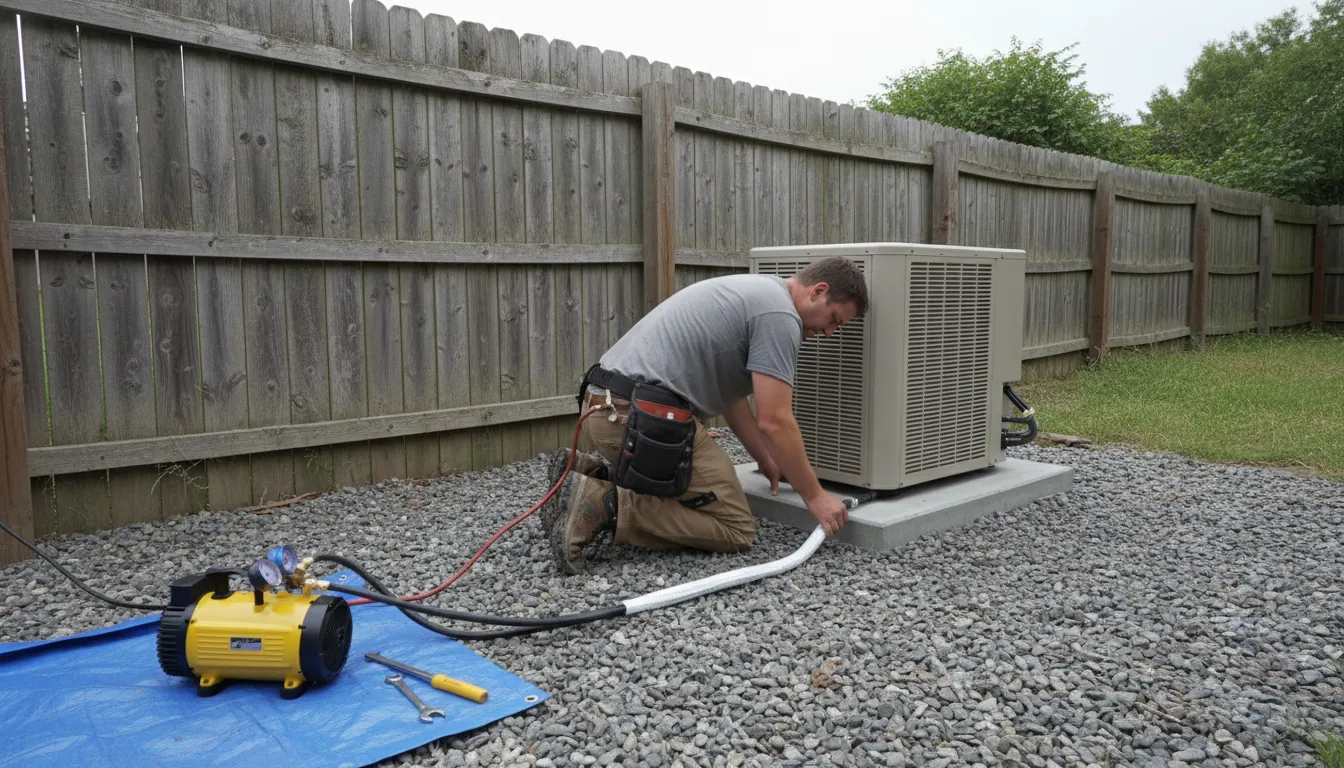
- Vacuum and Charge: Before releasing refrigerant, the technician uses a vacuum pump to remove all moisture and air from the copper lines. This step is non-negotiable; any remaining moisture can cause corrosion and compressor failure. The system is then charged with the precise amount of refrigerant specified by the manufacturer 5.
- System Testing and Commissioning: Finally, the system is powered on and tested in both heating and cooling modes. The technician will check pressures, temperatures, airflow, and thermostat operation to ensure everything is working perfectly.
Find the perfect mini-split installers for your needs
Get personalized recommendations and expert advice
Financial Incentives and Rebates in Idaho
One of the best reasons to install a high-efficiency mini-split in Idaho now is the availability of financial incentives.
- Federal Tax Credit: The Inflation Reduction Act (IRA) provides a tax credit worth 30% of the project cost, up to $3,200 annually. This applies to qualified, high-efficiency ductless heat pump systems installed in your primary residence 6 7. There is no income cap for this credit.
- Idaho Power Rebates: If you are an Idaho Power customer replacing electric baseboard heat, you may qualify for a rebate for installing a qualifying ductless heat pump. Systems must meet minimum efficiency ratings (9 HSPF / 7.6 HSPF2).
- Idaho Falls Power Programs: Customers of Idaho Falls Power have access to rebates and even zero-interest loans for installing efficient ductless heat pumps, making the upgrade more affordable 8.
A knowledgeable local installer will be aware of these programs and can help you determine your eligibility and complete any necessary paperwork.
Cost Factors for Installation in Idaho
The total cost of a ductless mini-split installation in Idaho varies widely based on several factors, but a general range is $2,000 to $10,500 or more 9 10 11.
Primary Cost Drivers:
- Number of Zones: A single-zone system (one outdoor unit, one indoor head) is the most affordable. Multi-zone systems (one outdoor unit serving 2-5 indoor heads) cost more but provide whole-home comfort.
- System Capacity and Efficiency: Higher BTU capacity and more efficient models (with higher SEER2 and HSPF2 ratings) command a premium but offer lower operating costs and qualify for rebates.
- Labor Complexity: The difficulty of running electrical lines, drilling through thick or multi-layered walls, and accessing the installation site impacts labor time and cost.
- Equipment Brand: Premium brands often come with a higher price tag for equipment and may have specialized installation requirements.
- Permit Fees: Your local jurisdiction's permit and inspection fees will be added to the project cost.
Always get detailed, written estimates from 2-3 licensed contractors that break down equipment, labor, permit fees, and any other charges.
Choosing the Right Idaho Professional
Selecting the right contractor is as important as choosing the right equipment. Look for:
- Valid Idaho HVAC License: Verify their license is current and in good standing.
- Insurance: Ensure they carry both liability and worker's compensation insurance.
- Experience with Mini-Splits: Ask for examples of similar installations and for manufacturer certifications (e.g., from Mitsubishi, Daikin, Fujitsu).
- Detailed Proposal: The estimate should include model numbers, efficiency ratings, a scope of work, and a clear breakdown of all costs.
- Rebate Knowledge: They should proactively discuss potential federal and utility incentives.
- Warranties: Understand both the manufacturer's equipment warranty and the contractor's workmanship warranty.
A professional installation ensures your system is safe, efficient, eligible for warranties, and performs reliably for years to come 12.
Frequently asked questions
Sources
Footnotes
-
Do Mini Splits Need Permits? Installation Requirements Guide - https://www.greecomfort.com/news-and-events/do-mini-splits-need-permits/ ↩
-
24.39.70 - Rules Governing Heating, Ventilation, and Air ... - https://adminrules.idaho.gov/rules/current/24/243970.pdf ↩
-
Do You Need a Permit to Install a Mini Split? Find Out Now - https://www.edsheatingandcooling.com/blog/do-you-need-a-permit-to-install-a-mini-split-find-out-now/ ↩
-
Can I Install a Mini-Split Myself? What You Should Know 2025 - https://bigalsservices.com/blog/can-i-install-mini-split-myself/ ↩
-
Ductless mini-split installation: Cool 2025 Guide - Southern Air - https://www.southern-air.com/blog/ductless-mini-split-installation ↩
-
What HVAC Equipment Qualifies for Energy Credits in Idaho? - https://www.gemheating.com/hvac-idaho-energy-credits/ ↩
-
Ductless Heat Pump - Existing Homes - https://www.idahopower.com/energy-environment/ways-to-save/savings-for-your-home/rebates-and-offers/heating-and-cooling-efficiency-program/ductless-heat-pump-existing-homes/ ↩
-
For Your Home: Heating & Air Conditioning - Idaho Falls Power - https://www.ifpower.org/accounts-and-services/energy-efficiency/your-home/heating-air-conditioning/ ↩
-
Ductless Mini Split Installation Costs in 2026 - Carrier - https://www.carrier.com/residential/en/us/products/ductless-mini-splits/ductless-mini-split-installation-cost/ ↩
-
Ductless Mini Split Installation: A Complete Guide - https://www.goairflow.com/blog/ductless-mini-split-installation/ ↩
-
How Much Does It Cost to Install a Mini Split Heat Pump? - https://www.cleanenergyconnection.org/article/how-much-does-it-cost-install-mini-split-heat-pump ↩
-
Mini Split Installation: What You're Really Paying For - https://www.callmattioni.com/blog/t-mini-split-installation-guide/ ↩