Find the Best Mini-Split Installers for Your Business
No obligation • Fast responses • Nationwide coverage

Why you can trust HVAC Firms
HVAC Firms is a leading United States resource for evaluating HVAC service providers. Our team researches companies, checks credentials, and reviews customer feedback to present clear, unbiased information. Listings and rankings are based on merit, and companies cannot pay to change our editorial content.
Search providers near you
Best Mini-Split Installers in Arkansas Ranked
Installing a ductless mini-split system is a smart way to add efficient heating and cooling to your Arkansas home, especially for room additions, sunrooms, or older houses without existing ductwork. A proper installation is critical for performance, safety, and compliance with state and local regulations. This guide explains the key steps, rules, and financial considerations for Arkansas homeowners, helping you understand the process so you can confidently connect with qualified local professionals for your project.
Understanding Mini-Split Systems
A ductless mini-split system consists of an outdoor compressor/condenser unit connected by refrigerant lines to one or more indoor air-handling units. This setup eliminates the need for extensive ductwork, making it an ideal solution for targeted climate control. In Arkansas, where summers are hot and humid and winters can be chilly, these systems provide efficient year-round comfort. They operate quietly and can offer significant energy savings compared to window units or inefficient central systems when properly sized and installed.
Arkansas Codes and Regulations
Adherence to state and local building codes is not optional; it's a legal requirement that ensures safety and system integrity. The primary codes governing mini-split installation in Arkansas are the Arkansas Mechanical Code (based on the International Mechanical Code) and the National Electrical Code (NEC).
- Mechanical Code: This code covers the proper installation of refrigerant lines, condensate drainage, and equipment clearances. For example, condensate drain lines must be properly trapped and may require check valves to prevent backflow, which is crucial in Arkansas's humid climate to manage moisture effectively 1.
- Electrical Code: All electrical work, including wiring for the outdoor unit and dedicated circuits for indoor units, must comply with the NEC. This ensures protection against electrical fires and shocks. A licensed professional will ensure the electrical load is correctly calculated and installed 2.
Failure to follow these codes can result in failed inspections, system malfunctions, safety hazards, and potential issues when selling your home.
The Importance of Professional Installation
While DIY projects can be tempting, mini-split installation is a job for licensed professionals. The process involves handling high-voltage electricity, drilling precise holes in your home's envelope, connecting refrigerant lines under vacuum, and programming complex controls. A licensed Arkansas HVAC contractor will:
- Pull the necessary permits from your local building department.
- Perform a Manual J load calculation to correctly size the system for your space.
- Ensure all electrical and refrigerant connections meet code.
- Handle the final system charging and commissioning for optimal efficiency.
- Schedule and manage the required inspections.
This professional expertise safeguards your investment and ensures the system performs as advertised, delivering the efficiency and comfort you expect.
Licensing and Permits in Arkansas
In Arkansas, contractors performing HVAC work must hold the appropriate licenses, which are overseen by the Arkansas Department of Labor and Licensing. Always verify a contractor's license before hiring.
A permit is almost always required for installing a new mini-split system. The permitting process, managed by your local city or county building department, involves submitting details about the system (make, model, efficiency ratings) and the installation plan. After the work is completed, a municipal inspector will visit to verify the installation complies with all applicable mechanical and electrical codes 3 4. Skipping permits can lead to fines and complications with your homeowner's insurance.
Sizing and Placement Best Practices
Correct sizing is the cornerstone of an efficient mini-split system. An oversized unit will short-cycle (turn on and off frequently), failing to dehumidify properly during Arkansas's muggy summers. An undersized unit will struggle to maintain temperature. Professionals use a detailed calculation that considers room square footage, insulation, window types, and local climate to determine the correct BTU capacity.
Placement is equally important:
- Indoor Units: Mount high on an interior wall, away from direct sunlight and heat sources, with at least 6-8 inches of clearance from the ceiling for proper airflow.
- Outdoor Unit: Place on a stable, level pad (often concrete) with ample clearance (typically 1-2 feet) on all sides for airflow and service access. It should be located in a shaded area if possible to improve efficiency.
Financial Considerations: Costs and Incentives
The total cost of a mini-split installation in Arkansas varies based on system complexity, labor rates, and any necessary ancillary work.
- Typical Cost Range: For a full professional installation, homeowners can expect a total project cost ranging from $2,000 to $10,500 or more. A single-zone system for one room will be at the lower end, while a multi-zone system cooling multiple areas will be higher.
- Labor Breakdown: Professional labor, which includes mounting, electrical connections, running the line set, and system charging, typically accounts for $1,000 to $3,500 of the total cost.
- Potential Additional Costs: Be prepared for possible extras like upgrading an electrical panel ($500-$2,000), repairing drywall after line-set installation ($300-$800), or permit and inspection fees ($100-$500) 5 6.
Find the perfect mini-split installers for your needs
Get personalized recommendations and expert advice
Available Rebates and Incentives
Arkansas homeowners have access to several financial incentives that can significantly offset the upfront cost of a high-efficiency mini-split system.
- Federal Tax Credits: The Inflation Reduction Act (IRA) provides a tax credit for qualified energy-efficient home improvements, including certain ductless mini-split heat pumps. This credit can be worth up to 30% of the project cost, with a maximum annual benefit 7 8.
- Utility Rebates: Local utility companies, such as the Arkansas Electric Cooperative Corporation (AECC), may offer rebates for installing high-efficiency ductless systems. It's essential to check with your specific electricity provider for available programs 9.
- Manufacturer Rebates: HVAC manufacturers frequently offer instant rebates or promotional discounts on qualifying high-efficiency models, especially during certain seasons.
A knowledgeable local installer will be aware of the current incentives and can help you identify which ones you qualify for.
The Installation Process: What to Expect
Understanding the steps of a professional installation can help you prepare.
- Consultation and Load Calculation: A contractor visits your home to assess needs, discuss zones, and perform the precise sizing calculation.
- Permitting: The contractor submits plans and system specifications to obtain the necessary permits.
- Preparation: The installation team protects your home, marks locations, and gathers equipment.
- Mounting and Drilling: Indoor and outdoor units are mounted, and a small, precise hole is drilled for the connecting lines.
- Line and Electrical Run: Refrigerant lines, condensate drain, and electrical wiring are connected between the units.
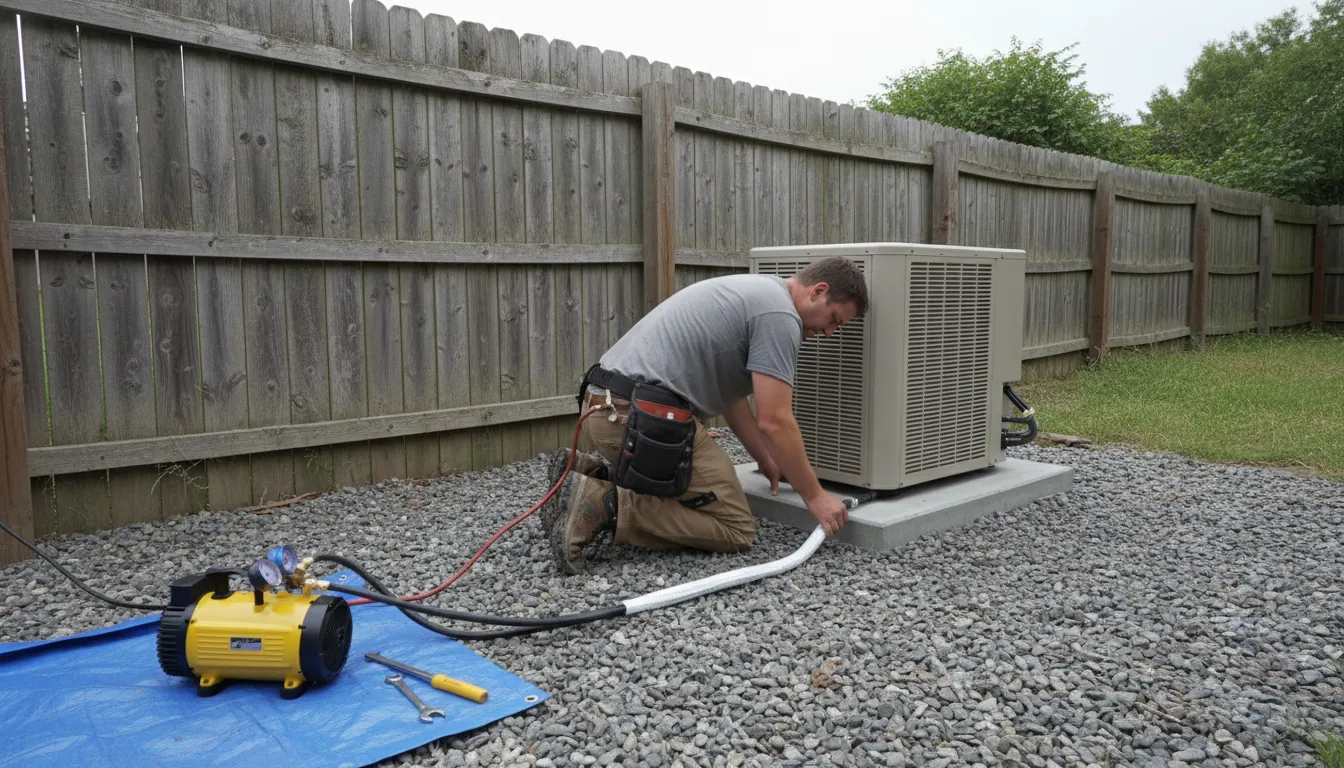
- System Evacuation and Charging: The refrigerant lines are vacuumed of air and moisture before the system is charged with refrigerant.
- Testing and Commissioning: The system is powered on, tested in heating and cooling modes, and the controls are set up.
- Final Inspection: The contractor arranges for the final municipal inspection to close out the permit 10 11.
Frequently asked questions
Sources
Footnotes
-
Chapter 3 General Regulations: Arkansas Mechanical Code 2021 - https://up.codes/viewer/arkansas/imc-2021/chapter/3/general-regulations ↩
-
Is a Ductless Mini-Split Installation a DIY Project A Complete Guide - https://www.heating-ac.com/blog/is-a-ductless-mini-split-installation-a-diy-project-a-complete-guide ↩
-
Do Mini Splits Need Permits? Installation Requirements Guide - https://www.greecomfort.com/news-and-events/do-mini-splits-need-permits/ ↩
-
Why Mini-Split Installations Are a Hot Market in Arkansas - https://expertce.com/arkansas-mini-split-installation-market/ ↩
-
Ductless Mini Split Installation Costs in 2026 - Carrier - https://www.carrier.com/residential/en/us/products/ductless-mini-splits/ductless-mini-split-installation-cost/ ↩
-
Ductless Mini-Split Installation Cost in 2025: Full Breakdown - https://osborneheatingncooling.com/ductless-mini-split-installation-cost/ ↩
-
Ductless mini-split installation: Cool 2025 Guide - Southern Air - https://www.southern-air.com/blog/ductless-mini-split-installation ↩
-
Instant rebates for 'ASHP' or 'ccASHP' hybrid heat projects with efficiency requirements, sizing, and different customer categories. - https://homeenergy.pseg.com/heatingandcooling ↩
-
Ductless, Mini-Split Heat Pumps - https://www.aecc.com/faqs/ductless-mini-split-heat-pumps/ ↩
-
Ductless Mini Split Installation: A Complete Guide - https://www.goairflow.com/blog/ductless-mini-split-installation/ ↩
-
Ductless Mini Split Installation Guide: What Every Homeowner ... - https://www.aceanda.com/blog/ductless-mini-split-installation-guide-what-every-homeowner-should-know/ ↩