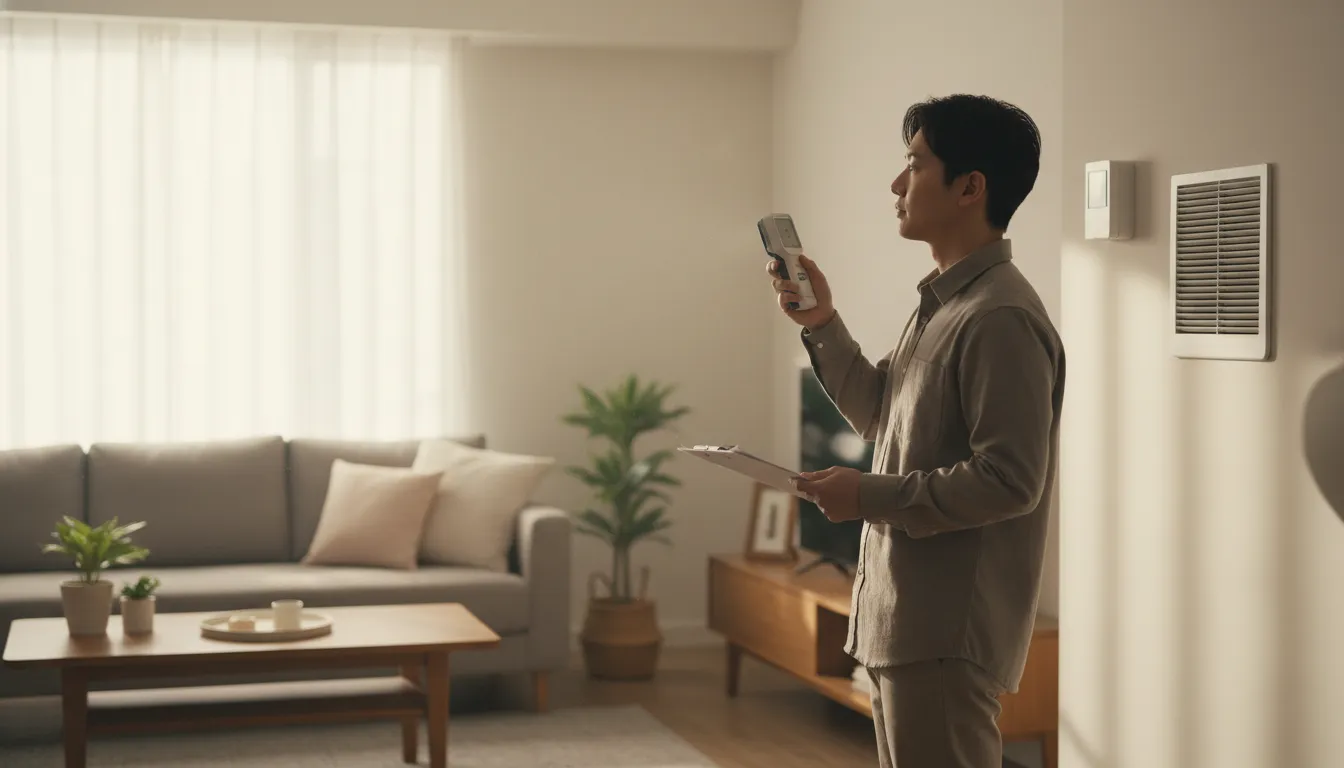
Find the Best Indoor Air Quality Service Providers for Your Business
No obligation • Fast responses • Nationwide coverage

Why you can trust HVAC Firms
HVAC Firms is a leading United States resource for evaluating HVAC service providers. Our team researches companies, checks credentials, and reviews customer feedback to present clear, unbiased information. Listings and rankings are based on merit, and companies cannot pay to change our editorial content.
Search providers near you
Best Indoor Air Quality Service Providers in Utah Ranked
The air inside your Utah home can significantly impact your health, comfort, and even the longevity of your property. Indoor air quality (IAQ) refers to the condition of the air within and around buildings, particularly as it relates to the health and well-being of occupants. In Utah, unique environmental factors like seasonal inversions, wildfire smoke, and dry climate make managing IAQ especially important. This guide explains the common pollutants in Utah homes, practical strategies for improvement, and how to connect with local professionals who can provide testing, system upgrades, and tailored solutions for your specific needs.
Understanding Utah's Indoor Air Pollutants
Utah's indoor air can often be more polluted than the air outside, concentrating a variety of contaminants that affect respiratory health and overall comfort 1. Being aware of the most common pollutants is the first step toward creating a healthier indoor environment.
Particulate Matter (PM2.5/PM10): These tiny particles are a major concern, especially during Utah's winter inversions and summer wildfire seasons. They can infiltrate your home from outdoors but are also generated indoors by activities like burning candles or incense, using fireplaces, and smoking. These fine particles can penetrate deep into the lungs and even enter the bloodstream.
Radon: This colorless, odorless radioactive gas naturally occurs in Utah soil and can seep into homes through cracks in the foundation. Radon is the second leading cause of lung cancer and testing is strongly recommended for all Utah homes. The American Lung Association and other organizations offer low-cost test kits.
Mold and Biological Contaminants: Mold, bacteria, dust mites, and pet dander thrive in environments with excess moisture. In Utah, this can be a problem in bathrooms, basements, and around humidifiers if indoor humidity is not properly controlled.
Volatile Organic Compounds (VOCs): These gases are emitted from a wide array of common household products, including cleaning supplies, paints, air fresheners, new furniture, and building materials. They can cause short-term irritation and may have long-term health effects.
Combustion Pollutants: Carbon monoxide (CO) and nitrogen dioxide (NO2) are produced by fuel-burning appliances like furnaces, water heaters, stoves, and fireplaces that are not properly vented or maintained. CO is particularly dangerous as it is odorless and can be fatal.
Legacy Pollutants: In older Utah homes, building materials may contain asbestos or lead-based paint. Disturbing these materials during renovations can release harmful fibers or dust into the air, requiring professional handling for testing and abatement 2.
The Pillar of Healthy Air: Source Control and Ventilation
Effective IAQ management hinges on two key principles: removing or reducing pollutant sources and ensuring adequate ventilation to dilute and remove contaminants.
Source Control Strategies
The most effective way to improve air quality is to prevent pollutants from entering the air in the first place.
- Choose Low-VOC Products: Opt for paints, cleaners, and furnishings labeled as low-VOC.
- Maintain Fuel-Burning Appliances: Have furnaces, water heaters, and fireplaces inspected annually to ensure proper combustion and venting.
- Control Moisture: Fix leaks promptly, use exhaust fans during and after showers, and aim to keep indoor relative humidity between 30% and 50% to inhibit mold growth 3.
- Minimize Indoor Burning: Avoid burning candles, incense, or wood indoors when possible, and never allow smoking inside.
Ventilation Guidelines for Utah Homes
Ventilation replaces stale indoor air with fresh outdoor air. Utah's building codes and health guidelines provide a framework:
- General Ventilation: All occupied spaces must have natural (windows) or mechanical ventilation.
- Mechanical Ventilation: Modern, energy-efficient homes are built very tight. If your home's air infiltration rate is less than 5 air changes per hour, mechanical ventilation is required to provide a consistent, controlled air exchange 4.
- Local Exhaust: Always use exhaust fans vented to the outside when cooking on a stovetop and for at least 20 minutes after showering to remove moisture, odors, and pollutants at the source.
- Strategic Natural Ventilation: On days when outdoor air quality is good (check local air quality indexes), opening windows for at least 10 minutes can help flush out indoor pollutants. Conversely, keep windows and doors tightly closed during winter inversions or periods of heavy wildfire smoke to prevent outdoor pollutants from entering.
Find the perfect indoor air quality service providers for your needs
Get personalized recommendations and expert advice
Testing Your Indoor Air: DIY Kits vs. Professional Inspection
How do you know if you have an air quality problem? Testing can identify specific pollutants and their concentrations.
DIY Test Kits: These are available for single pollutants like radon or mold, typically costing between $15 and $50. More comprehensive multi-test kits that check for several contaminants can range from $150 to $500 5. They are a good starting point but may lack the accuracy and interpretation a professional provides.
Professional IAQ Inspection: A certified professional can conduct a thorough assessment of your home's air. A basic whole-home evaluation may cost around $400-$500. Testing for specific, complex issues like asbestos or detailed mold identification can range from $150 to over $1,000 per test area 6 7. A professional inspection is advisable if you suspect a serious issue, are experiencing unexplained health symptoms, or are preparing for a major renovation in an older home.
Common IAQ Improvements and Associated Costs
Once you identify issues, various solutions can improve your home's air. Costs vary based on your home's size, location, and the specific interventions needed.
Air Filtration and Purification:
- HVAC Filter Upgrades: One of the simplest and most cost-effective steps is upgrading the filter in your central heating and cooling system. Filters rated MERV 11-13 can effectively capture fine particles like PM2.5 without overly restricting airflow 8.
- Portable Air Cleaners: For rooms where you spend the most time, like bedrooms, a portable High-Efficiency Particulate Air (HEPA) cleaner can be highly effective. Costs vary by unit capacity and features.
Advanced Ventilation Systems: For tight, modern homes, simply opening a window isn't always energy-efficient or practical (especially during poor outdoor air quality days). Installing a balanced ventilation system can be a superior solution.
- Heat Recovery Ventilators (HRVs) and Energy Recovery Ventilators (ERVs): These systems continuously exhaust stale indoor air and bring in fresh outdoor air. They transfer heat (and in the case of ERVs, moisture) between the two airstreams, improving air quality without sacrificing energy efficiency. Installation costs vary significantly based on your home's existing ductwork and structure 9 10.
Targeted Pollutant Mitigation:
- Radon Mitigation: If testing reveals elevated radon levels (4 pCi/L or higher), a professional mitigation system is recommended. These systems typically involve installing a vent pipe and fan to draw radon from beneath the home and exhaust it outside. Professional installation typically costs between $800 and $1,300 in Utah.
- Mold Remediation: The cost for professional mold removal depends on the extent of the infestation, but homeowners can expect averages between $1,200 and $3,800 11. Addressing the underlying moisture problem is critical to prevent recurrence.
System Maintenance: Never underestimate the power of regular upkeep. Scheduling annual maintenance for your HVAC system ensures it operates efficiently and circulates clean air. This includes cleaning ducts, coils, and drain pans where moisture and mold can accumulate.
Creating a Healthy Home Action Plan
Improving indoor air quality is an ongoing process. Start with these actionable steps:
- Test for Radon: This is a critical first test for any Utah homeowner due to the state's geology.
- Audit Your Habits: Implement source control by switching to green cleaning products, using kitchen and bath exhaust fans diligently, and avoiding indoor smoking.
- Check Your Filters: Inspect your HVAC filter monthly and replace it with a high-efficiency filter (MERV 11 or higher) at least every 90 days, or more often if you have pets or during high-pollution seasons.
- Control Humidity: Use a hygrometer to monitor levels. Use dehumidifiers in damp basements and exhaust fans to keep humidity in the 30-50% range.
- Consider a Professional Assessment: If problems persist or you have specific health concerns, a professional can provide a comprehensive diagnosis and tailored solution roadmap.
Frequently asked questions
Sources
Footnotes
-
Indoor Air Quality in Utah: What Every Homeowner Needs to Know - https://salmonhvac.com/indoor-air-quality-in-utah-what-every-homeowner-needs-to-know/ ↩
-
How To Improve Your Indoor Air Quality - https://accurateelectricplumbingheatingandair.com/blog/improving-your-indoor-air-quality/ ↩
-
INDOOR AIR POLLUTION - https://www.environment.utah.edu/wp-content/uploads/sites/101/2022/09/2-IAQ_OnePager.pdf ↩
-
CHAPTER 4 VENTILATION - 2021 UTAH STATE ... - https://codes.iccsafe.org/content/UTMC2021P1/chapter-4-ventilation ↩
-
How Much Does Indoor Air Quality Testing Cost? - https://www.katyacrepair.com/how-much-does-it-cost-to-have-your-home-indoor-air-quality-tested/ ↩
-
How Much Does Indoor Air Quality Testing Cost? [2026 Data] - https://www.angi.com/articles/how-much-does-indoor-air-quality-testing-cost.htm ↩
-
Average air quality inspection costs in dollars, based on home size in square feet. - https://www.airpf.com/how-much-does-a-home-indoor-air-quality-testing-cost/ ↩
-
Let the Air in: Low-cost ways to improve your indoor air quality - https://www.lung.org/blog/indoor-air-quality-improvements ↩
-
Utah's Indoor Air Quality Explained: Don't Hold Your Breath - https://www.airprosutah.com/blog/indoor-air-quality-utah ↩
-
Healthy Indoor Air Quality: A Guide To Understanding Pollutants In ... - https://docs.nrel.gov/docs/fy22osti/82799.pdf ↩
-
How Much Does Indoor Air Quality Testing Cost? [2025 Data] - https://www.homeadvisor.com/cost/environmental-safety/test-indoor-air-quality/ ↩