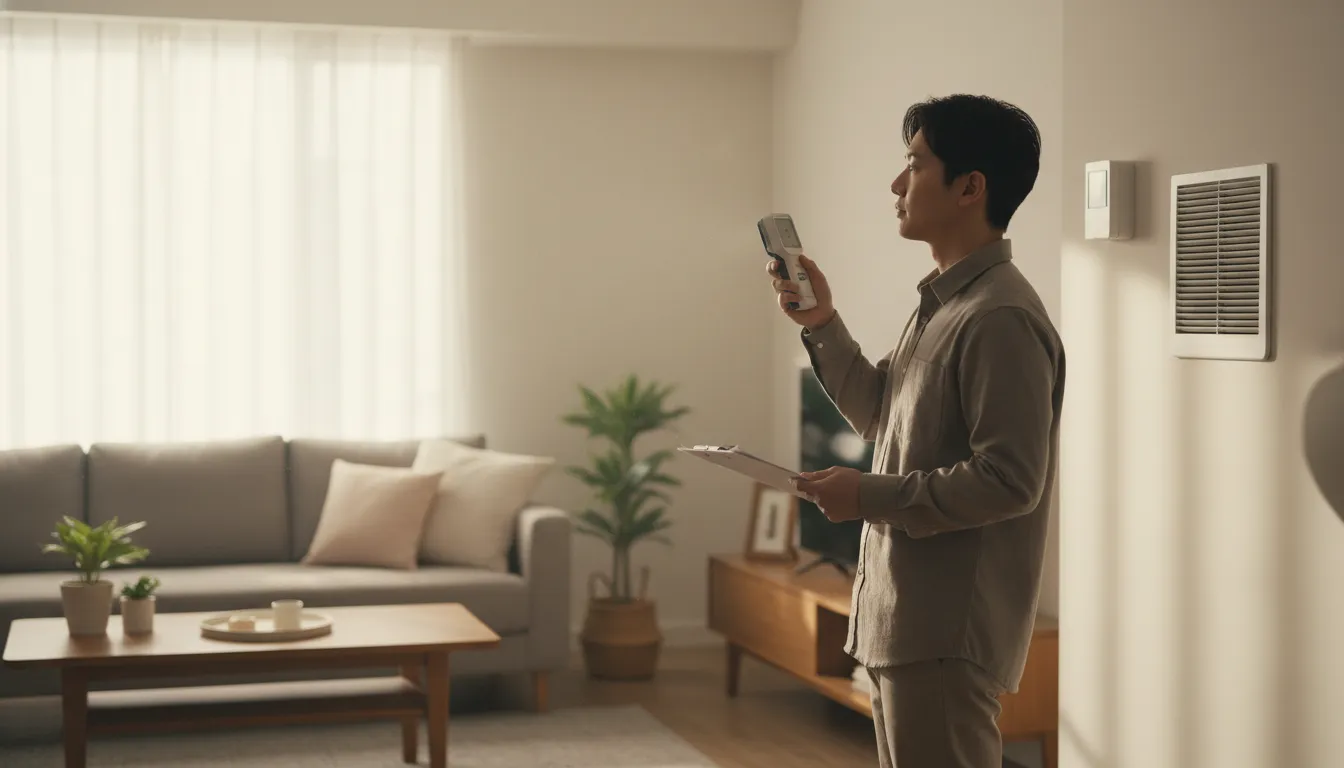
Find the Best Indoor Air Quality Service Providers for Your Business
No obligation • Fast responses • Nationwide coverage

Why you can trust HVAC Firms
HVAC Firms is a leading United States resource for evaluating HVAC service providers. Our team researches companies, checks credentials, and reviews customer feedback to present clear, unbiased information. Listings and rankings are based on merit, and companies cannot pay to change our editorial content.
Search providers near you
Best Indoor Air Quality Service Providers in Montana Ranked
The quality of the air inside your home or workplace is a critical component of health, comfort, and productivity. In Montana, unique environmental factors like radon, wildfire smoke, and seasonal temperature extremes make managing indoor air quality (IAQ) particularly important. This guide explains the key pollutants, state guidelines, and practical steps for testing and improving your indoor environment, helping you connect with knowledgeable local professionals who can assess your specific situation.
Why Indoor Air Quality Matters in Montana
Montanans spend a significant amount of time indoors, especially during the long winter months. Poor indoor air can lead to immediate symptoms like headaches, fatigue, and irritation of the eyes, nose, and throat, as well as long-term health effects, including respiratory diseases and heightened allergy or asthma responses. The state's approach to IAQ combines building codes, public health guidelines, and federal recommendations to address a range of pollutants that are prevalent in the region 1. Understanding these standards and common contaminants is the first step toward creating a healthier indoor space.
Key Pollutants and Concerns in Montana
Indoor air problems in Montana often stem from a mix of naturally occurring substances, biological growth, and chemical or combustion byproducts.
Radon: This colorless, odorless radioactive gas is a leading environmental cause of lung cancer and is a significant concern due to Montana's geology. It seeps into buildings from the decay of uranium in soil and rock. The Montana Department of Environmental Quality (DEQ) actively promotes testing, even offering free home test kits to homeowners each January 2.
Biological Contaminants: Mold, mildew, dust mites, pollen, and pet dander thrive in damp conditions. Inadequate ventilation in tightly sealed homes, basement moisture, and humidity from daily activities can promote growth, triggering allergies and asthma 3.
Chemical Pollutants (VOCs): Volatile Organic Compounds are emitted as gases from a wide array of products, including paints, varnishes, cleaning supplies, adhesives, and even new furniture or flooring 4. Concentrations can be many times higher indoors than outdoors.
Combustion Pollutants and Smoke: Carbon monoxide (CO) from malfunctioning fuel-burning appliances is a deadly risk. Furthermore, Montana's Clean Indoor Air Act prohibits smoking, including e-cigarettes and marijuana products, in enclosed public places and workplaces 5. Externally, wildfire smoke has become a major seasonal hazard, with health advisories recommending people stay indoors and use air cleaners when the Air Quality Index (AQI) reaches unhealthy levels 6.
Montana's IAQ Regulations and Guidelines
Montana does not have a single, comprehensive indoor air quality law, but relies on a framework of codes and guidelines for different building types 7 8.
For Residential Buildings
The Montana Residential Energy Code requires mechanical ventilation in new or significantly renovated dwelling units that are built to be relatively airtight. Key requirements include:
- Kitchen Exhaust: 100 cubic feet per minute (cfm) for intermittent exhaust or 25 cfm for continuous exhaust.
- Bathroom Exhaust: 50 cfm for intermittent exhaust or 20 cfm for continuous exhaust.
- All exhaust must vent directly to the outdoors, not into attics or crawl spaces 9 10. These standards are designed to remove moisture and pollutants at the source.
For Commercial and Public Buildings (e.g., Schools, Offices)
Guidelines are more specific, especially for schools:
- The Montana Department of Labor & Industry recommends at least 15 cfm of outdoor air per occupant in non-industrial workplaces 11.
- Schools are required to conduct annual IAQ inspections using the EPA's "IAQ Tools for Schools" checklist and perform annual HVAC system maintenance.
- School HVAC systems should use filters with a Minimum Efficiency Reporting Value (MERV) of 8 to 13, and the use of odor-masking agents or deodorizers is prohibited.
- Protocols must be in place to limit outdoor air infiltration during poor air quality events, such as wildfires.
General State Recommendations
The Montana Department of Public Health and Human Services (DPHHS) promotes a three-pronged strategy for all buildings: source control (removing or sealing pollutants), improved ventilation (bringing in fresh outdoor air when quality permits), and air filtration/cleaning 12.
Find the perfect indoor air quality service providers for your needs
Get personalized recommendations and expert advice
Testing Your Indoor Air Quality
If you suspect an issue or are buying a new home, professional testing provides a clear snapshot of your air.
What Testing Involves: A basic assessment typically checks for humidity levels, carbon dioxide (CO2), carbon monoxide (CO), particulate matter, and sometimes VOCs or formaldehyde. More comprehensive tests target specific pollutants like mold spores, radon, or asbestos.
Cost of IAQ Testing in Montana: Prices vary based on the size of your home and the scope of the analysis.
- A basic whole-home IAQ test averages around $422, with a typical range of $285 to $584 13.
- Comprehensive or specific pollutant testing can cost $1,000 or more, depending on the number of contaminants analyzed 14.
- Individual pollutant tests often have separate costs:
- Radon testing: $150-$800 (often less when part of a home inspection) 15.
- Mold inspection and testing: Starts around $400 and can reach $1,000.
- Asbestos testing: $200-$800.
Improving and Maintaining Healthy Indoor Air
Once you understand your air quality, a range of solutions can help.
Ventilation Upgrades: Ensuring your mechanical ventilation systems are properly sized and functional is crucial. This may involve installing or upgrading exhaust fans, heat recovery ventilators (HRVs), or energy recovery ventilators (ERVs), which bring in fresh air without wasting energy.
Air Filtration and Cleaning:
- Upgrade HVAC Filters: Switching to a MERV 13 filter in your forced-air system is a highly effective, low-cost step to capture fine particles, including those from wildfire smoke 16.
- Use Portable Air Cleaners: Standalone High-Efficiency Particulate Air (HEPA) filter units can supplement your central system, especially in bedrooms or other key areas.
Source Control and Remediation:
- Radon Mitigation: If test results are high (at or above 4 pCi/L), a professional radon mitigation system, typically involving sub-slab depressurization, is recommended. Installation in Montana averages $800 to $1,300.
- Mold Remediation: Addressing the moisture source is the first step. Professional mold removal averages $1,200 to $3,800, depending on the extent of the growth 17.
- Choose Low-VOC Products: Opt for paints, sealants, and cleaning products labeled as low-VOC or no-VOC.
Moisture Management: Use dehumidifiers in damp basements, fix leaks promptly, and ensure proper drainage around your home's foundation to prevent biological growth.
Frequently asked questions
Sources
Footnotes
-
Indoor Air Quality - Employment Standards Division - https://erd.dli.mt.gov/safety-health/indoor-air-quality ↩
-
(IAQ) HOME INDOOR AIR QUALITY .indd - https://www.montana.edu/extension/weatherization/documents/IAQ.pdf ↩
-
Indoor Air Quality - dphhs - https://dphhs.mt.gov/airquality/IndoorAirQuality ↩
-
Typical Indoor Air Concentrations of Volatile Organic ... - https://deq.mt.gov/Files/Land/StateSuperfund/Documents/VI_guide/CompleteIndoorVOCReport.pdf ↩
-
Montana's Smokefree Indoor Air Law - https://wsd.dli.mt.gov/_docs/MontanaSmokefreeIndoorAirLaw.pdf ↩
-
Everyone should stay inside when the AQI reaches 150 or higher, but if ... - https://www.facebook.com/SpokaneCleanAir/posts/everyone-should-stay-inside-when-the-aqi-reaches-150-or-higher-but-if-youre-preg/1145759257595528/ ↩
-
Database of State Indoor Air Quality Laws - https://www.eli.org/sites/default/files/files-pdf/2023%20IAQ%20Database%20-%20Schools_0.pdf ↩
-
Beyond the outdoors: indoor air quality guidelines and standards - challenges, inequalities, and the path forward - https://www.degruyterbrill.com/document/doi/10.1515/reveh-2023-0150/html ↩
-
Chapter 4 Ventilation: Montana Mechanical Code 2012 - https://up.codes/viewer/montana/imc-2012/chapter/4/ventilation ↩
-
Residential Buildings - Montana Department of Environmental Quality - https://deq.mt.gov/files/Energy/Documents/Energy_Code/ResBuildingsEnergyCodeSummary2025.pdf ↩
-
Indoor Air Quality - Employment Standards Division - https://erd.dli.mt.gov/safety-health/indoor-air-quality ↩
-
Indoor Air Quality - dphhs - https://dphhs.mt.gov/airquality/IndoorAirQuality ↩
-
How Much Is an IAQ Test for a Home? - Scott-Lee Heating - https://scottleeheating.com/how-much-is-an-iaq-test-for-a-home/ ↩
-
How Much Does Indoor Air Quality Testing Cost? - https://www.katyacrepair.com/how-much-does-it-cost-to-have-your-home-indoor-air-quality-tested/ ↩
-
Home Inspection Pricing - Liberty Home Inspections, LLC. - https://libertyhomeinspections.net/pricing ↩
-
Air Quality in Montana Schools - dphhs - https://dphhs.mt.gov/assets/publichealth/Asthma/SurveillanceReports/Air_Quality_FINAL.pdf ↩
-
How Much Does Indoor Air Quality Testing Cost? [2025 Data] - https://www.homeadvisor.com/cost/environmental-safety/test-indoor-air-quality/ ↩