Find the Best Indoor Air Quality Service Providers for Your Business
No obligation • Fast responses • Nationwide coverage

Why you can trust HVAC Firms
HVAC Firms is a leading United States resource for evaluating HVAC service providers. Our team researches companies, checks credentials, and reviews customer feedback to present clear, unbiased information. Listings and rankings are based on merit, and companies cannot pay to change our editorial content.
Search providers near you
Top Indoor Air Quality Service Providers in Gulfport, Mississippi Ranked
The air you breathe inside your home or business in Gulfport directly impacts your health, comfort, and even the longevity of your property. Indoor air quality (IAQ) refers to the condition of the air within and around buildings, particularly as it relates to the health and well-being of occupants. In Gulfport's subtropical climate, managing IAQ is crucial due to persistent high humidity and other local environmental factors. This guide explains the unique challenges, common pollutants, and effective solutions for maintaining healthy indoor air, helping you connect with the right local expertise for assessment and improvement.
Why Gulfport's Climate Demands Attention to Indoor Air
Gulfport's location on the Mississippi Gulf Coast creates a specific set of challenges for maintaining clean indoor air. The region's high humidity levels, frequent rainfall, and warm temperatures create an ideal environment for biological pollutants to thrive. This damp, subtropical climate means that issues like mold growth and excess moisture aren't just occasional problems-they are persistent threats that require proactive management. Furthermore, the potential for storm-related water intrusion adds another layer of risk, making a robust approach to indoor environmental quality essential for every homeowner and business manager.
Common Indoor Air Pollutants in Gulfport Homes & Businesses
Understanding the specific contaminants prevalent in the area is the first step toward a healthier indoor environment.
Mold and Mildew
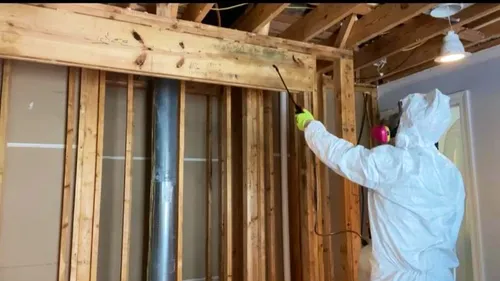
This is arguably the top IAQ concern for Gulfport residents. High humidity provides the constant moisture mold spores need to colonize. Common problem areas include air ducts, crawl spaces, attics, and behind walls where water intrusion may have occurred, often unnoticed. Mold can cause or exacerbate allergies, asthma, and other respiratory issues.
Excess Humidity and Moisture
Beyond fueling mold, high humidity itself degrades air quality. It creates a musty odor, fosters the growth of bacteria and dust mites, and makes spaces feel clammy and uncomfortable. Poorly sized or maintained air conditioning systems may not remove enough moisture from the air, exacerbating the problem.
Volatile Organic Compounds (VOCs)
These are gases emitted from a wide array of household and building products, including paints, varnishes, cleaning supplies, pesticides, and new furniture or construction materials 1. In tightly sealed buildings (which are common for energy efficiency), VOC concentrations can build up, leading to headaches, eye irritation, and other health concerns.
Particulate Matter (PM2.5)
Fine particles like dust, pet dander, pollen, and smoke can circulate through a building's HVAC system. Without proper filtration, these particles remain airborne and are easily inhaled, aggravating allergies and lung conditions 2.
Post-Storm Contaminants
Following hurricanes or severe storms, water damage can lead to hidden mold growth within days. Floodwaters may also introduce sewage, chemicals, and other hazardous materials into a building, creating severe and immediate indoor air quality crises.
Radon Gas
While most of Mississippi is considered low-to-moderate risk for radon, this colorless, odorless radioactive gas can seep into buildings from the ground. The only way to know if it's present is through specific testing, which is recommended for all homes 3.
How to Assess Your Indoor Air Quality
Before investing in solutions, it's wise to identify the specific pollutants and their sources. Several assessment methods are available.
Professional IAQ Inspection and Testing
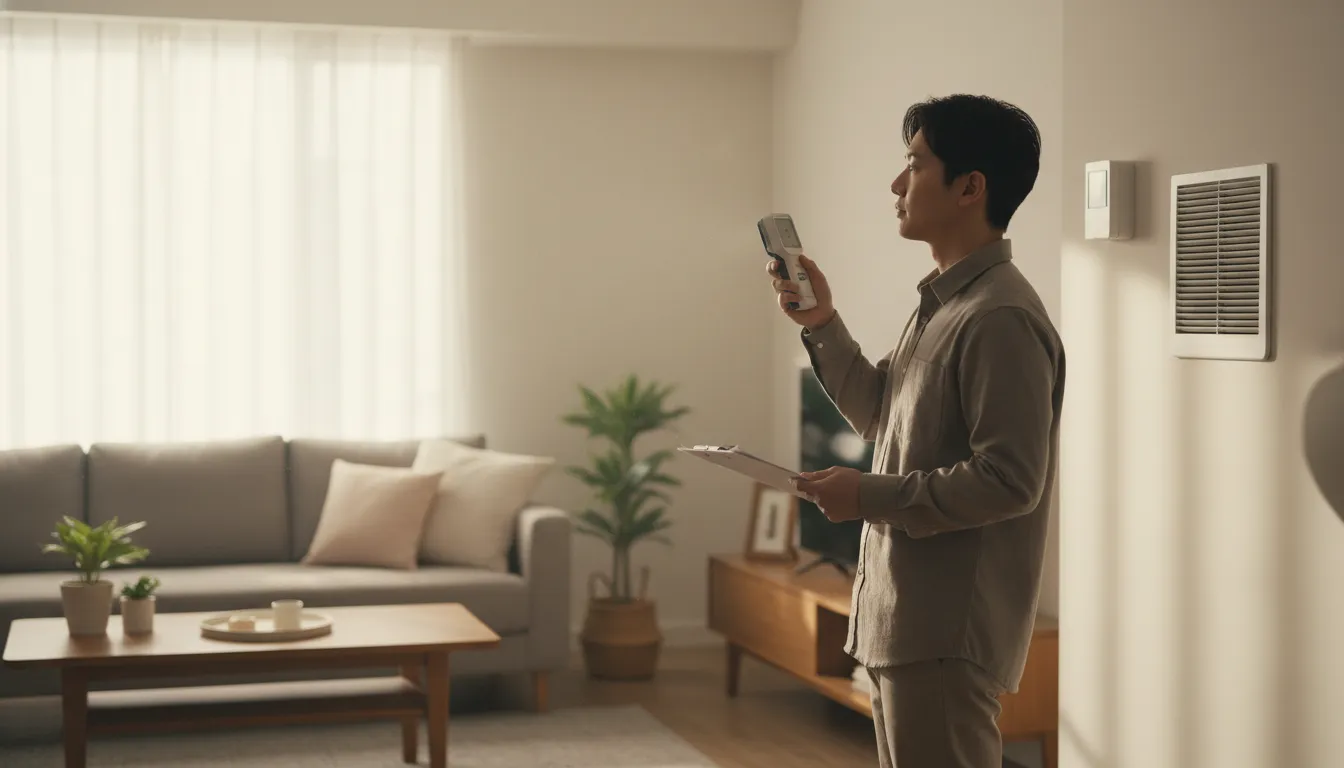
Hiring a local expert is the most comprehensive approach. Professionals can conduct:
- Air Sampling: Collecting air samples to be analyzed in a lab for mold spore types and concentrations, VOC levels, and other pollutants 4 5.
- Surface Testing: Swabbing or tape-lifting samples from suspected mold growth areas.
- Humidity and Moisture Mapping: Using tools like moisture meters and thermal imaging cameras to find hidden dampness in walls, ceilings, and floors 6.
- HVAC Duct Inspection: Using specialized cameras to look inside ductwork for dust buildup, mold growth, or damaged insulation that could be contaminating the air supply.
The cost for professional indoor air quality testing in the Gulfport area typically ranges from $300 to over $1,000, with an average around $400-$500, depending on the size of the property and the scope of tests performed 7 8.
DIY Environmental Monitoring
For ongoing awareness, homeowners can use consumer-grade air quality monitors. Devices like the IQAir AirVisual Pro or Airthings View Plus track real-time levels of key indicators such as particulate matter (PM2.5), humidity, temperature, carbon dioxide (CO2), and some VOCs 9 10. While not a substitute for professional diagnosis, these monitors provide valuable trend data and alerts.
Find the perfect indoor air quality service providers for your needs
Get personalized recommendations and expert advice
Effective Solutions for Healthier Indoor Air
Once problems are identified, a range of solutions can be implemented, often in combination.
1. Humidity Control
Managing moisture is foundational in Gulfport.
- Proper HVAC Operation: Ensure your air conditioning system is correctly sized and maintained. A/C units act as dehumidifiers when running; an undersized or faulty system won't remove enough moisture.
- Standalone Dehumidifiers: Use portable or whole-house dehumidifiers, especially in naturally damp areas like basements and crawl spaces, to keep relative humidity ideally between 30% and 50% 11.
2. Advanced Air Filtration and Purification
- High-Efficiency HVAC Filters: Upgrade the filter in your central air system to one with a Minimum Efficiency Reporting Value (MERV) rating of 13 or higher to capture finer particles like mold spores and dust 12.
- Air Purifiers: Portable HEPA air purifiers can effectively remove airborne particulates in specific rooms. For whole-home purification, UV-C light systems or photocatalytic oxidation (PCO) units can be installed within the HVAC ductwork to neutralize microorganisms and some chemical vapors 13.
3. Source Control and Ventilation
- Increase Fresh Air: When outdoor conditions permit, open windows to dilute indoor pollutants. Ensure that exhaust fans in kitchens and bathrooms are vented to the outside and are used consistently 14.
- Seal and Isolate: Store chemicals, paints, and solvents in sealed containers or in detached sheds. Choose low-VOC products when renovating or cleaning.
- Prompt Leak Repair: Address any plumbing leaks or roof leaks immediately to prevent the moisture that leads to mold 15.
4. Professional Remediation and Cleaning Services
- Mold Remediation: If active mold growth is found, professional remediation is often necessary. This involves containment, safe removal of contaminated materials, and deep cleaning. Costs in the region can range from $1,200 to $3,800 or more, depending on the extent.
- Air Duct Cleaning: Having your HVAC ductwork professionally cleaned is a cost-effective service to remove accumulated dust, debris, and potential mold, preventing it from being circulated throughout your home 16.
- Radon Mitigation: If testing reveals elevated radon levels, a mitigation system (typically involving sub-slab depressurization) can be installed, with costs generally ranging from $800 to $1,300 17.
Maintaining Your Investment
Improving indoor air quality isn't a one-time project. Consistent maintenance is key:
- Change HVAC filters regularly (every 1-3 months).
- Keep drip pans and drain lines in your A/C unit clear.
- Vacuum and dust using a HEPA-filter vacuum cleaner.
- Monitor humidity levels year-round.
- Schedule annual HVAC maintenance to ensure the system is operating efficiently and effectively managing humidity.
Frequently asked questions
Sources
Footnotes
-
Indoor Air Quality - NM-Tracking - https://nmtracking.doh.nm.gov/environment/air/IndoorQuality.html ↩
-
4 Signs of Poor Indoor Air Quality You Shouldn't Ignore - https://alabamahvacservices.com/4-signs-of-poor-indoor-air-quality-you-shouldnt-ignore/ ↩
-
IAQ - Mold and Other Common Indoor Pollutants - MDEQ - https://www.mdeq.ms.gov/air/other-air-information/indoor-air-quality/iaq-mold-and-other-common-indoor-pollutants/ ↩
-
Indoor Air Quality Testing / Industrial Hygiene Services - Safex - https://www.safex.us/our-services/indoor-air-quality/ ↩
-
Reliable Indoor Air Quality Testing - Green Home Solutions - https://www.greenhomesolutions.com/gulf-coast-ms/our-services/air-quality-testing/ ↩
-
Indoor Air Quality | Tillman's Services - https://tillmansheatingandair.com/indoor-air-quality/ ↩
-
Expert Air Quality Testing Services in Picayune - https://www.kdcairandheat.com/air-quality-testing ↩
-
How Much Is an IAQ Test for a Home? - Scott-Lee Heating - https://scottleeheating.com/how-much-is-an-iaq-test-for-a-home/ ↩
-
iqair AirVisual PRO AIR-QUALITY Monitor - https://www.google.com/search?q=product&prds=pvt:hg,productid:12731750861393503074,catalogid:16835460390359639346,gpcid:10152811169155146236,mid:576462399365726378&ibp=oshop ↩
-
Airthings View Plus Air Quality Monitor - https://www.google.com/search?q=product&prds=pvt:hg,productid:6072329373947128373,catalogid:7712427545849036561,gpcid:4854218481369443652,mid:576462731890981916&ibp=oshop ↩
-
Indoor Air Quality | Environmental Health and Safety - https://www.ehs.msstate.edu/focus-areas/workplace-safety/indoor-air-quality ↩
-
Indoor Air Quality Minneapolis - Maple Grove - https://www.callmoderntoday.com/air-quality ↩
-
Commercial Air Quality | Salem, OR - https://www.homecomfortinc.com/commercial-hvac/air-quality/ ↩
-
Portland Commercial HVAC Maintenance Cost Guide For Facility Managers - myshyft.com - https://www.myshyft.com/blog/commercial-hvac-preventative-maintenance-cost-portland-oregon/ ↩
-
How to Improve Indoor Air Quality - Strada Services - https://stradaservices.com/about-us/blog/how-to-improve-indoor-air-quality/ ↩
-
Air Duct Cleaning in Gulfport, FL - http://ductsalldone.com/locations/air-duct-cleaning-in-gulfport-fl/ ↩
-
How Much Does Indoor Air Quality Testing Cost? [2025 Data] - https://www.homeadvisor.com/cost/environmental-safety/test-indoor-air-quality/ ↩