Find the Best Indoor Air Quality Service Providers for Your Business
No obligation • Fast responses • Nationwide coverage

Why you can trust HVAC Firms
HVAC Firms is a leading United States resource for evaluating HVAC service providers. Our team researches companies, checks credentials, and reviews customer feedback to present clear, unbiased information. Listings and rankings are based on merit, and companies cannot pay to change our editorial content.
Search providers near you
Top Indoor Air Quality Service Providers in Biloxi, Mississippi Ranked
Living and working in Biloxi means enjoying beautiful coastal views and a vibrant community. However, the humid subtropical climate that defines our region also creates unique challenges for the air inside your home or business. Indoor air quality (IAQ) is a critical component of a healthy indoor environment, directly impacting comfort, respiratory health, and even the integrity of your property. From managing relentless humidity to addressing mold and allergens, understanding and controlling your indoor atmosphere is essential. This guide will help you navigate the common air quality concerns in Biloxi, explore professional testing and solutions, and connect you with local specialists who can assess and improve the air you breathe every day.
Why Biloxi's Climate Demands Attention to Indoor Air
Biloxi's location on the Mississippi Gulf Coast subjects it to a specific set of environmental conditions that directly influence indoor environments. The high humidity, salt air, and seasonal weather patterns aren't just topics for small talk-they are active factors in your home's air quality. The primary goal of any indoor air management strategy here is not just comfort, but creating a defensive barrier against the moisture and pollutants that the climate encourages indoors.
The constant battle against humidity is central to IAQ in our area. When warm, moisture-laden air from the Gulf enters a cooler indoor space, condensation occurs. This excess moisture doesn't just feel uncomfortable; it creates the perfect breeding ground for biological contaminants. Without proactive management, the air inside can become more problematic than the air outside.
Common Indoor Air Pollutants in Biloxi Homes & Businesses
Understanding the specific threats is the first step toward mitigation. In Biloxi, several pollutants are of particular concern due to the local climate and building practices.
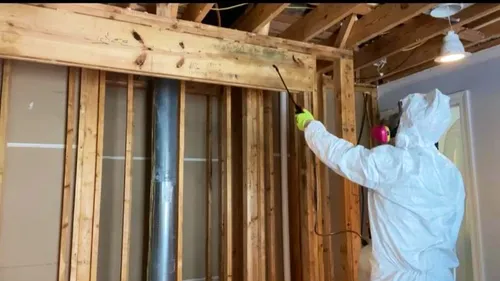
Mold and Mildew: This is arguably the most prevalent IAQ issue for Biloxi residents. Mold spores are everywhere, but they require moisture to grow. The region's high humidity, combined with potential water intrusion from heavy rains or flooding, provides an ideal environment for mold colonies to establish in walls, attics, under floors, and within HVAC systems. Exposure can trigger allergies, asthma attacks, and other respiratory issues.
High Humidity: Beyond fueling mold, relative humidity consistently above 60% fosters dust mite populations and can cause structural damage like wood rot. It also makes indoor spaces feel muggy and can overwork air conditioning systems as they struggle to remove latent heat from the air.
Allergens: The Gulf Coast has high pollen counts for much of the year. These outdoor allergens easily make their way indoors, mixing with common indoor allergens like pet dander, dust mites (which thrive in humidity), and cockroach debris. For sensitive individuals, this mix can cause significant respiratory distress.
Volatile Organic Compounds (VOCs): These are gases emitted from certain solids or liquids, including paints, varnishes, cleaning supplies, building materials, and furnishings. In newer, energy-efficient homes that are tightly sealed to save on cooling costs, VOCs can become concentrated indoors. Formaldehyde, often found in pressed-wood products, is a common VOC of concern 1 2.
Radon: This colorless, odorless radioactive gas can seep into homes from the ground. While radon risks vary by location, testing is recommended as part of a comprehensive IAQ assessment, as long-term exposure is a leading cause of lung cancer among non-smokers.
Inadequate Ventilation: Modern HVAC systems are designed to manage temperature and humidity, but if they are improperly sized, poorly maintained, or lack sufficient fresh air exchange, they can contribute to pollutant buildup. Stale air allows contaminants to accumulate to levels that can pose health and comfort problems.
The Risks of Poor Indoor Air in Coastal Mississippi
Ignoring indoor air quality isn't just about discomfort. The health and structural impacts can be substantial. Residents may experience exacerbated allergy symptoms, frequent sinus infections, headaches, fatigue, and dizziness. For those with asthma or other chronic respiratory conditions, poor IAQ can lead to more frequent and severe attacks 3.
From a property standpoint, unchecked humidity and mold growth can cause serious damage. This includes peeling paint, warped wood floors and cabinetry, stained ceilings and walls, and insulation degradation. Over time, this can lead to costly repairs and significantly lower a property's value. For business owners, poor indoor environmental quality can also affect employee productivity and absenteeism.
Professional Indoor Air Quality Assessment: What to Expect
When concerns arise, a professional assessment is the most reliable way to identify problems and chart a course for solutions. Local environmental specialists offer comprehensive evaluations tailored to the Gulf Coast's specific challenges.
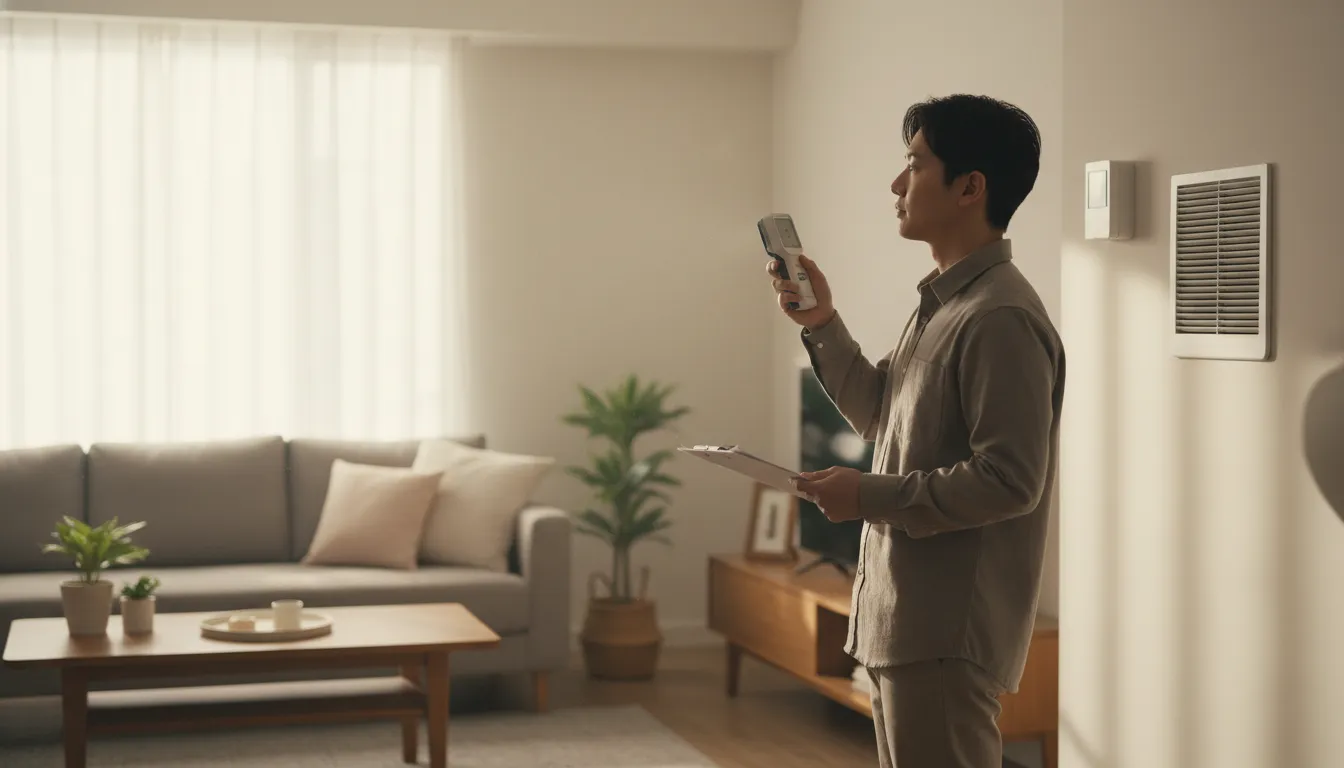
What an Inspection Involves: A professional IAQ inspection typically starts with a consultation to understand symptoms and concerns. The specialist will then conduct a visual inspection for signs of moisture, mold, and ventilation issues. They use specialized equipment to measure key parameters: temperature, relative humidity, carbon dioxide levels (an indicator of ventilation), and carbon monoxide.
Advanced Sampling: To identify specific contaminants, inspectors may collect air or surface samples. This can include:
- Microbiological Sampling: Air pumps collect samples to be analyzed in a lab for mold spore types and concentrations 4.
- VOC Testing: Using specialized meters or lab samples to identify and quantify chemical pollutants 5.
- Allergen Testing: Identifying concentrations of common allergens like dust mite or pet dander.
- HVAC System Assessment: Evaluating the heating, ventilation, and air conditioning system for proper operation, filtration, and its role in distributing pollutants or managing humidity.
Understanding Costs: The cost for these services varies based on the scope. A basic indoor air quality test in the Biloxi area typically ranges from $285 to $563, averaging around $4376 7. A focused mold inspection or assessment generally costs between $250 and $500. If remediation is needed, mold removal for a residential property can range from $1,200 to $3,800. For commercial properties, more in-depth IAQ assessments often range from $1,000 to $3,0008.
Find the perfect indoor air quality service providers for your needs
Get personalized recommendations and expert advice
Effective Solutions for Biloxi's IAQ Challenges
Once the specific issues in a building are identified, a range of solutions can be implemented. The right approach often combines source control, ventilation improvements, and air cleaning.
Source Control: The most effective way to improve IAQ is to eliminate individual sources of pollution or reduce their emissions. This includes fixing water leaks immediately, ensuring proper drainage away from your foundation, and using low-VOC paints and cleaning products 9.
Ventilation Enhancement: Increasing the amount of outdoor air coming indoors helps dilute pollutant concentrations. This can be achieved by simply opening windows when weather permits, using bathroom and kitchen exhaust fans, or installing a dedicated whole-house ventilation system like an Energy Recovery Ventilator (ERV) or Heat Recovery Ventilator (HRV), which brings in fresh air while minimizing energy loss 10.
Humidity Control: This is paramount in Biloxi. Your air conditioner removes humidity as it cools, but it may not be sufficient during extremely humid periods or if it's oversized. A standalone dehumidifier, or a whole-house dehumidifier integrated with your HVAC system, can maintain indoor relative humidity in the ideal 30-50% range, stifling mold growth and dust mites 11 12.
Air Cleaning: Air purifiers can remove particles and some gases from circulating air. Look for units with HEPA filters for allergens and dust, and possibly activated carbon filters for odors and VOCs. It's important to note that the Mississippi Department of Health advises against using ozone-generating air cleaners in occupied spaces, as ozone itself is a lung irritant and can reach unsafe levels 13 14.
HVAC Maintenance: Your HVAC system is the lungs of your home. Regular professional maintenance-including cleaning coils, checking refrigerant levels, and replacing filters-is essential. Using higher-efficiency pleated filters (MERV 8-13) can capture more particulates, but ensure your system can handle the increased airflow resistance 15.
DIY Measures and When to Call a Pro
Homeowners can take several proactive steps to maintain better air:
- Use dehumidifiers in damp basements or closed-off rooms.
- Change HVAC filters regularly (every 1-3 months).
- Clean and vacuum frequently using a vacuum with a HEPA filter.
- Address spills and leaks within 24-48 hours to prevent mold.
- Use DIY test kits for radon or mold as a preliminary check, understanding they are less accurate than professional testing 16.
However, you should contact a local IAQ professional if:
- You smell a persistent musty odor.
- Visible mold growth is present (more than a small, easily cleaned patch).
- Occupants experience health issues that improve when they leave the building.
- You have chronic condensation on windows.
- You are buying, selling, or renovating a property, especially after water damage.
Frequently asked questions
Sources
Footnotes
-
Indoor Air Quality | US EPA - https://www.epa.gov/air-quality/indoor-air-quality ↩
-
Indoor Air Quality in Columbia, Mississippi - Watts Electric - https://www.wattselectricac.com/indoor-air-quality/ ↩
-
Indoor Air Quality and Its Impact on Health | Atlantic Environmental - https://www.atlenv.com/indoor-air-quality-and-its-impact-on-health ↩
-
Reliable Indoor Air Quality Testing - Green Home Solutions - https://www.greenhomesolutions.com/gulf-coast-ms/our-services/air-quality-testing/ ↩
-
Expert Indoor Air Quality Testing With MSE Environmental - https://msenational.com/indoor-air-quality ↩
-
How Much Does Indoor Air Quality Testing Cost? [2025 Data] - https://www.homeadvisor.com/cost/environmental-safety/test-indoor-air-quality/ ↩
-
How Much Does Indoor Air Quality Testing Cost? [2026 Data] - https://www.angi.com/articles/how-much-does-indoor-air-quality-testing-cost.htm ↩
-
How Much Is an IAQ Test for a Home? - Scott-Lee Heating - https://scottleeheating.com/how-much-is-an-iaq-test-for-a-home/ ↩
-
Care for Your Air: A Guide to Indoor Air Quality | US EPA - https://www.epa.gov/indoor-air-quality-iaq/care-your-air-guide-indoor-air-quality ↩
-
Indoor Air Quality in South Bend | Factory Trained Techs - https://www.greatlakesheating-ac.com/indoor-air-quality/ ↩
-
High Indoor Humidity Problems in Mississippi Homes - https://www.grantairconditioning.com/why-high-indoor-humidity-is-a-problem-in-mississippi-homes ↩
-
IAQ & Home Health: Is Your Air Making You Sick? - https://www.southernairms.com/air-conditioning/indoor-air-quality/iaq-home-health-is-your-air-making-you-sick/ ↩
-
Mold - Mississippi State Department of Health - https://msdh.ms.gov/page/43,0,230,331.html ↩
-
Know All About Indoor Air Pollution - https://filterbuy.com/resources/health-and-wellness/indoor-air-pollution/ ↩
-
How to Improve Indoor Air Quality - Strada Services - https://stradaservices.com/about-us/blog/how-to-improve-indoor-air-quality/ ↩
-
Indoor Air Quality (IAQ) - Environmental Health & Safety - https://ehs.gatech.edu/form/indoor-air-quality-iaq- ↩