Find the Best Indoor Air Quality Service Providers for Your Business
No obligation • Fast responses • Nationwide coverage

Why you can trust HVAC Firms
HVAC Firms is a leading United States resource for evaluating HVAC service providers. Our team researches companies, checks credentials, and reviews customer feedback to present clear, unbiased information. Listings and rankings are based on merit, and companies cannot pay to change our editorial content.
Search providers near you
Best Indoor Air Quality Service Providers in Missouri Ranked
The air inside your Missouri home or workplace can significantly impact your health and comfort. Indoor air quality (IAQ) focuses on identifying and controlling pollutants-from radon and mold to allergens and chemicals-to create a safer, healthier indoor environment. In Missouri, guidance primarily follows federal standards, emphasizing practical strategies like source control and proper ventilation. This resource provides clear information on common pollutants, effective solutions, and how to connect with qualified local professionals who can assess your air and recommend improvements.
Air Care
10332 W 79th St, Shawnee, KS 66214
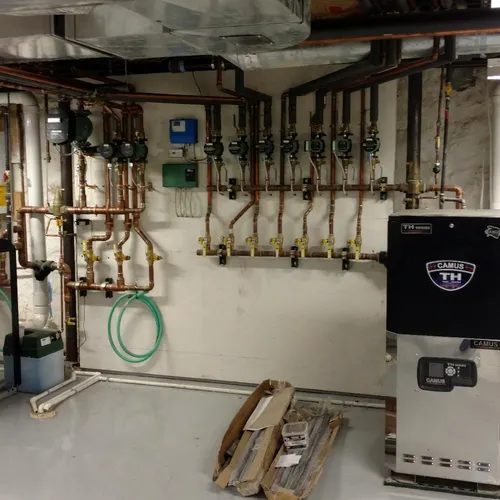
Air Care is an HVAC company serving Kansas City, MO, and the surrounding Shawnee area. Established in 1981, they provide a wide range of heating and cooling services including installation, repair, and maintenance of furnaces, air conditioners, boilers, mini-splits, and geothermal heat pumps. Their NATE-certified technicians handle both residential and light commercial work, with capabilities in duct design and indoor air quality services. Air Care offers 24/7 emergency repair service to address urgent heating or cooling issues.
Town & Country Heating And Cooling Co.
10674 Widmer Rd, Lenexa, KS 66215
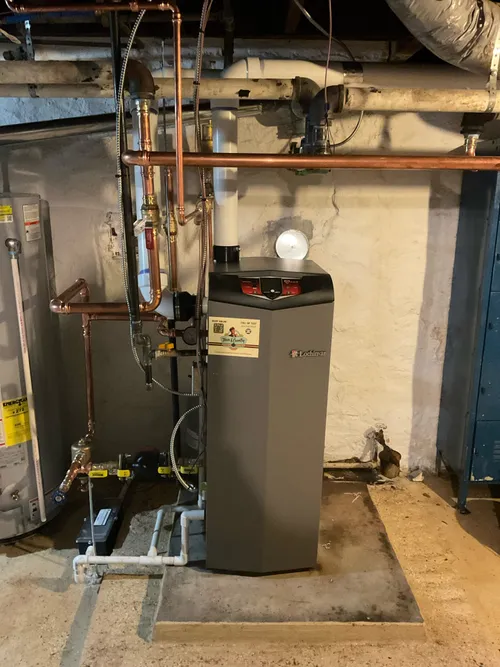
Town & Country Heating And Cooling Co. is a locally owned and operated business serving Kansas City, MO. They specialize in indoor air quality services, including repair, replacement, and maintenance of heating and cooling systems. The company offers same-day services, evening and weekend service calls, and emergency services to address urgent indoor climate needs. Town & Country Heating And Cooling Co. operates with a focus on integrity and customer priorities, ensuring workmanship is guaranteed and service is client-focused.
Design Aire Heating & Cooling - St. Louis
5804 Hampton Ave, St. Louis, MO 63109
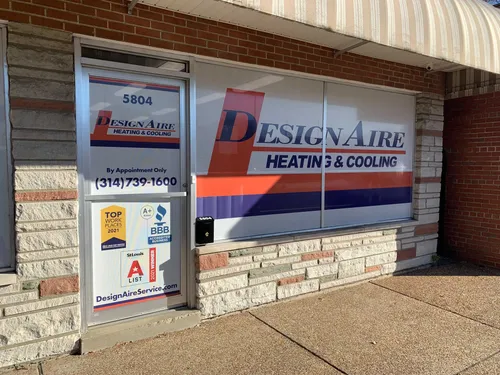
Design Aire Heating & Cooling - St. Louis provides a full range of HVAC services in St. Louis, MO, including installation, maintenance, and repair of air conditioners, furnaces, boilers, and heat pumps. They also offer indoor air quality improvements such as air duct cleaning and advanced air purifiers. The company specializes in commercial and residential HVAC solutions, using the latest technologies to ensure systems run efficiently and safely. Established in 1904, Design Aire has a long history of serving the St. Louis area with a focus on quality and customer satisfaction.

Lancaster Brothers
19495 Metcalf Ave, Overland Park, KS 66085
Lancaster Brothers is an HVAC company serving Kansas City, MO, since 2000. They provide heating, air conditioning, geothermal heat pump installation and repair, indoor air quality services, and home generator installation. Their team handles residential and commercial projects, including new construction HVAC installations. Lancaster Brothers specializes in geothermal systems and offers same-day service with free estimates. Their licensed and certified technicians focus on delivering long-lasting solutions backed by warranties.
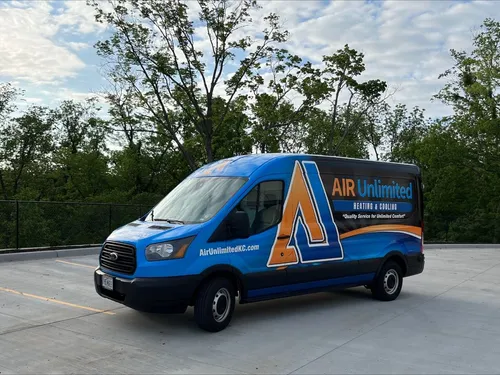
Air Unlimited Heating and Cooling
701 Haines Suite 100, Liberty, MO 64068
Air Unlimited Heating and Cooling provides a range of HVAC and indoor air quality services in Kansas City, MO. Their offerings include air conditioner, furnace, and heat pump repair and installation, as well as duct cleaning, thermostat installation, and air quality solutions. The company also handles water heater repair and water filtration system installation. Established in 2010, Air Unlimited Heating and Cooling has built a reputation for honest and reliable service. VIP members have access to 24/7 emergency service for urgent heating and cooling needs.
Understanding Missouri's Approach to Indoor Air
Missouri does not set unique, state-specific legal limits for indoor pollutants. Instead, state agencies like the Missouri Department of Health and Senior Services (MDHSS) provide information and guidance that aligns with recommendations from federal bodies like the Environmental Protection Agency (EPA) and the Centers for Disease Control and Prevention (CDC) 1. The core principle is prevention through source control-identifying and eliminating or reducing pollutants at their origin-coupled with adequate ventilation to dilute any remaining contaminants.
This means there is no state-run certification for mold testing or remediation, and exposure limits for most indoor pollutants are based on federal or industry guidelines 2. For homeowners, renters, and building managers, the focus is on being proactive: understanding common risks, maintaining building systems, and knowing when to call in a specialist.
Common Indoor Air Pollutants in Missouri Homes
Several key pollutants are of particular concern in Missouri, as identified by state and federal health agencies 3.
- Radon: This colorless, odorless radioactive gas is the second leading cause of lung cancer nationwide. It seeps into buildings from the ground. The MDHSS and EPA recommend that all Missouri homes be tested for radon 4.
- Mold: Mold thrives in areas with excess moisture and poor ventilation, such as basements, bathrooms, and around leaky windows. While Missouri law does not set specific exposure limits or regulate types of mold, visible growth should be addressed to prevent health issues and structural damage.
- Combustion Pollutants: These include carbon monoxide (CO), nitrogen dioxide, and fine particles from fuel-burning appliances. Common sources are gas stoves, fireplaces, wood stoves, furnaces, and vehicles in attached garages. Proper venting and appliance maintenance are critical 5.
- Volatile Organic Compounds (VOCs): These are chemicals that off-gas from many household products, including paints, varnishes, cleaning supplies, adhesives, and even new furniture and building materials. Source control and increased ventilation during and after use are key mitigation strategies 6.
- Biological Allergens: Dust mites, pet dander, cockroach debris, and pollen can circulate indoors, triggering allergies and asthma. Regular cleaning, humidity control, and effective air filtration can help reduce levels.
- Secondhand Smoke: Missouri's Clean Indoor Air Act provides protections in many public spaces, but exemptions can exist for smaller bars and restaurants 7. In multi-unit housing, smoke can drift between units, affecting air quality.
The Critical Role of Ventilation
Adequate ventilation is a fundamental solution for diluting and removing indoor air pollutants. Missouri's adopted building codes, such as the International Mechanical Code (IMC) and International Building Code (IBC), set minimum ventilation requirements for occupied spaces 8. Key expectations include:
- Natural Ventilation: Building codes generally require habitable rooms to have windows or skylights that can open to the outdoors to allow for fresh air exchange 9.
- Mechanical Ventilation: In modern, energy-efficient homes that are tightly sealed, natural ventilation is often insufficient. Whole-house mechanical ventilation systems are necessary to ensure a consistent supply of fresh outdoor air.
- HVAC System Maintenance: Your heating and cooling system is central to air circulation. Regular maintenance, including changing filters to a MERV 13 or higher rating when the system allows, is widely recommended by local health departments for improving air quality.
- Local Exhaust: Kitchens and bathrooms should have exhaust fans that vent directly to the outdoors (not into an attic) to promptly remove moisture, odors, and pollutants at their source 10.
Find the perfect indoor air quality service providers for your needs
Get personalized recommendations and expert advice
Professional IAQ Services: What to Expect
When DIY measures aren't enough, or if you have specific concerns like suspected mold or high radon, professional services are available. In Missouri, investigations of IAQ issues in commercial or public buildings are typically handled by facilities management or environmental health and safety staff, involving visual inspections and ventilation assessments 11 12. For residential needs, you can seek out specialists.
Inspections and Testing:
- General IAQ Assessment: A professional "healthy homes survey" to identify multiple risk factors can range from $200 to over $500, depending on the home's size and scope.
- Radon Testing: DIY test kits are available for under $20. Professional short-term or long-term testing typically costs between $100 and $250.
- Mold Inspection: Since there are no state standards for testing, many professionals recommend a thorough visual inspection first. If testing is deemed necessary, a full inspection and lab analysis can cost between $300 and $1,000 or more.
Common Improvements and Mitigation:
- Air Purifiers: Portable High-Efficiency Particulate Air (HEPA) cleaners for single rooms or whole-house units integrated into HVAC systems can range from $100 to over $800, depending on capacity and features 13.
- Air Duct Cleaning: Having your home's ductwork professionally cleaned to remove dust, debris, and allergens typically costs between $300 and $1,000+ for an average system 14.
- Mold Remediation: Costs are highly variable based on the extent of contamination. Significant remediation projects can cost several thousand dollars. It is crucial to address the underlying moisture problem to prevent recurrence.
- Radon Mitigation: Installing an active soil depressurization system, which vents radon gas from beneath the home to the outside, is the most effective solution. Professional installation in Missouri typically costs between $800 and $2,500 15 16.
Maintaining Healthy Indoor Air: A Proactive Approach
Beyond specific services, maintaining good indoor air is an ongoing process. Start with source control: choose low-VOC products, ensure fuel-burning appliances are properly vented and serviced, clean up spills and leaks quickly to prevent mold, and test for radon. Complement this with diligent maintenance of your home's ventilation systems-clean exhaust fan grilles, change HVAC filters regularly, and consider upgrading to higher-efficiency filters. Managing indoor humidity levels (ideally between 30-50%) with dehumidifiers or air conditioners can also suppress mold growth and dust mites. By combining knowledge of Missouri's common pollutants with these practical steps, you can take significant control over your indoor environment.
Frequently asked questions
Sources
Footnotes
-
Home Air Safety - Perryville - Perry County Health Department - https://www.perrycountyhealth.com/air-safety.php ↩
-
Policy on Indoor Air Quality - Missouri Disability Portal - MO.gov - https://disability.mo.gov/gcd/indoorairquality.htm ↩
-
Indoor Air Quality | US EPA - https://www.epa.gov/air-quality/indoor-air-quality ↩
-
Environmental Factors | Health & Senior Services - https://health.mo.gov/living/environment/ ↩
-
The Inside Story: A Guide to Indoor Air Quality | CPSC.gov - https://www.cpsc.gov/Safety-Education/Safety-Guides/Home/The-Inside-Story-A-Guide-to-Indoor-Air-Quality ↩
-
Indoor Air Pollution: What Missouri Homeowners Should Know - https://cleanaircolumbia.com/indoor-air-pollution/ ↩
-
Smoke-Free Bars and Restaurants - https://health.mo.gov/living/wellness/tobacco/smoke-free-environments/bars-restaurants.php ↩
-
Chapter 12 Interior Environment: Missouri Building Code 2018 - https://up.codes/viewer/missouri/ibc-2018/chapter/12/interior-environment ↩
-
§ 151.18 MINIMUM STANDARDS FOR VENTILATION. - https://codelibrary.amlegal.com/codes/coats/latest/coats_nc/0-0-0-2971 ↩
-
Chapter 4 Ventilation: Missouri Modular Mechanical Code 2021 - https://up.codes/viewer/missouri/imc-2021/chapter/4/ventilation ↩
-
INDOOR AIR QUALITY - Missouri State University - https://www.missouristate.edu/Facilities/_Files/IndoorAirQualityProcedure.pdf ↩
-
Indoor Air Quality - Saint Louis University - https://www.slu.edu/facilities/-pdf/indoor-air-quality.pdf ↩
-
Improving Indoor Air Quality to Improve Health - St. Louis County - https://stlouiscountymo.gov/st-louis-county-departments/public-health/covid-19/advisories-safety-recommendations/improving-indoor-air-quality/ ↩
-
Indoor Air Pollution: What Missouri Homeowners Should Know - https://cleanaircolumbia.com/indoor-air-pollution/ ↩
-
Policy on Indoor Air Quality - Missouri Disability Portal - MO.gov - https://disability.mo.gov/gcd/indoorairquality.htm ↩
-
Mold | Indoor Air | Health & Senior Services - https://health.mo.gov/living/environment/indoorair/mold.php ↩