Find the Best Indoor Air Quality Service Providers for Your Business
No obligation • Fast responses • Nationwide coverage

Why you can trust HVAC Firms
HVAC Firms is a leading United States resource for evaluating HVAC service providers. Our team researches companies, checks credentials, and reviews customer feedback to present clear, unbiased information. Listings and rankings are based on merit, and companies cannot pay to change our editorial content.
Search providers near you
Best Indoor Air Quality Service Providers in Indiana Ranked
The air inside your Indiana home or business can significantly impact your health, comfort, and productivity. Indoor air quality (IAQ) refers to the condition of the air within buildings, influenced by pollutants, humidity, and ventilation. In Indiana, there are no state-enforceable IAQ laws for private residences and most commercial buildings, making proactive management essential. This guide provides clear, actionable information on common pollutants, state-specific guidelines, and practical steps you can take to assess and improve your indoor environment, helping you connect with the right expertise for your needs.
Northeast Mechanical Services, Inc.
3620 Metro Park Dr N, Fort Wayne, IN 46818
Northeast Mechanical Services, Inc. is an HVAC and plumbing contractor based in Fort Wayne, IN. They provide a wide range of services including installation and repair of air conditioning, furnaces, heat pumps, boilers, mini splits, geothermal heat pumps, and indoor air quality systems. The company also offers generator installation and maintenance, ensuring reliable power solutions for homes and businesses. Northeast Mechanical Services emphasizes honest recommendations and fair pricing, serving Fort Wayne and nearby communities such as New Haven, Auburn, and Huntington. Their expertise includes energy consultations and eco-friendly geothermal HVAC systems.
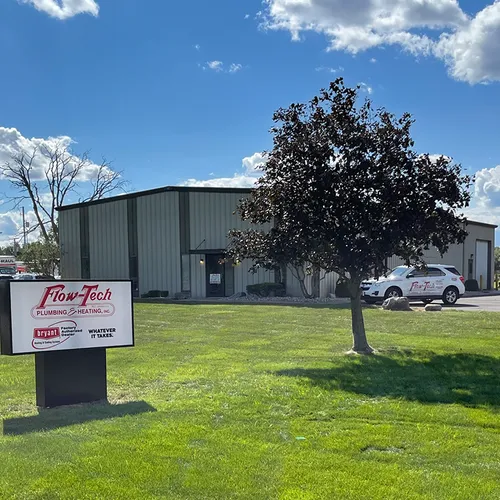
Flow-Tech Plumbing & Heating, Inc.
8131 N Clinton St, Fort Wayne, IN 46825
Flow-Tech Plumbing & Heating, Inc. has been serving Fort Wayne, IN, and surrounding areas since 1991. They provide a wide range of plumbing and HVAC services including installation, repair, and maintenance of air conditioners, furnaces, boilers, and indoor air quality systems. Their team handles both residential and commercial projects, offering specialized services such as backflow prevention, gas line work, and water purification system installation. Flow-Tech also provides 24/7 emergency service to address urgent plumbing and HVAC needs at any time.
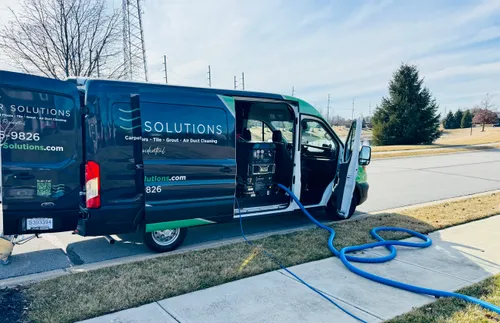
Healthy Interior Solutions
14996 Rustic Ridge Ct, Fishers, IN 46037
Healthy Interior Solutions is a family-owned company based in Fishers, Indiana, serving Indianapolis, IN, and Central Indiana. They specialize in indoor air quality services, including duct cleaning, mold remediation, radon mitigation, water damage restoration, and professional cleaning for homes and businesses. The company uses advanced equipment and scientifically backed methods to improve indoor environments and maintain healthier living and working spaces. Originally starting as a carpet-cleaning service, Healthy Interior Solutions has expanded into a comprehensive environmental health provider focused on restoring and protecting indoor air quality.
Blazing Heat HVAC LLC
Fort Wayne, IN
Blazing Heat HVAC LLC is a heating and cooling company serving Fort Wayne, IN, and nearby communities. They provide a wide range of HVAC services including installation, repair, diagnostics, maintenance, tune-ups, indoor air quality solutions, commercial refrigeration, boiler services, and geothermal system support. With over 36 years of combined experience, their certified technicians focus on energy efficiency, system longevity, and indoor comfort for both residential and commercial customers. They also offer emergency repair services to minimize downtime and maintain reliable system operation.
Home Comfort Experts
919 Production Rd, Fort Wayne, IN 46808
Home Comfort Experts is an HVAC contractor based in Fort Wayne, IN, offering a range of heating and cooling services. They provide furnace and air conditioning repair, installation, tune-ups, duct cleaning, and indoor air quality services. The company is known for its 24/7 availability, ensuring help is accessible during emergencies. Their technicians are trained to work on all makes and models, and they emphasize safety and professionalism by drug testing and background checking employees. Home Comfort Experts serves Northern Indiana and Southwest Michigan, focusing on maintaining system efficiency and indoor air quality.
Understanding Indiana's Approach to Indoor Air
Unlike some states, Indiana does not have specific, enforceable indoor air quality regulations for private homes or standard commercial properties. The state's formal rules (410 IAC 33) apply specifically to schools and state agency buildings only 1. For everyone else, guidance comes from federal agencies like the Environmental Protection Agency (EPA) and the Occupational Safety and Health Administration (OSHA), as well as general public health recommendations 2.
The Indiana Department of Health (IDOH) serves as a key resource, offering educational materials and technical assistance for IAQ issues in all building types 3 4. However, their role is advisory; they cannot mandate actions or enforce standards in residential or typical commercial settings 5 6. This means the responsibility for maintaining healthy indoor air largely falls on homeowners, renters, and business operators.
Common Indoor Air Pollutants in Indiana Homes
Several pollutants are of particular concern across the Hoosier State. Understanding these is the first step toward effective management.
- Mold and Moisture: Due to Indiana's humid summers and potential for basement dampness, mold growth is a widespread issue. Controlling moisture through proper ventilation, dehumidification, and prompt repair of leaks is the most critical prevention strategy.
- Radon: This colorless, odorless radioactive gas is a serious health hazard and is prevalent in many parts of Indiana. It seeps into buildings from the soil through cracks in foundations and slabs. The EPA recommends mitigation if levels are at or above 4 pCi/L and suggests retesting every five years even if initial results are lower.
- Combustion Pollutants: These include carbon monoxide (CO), nitrogen dioxide, and other gases produced by fuel-burning appliances. Risks arise from improperly vented furnaces, water heaters, fireplaces, and stoves, or from vehicles idling in attached garages 7.
- Volatile Organic Compounds (VOCs): These are chemicals emitted as gases from a wide array of products, including paints, varnishes, cleaning supplies, adhesives, and new furniture or carpets. They can cause short- and long-term health effects 8.
- Pesticides: Chemicals used to control insects, rodents, and other pests can linger in indoor air and dust, posing their own health risks.
- Asbestos and Lead Paint: Primarily found in homes and buildings constructed before the 1980s. These materials are generally safe if intact and undisturbed, but renovation or damage can release hazardous fibers or dust that require specialized handling and removal 9 10.
Ventilation Standards and Recommendations
Proper ventilation is the cornerstone of good indoor air quality, as it dilutes and removes pollutants.
For Indiana Schools: State regulations require mechanical ventilation systems to supply outside air to occupied classrooms. The rule mandates maintaining carbon dioxide (CO2) levels no more than 700 parts per million above outdoor concentrations, which typically translates to providing about 15 cubic feet per minute (cfm) of outside air per person 11 12.
For Indiana Residences: The IDOH recommends following guidelines from standards bodies like ASHRAE (American Society of Heating, Refrigerating and Air-Conditioning Engineers). A common target for homes is a minimum of 0.35 air changes per hour (ACH). You can improve your home's ventilation with several practical steps:
- Increase fresh air intake by opening windows and doors when outdoor weather and air quality conditions are favorable.
- Use exhaust fans in kitchens and bathrooms during and after cooking or showering to remove moisture and pollutants directly at the source 13 14.
- Ensure your HVAC system is properly maintained, with regular filter changes every 30 to 90 days depending on filter type and household factors 15.
Find the perfect indoor air quality service providers for your needs
Get personalized recommendations and expert advice
Professional IAQ Testing and Mitigation Costs
When DIY measures aren't enough, professional assessment and remediation are wise investments. Costs in Indiana align with national averages and depend on your home's size, the number of contaminants tested, and the complexity of the solutions required 16.
Testing and Assessment:
- Standard Whole-Home IAQ Assessment: A broad evaluation often costs between $292 and $584 on average, frequently as a flat fee.
- Specific Pollutant Testing (Professional):
- Mold: $300 to $1,000 17.
- Radon: $150 to $800.
- VOCs: $200 to $400.
- Asbestos: $250 to $800.
- DIY Test Kits: Available for $15 to $150, but professional testing is recommended for more reliable, accurate results and expert interpretation and recommendations 18.
Remediation and Mitigation:
- Mold Removal: Professional remediation averages $1,200 to $3,800.
- Radon Mitigation System Installation: Typically costs $800 to $1,300 on average.
- Asbestos Abatement: A specialized and regulated process averaging $1,190 to $3,260 19.
Creating a Healthier Indoor Environment
Beyond testing and fixing problems, you can adopt daily habits to maintain better air quality.
- Control Sources: Choose low-VOC paints and cleaning products. Store chemicals properly. Groom pets regularly and clean floors to reduce dander and dust.
- Manage Humidity: Use dehumidifiers in damp areas like basements to keep relative humidity between 30% and 50%, inhibiting mold growth and dust mites.
- Maintain Systems: Schedule annual HVAC inspections. Clean ducts if necessary. Upgrade to higher-efficiency air filters (like MERV 13-rated) if your system can accommodate them to capture smaller particles 20.
Frequently asked questions
Sources
Footnotes
-
Environmental Public Health: Indoor Air Quality - IN.gov - https://www.in.gov/health/eph/indoor-air-quality/ ↩
-
Clean Air Act - Environmental Law - https://environmentallaw.uslegal.com/federal-laws/clean-air-act/ ↩
-
Environmental Public Health: Indoor Air Quality - IN.gov - https://www.in.gov/health/eph/indoor-air-quality/ ↩
-
Air Quality | Allen County Department of Health - https://allencountyhealth.com/info-about/environmental-health/air-quality ↩
-
Health: Environmental Public Health: Health Nuisances Public Nuisances & Property Nuisances - https://www.in.gov/health/eph/health-nuisances-public-nuisances-and-property-nuisances/ ↩
-
Integrated Management of Residential Indoor Air Quality: A Call for Stakeholders in a Changing Climate - https://pdfs.semanticscholar.org/4a09/fb54c1d1cfbfd52186b8ab7d59a1c40998be.pdf ↩
-
What is Indoor Air Quality? - Air Care Heating And Air Conditioning - https://www.aircareheatingandairconditioning.com/indoor-air-quality/what-is-indoor-air-quality-/ ↩
-
Indoor Air Quality in Schools Best Practices Manual - IN.gov - https://iga.in.gov/publications/agency_report/2020-indoor-air-quality-in-schools-best-practices-manual-revised-july-2019.pdf ↩
-
Indoor Air Quality Program - https://marionhealth.org/indoor-air-quality-program/ ↩
-
improving indoor air quality in rental dwellings - https://www.eli.org/sites/default/files/eli-pubs/d13-06a.pdf ↩
-
Indoor Air Quality in Schools Best Practices Manual - IN.gov - https://www.in.gov/health/eph/files/IAQ-in-Schools-Best-Practices-Manual_Final12_11_25-Links.pdf ↩
-
Indoor Air Quality in Schools Best Practices Manual - IN.gov - https://www.in.gov/health/eph/files/Indoor-Air-Quality-in-Schools-Best-Practices-Manual.pdf ↩
-
How much ventilation do I need in my home to improve indoor ... - https://www.epa.gov/indoor-air-quality-iaq/how-much-ventilation-do-i-need-my-home-improve-indoor-air-quality ↩
-
Factors affecting variability in infiltration of ambient particle and gaseous pollutants into home at urban environment - https://www.sciencedirect.com/science/article/pii/S0360132321007484 ↩
-
The Hidden Dangers of Poor Indoor Air Quality in Indiana ... - https://hoosierindoorair.com/the-hidden-dangers-of-poor-indoor-air-quality-in-indiana-homes-and-how-fall-maintenance-can-help/ ↩
-
How Much Does An Indoor Air Quality Test Cost? - https://www.cleanairsciences.com/indoor-air-quality-cost/ ↩
-
Understanding Mold Testing Costs - INX Indoor Air Quality - https://inxiaq.com/how-much-does-mold-testing-cost/ ↩
-
How Much Does Indoor Air Quality Testing Cost? [2026 Data] - https://www.angi.com/articles/how-much-does-indoor-air-quality-testing-cost.htm ↩
-
How Much Does Indoor Air Quality Testing Cost? [2025 Data] - https://www.homeadvisor.com/cost/environmental-safety/test-indoor-air-quality/ ↩
-
Strategies for Improving Indoor Air Quality in Your Home | Wagner - https://www.wagnermechanical.com/blog/improving-indoor-air-quality ↩