Find the Best Indoor Air Quality Service Providers for Your Business
No obligation • Fast responses • Nationwide coverage

Why you can trust HVAC Firms
HVAC Firms is a leading United States resource for evaluating HVAC service providers. Our team researches companies, checks credentials, and reviews customer feedback to present clear, unbiased information. Listings and rankings are based on merit, and companies cannot pay to change our editorial content.
Search providers near you
Best Indoor Air Quality Service Providers in Arkansas Ranked
The air inside your Arkansas home or business can be more polluted than the air outside, impacting comfort, health, and even energy bills. Indoor Air Quality (IAQ) refers to the condition of the air within buildings, influenced by pollutants, humidity, and ventilation. This matters because we spend up to 90% of our time indoors, and poor IAQ can lead to allergies, asthma flare-ups, headaches, and long-term health concerns. For Arkansas residents, managing IAQ involves understanding common local pollutants like dust, mold, radon, and volatile chemicals, and knowing how to find qualified professionals who can assess your environment and implement effective solutions like improved filtration, ventilation, and source control.
Understanding Indoor Air Pollutants in Arkansas
The first step to improving your indoor environment is identifying what you're up against. Arkansas homes and buildings face a mix of common and region-specific pollutants that degrade air quality.
Particulate Matter (PM): This includes visible dust, pollen, pet dander, mold spores, and smoke particles. These tiny particles can irritate the eyes, nose, throat, and lungs, and exacerbate respiratory conditions.
Volatile Organic Compounds (VOCs): These are gases emitted from a wide array of household products and materials. Common sources in Arkansas homes include paints, cleaning supplies, adhesives, new furniture (often containing formaldehyde), carpets, and building materials. Prolonged exposure can cause headaches, nausea, and damage to the liver, kidney, or central nervous system.
Combustion Pollutants: Carbon Monoxide (CO) and Nitrogen Dioxide (NO2) are colorless, odorless gases produced by fuel-burning appliances. In Arkansas, common sources are gas furnaces, water heaters, stoves, and fireplaces that are not properly vented or maintained. CO is particularly dangerous, potentially fatal at high levels.
Radon: This is a significant concern in many parts of Arkansas. Radon is a naturally occurring radioactive gas that seeps into buildings from the soil. It is the second leading cause of lung cancer in the United States. Testing for radon is a critical IAQ step for any Arkansas property. 1
Mold and Biological Contaminants: Arkansas's humid climate creates ideal conditions for mold and mildew growth. Dampness from leaks, flooding, or high indoor humidity can lead to mold spores in the air, triggering allergic reactions and asthma attacks.
Carbon Dioxide (CO2): While not toxic at typical levels, high concentrations of CO2 from occupant respiration are a primary indicator of inadequate ventilation. Stuffy, stale air often means other pollutants are also being trapped indoors.
Arkansas IAQ Standards and Guidelines
Arkansas does not have unique statewide indoor air quality regulations for private residences. The state generally relies on federal standards and guidelines set by the Environmental Protection Agency (EPA) and the Occupational Safety and Health Administration (OSHA) for commercial settings. This means the best practices recommended by the EPA form the cornerstone of effective IAQ management for Arkansas homeowners and business operators. 2
The Arkansas Department of Environmental Quality (ADEQ) focuses on outdoor air quality permitting and standards, but their resources acknowledge the importance of managing indoor environments, especially concerning issues like smoke from open burning that can infiltrate homes. 3 4 For specific health-based concerns, the Arkansas Department of Health may provide guidance on contaminants like mold and radon.
Core Strategies for Healthier Indoor Air
Improving your indoor air doesn't necessarily require expensive equipment. The most effective strategy is a multi-pronged approach often summarized as Source Control, Ventilation, and Filtration.
1. Source Control: The Most Effective Method
The best way to improve air quality is to prevent pollutants from entering the air in the first place.
- Choose low-VOC paints, finishes, and building materials when renovating or furnishing your home.
- Store chemicals (paints, solvents, pesticides) in well-ventilated sheds or garages, not living spaces.
- Ensure combustion appliances (furnaces, water heaters, gas stoves) are professionally installed, properly vented to the outdoors, and regularly inspected.
- Address water leaks and moisture problems immediately to prevent mold growth.
- Test for radon and install a mitigation system if levels are high.
2. Ventilation: Diluting Indoor Pollutants
Bringing fresh outdoor air inside is crucial for diluting and removing stale, polluted air.
- Natural Ventilation: Open windows and doors when weather and outdoor air quality permit.
- Mechanical Ventilation: Use exhaust fans in kitchens and bathrooms that vent to the outside. Run them during and after cooking or showering.
- HVAC Systems: Your heating and cooling system plays a key role. Ensure it is bringing in adequate fresh air (through an outdoor air intake if equipped) and that the air circulation is balanced.
- Advanced Systems: For tighter, energy-efficient homes, Heat Recovery Ventilators (HRVs) or Energy Recovery Ventilators (ERVs) are excellent for bringing in fresh air while minimizing energy loss. These are highly recommended in Arkansas's climate. 5
3. Filtration and Humidity Control
- Air Filtration: Use the air filter in your central HVAC system. Upgrade to a filter with a Minimum Efficiency Reporting Value (MERV) of 11 or higher to capture finer particles like mold spores and dust. 6 Change filters regularly (every 1-3 months). For single rooms, portable HEPA air purifiers can be very effective.
- Humidity Control: Maintaining relative humidity between 30% and 50% is vital in Arkansas. 7 8 High humidity encourages mold and dust mites. Use dehumidifiers in damp basements or during humid summer months. Ensure your air conditioner is properly sized and functioning to remove moisture from the air.
Find the perfect indoor air quality service providers for your needs
Get personalized recommendations and expert advice
What to Expect from Professional IAQ Services
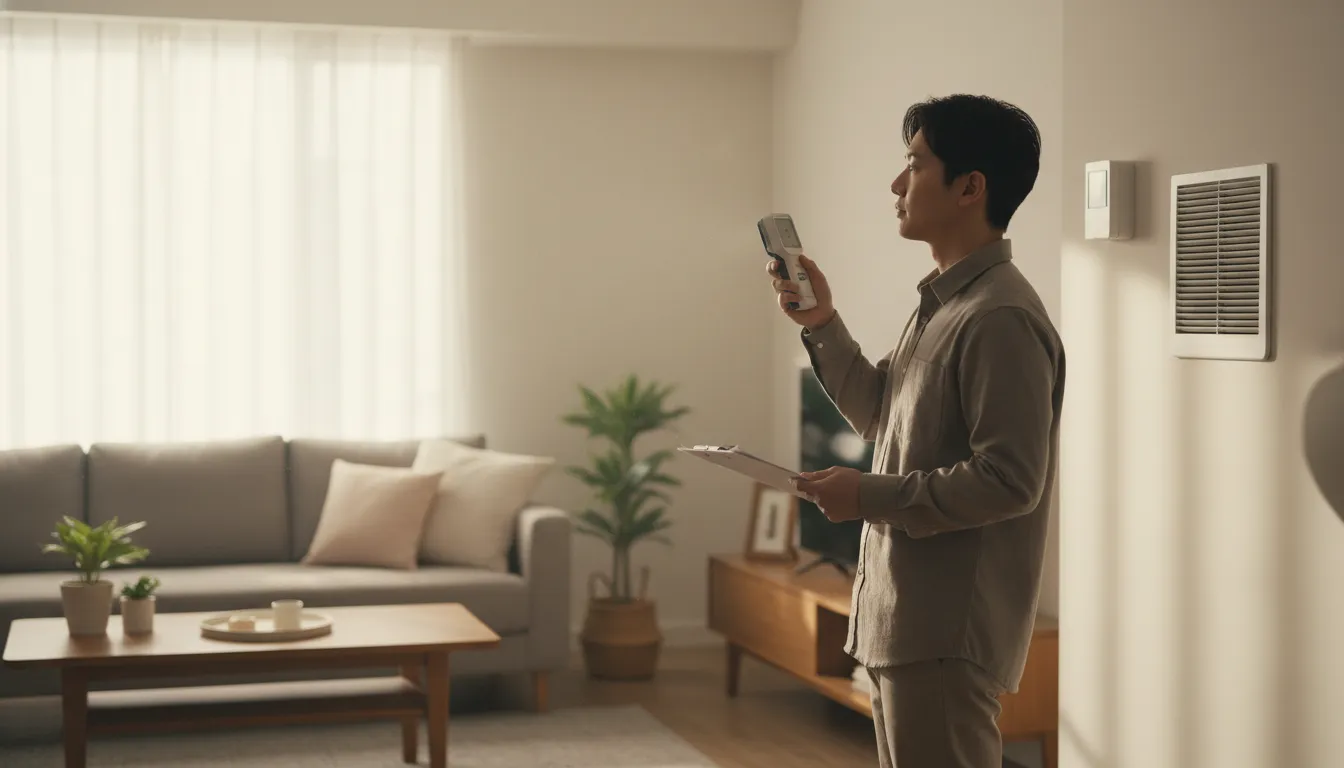
For complex problems or peace of mind, hiring a professional is wise. These specialists can conduct comprehensive assessments and implement targeted solutions.
Professional IAQ Assessment: A thorough evaluation goes beyond a simple visual check. It may include:
- Interview and Visual Inspection: Discussing occupant symptoms and inspecting the property for moisture, mold, ventilation issues, and potential pollutant sources.
- Instrument Testing: Using specialized tools to measure levels of specific contaminants like radon, formaldehyde, carbon monoxide, mold spores (via air or surface sampling), and particulate matter. 9
- Ventilation Analysis: Checking airflow rates, HVAC system performance, and the effectiveness of exhaust systems.
Common IAQ Improvement Services:
- Duct Cleaning and Sealing: Removing accumulated dust and debris from ductwork and sealing leaks to improve system efficiency and air quality.
- HVAC System Optimization: Adjusting or upgrading systems to improve fresh air intake, filtration, and humidity control.
- Mold Remediation: Safely containing, removing, and cleaning areas affected by mold growth.
- Radon Mitigation: Installing a system (typically a vent pipe and fan) to draw radon gas from beneath the home and vent it safely above the roof.
- Installation of Advanced Systems: Adding whole-home humidifiers/dehumidifiers, UV-C lights for microbial control, or ERV/HRV ventilation systems.
Cost Considerations for IAQ Improvements in Arkansas
Costs can vary dramatically based on your home's size, the specific problems found, and the solutions required.
-
DIY & Low-Cost Improvements ($50 - $300):
- High-MERV HVAC filters ($20-$50 each).
- Portable HEPA air purifiers for key rooms ($50-$400).
- Stand-alone dehumidifiers ($100-$300).
- DIY radon test kits ($10-$30).
- Using exhaust fans and controlling sources.
-
Professional Services & Medium-Cost Solutions ($300 - $2,000):
-
Professional IAQ inspection and testing: $300 - $1,000+.
- Duct cleaning: $300 - $800+.
- Professional installation of high-efficiency filters or UV lights.
- Repairing ventilation systems or adding localized exhaust fans.
-
Major Mitigation and High-Cost Solutions ($1,000 - $5,000+):
- Radon mitigation system installation: Often $1,200 - $2,500. 10
- Whole-home ventilation system (HRV/ERV): $2,000 - $5,000+ installed.
- Extensive mold remediation: Costs depend on the scope but can run several thousand dollars.
- Major HVAC upgrades or modifications to improve fresh air intake and humidity control.
Investing in better indoor air is an investment in your health, comfort, and the longevity of your property. By starting with source control and proper ventilation, then seeking professional help for assessment and complex solutions, you can create a healthier indoor environment for everyone in your Arkansas home or business.
Frequently asked questions
Sources
Footnotes
-
The Inside Story: A Guide to Indoor Air Quality - https://www.cpsc.gov/Safety-Education/Safety-Guides/Home/The-Inside-Story-A-Guide-to-Indoor-Air-Quality ↩
-
Indoor Air Quality - Mason-Grant - http://www.masongrant.com/indoor-air-quality ↩
-
Arkansas Air Quality Permitting - Introductory Guide - ADEQ - https://www.adeq.state.ar.us/poa/enterprise-services/pdfs/air-permitting-introductory-guide.pdf ↩
-
Arkansas Air Quality | Standards, Emission Control, Smoke Management - https://uaex.uada.edu/environment-nature/air-quality/default.aspx ↩
-
Indoor Air Quality Features | ENERGY STAR - https://www.energystar.gov/newhomes/features-benefits/indoor-air-quality-features ↩
-
Indoor Air Quality in Commercial and Institutional Buildings - https://www.osha.gov/sites/default/files/publications/3430indoor-air-quality-sm.pdf ↩
-
Improving Indoor Air Quality | US EPA - https://www.epa.gov/indoor-air-quality-iaq/improving-indoor-air-quality ↩
-
5 Factors that Affect Indoor Air Quality & How to Improve It - JSE Labs - https://jselabs.com/blog/factors-that-affect-indoor-air-quality/ ↩
-
Indoor Air Quality (IAQ) for Building Environments - Intertek - https://www.intertek.com/building/indoor-air-quality/ ↩
-
How Much Does a Home Indoor Air Quality Testing Cost? - https://www.airpf.com/how-much-does-a-home-indoor-air-quality-testing-cost/ ↩