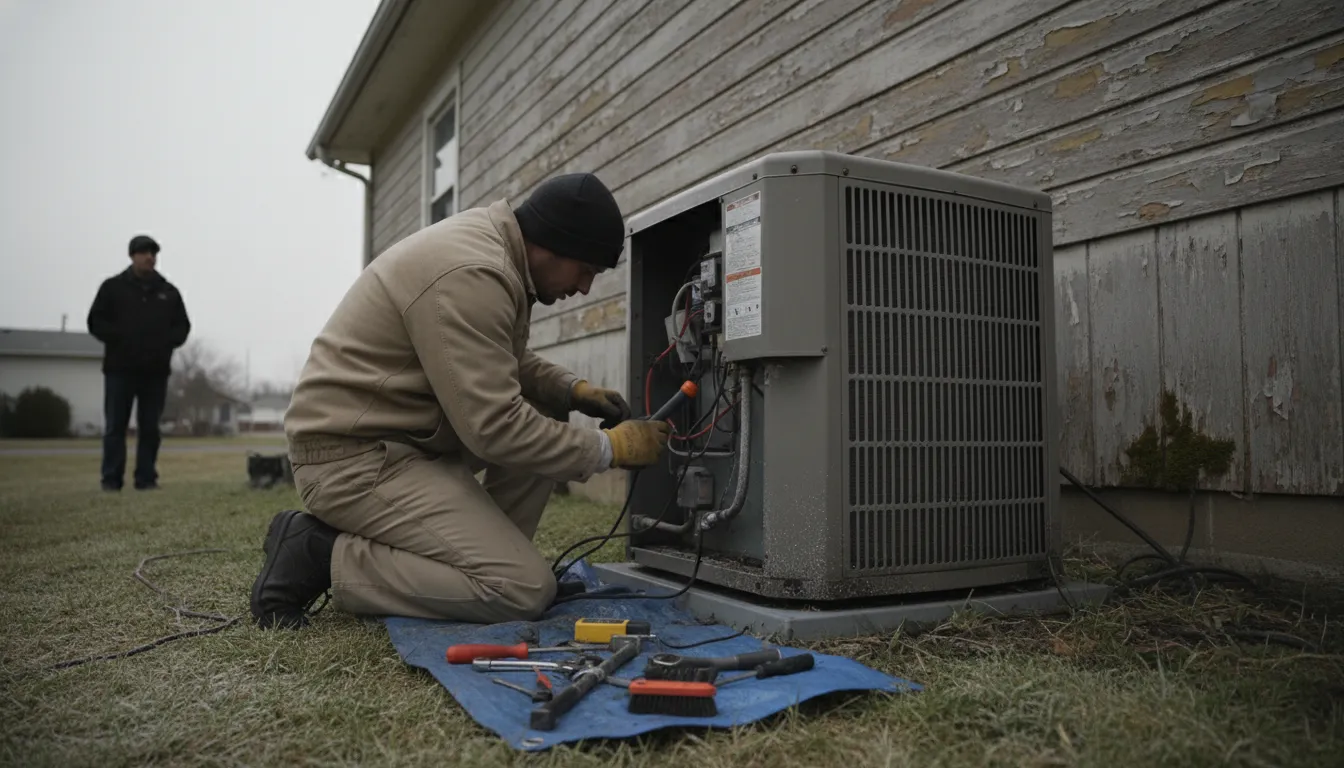
Find the Best Heat Pump Repair Contractors for Your Business
No obligation • Fast responses • Nationwide coverage

Why you can trust HVAC Firms
HVAC Firms is a leading United States resource for evaluating HVAC service providers. Our team researches companies, checks credentials, and reviews customer feedback to present clear, unbiased information. Listings and rankings are based on merit, and companies cannot pay to change our editorial content.
Search providers near you
Best Heat Pump Repair Contractors in Wisconsin Ranked
A heat pump is a versatile and efficient system for both heating and cooling your Wisconsin home. However, the state's famously harsh winters can push these systems to their limits, leading to performance issues or breakdowns. When your heat pump isn't working correctly, it affects your comfort, energy bills, and safety. This guide explains common heat pump problems in Wisconsin, how they are diagnosed and repaired, and how you can connect with qualified local specialists to restore your system's operation.
Professional Services Heating, AC & Electric Repair
113 Riverview Dr, Thiensville, WI 53092
Professional Services Heating, AC & Electric Repair is an HVAC company serving Milwaukee, WI, and the surrounding Ozaukee and Washington counties. They provide a range of heating and cooling services including furnace, heat pump, boiler, and geothermal system repair and installation. The company is equipped to handle both standard and high-efficiency furnaces, as well as ductless split systems. They emphasize practical advice and offer warranties on parts and labor. Professional Services also offers 24/7 emergency service to address urgent heating and cooling needs.
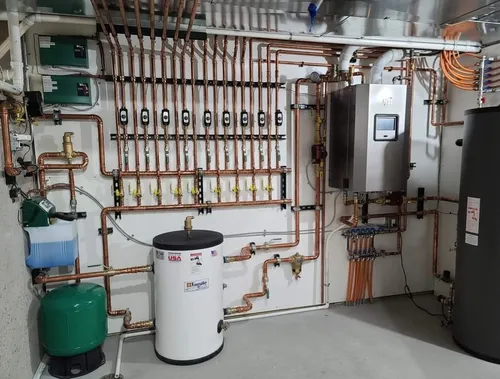
HoneyCreek Heating, Cooling & Electric, LLC
N63W22633 Main St Ste. 107, Sussex, WI 53089
HoneyCreek Heating, Cooling & Electric, LLC is a full-service HVAC and electrical company serving Milwaukee, WI, and the surrounding areas. They provide repair, installation, and maintenance for heating and cooling systems including furnaces, air conditioners, boilers, heat pumps, and thermostats. Their licensed electricians also handle electrical panel upgrades, wiring repairs, and ceiling fan installations. HoneyCreek offers 24/7 emergency service and covers a broad range of locations in Southeastern Wisconsin. Their technicians are experienced with many HVAC brands and emphasize safety and clear communication throughout their work.

Brothers HVAC, LLC
1331 County Rd D, Oregon, WI 53575
Brothers HVAC, LLC is an HVAC company based near Madison, WI, offering a full range of residential and commercial heating and cooling services. They provide installation, repair, maintenance, and remodeling for systems including air conditioners, furnaces, and heat pumps. The company works with well-known brands such as Trane, Mitsubishi Electric, and Honeywell, and handles projects from new construction to system upgrades. With over 20 years of experience, Brothers HVAC holds certifications and licenses in HVAC and refrigeration, ensuring skilled and knowledgeable service.

Pro Serv Plumbing, Heating, and Cooling
110 N 121st St, Wauwatosa, WI 53226
Pro Serv Plumbing, Heating, and Cooling provides residential and commercial plumbing, heating, and cooling services in Milwaukee, WI. The company offers repair, installation, and maintenance for HVAC systems including air conditioners, furnaces, and heat pumps. Pro Serv is family owned and operated by Jon Weis, a Master Plumber and HVAC Contractor trained by the U.S. Air Force. The company is accredited by the Better Business Bureau and the Milwaukee Builders Association and serves the Milwaukee metro area with 24/7 availability.
Roman Home Services - Electric, Plumbing, Heating & Cooling
2220 S 114th St, West Allis, WI 53227
Roman Home Services - Electric, Plumbing, Heating & Cooling is a family-owned home service contractor based in Milwaukee, WI. Serving Southeastern Wisconsin since 1929, they provide a wide range of residential electrical, plumbing, and HVAC services including installation, repair, and maintenance of air conditioning, furnaces, heat pumps, and boilers. Their team is equipped to handle projects of all sizes, from new construction to remodeling and service upgrades. Roman Home Services offers 24/7 availability with over 50 service trucks on the road, ensuring timely support whenever needed.
Why Wisconsin Winters Are Tough on Heat Pumps
Heat pumps work by transferring heat from one place to another. In winter, they extract heat from the cold outdoor air and move it inside. Wisconsin's extreme cold presents a unique challenge: as temperatures plummet, there is less available heat in the outdoor air for the system to capture.
This strain can lead to several specific issues:
- Reduced Heating Capacity: In very cold weather, your heat pump's ability to produce sufficient warmth diminishes, often causing the system to rely heavily on its auxiliary or emergency heat strips. This is normal operation but can lead to higher electricity bills if it occurs constantly.
- Frozen Coils: The outdoor unit's evaporator coil can become coated in frost during normal operation. A built-in defrost cycle should melt this ice. If the defrost cycle malfunctions or refrigerant levels are incorrect, heavy ice buildup can occur, blocking airflow and halting the heat transfer process entirely.
- Increased System Wear: The constant effort to operate in sub-freezing temperatures puts extra stress on components like the compressor, fan motors, and electrical connections, potentially shortening their lifespan.
Common Heat Pump Problems and Their Symptoms
Recognizing the signs of a problem early can prevent a minor issue from becoming a major repair. Here are frequent complaints from Wisconsin homeowners:
- Insufficient Heating: The system is running but not warming the house adequately. This could point to a dirty air filter, low refrigerant, a failing compressor, or issues with the auxiliary heat 1.
- Ice Buildup on the Outdoor Unit: While some frost is normal, a thick blanket of ice is a red flag indicating a problem with the defrost cycle, low refrigerant, or poor airflow.
- Strange Noises: Grinding, squealing, or rattling from the outdoor unit often signals a mechanical problem with the fan motor or compressor. Hissing may indicate a refrigerant leak.
- Short Cycling: The system turns on and off frequently without completing a full cycle. This can be caused by a faulty thermostat, an oversized unit, or a refrigerant issue.
- High Energy Bills: A sudden, unexplained increase in your electricity costs often means your heat pump is working inefficiently, possibly due to a maintenance issue or component failure.
- System Won't Start: If the unit doesn't turn on at all, check your thermostat settings and circuit breaker first. If those are fine, the issue could be electrical, such as a failed capacitor, contactor, or wiring problem.
The Professional Diagnosis and Repair Process
When you call a technician for heat pump service, they will follow a systematic approach to identify and resolve the issue.
1. Initial Inspection & Performance Checks: The technician will start with a visual inspection of both indoor and outdoor units, looking for obvious issues like ice, debris, or damaged components. They will then perform a series of tests:
- Airflow Measurement: Checking that air is moving properly across the indoor coil and through your ducts.
- Refrigerant Pressure & Levels: Using gauges to determine if the system is properly charged. Low pressure often indicates a leak that must be found and repaired.
- Electrical Diagnostics: Testing capacitors, contactors, wiring, and the compressor for proper voltage and operation.
- Thermostat and Control Verification: Ensuring the thermostat is signaling correctly and that the system's control board is functioning.
2. Common Repairs in Wisconsin: Based on the diagnosis, repairs can range from simple to complex:
- Cleaning & Basic Maintenance: Clearing debris from around the outdoor unit, cleaning dirty coils, and replacing a clogged air filter can sometimes restore performance immediately.
- Defrost Cycle Repair: Fixing or replacing a faulty defrost control board, sensor, or reversing valve that manages the ice-melting cycle.
- Electrical Component Replacement: Swapping out failed parts like capacitors, contactors, or relays is a common repair.
- Refrigerant Leak Repair: The technician will locate the leak, repair it (often by brazing), evacuate the system, and then recharge it with the correct amount of refrigerant 2.
- Major Component Repair: Fixing or replacing a faulty compressor or reversing valve are among the most significant and costly repairs.
Find the perfect heat pump repair contractors for your needs
Get personalized recommendations and expert advice
Understanding Repair Costs and the Replacement Question
Repair costs in Wisconsin vary widely based on the problem, the parts required, and labor rates. It's helpful to understand general price ranges:
- Minor Repairs/Tune-ups: Fixing a tripped breaker, replacing a contactor or capacitor, or performing a seasonal tune-up might cost $200 to $800.
- Moderate Repairs: Addressing a refrigerant leak, replacing a fan motor, or repairing the defrost system typically falls in the range of $800 to $2,000.
- Major Repairs: Compressor or reversing valve replacement is labor-intensive and expensive, often costing $1,500 to $5,000 or more3 4.
Given these high costs for major repairs, a critical decision point arises: should you repair or replace your system? A technician can help you weigh factors such as the age of your heat pump (most last 10-15 years), the frequency of recent repairs, the cost of the repair relative to a new system, and the potential energy savings a modern, more efficient model could provide. In many cases, investing in a new, higher-efficiency heat pump designed for cold climates can be more economical than repeatedly fixing an aging unit.
Preventative Maintenance for Year-Round Reliability
The best way to avoid costly repairs is through proactive, seasonal maintenance. A well-maintained heat pump runs more efficiently, lasts longer, and is less likely to fail on the coldest night of the year. Key maintenance tasks include:
- Regular Filter Changes: Replace or clean your indoor air filter every 1-3 months. A dirty filter is the most common cause of reduced airflow and system strain.
- Annual Professional Service: Schedule a tune-up twice a year-ideally in the fall for heating and spring for cooling. A professional will clean coils, check refrigerant levels, tighten electrical connections, inspect the defrost cycle, and ensure all components are in good working order 5.
- Keep the Area Clear: Maintain at least two feet of clear space around your outdoor unit. Remove leaves, grass clippings, and snow to ensure proper airflow.
- Know Your System: Familiarize yourself with your thermostat settings and understand when the auxiliary heat should engage. Avoid constantly adjusting the thermostat, as this can cause unnecessary cycling.
Finding the Right Specialist for Your Repair
For complex diagnostics and repairs, especially those involving refrigerant or electrical components, a licensed and certified HVAC technician is essential. Look for professionals with specific experience servicing heat pumps in cold-climate regions like Wisconsin. They will have the right tools, knowledge, and expertise to accurately diagnose issues and perform repairs that ensure your system operates safely and efficiently throughout the winter.
Frequently asked questions
Sources
Footnotes
-
Heat pump not heating: 5 Quick Fixes - Southern Air - https://www.southern-air.com/blog/heat-pump-not-heating ↩
-
Heat Pump Troubleshooting: 11 Heat Pump Issues & Their Fixes - https://cielowigle.com/blog/heat-pump-troubleshooting/ ↩
-
Heat Pump Repair Service | Heating And Cooling - Ultimate Air - https://comfortbyultimateair.com/residential/heat-pump-repair/ ↩
-
Heat Pump Repair Milwaukee WI - Action Heating & Cooling - https://www.actionwi.com/heat-pump-repair ↩
-
5 Common Causes of HVAC Breakdowns & How To Prevent Them - https://www.moncriefair.com/blog/5-causes-of-hvac-breakdowns-and-how-to-prevent-them ↩