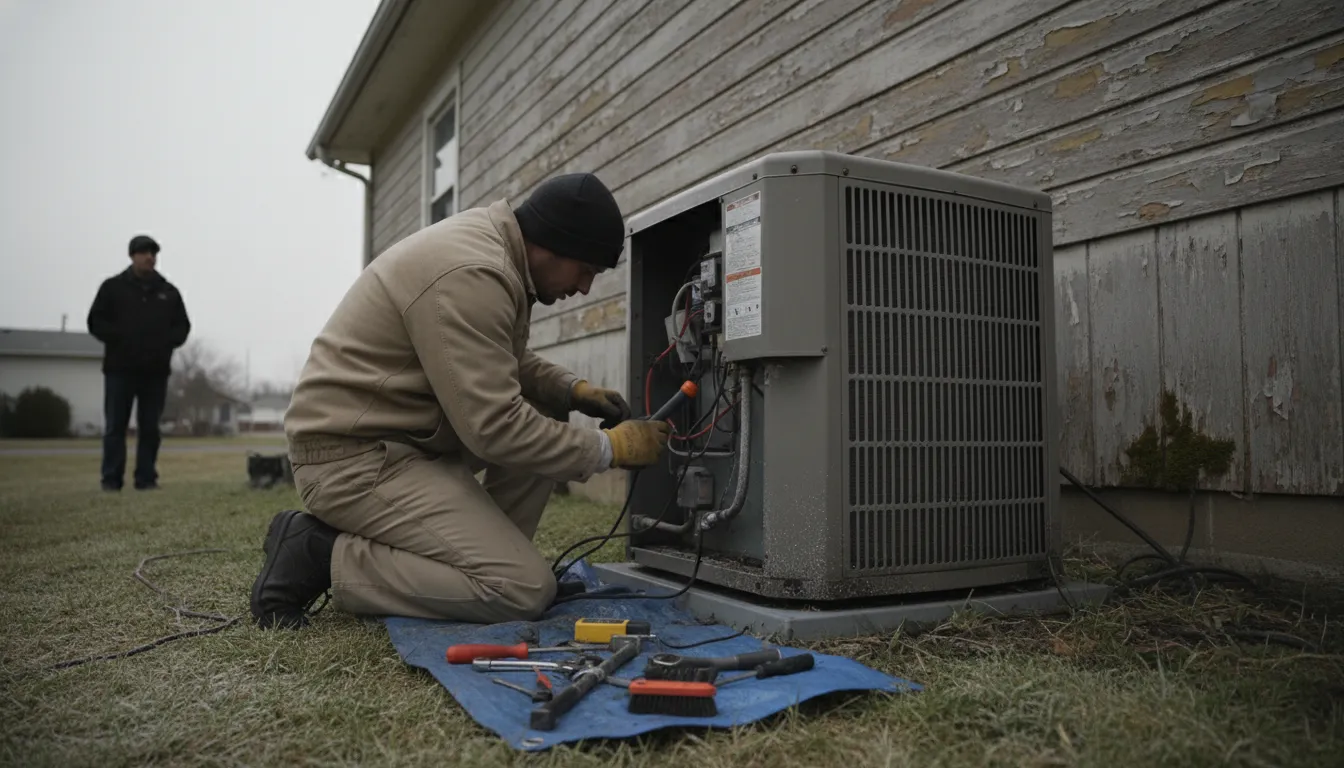
Find the Best Heat Pump Repair Contractors for Your Business
No obligation • Fast responses • Nationwide coverage

Why you can trust HVAC Firms
HVAC Firms is a leading United States resource for evaluating HVAC service providers. Our team researches companies, checks credentials, and reviews customer feedback to present clear, unbiased information. Listings and rankings are based on merit, and companies cannot pay to change our editorial content.
Search providers near you
Best Heat Pump Repair Contractors in Washington Ranked
A heat pump is a versatile and efficient system for both heating and cooling your Washington home. When it malfunctions, it can lead to discomfort, high energy bills, and potential damage. This guide provides clear, practical information on common heat pump problems in Washington, how they are diagnosed, typical repair costs, and how to decide between fixing your current system or replacing it. Use this resource to understand your options and communicate effectively with local service professionals.
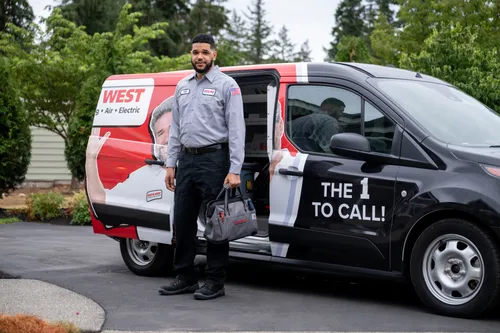
South West Plumbing, Heating, Air, & Electric
825 S Stacy St, Seattle, WA 98134
South West Plumbing, Heating, Air, & Electric has provided plumbing, HVAC, and electrical services in Seattle, WA for over 40 years. They offer a wide range of services including air conditioning repair and installation, furnace and heat pump repair, boiler installation, and HVAC tune-ups. Their capabilities include advanced drain and sewer services such as hydro jetting and video camera inspections. The company serves residential customers throughout Seattle, delivering comprehensive solutions for heating, cooling, plumbing, and electrical needs.
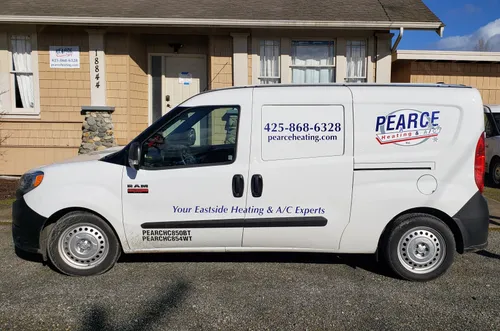
Pearce Heating & A/C
18844 NE 84th St, Redmond, WA 98053
Pearce Heating & A/C is a comprehensive HVAC and electrical service provider based in Seattle, WA. They serve the Eastside and King County areas, including Redmond, Bellevue, and Kirkland. Their services include installation, repair, and maintenance of heating, air conditioning, and heat pump systems, along with indoor air quality solutions such as air purifiers and humidifiers. Pearce Heating & A/C also offers professional electrical services including panel upgrades and rewiring. With decades of experience, their technicians are certified to work with all major HVAC brands and models. The company emphasizes personalized service by assigning consistent technicians and maintaining direct owner involvement to ensure quality and customer satisfaction.
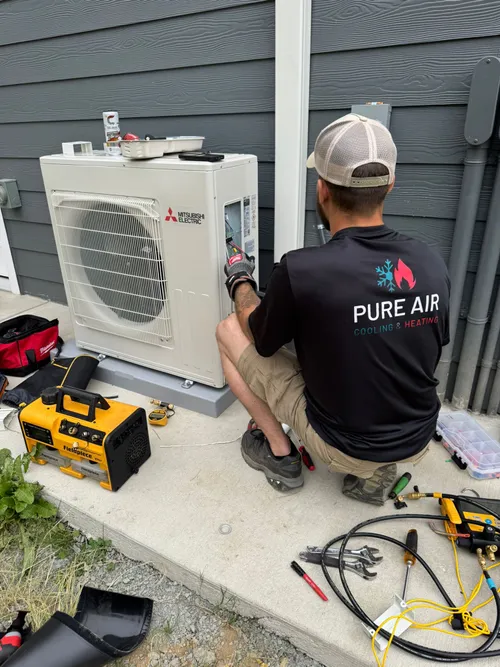
Pure Air Cooling & Heating
9720 NE 120th Pl, Kirkland, WA 98034
Pure Air Cooling & Heating is an HVAC contractor based near Seattle, WA, serving Kirkland, Bellevue, Redmond, and nearby areas. They provide a range of heating and cooling services including air conditioning repair and installation, furnace repair, heat pump services, and duct cleaning. The company focuses on energy-efficient solutions and reliable climate control for both homes and businesses in the region.
Fuse Service: Heating & Air Conditioning
10221 NE 134th Ln F-103, Kirkland, WA 98034
Fuse Service: Heating & Air Conditioning provides heating, air conditioning, and heat pump repair services in Seattle, WA. They serve both residential and commercial clients with a focus on honest service and efficient solutions. Their technicians handle systems of varying complexity and offer same-day repairs along with warranties on all services. The company covers multiple nearby areas including Bellevue, Kirkland, and Redmond.
Comfort Heating, Cooling, Electrical & Plumbing
11711 E Trent Ave, Spokane Valley, WA 99206
Comfort Heating, Cooling, Electrical & Plumbing is a home services company based in Spokane, WA, offering a wide range of HVAC, plumbing, electrical, and water treatment services. They provide repair, maintenance, and installation for heating and cooling systems, including air conditioners, heat pumps, and ductless units. Comfort Heating, Cooling, Electrical & Plumbing has been serving the Post Falls and surrounding areas since 1993, bringing over 30 years of experience to their work. The company also offers 24/7 emergency service without extra charges for evenings or weekends.
Common Heat Pump Issues in Washington's Climate
Washington's unique climate, particularly the damp, cool winters in Western Washington and the more extreme temperature swings in the eastern part of the state, can accelerate wear and create specific challenges for heat pump systems. Understanding these regional issues is the first step in effective troubleshooting.
Corrosion and Moisture Damage: The high humidity and frequent rain, especially west of the Cascades, can lead to accelerated corrosion of the outdoor unit's coils, electrical connections, and metal components. This corrosion is a primary cause of refrigerant leaks and electrical failures, which are among the most common repair needs for Washington heat pumps.
Strain from Defrost Cycles: During Washington's cold, damp winters, your heat pump must regularly enter a defrost cycle to melt ice that forms on the outdoor coil. If the defrost control board, sensors, or reversing valve malfunctions, the coil can remain frozen, severely restricting airflow and heating capacity. This often manifests as the system blowing cold air or failing to heat the home adequately.
Refrigerant Leaks: Leaks are a frequent issue, often occurring at valve fittings, within the coils (sometimes due to corrosion), or along refrigerant lines. A low refrigerant charge forces the compressor to work harder, reducing efficiency, increasing wear, and ultimately leading to a complete system shutdown if not addressed.
Diagnosing Performance Problems
Before calling for service, you can perform some basic checks that may save time and help you describe the problem more accurately to a technician. A systematic approach to diagnostics can also help you understand the recommendations a professional will make.
Monitor for Key Warning Signs:
- Rising Energy Bills: A gradual or sudden increase in your heating or cooling costs is often the first sign of declining efficiency.
- Inconsistent Temperatures: Rooms that are too hot or too cold, or a system that struggles to reach the thermostat setpoint.
- Short Cycling: The unit turns on and off more frequently than normal, which wastes energy and strains components.
- Unusual Noises: Grinding, squealing, or rattling sounds from the indoor air handler or outdoor condenser unit often indicate mechanical problems like a failing fan motor or compressor 1.
- Poor Airflow: Weak airflow from your vents can signal a clogged filter, blocked ductwork, or a failing blower motor.
Basic Diagnostic Steps You Can Take:
- Check the Air Filter: A dirty filter is the most common cause of reduced airflow and system strain. Replace it if it's clogged.
- Inspect the Outdoor Unit: Ensure it is clear of leaves, dirt, snow, or overgrown vegetation (maintain at least 2 feet of clearance).
- Look for Ice: Check the outdoor coil for a thick layer of ice. A little frost during defrost is normal, but a solid block of ice indicates a problem.
- Check Electrical Basics: Verify that the system's circuit breaker in your main panel hasn't tripped. Also, ensure the thermostat has power and is set correctly (e.g., to "HEAT" mode in winter).
Understanding Efficiency Metrics: A key indicator of your heat pump's health is its Coefficient of Performance (COP). A COP above 3.0 indicates efficient operation, meaning it moves more than three units of heat for every unit of electricity consumed 2. A significant drop in performance often correlates with a lower COP, which a technician can assess.
Find the perfect heat pump repair contractors for your needs
Get personalized recommendations and expert advice
Typical Repair Costs and Scope
Repair costs for heat pumps in Washington vary widely based on the component, the brand, labor rates, and the urgency of the service. The following ranges provide a general guideline for budgeting, though obtaining a detailed quote from a qualified technician is essential.
Minor Repairs ($100 - $400): This tier includes common, relatively straightforward fixes. Examples are replacing a failed starting capacitor, a blown fuse on the control board, fixing a clogged condensate drain line, or installing a new programmable thermostat. These repairs often resolve issues like a unit that hums but won't start or water leakage from the indoor unit.
Moderate Repairs ($200 - $1,500): These involve more labor or costly parts. Common repairs in this range include replacing an indoor blower motor or outdoor fan motor, repairing a leaking refrigerant line (which may also require a recharge), replacing a faulty reversing valve (responsible for switching between heating and cooling), or installing a new system control board 3.
Major Repairs/Replacements ($500 - $3,000+): This category encompasses the most critical and expensive components of the system. A compressor replacement is often the costliest single repair, frequently ranging from $1,500 to over $3,000 due to the part cost and labor-intensive process 4 5. Replacing a leaking condenser or evaporator coil also falls into this high-cost range. A full refrigerant recharge after a major leak can cost several hundred dollars, plus the cost of finding and repairing the leak itself.
Making the Decision: Repair or Replace Your Heat Pump?
Facing a significant repair bill can be daunting. A useful industry guideline, often called the "$5,000 Rule," can help frame your decision 6. Multiply the age of your heat pump (in years) by the estimated repair cost. If the product exceeds $5,000, replacement is often the more economical long-term choice.
Example: A 12-year-old heat pump needs a $1,200 compressor repair.
- 12 (years) x $1,200 (repair cost) = $14,400.
- Since $14,400 > $5,000, investing in a new, high-efficiency system is likely wiser than repairing the old one.
Other Factors to Consider:
- System Age: Most heat pumps have a lifespan of 10-15 years. If yours is over 10 and needs a major repair, replacement becomes more attractive.
- Efficiency Gains: Newer models are significantly more efficient than units from 10+ years ago. The energy savings from a new system can help offset its cost over time.
- Frequency of Repairs: If you are calling for service multiple times a year, you are likely throwing good money after bad. Cumulative repair costs add up quickly.
- Refrigerant Type: Older systems use R-22 refrigerant (Freon), which is no longer produced and is extremely expensive. A leak in such a system almost always justifies replacement with a modern R-410A or new-generation unit.
Maintaining Your Washington Heat Pump
Proactive maintenance is the best way to avoid costly repairs and extend your system's life, especially in a demanding climate.
- Schedule Biannual Tune-ups: Have a professional inspect and service your system in the spring (before cooling season) and fall (before heating season). This includes cleaning coils, checking refrigerant levels, testing electrical components, and ensuring the defrost cycle works properly.
- Change Filters Regularly: Check your air filter monthly and replace it at least every 90 days, or more often if you have pets or allergies.
- Keep the Area Clear: Maintain clear space around both the indoor air handler and the outdoor condenser unit for proper airflow.
- Monitor Performance: Pay attention to changes in sound, airflow, and your home's comfort level. Early detection of small issues prevents them from becoming major failures.
Frequently asked questions
Sources
Footnotes
-
Heat Pump Troubleshooting: 12 Common Issues & Steps to Take - https://www.conwayservices.net/blog/heat-pump-troubleshooting-12-common-issues-and-tips-for-what-to-do ↩
-
Heat Pump COP and SCOP: What They Mean & Why They Matter - https://www.h2xengineering.com/blogs/heat-pump-cop-and-scop-what-they-mean-and-why-they-matter/ ↩
-
HVAC Repair Services in Puyallup - Fast, Trusted Techs - https://greenheadheating.com/hvac/hvac-repair-in-puyallup ↩
-
Commercial heat pump repair in graham, wa: 5 Critical - https://www.infinityheatingandair.com/blog/best-commercial-heat-pump-repair-graham-wa ↩
-
How much does it cost to repair a heat pump in 2025? Get the ... - https://comforttemp.com/how-much-does-it-cost-to-repair-a-heat-pump/ ↩
-
The $5,000 HVAC Rule | Repair or Replace Your HVAC? - https://www.myqualitycomfort.com/tips-tricks/5000-rule-hvac/ ↩