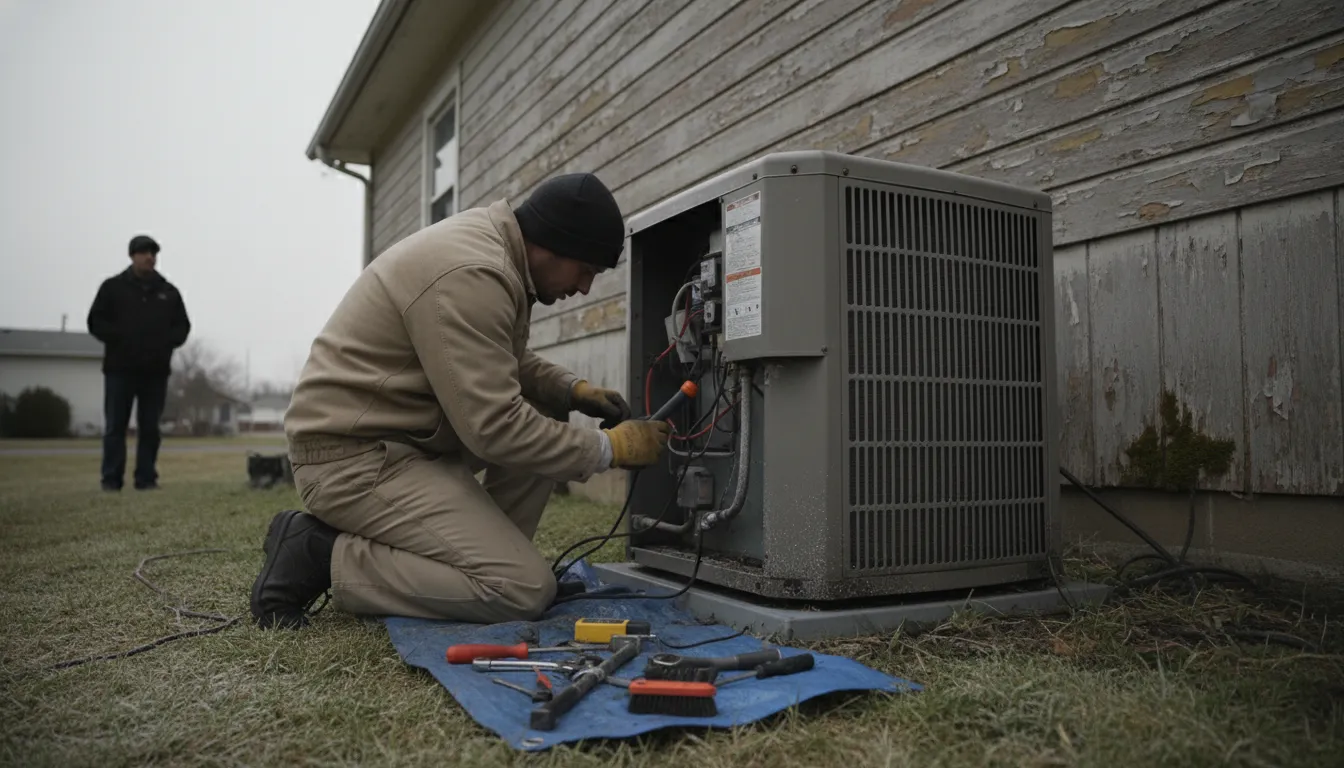
Find the Best Heat Pump Repair Contractors for Your Business
No obligation • Fast responses • Nationwide coverage

Why you can trust HVAC Firms
HVAC Firms is a leading United States resource for evaluating HVAC service providers. Our team researches companies, checks credentials, and reviews customer feedback to present clear, unbiased information. Listings and rankings are based on merit, and companies cannot pay to change our editorial content.
Search providers near you
Top Heat Pump Repair Contractors in Portsmouth, Virginia Ranked
When your heat pump stops working in Portsmouth, it's more than an inconvenience-it's a disruption to your home's comfort and efficiency. Heat pump service is essential for maintaining year-round climate control, as these systems provide both heating and cooling. This guide helps you understand common repair issues, what to expect from the service process, and how to connect with skilled local technicians who can restore your system's performance.
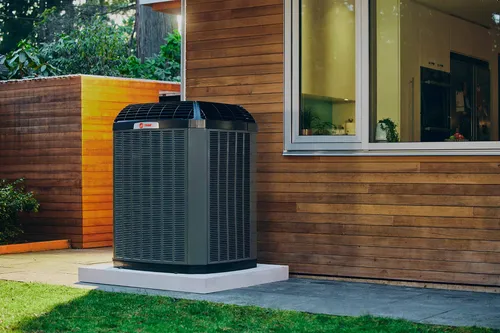
Smiley's Heating & Cooling
3500 Virginia Beach Blvd Ste 110, Virginia Beach, VA 23452
Smiley's Heating & Cooling is an HVAC company based in Virginia Beach, VA, serving both residential and commercial customers. They offer a wide range of services including air conditioning repair and installation, furnace and heat pump repair, ductless mini-split installation, indoor air quality testing, and HVAC maintenance plans. Their certified technicians provide expert repairs and installations, backed by a 10-year labor warranty on select new installs. Smiley's also offers emergency HVAC repair services and covers areas including Virginia Beach and Norfolk.
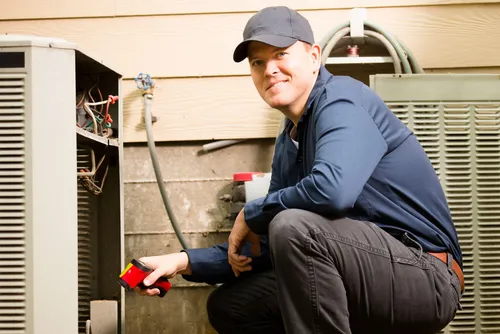
Absolute Comfort Heating and Cooling
524 Central Dr #101, Virginia Beach, VA 23454
Absolute Comfort Heating and Cooling is a family-owned HVAC company serving Virginia Beach, VA, and nearby areas since 2003. They provide a wide range of services including air conditioning, heat pump, furnace, and boiler repair and installation, as well as indoor air quality solutions and ductless system services. Their NATE-certified technicians handle both residential and light commercial HVAC needs, offering expertise in system diagnostics, maintenance, and installations. The company also offers 24/7 emergency service for urgent HVAC issues.
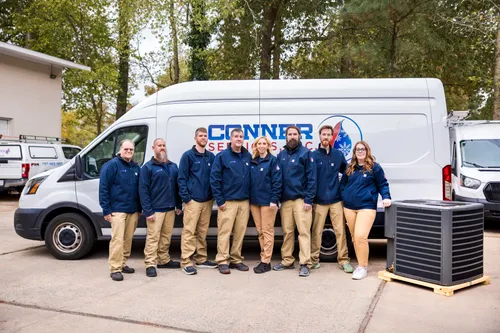
Conner Services Inc
1359 Virginia Beach Blvd, Virginia Beach, VA 23454
Conner Services Inc provides a wide range of heating, ventilation, and air conditioning services in Virginia Beach, VA. Their skilled technicians handle HVAC installation, repair, and maintenance for systems including furnaces, heat pumps, mini-splits, geothermal units, and ductwork. They also offer indoor air quality solutions such as filtration and UV lights, as well as smart home HVAC accessories. The company emphasizes energy-efficient options and comprehensive seasonal tune-ups to maintain system performance. Conner Services Inc holds multiple professional licenses and offers a one-year labor warranty on all services.

Aire Serv of Southside
4740 W Norfolk Rd, Portsmouth, VA 23703
Aire Serv of Southside is an HVAC company serving Virginia Beach, VA, and nearby areas including Chesapeake, Norfolk, and Portsmouth. They provide a range of heating and cooling services such as air conditioner repair and installation, furnace and heat pump maintenance, boiler services, and indoor air quality improvements. The company offers specialized capabilities like ductless mini split AC system installation and comprehensive HVAC tune-ups to enhance system efficiency. Aire Serv of Southside is locally owned and operated and is affiliated with a national network, providing access to extensive resources and continuing education. They also offer 24/7 availability for heating and air conditioning repairs to ensure customer comfort year-round.
Galactic Air Incorporated
420 Investors Pl #107, Virginia Beach, VA 23452
Galactic Air Incorporated is a locally owned HVAC company serving Virginia Beach, VA, and the surrounding South Hampton Roads area. They provide a wide range of services including repair and installation of air conditioners, heat pumps, gas furnaces, geothermal heat pumps, ductless mini split systems, and water heaters. Their technicians are nationally certified and trained on the latest HVAC technologies, with a focus on systems like Trane. Galactic Air also offers indoor air quality services and ductwork repair or replacement. The company emphasizes attention to detail and professional service in both residential and commercial settings.
Common Heat Pump Problems in Portsmouth Homes
Heat pumps are complex systems, and several issues can arise that require professional attention. Recognizing the symptoms can help you describe the problem more accurately when you call for service.
No Heating or Cooling This is the most urgent issue. If your system isn't producing warm or cool air, the cause could be a faulty thermostat, a refrigerant leak, or a problem with the reversing valve that switches between heating and cooling modes. Electrical issues, like a failed capacitor or contactor, can also prevent the compressor or fan motor from starting.
Inadequate or Uneven Temperatures If some rooms are too hot or too cold, the issue might not be with the heat pump itself but with airflow. Dirty air filters, blocked return vents, or leaks in the ductwork can restrict airflow and create comfort imbalances. A low refrigerant charge, often due to a slow leak, can also severely reduce the system's capacity to heat or cool your home effectively.
Ice Buildup on the Outdoor Unit Seeing ice on the coils of your outdoor unit is a clear sign of trouble. While a light frost during heating mode is normal, thick ice indicates problems like low refrigerant, a dirty air filter restricting airflow, or a malfunctioning defrost cycle. Ignoring this can lead to further damage to the compressor.
Unusual Noises Heat pumps should operate relatively quietly. New or loud noises are warning signs:
- Grinding or Squealing: Often points to a worn-out fan motor or blower wheel bearings that need lubrication or replacement 1.
- Banging or Rattling: Could be from loose parts, a broken fan blade, or a failing compressor.
- Hissing or Bubbling: May indicate a refrigerant leak, which requires immediate professional repair.
High Energy Bills A sudden spike in your electricity bill, without a change in usage, often signals that your heat pump is working harder than it should. This loss of efficiency can stem from dirty coils, refrigerant issues, or failing components like the compressor.
What to Expect During a Professional Service Visit
Knowing the typical process for heat pump maintenance and repair can make the experience smoother and help you choose a reliable provider.
Before You Make the Call A few simple checks can sometimes resolve the issue or provide valuable information to the technician:
- Verify Thermostat Settings: Ensure it's set to "HEAT" or "COOL" and the temperature is set correctly. Try replacing the batteries if it's not powered.
- Check Circuit Breakers: Look for a tripped breaker in your home's electrical panel for both the indoor and outdoor units and reset it if necessary 2.
- Inspect the Air Filter: A clogged filter is a common cause of poor performance. Replace it if it's dirty.
- Clear the Area: Ensure the outdoor unit is free of leaves, grass clippings, and debris that can block airflow.
The Technician's Diagnostic Process When the technician arrives, they will follow a systematic approach to diagnose your system 3:
- Visual Inspection: They will examine the indoor and outdoor units for obvious issues like ice, leaks, damaged wiring, or worn components.
- Electrical Testing: Using a multimeter, they will test capacitors, contactors, and other electrical components for proper voltage and function 4.
- Refrigerant Check: They will measure the refrigerant pressure and temperature to determine if the system is properly charged.
- Airflow and Performance Tests: The tech will check ductwork for leaks, measure airflow from vents, and assess the overall system cycle.
The Repair and Approval Stage After diagnosis, the technician will explain the problem, the necessary fix, and provide an upfront cost estimate. For common repairs in Portsmouth, costs can range from $100-$300 for minor electrical fixes like a capacitor replacement to $1,000 or more for major component work like a compressor replacement. Reputable companies will not proceed with any repair without your explicit approval.
Find the perfect heat pump repair contractors for your needs
Get personalized recommendations and expert advice
Understanding Repair Timelines and Costs
The time and cost to fix your heat pump depend entirely on the nature of the problem. Most service visits include a diagnostic fee, typically between $75 and $150, which is often waived if you proceed with the recommended repair.
Minor Repairs (Often Completed in 1-3 Hours) These are common, same-day fixes that address components that commonly wear out.
- Examples: Replacing a failed start/run capacitor, installing a new thermostat, or fixing a loose electrical connection.
- Typical Cost Range: $100 - $300.
Moderate Repairs (A Few Hours to Half a Day) These repairs involve more labor or specialized parts but are usually completed in one visit.
- Examples: Replacing an indoor blower motor or outdoor fan motor, repairing a minor refrigerant leak, or replacing a control board.
- Typical Cost Range: $300 - $800.
Major Repairs (May Require Multiple Days) These are significant repairs that may require ordering specific parts or involve extensive labor.
- Examples: Compressor replacement, evaporator or condenser coil repair/replacement, or fixing a major refrigerant leak 5.
- Typical Timeline: If parts are in stock, repair may be done in one long day. If parts need ordering, the process can take 1-3 days 6 7.
- Typical Cost Range: $1,000 - $2,500+ 8 9.
Maintaining Your Heat Pump to Avoid Future Repairs
Consistent, professional maintenance is the best way to extend the life of your heat pump and prevent costly breakdowns. A seasonal tune-up should include cleaning coils, checking refrigerant levels, tightening electrical connections, lubricating moving parts, and testing system controls 10. Keeping the area around your outdoor unit clear and changing your indoor air filter every 1-3 months are simple tasks you can do to support system health.
Frequently asked questions
Sources
Footnotes
-
Heat Pumps In Portsmouth, VA | Energy Pro Heating & Cooling - https://energyprohvac.com/services/heat-pump/ ↩
-
6 Important Things to Check Before Scheduling a Service Call - https://acmasters.com/6-things-to-check-before-scheduling-a-service-call/ ↩
-
10 Things That Should be Included in a Heat Pump Inspection - https://iaqcolorado.com/blog/10-things-that-should-be-included-in-a-heat-pump-inspection/ ↩
-
HVAC Troubleshooting Guide: Step-by-Step Solutions Made Easy - https://projecthvac.com/2026/01/07/hvac-troubleshooting-guide-step-by-step/ ↩
-
Does My Heat Pump Have a Bad Compressor in Durham, NC? - https://leeac.com/does-my-heat-pump-have-a-bad-compressor-in-durham-nc/ ↩
-
Heat Pump & HVAC Maintenance Auckland | AC Repair Services - EPS - https://epservices.co.nz/electrical-services/heat-pump-repairs/ ↩
-
The HVAC Repair Process: What to Expect from Start to Finish - https://eliteairandheatllc.com/the-hvac-repair-process-what-to-expect-from-start-to-finish/ ↩
-
Expert Heat Pump Repair Service Portsmouth VA - https://dmsvirginia.com/heat-pump-repair ↩
-
HVAC Repair Costs: How Much Will You Have to Spend? - https://onthegohac.com/cost-of-hvac-repair/ ↩
-
Operating and Maintaining Your Heat Pump | Department of Energy - https://www.energy.gov/energysaver/operating-and-maintaining-your-heat-pump ↩