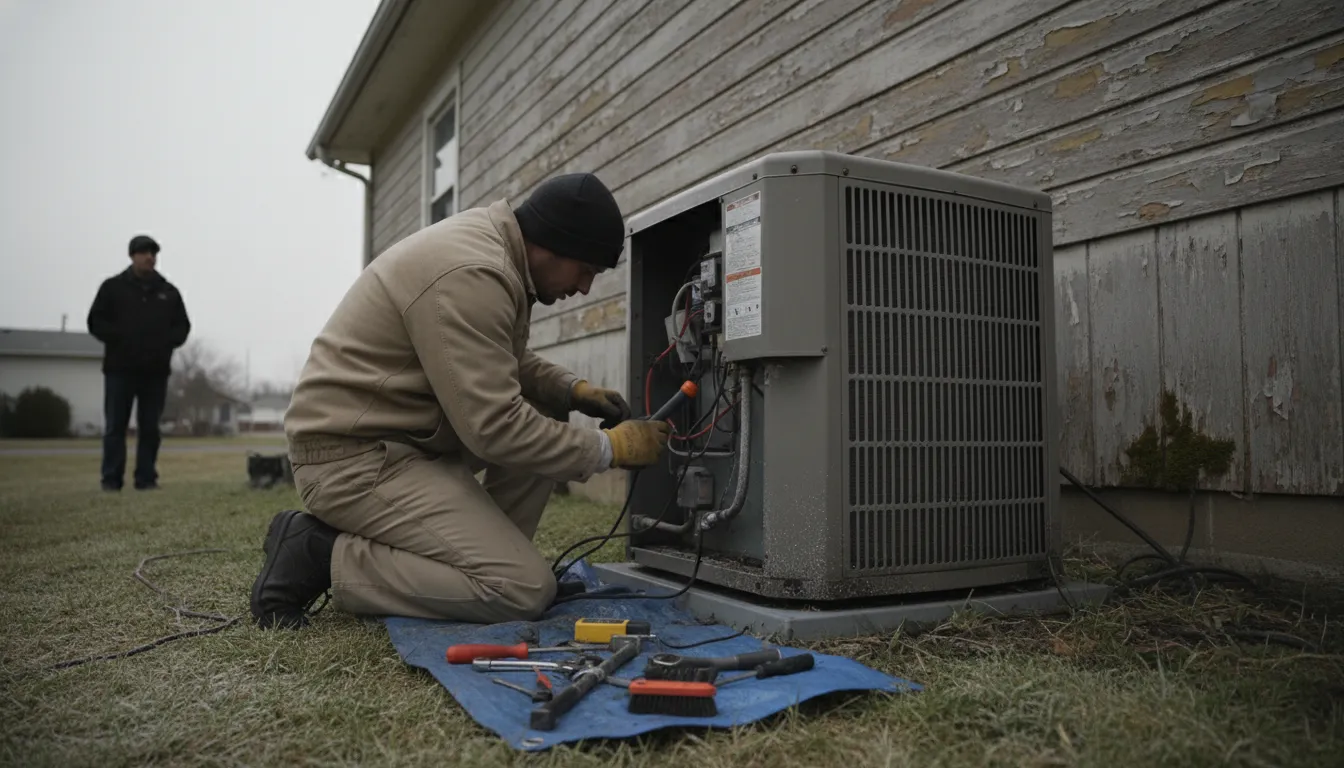
Find the Best Heat Pump Repair Contractors for Your Business
No obligation • Fast responses • Nationwide coverage

Why you can trust HVAC Firms
HVAC Firms is a leading United States resource for evaluating HVAC service providers. Our team researches companies, checks credentials, and reviews customer feedback to present clear, unbiased information. Listings and rankings are based on merit, and companies cannot pay to change our editorial content.
Search providers near you
Best Heat Pump Repair Contractors in South Carolina Ranked
A heat pump is the year-round workhorse of your South Carolina home, providing efficient heating and cooling. When it malfunctions, comfort and energy bills can suffer quickly. This guide explains common heat pump issues in the Palmetto State, typical repair processes, and cost considerations, helping you understand what to expect and how to find qualified local professionals to restore your system's performance.
Common Heat Pump Problems in South Carolina's Climate
South Carolina's humid subtropical climate-with hot, muggy summers and mild but occasionally chilly winters-puts unique stress on heat pumps. The constant switching between heating and cooling modes, combined with high humidity, leads to a predictable set of issues. Recognizing these symptoms early can prevent minor problems from becoming major, costly failures.
Refrigerant Leaks: The high humidity can accelerate corrosion on copper refrigerant lines and connections, leading to leaks. Symptoms include a noticeable drop in cooling or heating capacity, ice buildup on the indoor or outdoor coils, and a hissing sound. Low refrigerant is a serious issue that strains the compressor.
Iced-Over Outdoor Unit: It's common to see the outdoor coil (condenser) completely iced over, even in summer. This is rarely just a winter problem. Causes include low refrigerant, a dirty air filter or indoor coil restricting airflow, a failing defrost control board, or a stuck reversing valve 1 2.
Electrical Component Failures: The frequent cycling and electrical load can wear out components. The most common are capacitors (which help the compressor and fan motors start and run) and contactors (electrical relays). A failed capacitor will often prevent the unit from starting or cause it to hum without turning on.
Reversing Valve Malfunctions: This valve is what allows your heat pump to switch between heating and cooling. It can become stuck due to debris, wear, or electrical failure. A stuck valve may cause the system to only heat when you want cool, or vice versa, or it may cause poor performance in one mode.
Dirty Coils and Airflow Restrictions: Pollen, dirt, and debris accumulate rapidly on the outdoor coil, reducing its ability to release heat. Indoors, a clogged air filter is the primary culprit for restricted airflow. Both lead to inefficiency, freezing, and increased strain on the system 3.
The Professional Diagnostic Process
When a technician arrives to service your heat pump, they follow a systematic approach to pinpoint the problem. This diagnostic sequence is crucial for an accurate and cost-effective repair.
- Interview and Visual Inspection: The tech will ask about the symptoms and recent performance, then perform a visual check for obvious issues like ice, debris around the unit, disconnected wires, or signs of refrigerant oil (indicating a leak).
- Thermostat and Electrical Check: They will verify the thermostat is set correctly, calibrated, and sending the proper signals. Next, they'll check the electrical panel for tripped breakers and then use a multimeter to test voltage at the unit, capacitors, and contactors.
- Airflow Assessment: The indoor air filter is inspected and the blower motor and indoor coil are checked for dirt buildup. Proper airflow is essential for heat exchange and preventing coil freeze-ups 4.
- Refrigerant System Analysis: Using manifold gauges, the technician measures the system's high and low-side pressures. These readings tell them if the refrigerant charge is correct, if there's a restriction, or if the compressor is failing. If low, a leak search is necessary 5.
- Mechanical Component Testing: The compressor, fan motors, and reversing valve are tested for proper operation. The technician will listen for unusual noises and check amperage draws to assess the health of these major components 6.
Find the perfect heat pump repair contractors for your needs
Get personalized recommendations and expert advice
Understanding Repair Costs and Components
Heat pump repair costs in South Carolina vary widely based on the component, the labor involved, and the system's accessibility. Here's a breakdown of common repairs and estimated cost ranges to help you budget. Remember, these are estimates; always get a detailed, written quote from your service provider.
Lower-Cost Repairs ($100 - $450)
- Capacitor Replacement: Often the most common repair. A dual-run capacitor typically costs between $100 and $450 parts and labor.
- Contactor Replacement: This electrical relay can wear out and cause intermittent operation. Repair usually falls in a similar range to capacitor replacement.
- Condensate Line Clearing: A clogged drain line can cause water damage. Clearing it is generally a service call fee plus labor, often $75 to $200.
- Circuit Board Repair/Replacement: A faulty control or defrost board can cost between $50 and $350 for the part, with labor on top.
Mid-Range Repairs ($250 - $700)
- Reversing Valve Replacement: This is a labor-intensive repair due to its location in the refrigerant circuit. Expect costs from $250 to $700 or more, including the valve and refrigerant recovery/recharge.
- Fan Motor Replacement: Whether it's the outdoor condenser fan motor or the indoor blower motor, replacement typically ranges from $200 to $700 depending on the motor type and labor.
- Thermostat Upgrade: Replacing an old or faulty thermostat with a new programmable or smart model can cost between $150 and $600 installed.
Higher-Cost Repairs ($1,000+)
- Compressor Replacement: This is the heart of the system. The compressor itself is expensive, and replacing it requires recovering all refrigerant, welding, and recharging. Costs can range from $1,000 to over $2,400, making it sometimes more economical to consider a new system if the heat pump is older 7.
- Refrigerant Leak Repair + Recharge: The cost here is highly variable. Finding and repairing a leak ($100-$1,600+) plus the cost to recharge the system with refrigerant (which is priced per pound) can quickly add up, especially if the leak is difficult to locate 8.
When to Repair vs. When to Consider Replacement
Making the decision between a repair and a new heat pump installation involves weighing several factors beyond the immediate repair cost.
- Age of the System: If your heat pump is over 10-12 years old, major repairs like a compressor replacement may not be a wise investment. Newer models are significantly more efficient.
- Cost of Repair vs. Replacement Rule: A common guideline is the "5,000 Rule." Multiply the repair cost by the age of the unit. If the result is over $5,000, replacement is often recommended. For example, a $1,200 repair on a 10-year-old unit (1,200 x 10 = 12,000) suggests replacement.
- Energy Efficiency: Older R-22 (Freon) systems are obsolete, and the refrigerant is very expensive. New systems use R-410A or newer refrigerants and have much higher SEER (cooling) and HSPF (heating) ratings, which can lead to substantial savings on your South Carolina utility bills.
- Frequency of Repairs: If you're calling for service multiple times a year, you're pouring money into a declining system. The cumulative cost and hassle often justify an upgrade.
Maintaining Your Heat Pump to Prevent Repairs
Proactive maintenance is the most effective way to avoid unexpected breakdowns and costly repairs. A well-maintained system runs more efficiently, lasts longer, and provides better comfort.
- Change Air Filters Monthly: This is the single most important thing a homeowner can do. A clean filter protects the indoor coil and ensures proper airflow.
- Keep the Outdoor Unit Clear: Maintain at least two feet of clearance around the outdoor condenser. Regularly remove leaves, grass clippings, and pollen from the coil fins. Trim back any shrubs or vines.
- Schedule Biannual Professional Maintenance: Have a qualified technician perform a pre-season tune-up in the spring (before cooling season) and fall (before heating season). This service typically includes cleaning coils, checking refrigerant levels, tightening electrical connections, lubricating motors, and verifying system operation.
- Listen and Observe: Pay attention to unusual noises (grinding, squealing, hissing), changes in airflow, or unexpected increases in your energy bill. Early detection can turn a major repair into a minor one.
Frequently asked questions
Sources
Footnotes
-
The 7 Most Common Heat Pump Repair Problems Solved! - https://pantherhvac.com/blog/heat-pump-repair/ ↩
-
4 Common Heat Pump Issues & How To Troubleshoot Them - https://eurosun.com.au/common-heat-pump-issues-and-how-to-troubleshoot-them/ ↩
-
Heat Pump Troubleshooting: 12 Common Issues & Steps to Take - https://www.conwayservices.net/blog/heat-pump-troubleshooting-12-common-issues-and-tips-for-what-to-do ↩
-
5 Common Causes of HVAC Breakdowns & How To Prevent Them - https://www.moncriefair.com/blog/5-causes-of-hvac-breakdowns-and-how-to-prevent-them ↩
-
Heat Pump Repair Services | Call Waldrop - https://www.callwaldrop.com/heat-pumps/repair/ ↩
-
Heat Pump Troubleshooting | Heat Pump Problems & Solutions - Carrier - https://www.carrier.com/residential/en/us/products/heat-pumps/heat-pump-troubleshooting/ ↩
-
How much does it cost to repair a heat pump in 2025? Get the ... - https://comforttemp.com/how-much-does-it-cost-to-repair-a-heat-pump/ ↩
-
How Much Does It Cost To Repair a Heat Pump in South ... - https://eliteairandheatllc.com/heat-pump-repair-cost-york-county/ ↩