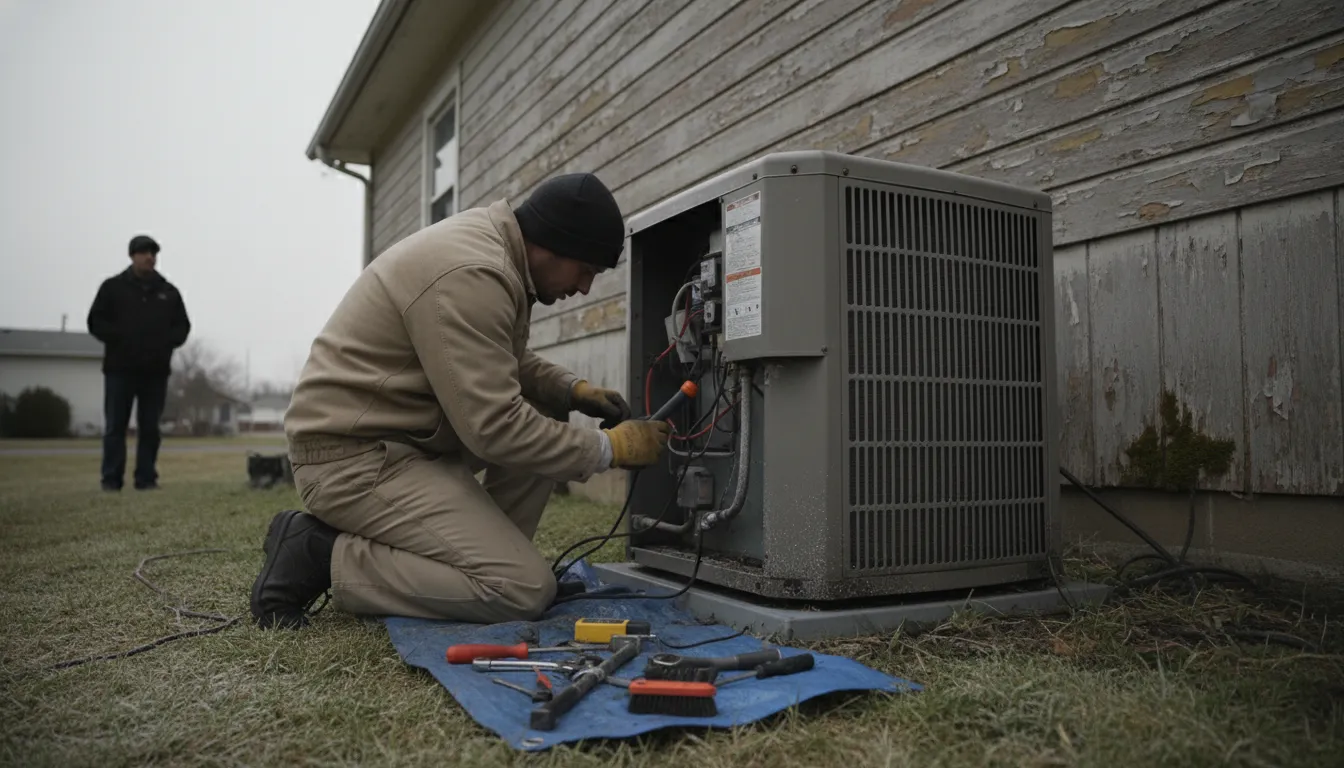
Find the Best Heat Pump Repair Contractors for Your Business
No obligation • Fast responses • Nationwide coverage

Why you can trust HVAC Firms
HVAC Firms is a leading United States resource for evaluating HVAC service providers. Our team researches companies, checks credentials, and reviews customer feedback to present clear, unbiased information. Listings and rankings are based on merit, and companies cannot pay to change our editorial content.
Search providers near you
Best Heat Pump Repair Contractors in New Mexico Ranked
A heat pump is a versatile and efficient system for both heating and cooling your home, but like any complex appliance, it can experience problems. In New Mexico's unique climate, specific issues like dust accumulation and extreme cold snaps can lead to performance drops or breakdowns. Recognizing the signs of trouble and understanding common repairs can help you make informed decisions and connect with qualified local technicians to restore your home's comfort efficiently.
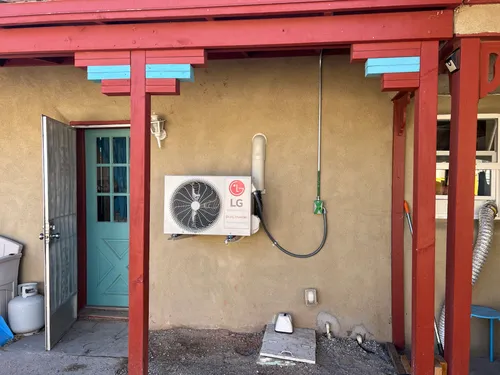
Hi-Tech Heating and Cooling
2601 Wyoming Blvd NE #115D, Albuquerque, NM 87112
Hi-Tech Heating and Cooling provides residential and commercial HVAC services in Albuquerque, NM. With 20 years of experience, they specialize in the installation, repair, and maintenance of air conditioning, heating systems, heat pumps, furnaces, boilers, and ductless mini-splits. Their services include indoor air quality solutions, thermostat installation, and duct cleaning, all tailored to meet the unique climate needs of the Albuquerque area. The company offers comprehensive diagnostics, preventive maintenance, and emergency 24/7 repair services to ensure reliable system performance and comfort year-round. As authorized Lennox and LG dealers, they emphasize precise system sizing and energy-efficient installations backed by a satisfaction guarantee.
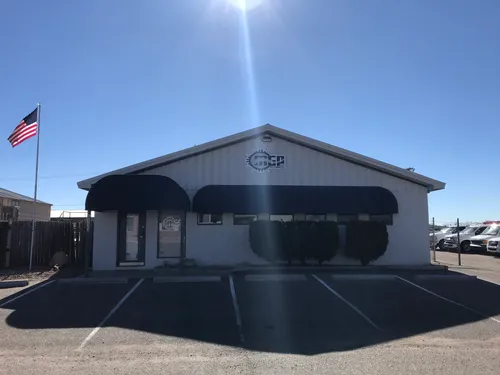
MGP Mechanical
6133 Edith Blvd NE, Albuquerque, NM 87107
MGP Mechanical is a family-owned HVAC and plumbing company serving Albuquerque, NM, and nearby communities since 2013. They provide heating, cooling, and plumbing services including installation, repair, and maintenance of furnaces, heat pumps, boilers, air conditioners, duct systems, and smart thermostats. The company specializes in energy-efficient solutions and offers 24/7 emergency repairs to ensure year-round home comfort. Their capabilities include full HVAC system upgrades and preventive maintenance plans to enhance system performance and reliability.
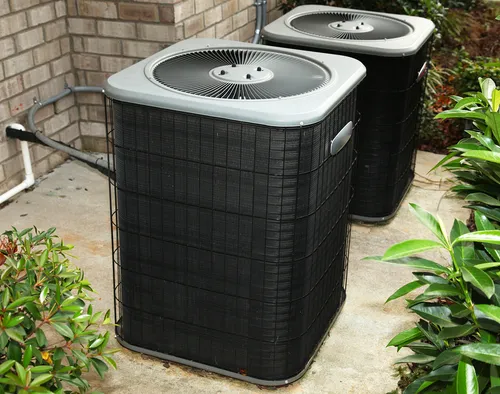
Airlink Cooling & Heating Systems
Albuquerque, NM
Airlink Cooling & Heating Systems is an HVAC contractor based in Albuquerque, NM, offering a range of heating and cooling services. They provide installation, repair, and maintenance for air conditioners, furnaces, heat pumps, mini splits, thermostats, and indoor air quality products. As a Carrier® dealer, they supply various indoor comfort equipment including air conditioners, heat pumps, gas furnaces, humidifiers, and air cleaners. Airlink Cooling & Heating Systems is experienced in servicing all brands and emphasizes integrity and respect in their customer interactions.
First Rate Plumbing Heating and Cooling Inc
4311 Sara Rd #212, Rio Rancho, NM 87124
First Rate Plumbing Heating and Cooling Inc is a locally owned HVAC and plumbing company based in Albuquerque, NM, serving the Rio Rancho area. With over 20 years of experience since 1999, they provide a wide range of services including air conditioning, furnace, heat pump, boiler, and mini split installation and repair, as well as indoor air quality solutions tailored to the local climate. Their certified technicians are knowledgeable about Rio Rancho building codes and offer expertise in installing and maintaining evaporative coolers and Breezair systems. The company also handles plumbing services, commercial HVAC projects, and ensures compliance with permits and regulations.
Ace Heating, Cooling, Plumbing and Electrical
4020 Vassar Dr NE Unit A, Albuquerque, NM 87107
Ace Heating, Cooling, Plumbing and Electrical is a veteran-operated company serving Albuquerque, NM, and surrounding areas with over 30 years of experience. They provide a wide range of home services including heating and cooling repair and installation, indoor air quality solutions, duct cleaning, plumbing, and electrical work. Their capabilities include smart thermostat installation, hydro jetting, and emergency services. The company is licensed, insured, and holds an A+ rating with the Better Business Bureau.
Common Heat Pump Problems in New Mexico
New Mexico's high desert environment presents distinct challenges for HVAC systems. Understanding these regional factors is the first step in effective troubleshooting and maintenance.
- Dust and Debris Accumulation: The arid climate generates fine dust and sand that can quickly coat both the indoor and outdoor coils of your heat pump. This layer acts as an insulator, drastically reducing the system's ability to transfer heat. In heating mode, a dirty outdoor coil can even freeze over, leading to a complete loss of function.
- Cold Snap Performance: While modern heat pumps are effective in cold weather, extreme overnight temperature drops common in New Mexico can push them to their limit. When the outdoor temperature falls below the heat pump's efficient operating range (often around 25-30°F), the system will engage its auxiliary or "emergency" electric heat strips. This backup heat is much more expensive to operate and can cause a noticeable spike in your utility bills.
- General Wear and Tear: Beyond environmental factors, heat pumps are susceptible to the same common mechanical, electrical, and refrigerant issues found anywhere. These include failing capacitors, refrigerant leaks, sensor problems, and wear on motors and fans.
Diagnosing Your Heat Pump's Issues
Before calling for service, you can often identify the general area of a problem by observing specific symptoms. Here's what to look and listen for:
- Inadequate Heating or Cooling: If your system is running but not reaching the set temperature, the most likely culprits are a dirty air filter, blocked coils, or low refrigerant charge.
- Short Cycling: This occurs when the heat pump turns on and off more frequently than normal. It can be caused by an oversized unit, a faulty thermostat, a dirty filter restricting airflow, or a refrigerant issue 1.
- Unusual Noises: Different sounds point to different problems. A grinding noise may indicate a failing motor bearing, buzzing often suggests an electrical issue like a failing contactor or capacitor, and squealing can point to a belt or blower motor problem.
- Sky-High Energy Bills: A sudden, unexplained increase in your electricity bill is a strong sign your heat pump is losing efficiency. This is often due to dirty coils, a refrigerant leak, or the system being stuck in inefficient auxiliary heat mode 2.
- The "Emergency Heat" Light is Constantly On: If this indicator on your thermostat is always lit, it signals that your heat pump is not functioning and only the expensive backup electric heat is working. This could be due to a failed reversing valve, a faulty defrost control board, or another component preventing the heat pump cycle from operating 3.
Typical Repairs and Associated Costs
Repair costs can vary based on the specific component, the brand of your unit, and labor rates in your area. The following are general national estimates, which can provide a useful benchmark for New Mexico homeowners.
Routine and Minor Repairs:
- Professional Tune-Up: $150 - $300. This essential service includes cleaning coils, checking refrigerant levels, inspecting electrical connections, and ensuring all components are operating safely and efficiently. It's the best way to prevent major failures.
- Capacitor or Contactor Replacement: $150 - $600. These electrical components help start and run the motors in your compressor and fan. They are common failure points and are relatively inexpensive to replace.
- Thermostat Replacement: $100 - $400. A faulty or outdated thermostat can cause many performance issues. Upgrading to a modern programmable or smart model can improve comfort and efficiency.
Major Component Repairs:
- Reversing Valve Replacement: $400 - $1,500. This valve is crucial for switching your system between heating and cooling modes. When it gets stuck or fails, your heat pump may only work in one mode or not at all 4.
- Fan Motor Replacement: $230 - $1,050. The outdoor fan motor or indoor blower motor can wear out. Costs depend on whether it's a standard or variable-speed motor 5.
- Compressor Replacement: $900 - $3,500+. The compressor is the heart of the heat pump. Replacing it is a significant repair that often requires recovering and replacing refrigerant. In many cases, if the compressor fails on an older unit, replacing the entire outdoor unit may be more cost-effective 6.
- Coil Replacement (Evaporator or Condenser): $1,000 - $4,000+. Repairing a refrigerant leak in a coil is often not possible. Replacing a coil is a major repair due to the labor involved and the need to handle refrigerant. The cost is highly dependent on the unit's brand and accessibility 7 8.
Find the perfect heat pump repair contractors for your needs
Get personalized recommendations and expert advice
When to Repair vs. Replace Your Heat Pump
Making the decision between a repair and a full system replacement depends on several factors. Consider replacement if:
- The repair cost is high relative to the system's age. A common rule of thumb is the "5,000 Rule": Multiply the age of your unit by the estimated repair cost. If the result is over $5,000, replacement is often the better long-term investment. For example, a $1,200 repair on a 10-year-old unit (10 x 1,200 = 12,000) suggests replacement.
- Your system is over 10-15 years old. Older heat pumps are significantly less efficient than modern models. New units can have SEER ratings above 20 and HSPF ratings above 10, which can cut your energy bills substantially.
- You are facing frequent repairs. If you're calling for service multiple times a year, you're pouring money into a declining system. A new unit comes with reliability and a manufacturer's warranty.
- Your energy bills are consistently rising. Even with repairs, an aging system loses efficiency. Upgrading to a high-efficiency heat pump can offer immediate savings on monthly utility costs.
Maintaining Your Heat Pump for New Mexico Climates
Proactive maintenance is the most effective way to avoid costly repairs and extend the life of your system, especially given the local conditions.
- Change Air Filters Monthly: This is the single most important thing you can do. A clogged filter restricts airflow, causing the system to work harder, freeze up, or overheat.
- Keep Coils Clean: Visually inspect the outdoor unit regularly. Gently rinse away dust and debris with a garden hose (after turning the power off). For the indoor coil, schedule a professional cleaning as part of your annual tune-up.
- Ensure Proper Airflow: Keep the area around your outdoor unit clear of plants, debris, and furniture by at least two feet. Indoors, make sure all supply and return vents are open and unblocked.
- Schedule Biannual Professional Service: Have a certified technician perform a pre-season check in the spring (before cooling season) and in the fall (before heating season). This will catch small issues before they become big problems.
Finding the Right Service Professional in New Mexico
When your heat pump needs attention, choosing a qualified technician is crucial. Look for a licensed, insured, and NATE-certified (North American Technician Excellence) professional. They should perform a thorough inspection, provide a clear, written estimate detailing parts and labor, and be willing to explain the problem and your options. A reputable technician will focus on solving the root cause, not just the symptom.
Frequently asked questions
Sources
Footnotes
-
Heat Pump Troubleshooting: 11 Heat Pump Issues & Their Fixes - https://cielowigle.com/blog/heat-pump-troubleshooting/ ↩
-
Repair or Replace Your Heat Pump in Albuquerque - https://www.wolffheatingcooling.com/repair-or-replace-your-heat-pump/ ↩
-
Heat pump not heating: 5 Quick Fixes - Southern Air - https://www.southern-air.com/blog/heat-pump-not-heating ↩
-
Is My Heat Pump Reversing Valve Stuck or Broken? - https://payneair.com/blog/heat-pump-reversing-valve-stuck-broken ↩
-
Heat Pump Repair Costs - https://heatpumppriceguides.com/repair-costs/ ↩
-
Average Heat Pump Repair Cost - Trane® - https://www.trane.com/residential/en/resources/blog/heat-pump-repair-cost/ ↩
-
Heat Pump Repair Cost in 2026 - Modernize - https://modernize.com/hvac/heating-repair-installation/heat-pump/repair-cost ↩
-
How much does it cost to repair a heat pump in 2025? Get the ... - https://comforttemp.com/how-much-does-it-cost-to-repair-a-heat-pump/ ↩