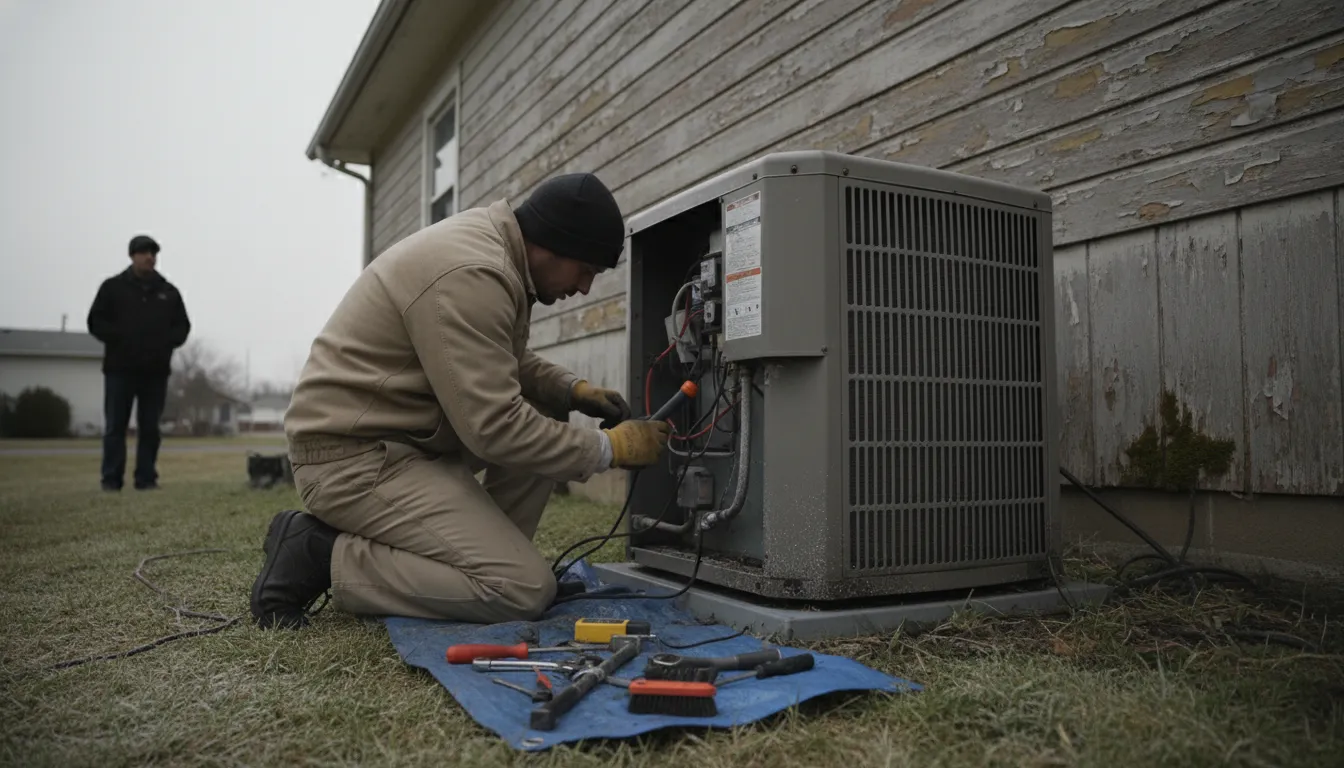
Find the Best Heat Pump Repair Contractors for Your Business
No obligation • Fast responses • Nationwide coverage

Why you can trust HVAC Firms
HVAC Firms is a leading United States resource for evaluating HVAC service providers. Our team researches companies, checks credentials, and reviews customer feedback to present clear, unbiased information. Listings and rankings are based on merit, and companies cannot pay to change our editorial content.
Search providers near you
Top Heat Pump Repair Contractors in Southaven, Mississippi Ranked
When your heat pump stops working in Southaven, it's more than an inconvenience-it's a threat to your home's comfort and efficiency, especially given our region's humid summers and cool winters. Heat pump service and repair is essential for maintaining a reliable heating and cooling system that can handle Mississippi's climate. This guide will help you understand common issues, what to expect during a service visit, and how to find qualified local technicians to get your system running smoothly again.
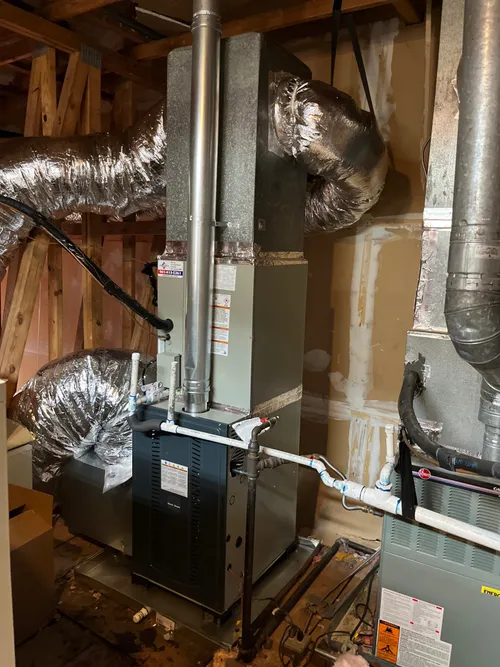
Crowe Services/Heating & Air
6391 Ferrell Dr, Memphis, TN 38134
Crowe Services/Heating & Air is an HVAC and plumbing company serving Memphis, TN. They offer a wide range of services including air conditioning, furnace, heat pump, and mini split installation and repair, as well as indoor air quality solutions. Their commercial HVAC services support local businesses with installation, maintenance, and repair. They also provide plumbing services such as faucet and toilet repairs, leak detection, drain cleaning, hydro jetting, and sewer line maintenance. Crowe Services is an American-Standard® dealer with licensed technicians experienced in both residential and commercial systems. Emergency service is available to address urgent needs.
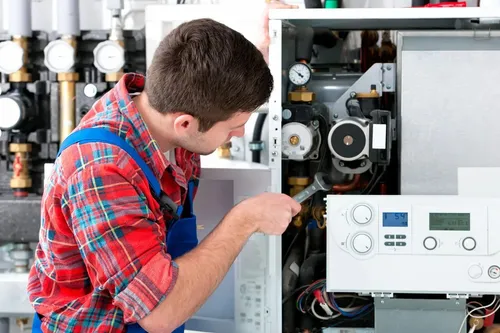
Memphis Air Conditioning & Heating
2125 Hillshire Cir, Memphis, TN 38133
Memphis Air Conditioning & Heating is a family-owned HVAC company serving Memphis, TN, and surrounding areas since 1968. They provide a wide range of heating and cooling services including installation, repair, and maintenance of air conditioners, furnaces, heat pumps, and boilers. The company also offers indoor air quality solutions such as air purification systems and humidifiers. As Trane Comfort Specialists, their technicians are trained in the latest HVAC technologies. They provide 24/7 emergency heating and air repair services to ensure comfort at any time.

Kings Services LLC
Memphis, TN
Kings Services LLC is a Memphis, TN-based company offering a wide range of HVAC and plumbing services. They specialize in the installation and repair of air conditioners, furnaces, and heat pumps, as well as plumbing solutions including tankless water heater installation and water line repairs. Their team is experienced in diagnosing HVAC equipment issues and providing appropriate repairs or replacements. Kings Services LLC has built a reputation over the years for professionalism and expertise, serving the Memphis area with a commitment to customer care and practical solutions.
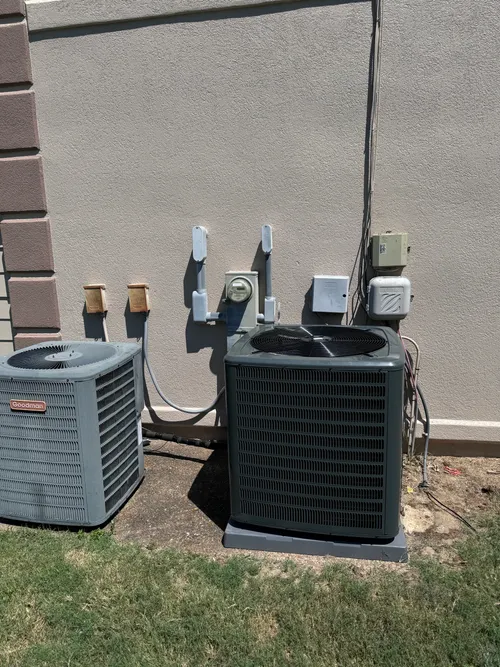
B&B HVAC LLC
Memphis, TN
B&B HVAC LLC is a family and friend owned HVAC company serving Memphis, TN. They provide a range of heating, ventilation, refrigeration, and air conditioning services including installation, repair, and tune-ups for systems such as air conditioners, furnaces, heat pumps, boilers, and mini splits. Their licensed and insured technicians focus on delivering transparent and reliable service while building lasting client relationships based on trust and satisfaction.

Aire Serv of Memphis
2099 Hillshire Cir Suite A, Memphis, TN 38133
Aire Serv of Memphis provides a full range of HVAC services in Memphis, TN, including air conditioner and heater repair, installation, and maintenance for residential and commercial properties. They specialize in servicing furnaces, heat pumps, boilers, and offer indoor air quality solutions such as air purification and duct cleaning. The company is equipped to handle emergency HVAC repairs with 24/7 availability. Aire Serv of Memphis is staffed by licensed technicians who deliver upfront pricing and stand behind their work with a Fixed Right Promise. They serve Memphis and surrounding communities including Bartlett, Germantown, and Shelby County.
Understanding Your Heat Pump System
A heat pump is a versatile HVAC unit that provides both heating and cooling by transferring heat rather than generating it. In cooling mode, it extracts heat from inside your home and releases it outdoors. In heating mode, this process reverses, pulling heat from the outside air (even in cool weather) and moving it indoors. This dual functionality makes it a year-round appliance, but it also means components like the compressor, reversing valve, and coils are in near-constant use, which can lead to wear and tear requiring professional attention.
Common Heat Pump Problems in Southaven's Climate
Southaven's specific weather patterns-characterized by high humidity, significant pollen counts, and temperature swings-can accelerate certain types of system failures. Being aware of these common HVAC issues can help you identify problems early.
- Dirty Air Filters and Coils: This is perhaps the most frequent culprit. Dust, pollen, and other airborne particles prevalent in our area can quickly clog filters and coat the evaporator and condenser coils. This restricts airflow, forcing the system to work harder, reducing efficiency, and potentially leading to frozen coils.
- Refrigerant Leaks: Your heat pump relies on a precise charge of refrigerant to transfer heat. Leaks can develop in coils or lines, leading to a low charge. Symptoms include poor heating or cooling performance, longer run times, and ice buildup on coils.
- Thermostat Malfunctions: Sometimes the problem isn't with the pump itself but with its control system. Incorrect settings, dead batteries, or faulty wiring in the thermostat can prevent the system from turning on or operating in the correct mode.
- Frozen Coils: Often a symptom of other problems, coils can freeze due to dirty filters/coils (restricting airflow), low refrigerant, or a failing blower fan 1 2. A frozen system will not heat or cool effectively.
- Fan Motor Failures: Both the indoor air handler fan and the outdoor unit's fan are critical for airflow. Motors can fail due to age, lack of lubrication, or electrical issues, halting system operation.
- Compressor or Reversing Valve Failure: These are major components. The compressor is the heart of the system, and the reversing valve changes the flow of refrigerant for heating vs. cooling. Failure of either typically means a significant repair.
What to Expect During a Professional Service Visit
When you call a technician for heat pump troubleshooting, a systematic process ensures an accurate diagnosis and effective repair.
- Arrival and Initial Consultation: The technician will discuss the symptoms you've observed and check the thermostat settings to rule out simple user-error issues.
- Comprehensive System Inspection: The pro will inspect all accessible components. This includes checking and likely replacing the air filter, examining indoor and outdoor coils for dirt or ice, clearing drain lines, and looking at electrical connections for signs of wear or damage.
- Diagnosis and Testing: Using specialized tools like manifold gauges, the technician will check refrigerant pressures and temperatures to determine if there's a leak or improper charge. Electrical tests will identify failed components like capacitors, contactors, or circuit boards.
- Detailed Quote: Before any work begins, a reputable technician will provide a clear breakdown of the necessary repairs, including the cost of parts and labor. This allows you to make an informed decision.
- Repair and Component Replacement: With your approval, the technician will perform the repair. This could involve replacing a capacitor, installing a new fan motor, sealing a refrigerant leak, or swapping out a faulty circuit board.
- System Verification and Testing: After the repair, the technician will restart the system, monitor its operation through a full cycle, and verify that heating and cooling functions are restored and operating efficiently.
Repair Timelines and Cost Considerations
Understanding the scope of a repair helps set realistic expectations for how long you might be without your system.
- Diagnosis: A thorough inspection and diagnosis typically takes 30 to 60 minutes 3.
- Simple Repairs: Fixes like replacing a capacitor, contactor, or air filter, or performing a basic cleaning, can often be completed in 1 to 2 hours 4.
- Complex Repairs: Major jobs such as replacing a compressor, fixing a refrigerant leak and recharging the system, or installing a new coil can take 2 to 4 hours or more, and may sometimes require a follow-up visit if special-order parts are needed.
Find the perfect heat pump repair contractors for your needs
Get personalized recommendations and expert advice
Repair costs in Southaven vary widely based on the failed part and the labor involved. Labor rates for HVAC services typically range from $75 to $150 per hour. When combined with parts, common repairs often fall within these general ranges:
- Capacitor Replacement: $100 - $400
- Fan Motor Replacement: $200 - $700
- Control/Circuit Board Replacement: $75 - $600
- Refrigerant Recharge: Cost varies significantly by the type (e.g., R-410A) and amount of refrigerant needed.
- Compressor Replacement: $900 - $3,500+ 5. This is considered a major repair due to the cost of the part and the labor-intensive work required.
It's important to note that these are example participation costs (parts + labor), and getting multiple quotes for any significant repair is always advisable 6 7. For many common issues like dirty filters or a failed capacitor, homeowners can expect total costs between $100 and $400 6 8.
The Value of Preventative Maintenance
The best way to avoid unexpected repair bills is through regular preventative maintenance. An annual tune-up by a qualified technician can identify and resolve small issues before they become big problems. Key maintenance tasks include cleaning coils, checking refrigerant levels, lubricating moving parts, tightening electrical connections, and testing system controls 9. This not only improves reliability but also maintains your system's efficiency, saving you money on energy bills throughout the year.
Frequently asked questions
Sources
Footnotes
-
Heat Pump Troubleshooting: 11 Heat Pump Issues & Their Fixes - https://cielowigle.com/blog/heat-pump-troubleshooting/ ↩
-
My Heat Pump Isn't Heating: A Homeowner's Troubleshooting Guide - https://www.southern-air.com/blog/heat-pump-not-heating ↩
-
What to Expect From a Heat Pump Service - Ideal Heating - https://idealheating.com/tips-and-advice/heat-pump-service-guide-what-to-expect ↩
-
Heat Pump & HVAC Maintenance Auckland | AC Repair Services - EPS - https://epservices.co.nz/electrical-services/heat-pump-repairs/ ↩
-
Heat Pump Repair Cost in 2026 - Modernize - https://modernize.com/hvac/heating-repair-installation/heat-pump/repair-cost ↩
-
Average Heat Pump Repair Cost - Trane® - https://www.trane.com/residential/en/resources/blog/heat-pump-repair-cost/ ↩ ↩2
-
How Much Does Heat Pump Repair Cost? [2026 Data] | Angi - https://www.angi.com/articles/heat-pump-repair-cost.htm ↩
-
Average Heat Pump Repair Cost - https://www.trane.com/residential/en/resources/blog/heat-pump-repair-cost/ ↩
-
Operating and Maintaining Your Heat Pump | Department of Energy - https://www.energy.gov/energysaver/operating-and-maintaining-your-heat-pump ↩