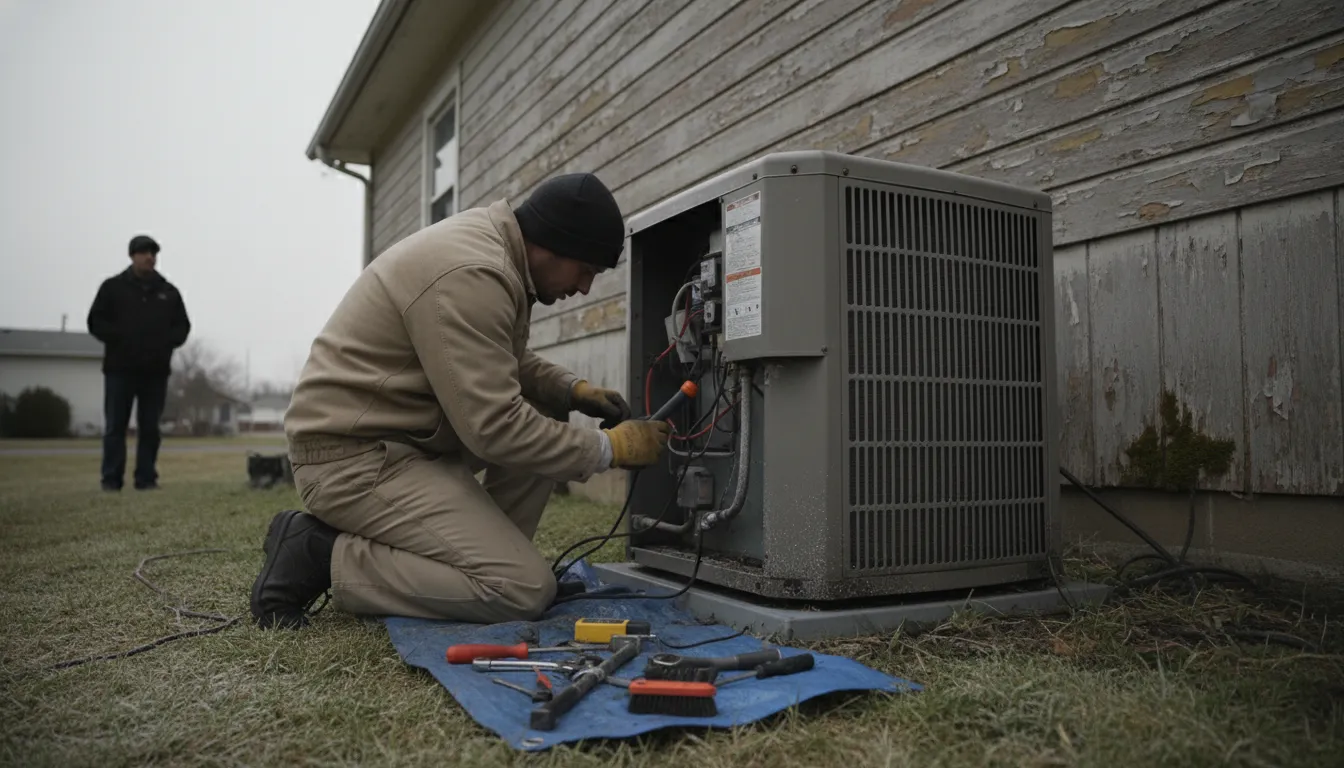
Find the Best Heat Pump Repair Contractors for Your Business
No obligation • Fast responses • Nationwide coverage

Why you can trust HVAC Firms
HVAC Firms is a leading United States resource for evaluating HVAC service providers. Our team researches companies, checks credentials, and reviews customer feedback to present clear, unbiased information. Listings and rankings are based on merit, and companies cannot pay to change our editorial content.
Search providers near you
Top Heat Pump Repair Contractors in St Peters, Missouri Ranked
When your heat pump stops working in St. Peters, it's more than an inconvenience-it's a disruption to your home's comfort and efficiency. Heat pump systems are sophisticated pieces of HVAC equipment that provide both heating and cooling, making their reliable operation essential for Missouri's varied climate. This guide is designed to help you understand common repair scenarios, what to expect during a service visit, and how to connect with qualified local technicians who can diagnose and fix your system promptly and professionally.
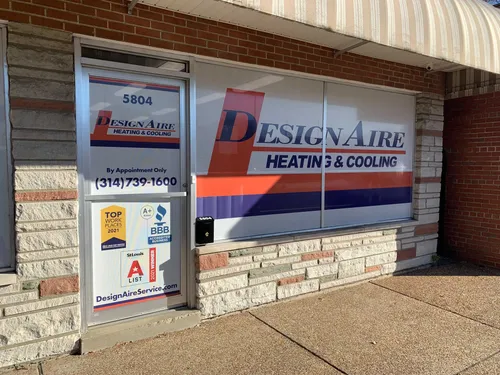
Design Aire Heating & Cooling - St. Louis
5804 Hampton Ave, St. Louis, MO 63109
Design Aire Heating & Cooling - St. Louis provides a full range of HVAC services in St. Louis, MO, including installation, maintenance, and repair of air conditioners, furnaces, boilers, and heat pumps. They also offer indoor air quality improvements such as air duct cleaning and advanced air purifiers. The company specializes in commercial and residential HVAC solutions, using the latest technologies to ensure systems run efficiently and safely. Established in 1904, Design Aire has a long history of serving the St. Louis area with a focus on quality and customer satisfaction.

Indoor Comfort Team
3640 Scarlet Oak Blvd, Kirkwood, MO 63122
Indoor Comfort Team is a family-owned HVAC company serving St Louis, MO, and nearby areas since 1979. They provide a wide range of services including air conditioning repair, furnace and heat pump installation and repair, mini split and geothermal heat pump systems, as well as indoor air quality solutions. Their NATE-certified technicians work with leading manufacturers to deliver heating and cooling services tailored to residential and commercial needs. Indoor Comfort Team offers specialized capabilities such as ground-source geothermal heat pump installations and maintains a commitment to customer satisfaction with workmanship guarantees.
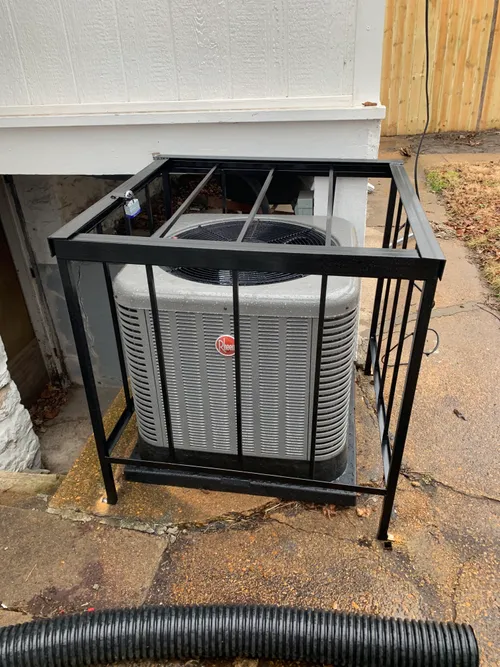
Jersey heating and cooling llc
6544 Southwest Ave, St. Louis, MO 63139
Jersey Heating and Cooling LLC provides comprehensive HVAC services in St Louis, MO, including air conditioning, furnace, heat pump, and mini split installation and repair. Their certified technicians offer tailored solutions for both residential and commercial clients, focusing on energy efficiency and system performance. With over 15 years of experience, they handle routine maintenance as well as 24/7 emergency repairs to maintain year-round comfort.
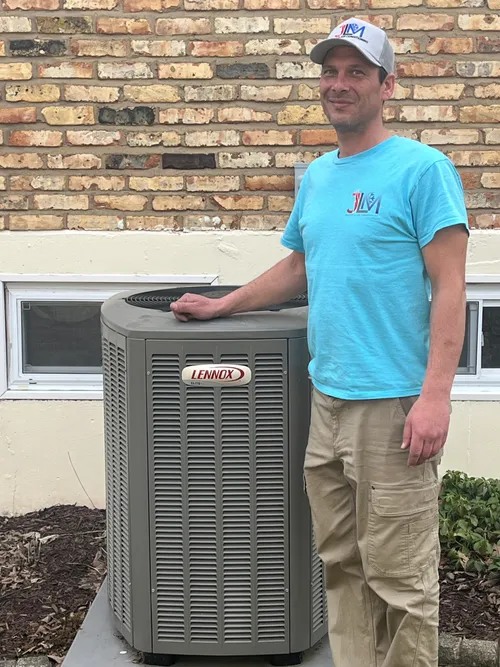
JLM Heating and Air Conditioning
3976 Royal Estates Dr, St. Louis, MO 63129
JLM Heating and Air Conditioning serves St. Louis, MO, and surrounding areas with a range of HVAC services including installation and repair of air conditioners, furnaces, heat pumps, boilers, and geothermal systems. With over 14 years of experience, their factory-trained technicians work on all makes and models and carry fully stocked service vehicles to handle most repairs efficiently. They are authorized dealers for several brands and offer flexible financing options to assist with new installations and major repairs.
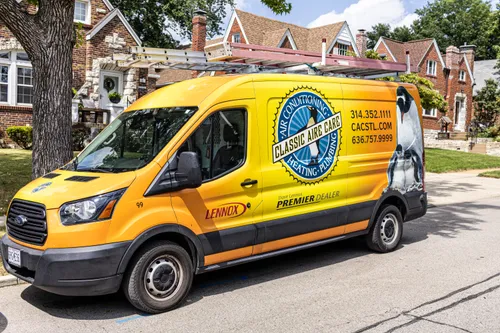
Classic Aire Care
1276 N Warson Rd, St. Louis, MO 63132
Classic Aire Care is an established HVAC and plumbing company serving St Louis, MO, and the surrounding areas. With a history dating back to 1926, they provide a wide range of services including installation, repair, and maintenance of air conditioners, furnaces, heat pumps, boilers, and geothermal systems. They also offer indoor air quality solutions such as air purifiers and humidifiers, along with expert plumbing services. Classic Aire Care is equipped to handle 24/7 emergency heating and cooling repairs, ensuring reliable service year-round.
Understanding Your Heat Pump System
A heat pump is a versatile climate control device that transfers heat rather than generating it. In the winter, it extracts warmth from the outside air to heat your home; in the summer, it reverses the process to act as an air conditioner. This dual functionality relies on a complex assembly of components including a compressor, coils, a reversing valve, fans, and electrical controls. Because it runs year-round, a heat pump can be susceptible to wear and tear, making timely maintenance and repair crucial for preventing minor issues from escalating into costly system failures 1 2.
Most Common Heat Pump Problems in St. Peters
Local technicians report a consistent set of issues that prompt repair calls for heat pumps in the St. Peters area. Recognizing the signs of these common problems can help you describe the issue more accurately when you call for service.
Refrigerant Leaks
Refrigerant is the lifeblood of your heat pump, facilitating the heat transfer process. A leak leads to low refrigerant levels, causing the system to work harder to maintain temperature. Symptoms include reduced heating or cooling capacity, longer run times, and higher energy bills. Repairing a leak involves locating the source, sealing it, and then recharging the system to the manufacturer's specified level, a job that requires EPA-certified technicians.
Frozen Coils
Finding ice on your indoor or outdoor unit is a clear sign of trouble. Ice buildup, or frozen coils, severely hinders heat transfer and can damage the compressor. This is often caused by restricted airflow from dirty air filters or blocked vents, a malfunctioning blower fan, or-as mentioned-low refrigerant levels. The repair process involves thawing the unit and correcting the root cause, such as cleaning components or fixing a refrigerant issue.
Electrical Component Failures
The electrical system is a frequent failure point. Components like capacitors, which help start the compressor and fan motors, are particularly prone to wear. A bad capacitor can prevent your unit from starting or cause it to run erratically. Other electrical issues include faulty contactors, wiring problems, or failing fan motors. These problems often manifest as a unit that hums but won't start, trips the circuit breaker, or has intermittent operation 3.
Dirty Coils and Air Filters
Simple maintenance oversights are a leading cause of performance drops. The evaporator and condenser coils must be clean to exchange heat efficiently. Similarly, a clogged air filter restricts airflow across the indoor coil, which can lead to freezing and strain on the entire system. Regularly cleaning or replacing your air filter is the easiest way to prevent many common repair issues 4.
Find the perfect heat pump repair contractors for your needs
Get personalized recommendations and expert advice
What to Expect During a Professional Service Visit
When you schedule a heat pump repair in St. Peters, a certified technician will follow a systematic process to diagnose and resolve your issue. Understanding these steps can set clear expectations for the service call.
1. Comprehensive Diagnostic Check The visit typically begins with a diagnostic fee, which averages around $98 in the local area. Many service providers will waive this fee if you proceed with the recommended repair. The technician will start by discussing the symptoms with you before checking the thermostat settings. They will then perform a visual and instrumental inspection of both the indoor and outdoor units, examining coils, fans, electrical connections, and refrigerant pressure levels to pinpoint the problem 5 6.
2. Troubleshooting and Identification Using their findings, the technician will identify the root cause. For example, if the unit isn't starting, they might test the capacitor and contactor. If cooling performance is poor, they will check for refrigerant leaks or airflow restrictions. This step is crucial for providing an accurate repair estimate and ensuring the fix addresses the core issue, not just a symptom.
3. Performing the Repair Once you approve the estimate, the technician will perform the necessary repairs. This could involve tasks like replacing a failed capacitor, sealing a refrigerant leak, cleaning heavily soiled coils, or replacing a damaged fan motor. They will use quality, compatible parts to ensure the longevity of the repair.
4. System Testing and Verification After the repair is complete, a responsible technician will never leave without testing the system. They will start the heat pump, verify it is operating in both heating and cooling modes (if seasonally appropriate), check temperature differentials, and ensure all electrical components are functioning correctly. This final step confirms the repair's success and your system's return to proper operation.
Typical Repair Timelines and Cost Considerations
The time and cost for heat pump repair in St. Peters depend entirely on the nature of the problem.
Repair Timelines:
- Quick Fixes (1-3 hours): Repairs like replacing a thermostat, capacitor, or contactor, or cleaning a clogged filter/condensate line, can often be completed in a single, short visit.
- Complex Repairs (Half-day or more): Fixing a refrigerant leak, replacing a fan motor or reversing valve, or addressing major electrical issues requires more time due to the complexity of the work and necessary testing.
Cost Ranges: Costs can vary based on the part needed, labor rates, and the urgency of the service. Local data shows the following general ranges:
- Diagnostic Fee: Approximately $98 (often credited toward repair).
- Common Minor Repairs: $150 to $300. This range typically covers parts like capacitors, contactors, or thermostat replacements 7.
- Moderate to Major Repairs: $400 to $650 for common fixes. More extensive repairs, such as fixing refrigerant leaks, replacing fan motors, or repairing coil damage, fall into this category.
- Major Component Replacement: $1,500 to $3,500+. This includes replacing the compressor, major coil assemblies, or the reversing valve, which are significant investments often weighed against the age and condition of the entire unit 8 9.
Choosing a Service Provider in St. Peters
Selecting a reliable technician is key to a quality repair. Look for companies with strong local reputations, proper licensing and insurance, and technicians who are certified by organizations like NATE (North American Technician Excellence). Providers such as Jerry Kelly Heating & Air Conditioning, Missouri Furnace & Air Conditioning, and CNO Comfort Zone Heating and Cooling have established service histories in the St. Peters community 10. Always ask for a detailed, written estimate before work begins and inquire about warranties on both parts and labor.
The Importance of Regular Maintenance
The best way to avoid unexpected repair bills is through proactive, annual maintenance. A professional tune-up typically includes cleaning coils, checking refrigerant levels, tightening electrical connections, lubricating moving parts, and testing system controls. This service can identify small issues before they lead to a complete breakdown, improve your system's efficiency, and extend its overall lifespan, protecting your comfort and your investment 11.
Frequently asked questions
Sources
Footnotes
-
What Fails Most Often in Your HVAC System? - Zone Heating & Air - https://www.zoneheatingandair.com/what-fails-most-often-in-your-hvac-system/ ↩
-
Servicing your heat pump | Daikin - https://www.daikin.co.uk/en_gb/residential/inspiration/articles/servicing-your-heat-pump.html ↩
-
Here Are Your Most Common Heat Pump Repairs - Ohio's Best Heating, Cooling & HVAC Services - https://www.bartelsheatingandcooling.com/blog/here-are-your-most-common-heat-pump-repairs/ ↩
-
My Heat Pump Isn't Heating: A Homeowner's Troubleshooting Guide - https://www.southern-air.com/blog/heat-pump-not-heating ↩
-
Heat Pump Repair Services | HVAC Solutions | St. Peters, MO - https://www.missourifurnace.com/residential/heat-pump-repair/ ↩
-
10 Things That Should be Included in a Heat Pump Inspection - https://iaqcolorado.com/blog/10-things-that-should-be-included-in-a-heat-pump-inspection/ ↩
-
Save On Heat Pump Repair In St Peters, MO - https://jerrykelly.com/hvac-services/heat-pump-repair/ ↩
-
Heat Pump Repair Cost in 2026: Average Prices & Common Fixes - https://modernize.com/hvac/heating-repair-installation/heat-pump/repair-cost ↩
-
Heat Pump & HVAC Maintenance Auckland | AC Repair Services - EPS - https://epservices.co.nz/electrical-services/heat-pump-repairs/ ↩
-
Heat Pump Repairs and Installation | St. Peters, MO - https://www.cnocomfortzone.com/heat-pumps ↩
-
Professional Heat Pump Services in St. Peters, MO - https://npmheatingandcooling.com/heat-pumps/ ↩